
How to Scent Soy Candles With Honeysuckle Absolute
Honeysuckle absolute is one of the more elusive materials in a home candle maker's toolkit. It is not a synthetic fragrance oil, and it is not a steam-distilled essential oil either. It is a solvent-extracted botanical concentrate, prized for a green, nectar-like sweetness that most synthetic "honeysuckle" fragrance blends only approximate. If you have ever wanted to scent candles with honeysuckle absolute instead of a bottled fragrance oil, the process asks for a bit more precision than a typical candle recipe, but the payoff is a softer, more complex scent profile that reads as genuinely botanical rather than candy-sweet.
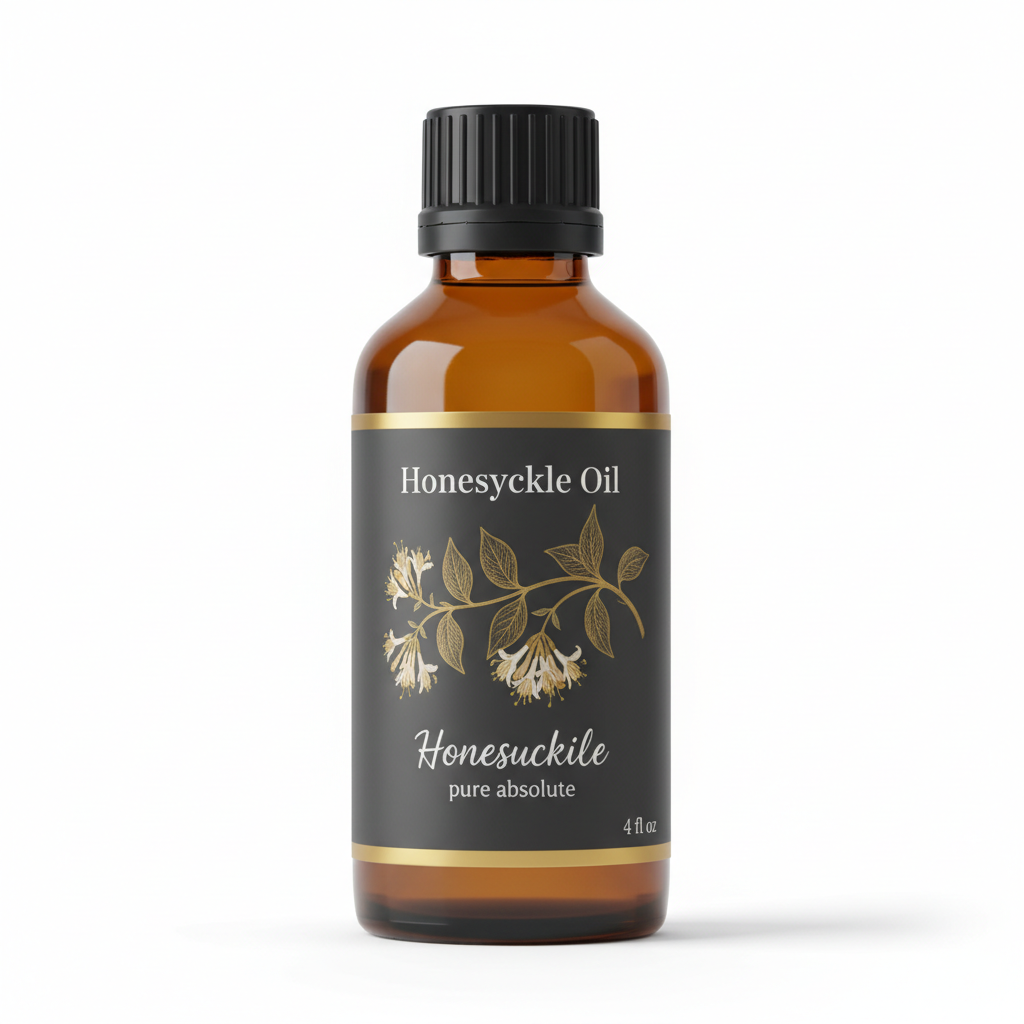
Honeysuckle Absolute
Our own Honeysuckle Absolute, in sizes from 0.5 oz to bulk.
From $11.99
Shop Now →This guide walks through honeysuckle absolute candle making from start to finish: what to buy, how much to use, how to add absolute to soy wax without losing its character, and what a finished candle can reasonably be expected to smell like once it sets up.
What Is Honeysuckle Absolute, and Why Use It in Candles?
Absolutes are made by washing raw plant material (in this case, honeysuckle blossoms) with a solvent to pull out the aromatic compounds, then further refining that extract into a concentrated, waxy or syrupy liquid. The result carries a scent much closer to the living flower than a distilled oil does, since some of honeysuckle's most delicate aromatic notes do not survive steam distillation well.
In candle work, that translates to a fragrance that leans green and nectarous rather than one-dimensionally floral. It is also expensive relative to standard fragrance oils, which is the main reason absolute-scented candles are usually a small-batch, gift-quality project rather than a production-line one. Soy wax is a natural partner for it: soy has a lower melt point than paraffin, which is gentler on delicate aromatic compounds, and its slower, more even burn gives an absolute more time to release scent into a room.
What You'll Need
- Natural soy wax flakes (a container-blend wax, not a pillar blend)
- Honeysuckle absolute
- Cotton or wood wicks, pre-tabbed, sized for your container's diameter
- Heat-safe glass or ceramic candle vessels
- A digital kitchen scale (grams, not just ounces, for accuracy)
- A double boiler or a pouring pitcher set inside a water bath
- A candy or candle-making thermometer
- A long stirring utensil (a silicone spatula or wooden skewer)
- Wick stickers or hot glue, plus wick centering tools (clothespins or wick bars)
- A heat gun or hair dryer, for smoothing the top of set wax (optional)
How to Add Absolute to Soy Wax: Step-by-Step
- Weigh your wax first. Set your vessel on the scale, zero it out, and weigh the wax flakes you'll need to fill it, minus about half an inch of headspace. Working by weight rather than volume keeps your fragrance load calculations accurate from batch to batch.
- Calculate your fragrance load. This is the step most people get wrong when they first scent candles with honeysuckle absolute. Standard fragrance oils are often used at 6 to 10 percent of wax weight. Absolutes are far more concentrated and far more expensive, so most crafters start closer to 3 to 5 percent and adjust from there. For 16 ounces of wax, that's roughly 14 to 23 grams of absolute. Write down whatever ratio you use so you can repeat or adjust it next time.
- Melt the wax slowly. Use a double boiler or a pouring pitcher set in a pan of simmering water rather than direct heat, which can scorch soy wax unevenly. Bring the wax to your manufacturer's recommended melt point, typically around 170 to 185 degrees Fahrenheit, stirring occasionally.
- Let the wax cool to fragrance-adding temperature. This is the detail that most affects scent quality. Adding absolute while the wax is still very hot can drive off some of its lighter aromatic notes before the candle ever sets, leaving a flatter scent. Most soy waxes take fragrance well between 130 and 140 degrees Fahrenheit. Check your specific wax's data sheet, since blends vary.
- Add the honeysuckle absolute. Pour it in slowly rather than dumping it all at once, especially with thicker, more viscous absolutes that may need a moment to loosen and disperse.
- Stir thoroughly and patiently. Stir for a full two minutes minimum, scraping the sides and bottom of the pitcher. Uneven stirring is a common reason a finished candle smells strong near the wick and faint everywhere else.
- Set and center your wick. Attach the wick base to the center of your vessel's bottom with a wick sticker or a small dab of hot glue, then use a centering bar or two clothespins across the rim to hold it upright and centered while you pour.
- Pour at the right temperature. Pour the fragranced wax into your prepared vessel once it has cooled to your wax's recommended pour temperature, usually somewhere around 120 to 130 degrees Fahrenheit. Pouring too hot can cause pitting and rough tops as the wax cools; pouring too cool can cause poor adhesion to the glass.
- Let the candles rest undisturbed. Set finished candles somewhere flat, out of drafts and direct sunlight, and leave them alone for at least 24 hours before touching the wick. Many soy wax makers recommend a full 1 to 2 week resting period before the first burn, which gives the fragrance time to bind more evenly throughout the wax.
- Trim the wick and test burn. Trim the wick to a quarter inch, light it, and let the candle burn until the wax pool reaches the edges of the container on its first burn, generally 2 to 4 hours depending on diameter. This first burn sets the "memory ring" for how the candle burns going forward.
A Basic Honeysuckle Scented Candle Recipe
For anyone looking for a simple honeysuckle scented candle recipe to start with, here is a small-batch ratio scaled to a standard 8-ounce vessel.
| Ingredient | Amount (8 oz vessel) | Notes |
|---|---|---|
| Soy wax flakes | 8 oz (227 g) | Container-blend soy, not pillar wax |
| Honeysuckle absolute | 7 to 11 g (3 to 5 percent load) | Start at 3 percent for a first batch, increase gradually |
| Wick | 1 cotton wick, sized for 2.5 to 3 in. diameter | Confirm sizing against your specific wax and vessel |
This is a starting point, not a fixed formula. Every soy wax blend, vessel width, and absolute batch behaves a little differently, so treat your first pour as a test batch and adjust the fragrance load or wick size before committing to a larger run.
Common Mistakes to Avoid
- Adding absolute to wax that's too hot. This is the single biggest reason a finished candle smells weaker than expected. Check your temperature every time rather than eyeballing it.
- Assuming more absolute means a stronger scent. Past a certain point, soy wax simply cannot hold more fragrance without affecting how the candle burns; extra absolute beyond your wax's recommended maximum load can cause sooting, poor flame height, or wet spots on the sides of the jar.
- Skipping the resting period. Burning a candle the same day it's poured almost always produces a weaker scent throw than the same candle burned after a week or two of rest.
- Using the wrong wick size. A wick sized for plain, unscented wax often burns too small once fragrance is added, since the added oil changes the wax's melt behavior. Consult your wick supplier's sizing chart for scented soy blends specifically.
- Storing absolute in light or heat. Absolutes degrade faster than most essential oils when exposed to sunlight or warm storage. Keep the bottle capped tightly, away from windows, and away from any heat source.
Tips for Better Scent Throw
- Pour into pre-warmed vessels (briefly warmed with a heat gun or set near, not on, a warm stove) to reduce pitting and support better glass adhesion, which some crafters find improves cold throw.
- Blend a small amount of a complementary note, such as a light citrus or a soft musk base, to round out honeysuckle's sweetness rather than relying on absolute alone for complexity.
- Keep a fragrance log for every batch: wax brand, pour temperature, fragrance load, and rest time. Small variations add up, and a log makes it possible to reproduce a batch that worked well.
- Test burn in the same size room you intend the candle for. Scent throw in a small bathroom and an open living room can read very differently.
What to Expect
A well-made honeysuckle absolute candle may offer a soft, nectar-sweet fragrance with a slightly green edge that many people describe as more true-to-flower than synthetic honeysuckle fragrance oils. Cold throw (the scent noticeable from an unlit candle) tends to be gentler with absolutes than with high-load synthetic blends, since absolutes are typically used at lower percentages. Some crafters report that hot throw builds gradually over the first few burns rather than announcing itself instantly, which is consistent with how slowly soy wax releases fragrance compared to paraffin.
Results vary by wax brand, vessel size, wick choice, and the specific absolute batch, since natural extracts carry some variation harvest to harvest. Treat any single batch as a starting point for your own adjustments rather than a guaranteed outcome.
Safety Notes
- Honeysuckle absolute is a concentrated botanical material. Handle it with care, avoid contact with eyes, and keep it away from open flame while measuring and pouring.
- This guide covers candle making only. It is not guidance for topical or ingested use of honeysuckle absolute, and any such use should be discussed with a qualified healthcare provider first.
- Keep absolute bottles, unset wax, and finished candles out of reach of children and pets.
- Never leave a burning candle unattended, and always burn on a heat-safe, level surface away from drafts and flammable materials.
- Work in a ventilated space when melting wax and adding fragrance, since warm wax can carry a strong scent while it's fluid.
Scenting soy candles with a true botanical absolute takes a little more patience than reaching for a bottled fragrance oil, mostly in the form of careful temperature control and a longer rest before that first burn. For a maker who wants a candle line that smells distinctly like real honeysuckle rather than an approximation of it, that patience tends to be worth the extra step.