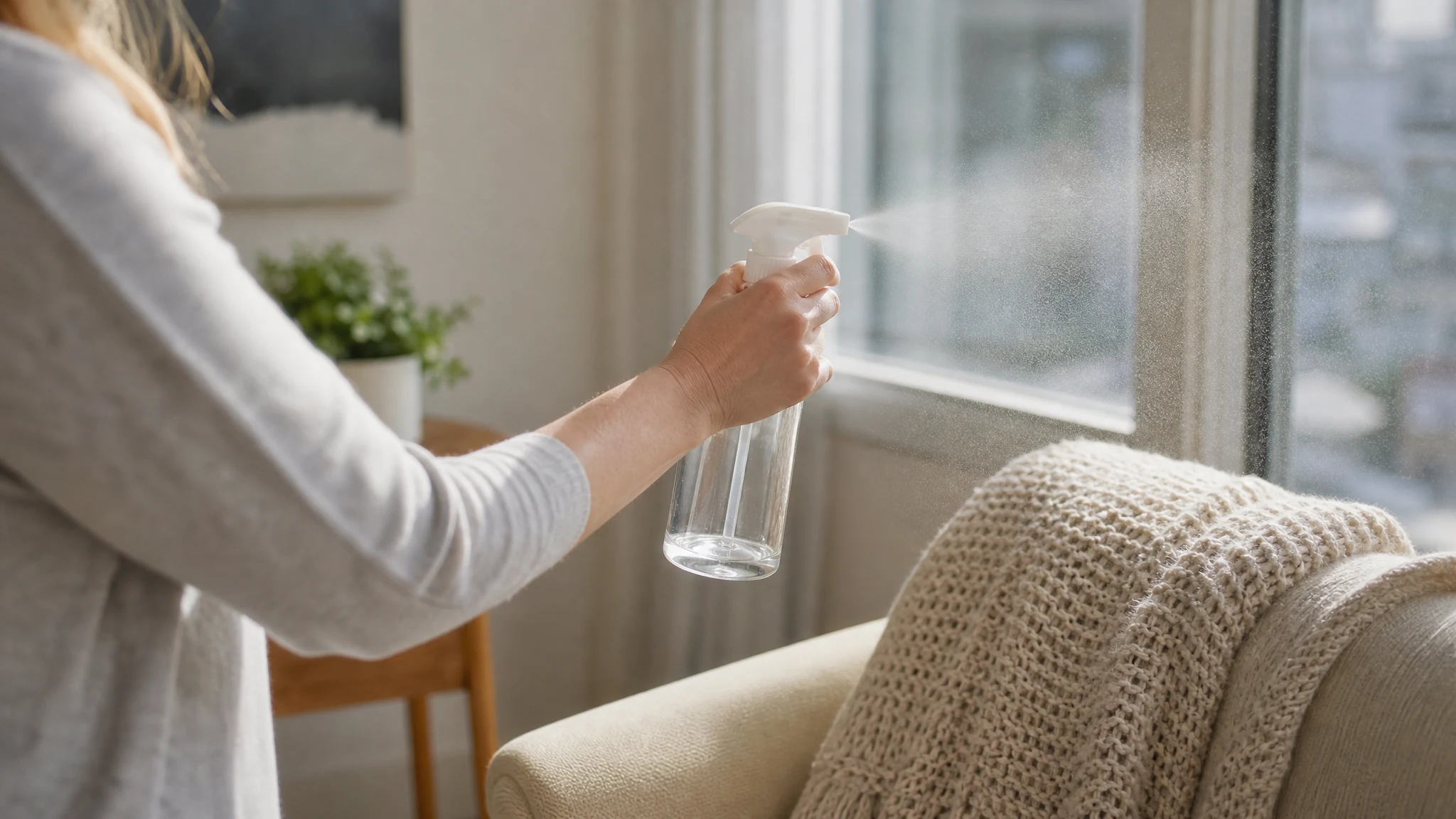
DIY Honeysuckle Room Spray: An Ethanol Recipe for 100 ml
Make this room spray with ethanol as the main liquid, not water. An absolute does not dissolve in water, and a water-based spray needs a solubilizer and a preservative that we cannot sell you and that most first-time makers get wrong. The recipe below is a formulation worked out from cited guidance and arithmetic: 100 ml at 1% honeysuckle absolute, or 0.5% if you want it fainter. We have not made or tested it, so make a small bottle first and check it on a hidden patch of fabric before you spray a room.
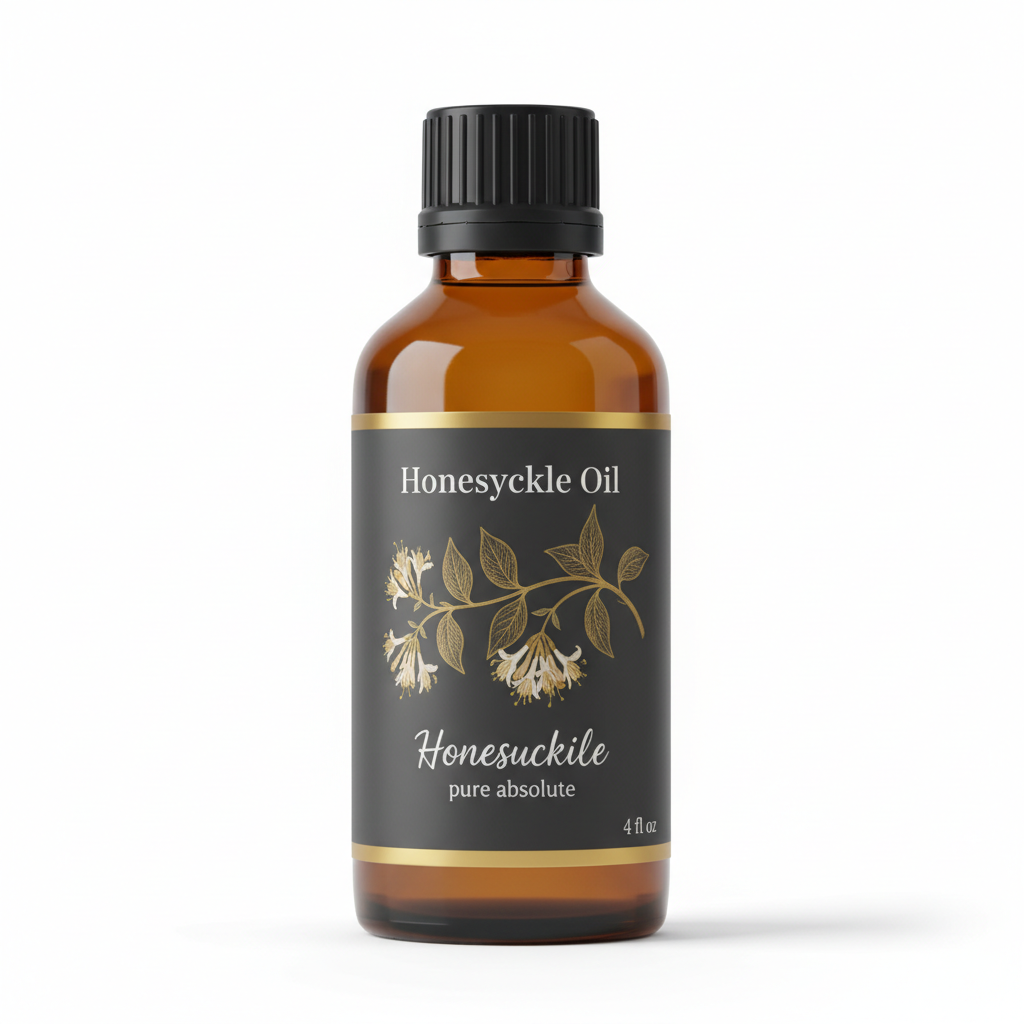
Honeysuckle Absolute
Our own Honeysuckle Absolute, in sizes from 0.5 oz to bulk.
From $13.99
Shop Now →Why ethanol, and what we could not verify
Our absolute finishes in an ethanol wash and chill, per our how-it-is-made page, which is a good sign it will go into ethanol. The Good Scents Company, a fragrance database, lists a honeysuckle absolute (Lonicera caprifolium, a related species, so an indication only) as soluble in alcohol. Water is the problem. Oil and water separate, which is why makers add a solubilizer, and then the water-based product has to stay free of microbes.
On that second point we looked for a primary source that gives a minimum ethanol percentage at which a spray preserves itself, and we did not find one we could read. Formulator forums repeat a figure of 20%, but forums are not primary sources and we do not rely on it. So this recipe does not depend on a preservation claim. It keeps water to a fifth of the bottle, uses distilled water, and treats the spray as a small batch to be used up. The FDA page Microbiological Safety and Cosmetics (current as of 15 October 2024) lists contaminated water and an ineffective preservation system among the routes by which microbes get into a product. It is written for cosmetics, not room sprays, so that is a reason to be careful, not a rule for this product. If you want a larger or longer-lived water-based spray, take that to a cosmetic chemist or your preservative supplier.
The recipe, 100 ml
| Ingredient | Volume | Weight or drops |
|---|---|---|
| Honeysuckle absolute (1%) | 1 ml | about 0.99 g, about 20 drops |
| Ethanol, highest strength your supplier sells | 79 ml | about 62 g if pure (specific gravity 0.79) |
| Distilled water | 20 ml | 20 g |
For a lighter 0.5% spray, use 0.5 ml (about 10 drops, 0.49 g) of the absolute and 79.5 ml of ethanol. The arithmetic: the relative density on our published COA is 0.989, so 1 ml weighs about 0.989 g; we assume about 20 drops per ml, and droppers differ, so weigh if you have a scale accurate to 0.01 g. The specific gravity of ethanol, 0.79, is from the NOAA CAMEO Chemicals datasheet. If your ethanol is 95% rather than 100%, the water in it counts toward the 20 ml, so reduce the added water.
Buy the ethanol and the bottle from a craft, perfumery or cosmetic-supply shop, and ask for ethanol sold for fragrance or cosmetic use and its strength; we sell only the honeysuckle absolute. Use a glass bottle with a fine-mist sprayer. Plastic and sprayer parts vary in how they take ethanol, so ask the supplier.
Method
- Warm the absolute bottle in your hand for a minute. Our how-it-is-made page says it thickens in the cold and pours once warmed.
- Weigh or measure the absolute into a clean glass jar. Add the ethanol and swirl until no streaks of absolute remain. Do this before any water goes in.
- Add the distilled water slowly and swirl. Reasoning from the chill step in how absolutes are made, a diluted absolute can cloud when cold, so check clarity at room temperature and again after an hour in the fridge before judging.
- Rest the jar closed and out of light for a day or two, then decant through a coffee filter into the spray bottle if it looks hazy. The rest time is a habit from perfume making, not a figure from a source we fetched.
- Label it with the date, the percentage and "flammable, keep from flame, not for skin or pets".
Where a water-based version goes wrong
If you want a spray with no alcohol smell, the usual route is polysorbate 20. The Tisserand Institute's bath safety page says to start mixing the solubilizer at a 1:1 ratio with the essential oil, and that Solubol, a related product, can go up to 1 part oil to 8 parts. Applied to our numbers, that is 1 ml of absolute with 1 to 8 ml of solubilizer in 90 or more ml of water. The page is about essential oils, not absolutes; we have not tested whether an absolute clears. A fully water-based spray also needs a preservative, which means checking the supplier's use rate and the FDA concern above. For that reason, we do not recommend it as a first project.
Fire, surfaces, pets and people
Fire. The CAMEO datasheet gives ethanol a flash point of 55 F, lower and upper explosive limits of 3.3% and 19%, vapor heavier than air, and says flashback along a vapor trail may occur. Do not spray near candles, gas burners, a fireplace or a wax warmer, and do not smoke while you work. This spray is about 80% ethanol by volume, so treat it as a flammable liquid. A lower ethanol share is less flammable, but we found no figure for where the line sits.
Surfaces. Coloured Bottles, a reed-diffuser supplier, notes that fragrance oils can damage varnished wood and some plastics. That is about fragrance oils generally, but a spray lands on furniture. Test on a hidden corner, spray into the air rather than at upholstery, and from about an arm's length. The COA describes the absolute as pale yellow to yellow, and ethanol is a solvent, so on pale fabric the real risk is spotting; this is reasoning, not a test result.
Pets and children. Our own copy says to keep it away from children and pets. The ASPCA's poison-control page says cats and small mammals may be more sensitive to skin exposure because grooming leads to swallowing, and not to apply highly concentrated oils to pets. Never spray an animal, and keep the bottle where it cannot be knocked over. For a bird or an animal with breathing problems, ask a veterinarian first. Do not spray food or food-contact surfaces.
Who should skip it. Anyone who reacts to fragrance, anyone in a closed room without airflow, and anyone expecting a spray to carry a candle's throw. For a fabric-only use, the linen spray and sachets post is the better fit, and the home fragrance guide compares this with the other methods.
Adjusting the strength
The 0.5% to 1% range is our choice, not a source's figure. At 1% the 100 ml bottle uses the 1 ml above, and a 0.5 oz bottle (14.8 ml) covers about 14 such bottles. At 0.5% it covers about 29. If it is too faint, raise to 1.5% (1.5 ml, about 30 drops) in the next batch; do not raise it in the same bottle after the water is in. If you want a fuller bouquet, add a thinner partner at the same total oil percentage, such as bergamot or sweet orange from a craft or aromatherapy supplier, and see the diffuser blends for the combinations we reason well with honeysuckle.
Make 100 ml, label it, use it within a few weeks and throw it out if it clouds or smells off.
Honeysuckle Absolute
Honeysuckle Absolute from our own shop, in sizes from 0.5 oz to bulk.
From $13.99
Shop Now →Sources & Further Reading
- NOAA CAMEO Chemicals. Ethanol datasheet (CH667). cameochemicals.noaa.gov
- US FDA, 2024. Microbiological Safety and Cosmetics. fda.gov
- Tisserand Institute. Bath Safety: how to use essential oils safely in the bath. tisserandinstitute.org
- ASPCA Poison Control, 2025. Are Essential Oils Dangerous to Pets? aspcapro.org
- Coloured Bottles. How to Make Reed Diffusers: The Complete Guide. colouredbottles.co.uk
- The Good Scents Company. Honeysuckle absolute (Lonicera caprifolium) listing. thegoodscentscompany.com