Honeysuckle Personal Inhalers and Car Diffusers: What to Skip
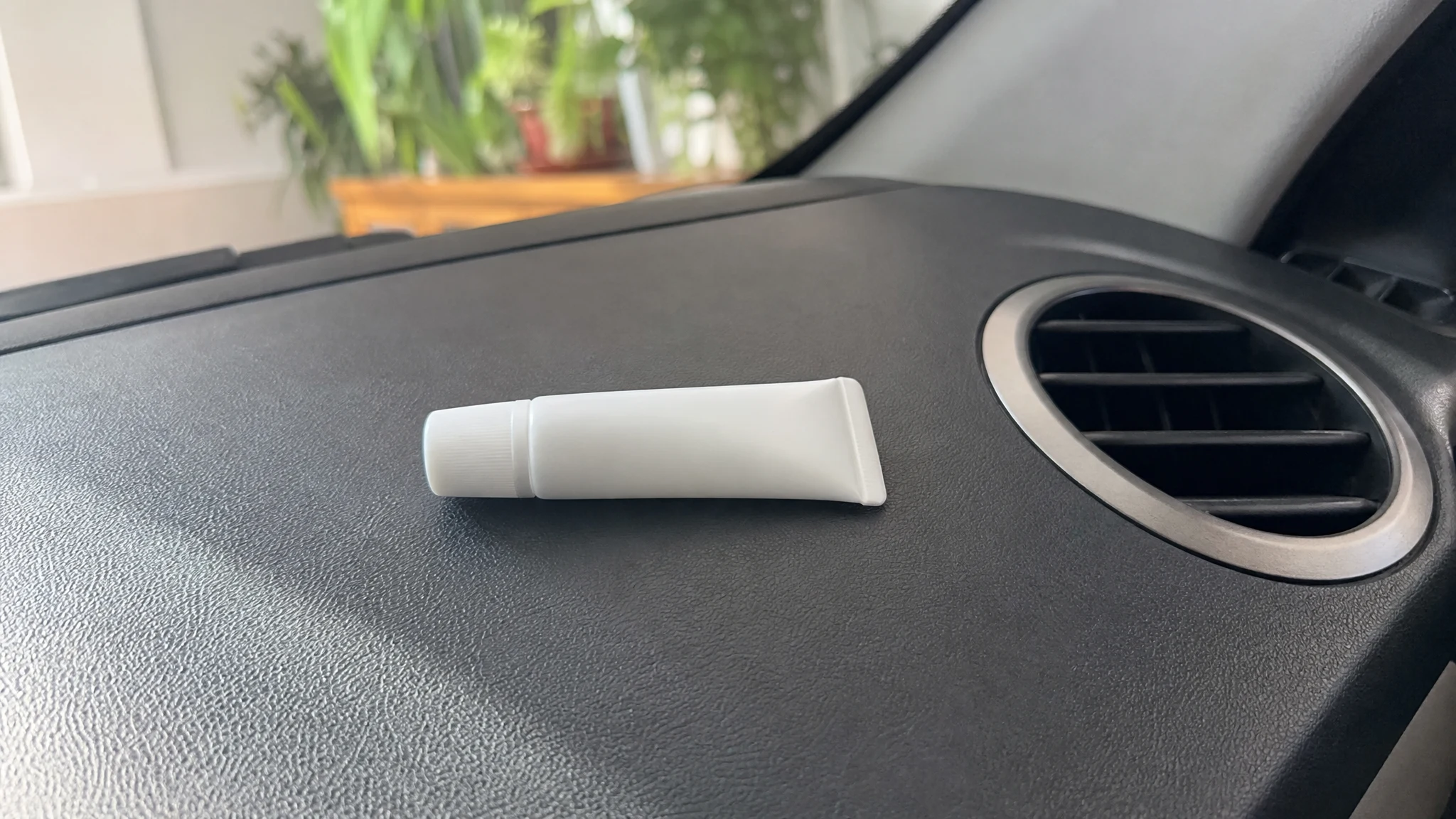
A personal inhaler is a good small project for honeysuckle absolute and a car diffuser is a bad one, and the difference is heat and shared air. An inhaler is a capped tube with a wick that stays in your pocket. A car diffuser is a fragrance source in a small shut cabin that can sit in the sun. This guide keeps both strictly to the pleasure of a scent, with no health claim, gives the drop arithmetic for a wick, and explains why we would skip the car version.
Honeysuckle Absolute
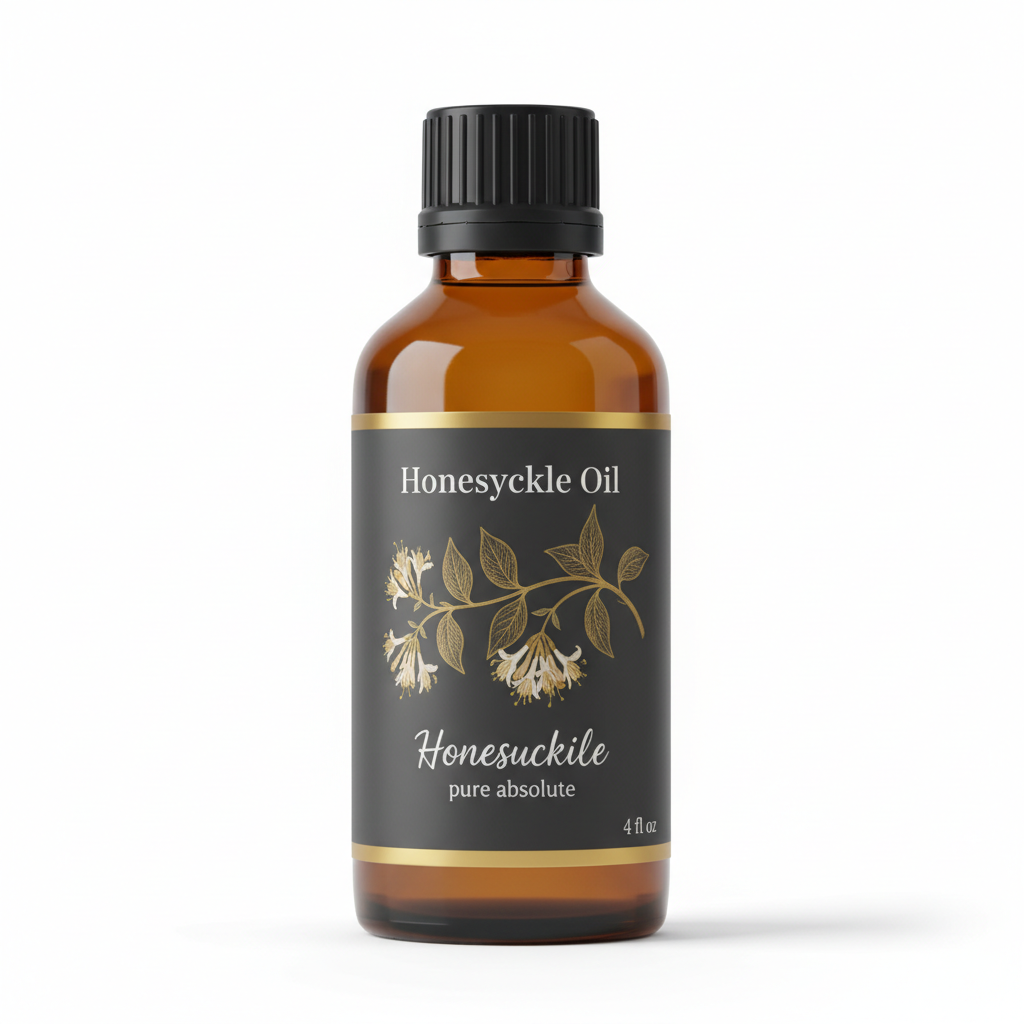
Our own Honeysuckle Absolute, in sizes from 0.5 oz to bulk.
From $13.99
Shop Now →Who should not make either
Skip both if you or anyone who rides with you has asthma or a sensitivity to fragranced products, and never make one for a child. Steinemann surveyed 1,137 US adults in 2018: about a quarter reported a diagnosis of asthma or an asthma-like condition, and of those, 64.3% reported one or more adverse effects from fragranced products (respiratory problems 43.3%, migraine 28.2%, asthma attacks 27.9%). The odds ratio against non-asthmatics was 5.76 (95% CI 4.34 to 7.64). It was an online, self-reported survey of fragranced products in general, not honeysuckle, and it cannot say what any one product does. It does say the exposure is common: 41.0% of the asthmatics named air fresheners or deodorizers and 46.2% named being near someone wearing a fragranced product (Steinemann, 2018, Air Quality, Atmosphere and Health). A passenger cannot step out of a car the way they can leave a room. Ask a physician about any respiratory condition. Our safety copy says to keep the oil away from children and pets, and that it is not for internal use.
The inhaler: wick arithmetic
Commercial inhaler tubes take a cotton wick; where to buy tubes and wicks is a craft or aromatherapy-supply question, because we sell only the absolute. We have not made one. This is worked from our figures.
At the relative density on our published COA (0.989), 1 ml of absolute weighs about 0.989 g. At roughly 20 drops per ml (droppers vary; weigh if you can) a drop is about 0.05 g. A 0.5 oz bottle is 14.79 ml, about 14.6 g and 296 drops.
| Drops on the wick | Oil weight | Inhalers from a 0.5 oz bottle | From a 1 oz bottle |
|---|---|---|---|
| 3 | 0.15 g | 98 | 196 |
| 6 | 0.30 g | 49 | 98 |
| 10 | 0.50 g | 29 | 59 |
Our process page says the absolute thickens with age and in the cold, and pours after a minute warmed in the hand. For a wick, that is the main practical issue. A viscous oil moves up cotton slowly, so drops placed on a dry wick can sit at the surface. Reasoning from that, warm the bottle first, add 3 drops, wait a few minutes, then add more only if the wick still looks dry. If it beads on the surface, stop, because you have passed what the wick will hold. We have no measurement of how much a given wick absorbs, so weigh the wick before and after on a kitchen scale that reads to 0.01 g if you want to know.
The absolute should not touch skin undiluted: our guidance is 0.5% to 2% in a carrier for skin, with a patch test first. Load the wick with the tube tilted away from you, pick up the wick with tweezers, and wash your hands if oil gets on them. Then cap the tube immediately.
Using it is simple: remove the cap, hold the tube a short distance from your nose and smell, then replace the cap. The point is a brief, deliberate sniff for enjoyment. We make no claim that it does anything for the body or mood; our site makes no medical claims. If it irritates your nose or eyes, stop, and ask a physician if the irritation persists.
Before you load a wick: three checks
Check who shares the space you will carry it into: an office, a bus, a classroom. A tube you open under your own nose still releases scent into the air around you, and the Steinemann figures above include 46.2% of asthmatic respondents naming people nearby who wear fragrance. Check the tube: it must close firmly, because an open tube in a bag will perfume everything else in it. Check the wick: use a fresh one for each fragrance, as a reused wick carries the previous scent.
The car: why we would not put the absolute there
A parked car is a hot box. A Stanford-led team of McLaren, Quinn and Null reported in Pediatrics in 2005 that on sunny days with outside highs of 72 to 96 F, the inside of a parked car rose by an average of about 40 F within an hour, regardless of outside temperature, with about 80% of the rise in the first 30 minutes. Cracking a window did not make a significant difference, and running the air conditioning before parking delayed the spike only about five minutes (Stanford Medicine news release, 2005). The release is a summary: it did not state the number of cars or days, and the study was about child hyperthermia risk, not fragrance.
Apply that as arithmetic. A cabin that starts at 77 F (25 C) and gains the average 40 F reaches about 117 F (47 C). Individual cars vary. Our own storage copy says to keep the absolute tightly capped, cool, dark and away from heat and sunlight. A vent clip, a dashboard disc or an open felt pad in a parked car breaks all of those instructions at once. Reasoning from this, heat will also push a volatile, delicate floral off the pad faster than you can enjoy it. We have no honeysuckle-specific data on what heat does to this absolute, and we state no shelf life for it.
The cabin also has a second problem: nobody can leave it. A strong scent at the first start of a morning drive is a concentrated dose for every passenger, and a wick close to a vent is directed straight at someone's face. If a passenger tells you the smell is too much, take the diffuser out; do not argue the point.
If you want something scented in the car anyway
- Keep the oil out of the car: carry the sealed inhaler tube in a bag and take it with you when you leave.
- Use a tiny load: a cotton wick with 3 drops in a capped tube you open and close, not a continuous source.
- Never leave any bottle of the absolute itself in a closed car; it breaks the storage guidance in our storage article.
- For a driver, avoid anything that draws attention from the road; open the tube at a stop, not on the move.
Our recommendation is to leave the diffuser at home and keep the inhaler. If you want a fragrance for a room you control, the dusk diffuser blend and the diffuser blends guide cover that in more detail, and the rollerball recipe covers a carried, skin-diluted version at the 0.5% to 2% range we publish.
Honeysuckle Absolute
Honeysuckle Absolute from our own shop, in sizes from 0.5 oz to bulk.
From $13.99
Shop Now →Sources & Further Reading
- Steinemann A, 2018. Fragranced consumer products: effects on asthmatics. Air Quality, Atmosphere and Health 11(1):3-9. researchonline.jcu.edu.au/52402
- Stanford Medicine, 2005. Parked cars get dangerously hot even on cool days, Stanford study finds (reporting McLaren, Null and Quinn, Pediatrics, July 2005). med.stanford.edu