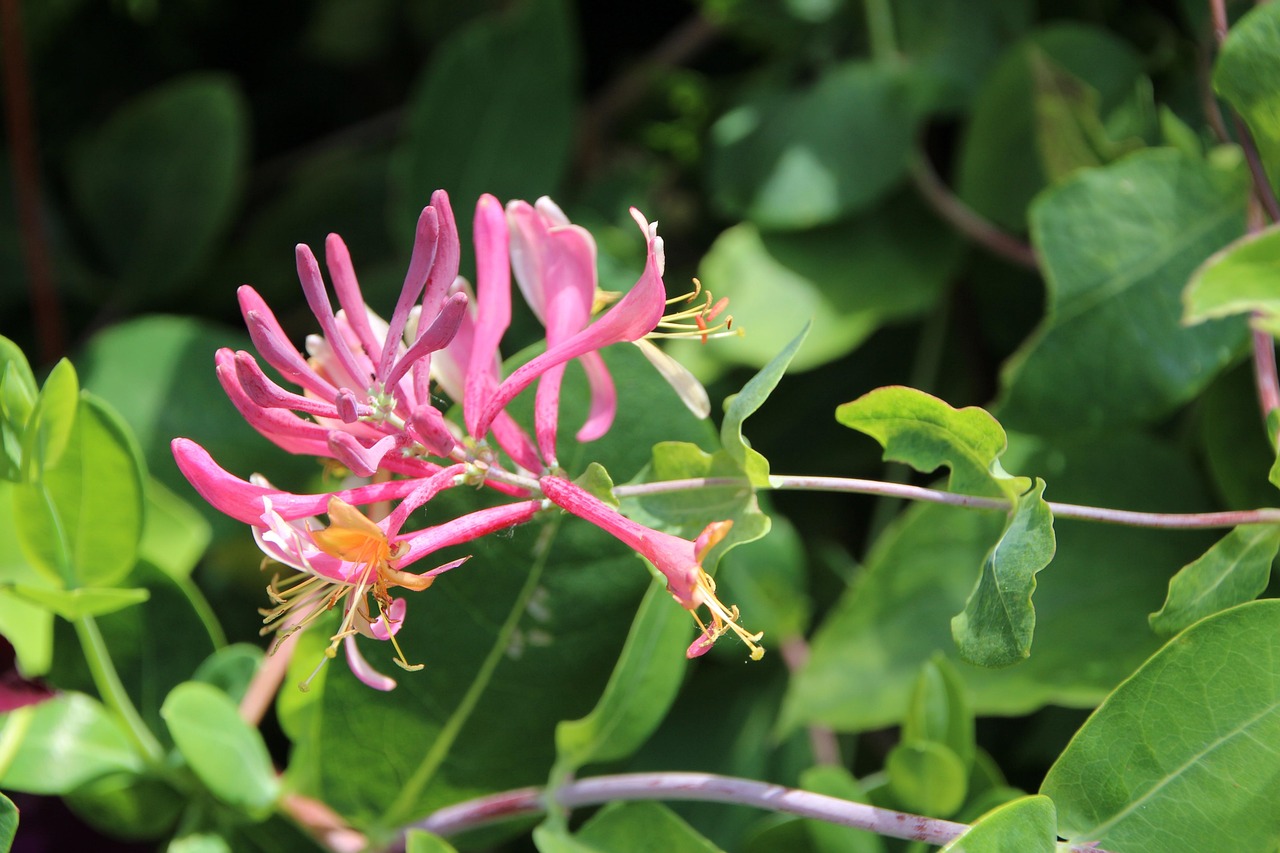
A Signature Honeysuckle Dusk Blend for the Diffuser
Some evenings deserve a little more intention. The light shifts, the day softens, and the right scent in the air can anchor the whole mood. This honeysuckle diffuser blend was built for exactly that kind of evening: unhurried, warm, and quietly beautiful.
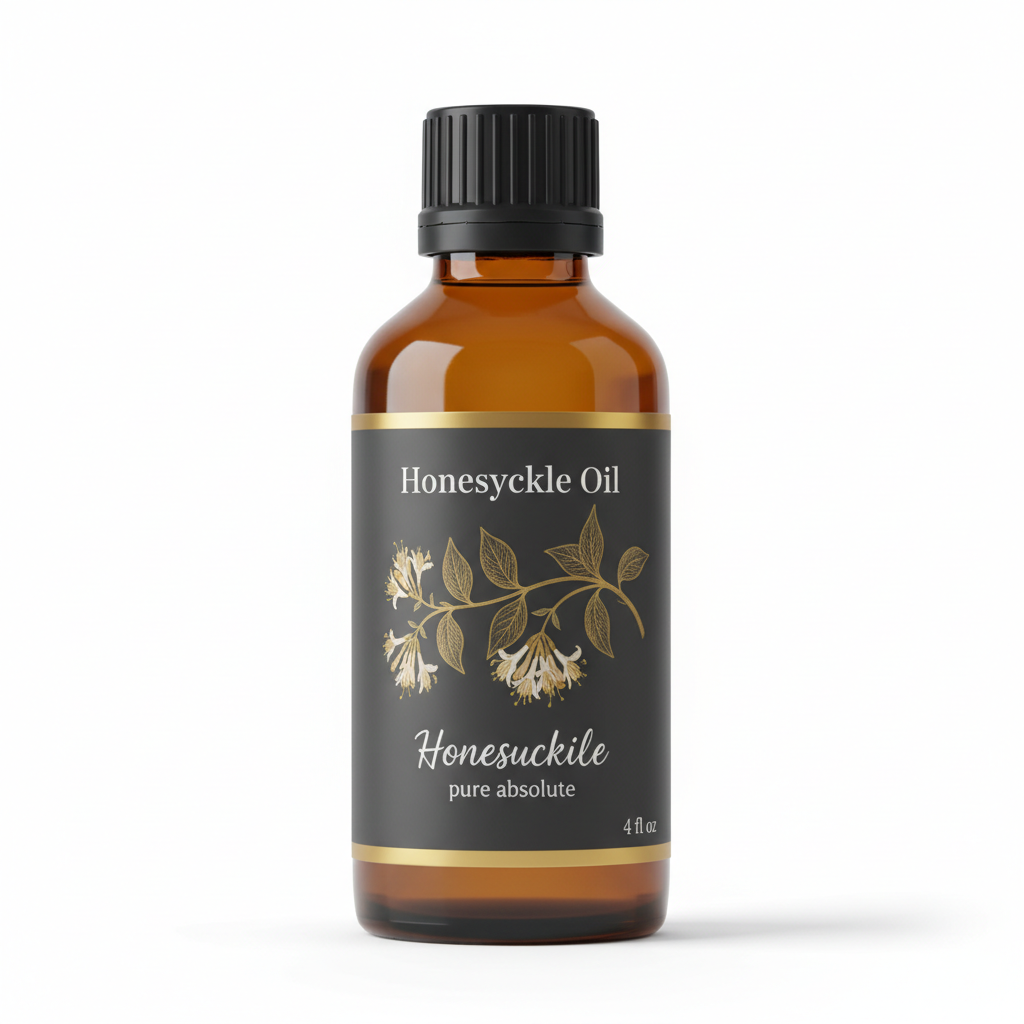
Honeysuckle Absolute
Our own Honeysuckle Absolute, in sizes from 0.5 oz to bulk.
From $13.99
Shop Now →At its center is a pairing that sounds almost contradictory at first. Honeysuckle, bright and intensely floral, alongside frankincense, which is resinous and ancient-feeling. But in practice, the two reach toward each other. The honeysuckle lifts the resin out of its solemnity. The resin gives the honeysuckle somewhere to land. The result is a floral diffuser recipe that feels finished rather than simple, layered rather than obvious.
This guide walks through every detail: the choice of frankincense variety, the measurements, the method, storage notes, and a handful of variations so you can make the blend your own.
Why Frankincense Serrata, Specifically
There are several frankincense species worth knowing, and choosing between them matters more than most blenders realize. For this particular evening diffuser blend, frankincense serrata is the right call, and the reasons are both aromatic and practical.
Frankincense serrata (Boswellia serrata) is native to India, where it has been cultivated and harvested for centuries. Its resin is tapped from the papery-barked trees that grow across the dry forests of Rajasthan and Madhya Pradesh. The resulting oil carries a character distinct from its East African relatives. Where Boswellia carterii reads as bright and citrus-edged, and sacra has a sharp, almost bracing quality, serrata is warmer. It opens with a soft woodiness, settles into something faintly balsamic, and carries just enough earthy depth to read as grounding rather than green.
That warmth is exactly what honeysuckle needs as a partner in a diffuser context. Honeysuckle oil is intensely floral, with a natural sweetness that sits somewhere between jasmine and fresh nectar. Left on its own in a diffuser, it can read as almost candy-like at higher concentrations. Serrata rounds that sweetness without competing with it. The resin adds a quiet base note, giving the blend a sense of dusk rather than midday.
Serrata also tends to diffuse well. Its viscosity is manageable, its throw is moderate and even, and it blends smoothly with floral carriers. For a home diffuser context, those are real advantages.
The Full Blend: Honeysuckle Dusk
What You Will Need
- A clean ultrasonic or nebulizing diffuser
- A small dark glass bottle (5 ml or 10 ml) for pre-blending
- A pipette or dropper insert for each oil
- A label and pen
Ingredients
| Oil | Drops | Approximate Volume (ml) | Role in the Blend |
|---|---|---|---|
| Honeysuckle absolute or CO2 extract | 8 drops | approx. 0.27 ml | Floral heart, sweetness, signature note |
| Frankincense serrata essential oil | 6 drops | approx. 0.20 ml | Warm resinous base, depth, grounding |
| Sandalwood essential oil (Australian or Indian) | 4 drops | approx. 0.13 ml | Creamy bridge between floral and resin |
| Bergamot essential oil (bergapten-free) | 3 drops | approx. 0.10 ml | Bright citrus lift, keeps the blend from feeling heavy |
| Ylang ylang essential oil (extra or complete) | 2 drops | approx. 0.07 ml | Floral richness, links honeysuckle to sandalwood |
Total blend: 23 drops (approx. 0.77 ml)
This quantity is designed for pre-blending into a 5 ml bottle, from which you will add drops directly to your diffuser as needed. You can scale the recipe up by doubling or tripling all measurements to fill a 10 ml bottle.
A Note on Honeysuckle Oil
Honeysuckle does not yield a traditional steam-distilled essential oil. What you will find sold as honeysuckle oil is typically an absolute (solvent-extracted), a CO2 supercritical extract, or a carefully constructed aromatic blend built on natural isolates. For this recipe, an absolute or CO2 extract gives the most authentic floral character. If you are curious about the nuances of working with honeysuckle in aromatic projects, the article on blending with honeysuckle covers sourcing and extraction in detail.
Step-by-Step Instructions
- Prepare your workspace. Wipe down your surface and gather all bottles, your dropper, and your dark glass storage bottle. Work somewhere away from direct sunlight.
- Add the base note first. Drop the frankincense serrata into the empty storage bottle first. Starting with the heaviest note lets the lighter oils layer over it, which tends to produce a more cohesive blend.
- Add the sandalwood. Follow immediately with the sandalwood drops. Give the bottle a gentle swirl (do not shake).
- Add the honeysuckle. This is your star ingredient. Drop it slowly, counting carefully, as honeysuckle extracts can be thick and the drop size sometimes varies.
- Add the ylang ylang. Two drops only. Ylang ylang is potent and easy to over-pour. Use a fine-tipped dropper for precision.
- Add the bergamot last. The bergamot brightens the whole composition and helps the blend feel cohesive when diffused. Its volatility carries the top of the blend into the air quickly.
- Cap and rest. Seal the bottle, label it with the blend name and date, and let it rest for 24 to 48 hours before first use. Resting allows the molecules to integrate, and the blend often smells notably more rounded after this period.
- To diffuse: Add 5 to 8 drops of the pre-made blend to your diffuser's water reservoir (for ultrasonic models) or per the manufacturer's recommendation for your specific device. Run for 30 to 60 minutes per session.
Dilution Ratios and Safety Notes
This blend is formulated for diffuser use only. It is not a topical product in this form, and the measurements above are not calibrated for skin application.
If you wish to adapt this blend for skin-safe topical use (such as a rollerball or body oil), a separate dilution calculation is required. For a leave-on product, a 1 to 2% dilution in a carrier oil is a standard starting point for most adults. That means roughly 6 to 12 drops of essential oil blend per 30 ml of carrier. For a detailed topical recipe built around honeysuckle, the honeysuckle rollerball recipe guide has step-by-step instructions.
Ylang ylang is a known sensitizer at higher concentrations. The two-drop maximum in this recipe keeps it well within safe aromatic use levels for diffusion in a ventilated space. If you or anyone in your household has a known sensitivity to floral extracts, reduce the ylang ylang to one drop or omit it.
Bergapten-free bergamot is specified because standard bergamot contains furocoumarin compounds that can cause photosensitivity on skin. For a diffuser-only blend this is largely a moot point, but the habit of using bergapten-free bergamot is a good one to build.
Ventilation matters. Always diffuse in a room with some airflow. Avoid running any diffuser continuously for more than 60 minutes without a break. Pets, particularly cats and birds, can be sensitive to diffused essential oils; diffuse in spaces they do not occupy, and keep the room well-ventilated if they are present.
Pregnancy and nursing: Some essential oils are not recommended during pregnancy. Consult a qualified healthcare provider before using this or any aromatic blend if you are pregnant, nursing, or managing any health concern.
Storage and Shelf Life
Store the pre-blended bottle upright, capped tightly, in a cool and dark location. A drawer, a cabinet, or a dedicated aromatics box away from heat sources all work well.
Expected shelf life is determined by the least stable ingredient in the blend. Bergamot is the most volatile and oxidizes fastest. Properly stored, this blend should remain at its aromatic best for 12 to 18 months. The frankincense serrata and sandalwood are quite stable and can last considerably longer on their own, but bergamot begins to shift after the 18-month mark. Label your bottle with the blending date so you can track freshness.
If the blend begins to smell flat, sharp, or noticeably different from when freshly made, it is time to blend a new batch rather than continue using the oxidized version.
Variations
Variation 1: Honeysuckle Dusk, Greener
For a slightly more outdoorsy, botanical character, swap the sandalwood for 4 drops of cedarwood (Virginian or Atlas) and add 2 drops of petitgrain in place of one of the bergamot drops. This version reads like honeysuckle climbing over a cedar fence at the end of summer. The floral note stays at the center but the base reads drier and more woody.
Variation 2: Honeysuckle Dusk, Deeper
For a richer, more resinous evening profile, increase the frankincense serrata to 9 drops and add 2 drops of labdanum absolute (or cistus essential oil) in place of the ylang ylang. Labdanum has an almost leathery, amber-like quality that deepens the dusk feeling considerably. Reduce the honeysuckle to 6 drops to keep the floral note from competing with the heavier resinous base. This variation suits cooler evenings particularly well.
Variation 3: Honeysuckle Dusk, Lighter
If the full blend feels a little rich for your taste, or if you want a daytime-appropriate version, simplify it. Use 8 drops of honeysuckle, 4 drops of frankincense serrata, 4 drops of bergamot, and skip the sandalwood and ylang ylang entirely. The result is a cleaner, more transparent floral with a quiet resinous background. It suits spring evenings more than deep summer nights, and it diffuses beautifully without ever feeling heavy.
Building Your Own Variations
Once you have made the base recipe a few times, you will develop an intuition for where to push it. The core principle is balance: honeysuckle wants a base note strong enough to anchor it, and a top note light enough not to compete. Frankincense serrata occupies the middle of that equation in a way few other resins do.
If you are interested in how honeysuckle behaves as a solo aromatic rather than as part of a blend, the honeysuckle soliflore case study is a useful companion read. Understanding what honeysuckle smells like stripped of supporting notes makes you a sharper blender when you add them back in.
The Honeysuckle Dusk blend is designed to be lived with, not just sniffed once and set aside. Diffuse it on an ordinary Tuesday. Let it become part of what your evenings smell like. That is the quiet point of a floral diffuser recipe built this carefully: not one dramatic occasion, but a hundred small, pleasant ones.