Blending With Honeysuckle: The Ultimate Floral Perfumery Guide
What Makes Honeysuckle Unique in Perfumery
Honeysuckle has a strange kind of magic in the fragrance world. It is instantly recognizable yet oddly difficult to pin down. Ask someone to describe it and they will reach for words like "warm," "sweet," "clean," and "a little bit like honey," but those words only gesture at the full picture. The complete scent is richer, more layered, and more structurally interesting than most casual wearers realize.
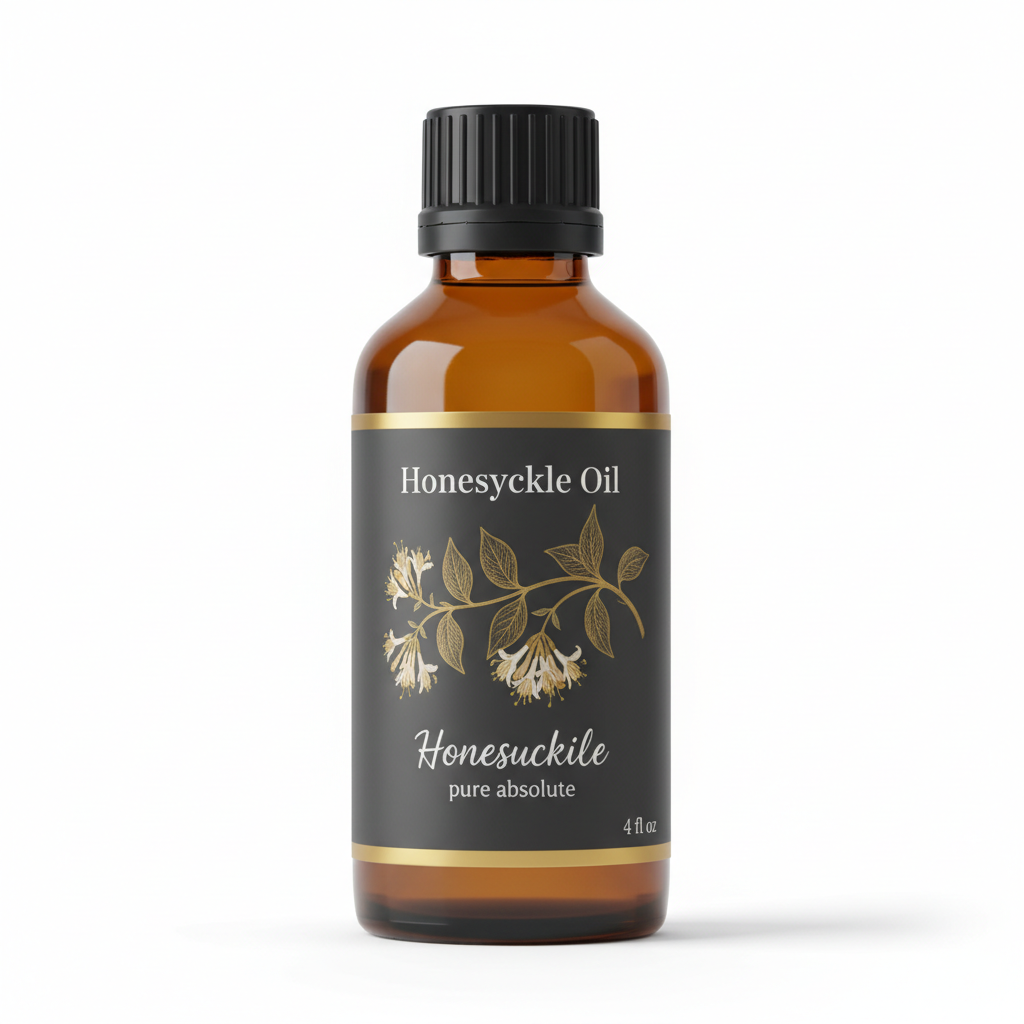
Honeysuckle Absolute
Our own Honeysuckle Absolute, in sizes from 0.5 oz to bulk.
From $13.99
Shop Now →For perfumers, that complexity is the whole point. Honeysuckle sits at a crossroads. It belongs unmistakably to the white floral family alongside jasmine, tuberose, and gardenia, but it carries facets that those flowers do not. There is a green quality to it, almost like freshly cut stems. There is a mild fruitiness, vaguely reminiscent of ripe peach or apricot. And there is an underlying warmth that reads as neither resinous nor musky in the conventional sense. It is simply honeyed.
That combination of softness and complexity explains why honeysuckle perfumery has grown so steadily among both professional formulators and home blenders. It is a flower that plays well with others. It can anchor a floral bouquet, brighten a woody base, add warmth to a cold citrus opening, or provide the sweet counterpoint to sharper green notes. Few raw materials offer that range.
This guide is designed to give you a genuinely thorough working knowledge of honeysuckle as a perfumery ingredient. You will find material selection guidance, olfactive analysis, detailed blending partner profiles, practical technique, dilution and safety information, seasonal formatting advice, and a walkthrough for building your first complete honeysuckle accord from scratch. Whether you are approaching your first fragrance blend or refining a formula you have been working on for months, there is something here for you.
Understanding Your Material: Absolute, CO2, and Fragrance Oil
Before you can blend effectively with honeysuckle, you need to understand what you are actually working with. This is not a trivial distinction. The material you choose shapes every decision that follows: how you dilute, how the scent evolves on skin, how it interacts with other ingredients, and what finished formats it suits best.
Honeysuckle Absolute
True honeysuckle absolute is extracted from the flowers of Lonicera caprifolium or related species using solvent extraction followed by alcohol washing. The resulting material is a concentrated, highly aromatic substance that captures the full olfactive richness of the living flower. Genuine honeysuckle absolute is not widely available at consumer scale, partly because the yield from the delicate blooms is very low, which drives the cost up considerably.
When you do find it, the absolute is typically a viscous liquid ranging from pale yellow to amber. It smells intensely floral with that characteristic honeyed depth, green freshness, and faint fruitiness. Because it is a natural extract containing many dozens of volatile compounds, it behaves with real complexity on skin: opening one way, shifting through a middle phase, and leaving a soft dry-down that synthetic versions rarely match.
Working with genuine floral absolute blending requires some adjustments to your process. Absolutes are highly concentrated and should be handled in very small quantities. They can be slow to dissolve in carrier oils and may need gentle warming (never above 35°C) to become workable. They are also susceptible to oxidation and should be stored in small, full, dark glass bottles away from heat.
CO2 Extracts
Supercritical CO2 extraction produces a material that is in some ways even closer to the living flower than a traditional absolute, because the lower temperatures involved preserve volatile compounds that solvent extraction can damage. CO2-extracted honeysuckle is rare but occasionally available from specialist suppliers. It tends to be lighter in color and somewhat fresher in character than the solvent-extracted absolute, with the green and fruity facets more prominent.
Honeysuckle Fragrance Oil and Perfume Oil
The majority of honeysuckle oil blends that home perfumers work with are built on either a synthetic aroma chemical reconstruction or a blended fragrance oil combining naturals and synthetics. This is not a compromise. A well-crafted honeysuckle perfume oil or fragrance oil can be beautifully accurate, highly stable, and far more accessible than a pure absolute.
The key is sourcing carefully. Look for fragrance oils that are IFRA-compliant, clearly labeled for cosmetic use, and supplied with a full safety data sheet. Some honeysuckle fragrance oils lean heavily sweet and candied. Others capture the green, dewy quality of the actual flower much more faithfully. Smelling a few options side by side will tell you more than any description.
For most of the blending guidance in this article, the techniques apply equally whether you are working with a natural absolute or a quality honeysuckle fragrance oil. Where there are meaningful differences, those are noted specifically.
The Scent Anatomy of Honeysuckle: Notes, Facets, and Olfactive Family
Good blending starts with good smelling. Before you reach for other ingredients, spend serious time with your honeysuckle material alone. Smell it on a strip. Smell it on your skin. Smell it again an hour later. Take notes. What you discover in that process will guide every blending decision you make.
The Note Structure
In classical perfumery, honeysuckle typically reads as a heart note, which is to say it reveals itself most fully in the middle phase of a fragrance after the top notes have burned off. That said, some honeysuckle materials (particularly lighter fragrance oils) have enough volatility to register in the opening as well. The dry-down on most well-made honeysuckle preparations leaves a soft, slightly powdery sweetness that bridges naturally to base notes.
The Olfactive Facets
Breaking honeysuckle down into its distinct olfactive facets helps you choose blending partners with precision. Here are the primary facets you will encounter:
- Floral core: A warm, full, distinctly feminine floral character that places it squarely in the white floral family. It is softer and less indolic than jasmine, less narcotic than tuberose, less powdery than gardenia.
- Honeyed sweetness: Not sugary in the way that synthetic vanillin reads as sweet. This is a natural, slightly raw sweetness with depth, reminiscent of raw honey or honeycomb.
- Green freshness: A clean, slightly herbaceous quality in the opening that references the stems and leaves of the plant as much as the flowers. This is what keeps honeysuckle from reading as cloying.
- Fruity undertone: A mild, ripe stone-fruit quality. Peach and apricot are the most common references. It is subtle but important: it is what gives honeysuckle its characteristic warmth.
- Creamy softness: In the dry-down especially, there is a soft, almost buttery quality. This is the facet that makes honeysuckle blend so naturally with musky and lactic materials.
Olfactive Family Placement
Honeysuckle belongs to the white floral family, but it has meaningful overlap with the floral fruity and green floral categories. This dual citizenship is one of its greatest blending assets. A honeysuckle accord can be steered decisively toward any of these families depending on which blending partners you choose to amplify which facets.
Amplify the honeyed and fruity facets with peach, mango, or lychee notes, and you move into floral fruity territory. Amplify the green freshness with violet leaf, galbanum, or hedione, and you land in green floral. Let the creamy softness dominate with musks and sandalwood, and you have a soft floral oriental. This range is unusual and worth understanding clearly before you start building formulas.
Best Blending Partners for Honeysuckle Oil Blends
Honeysuckle is genuinely promiscuous as a fragrance ingredient in the best possible sense. It has natural affinity with a wide range of materials across multiple olfactive families. The partners below are organized by category, with notes on what each pairing achieves and how to approach the proportions.
For an even deeper exploration of specific pairings, our dedicated article on what blends well with honeysuckle covers twelve standout combinations in detail.
White Florals
Honeysuckle's closest olfactive relatives are its fellow white florals, and layering within this family creates lush, complex floral hearts.
- Jasmine: The classic pairing. Jasmine brings indolic richness and depth that honeysuckle lacks on its own. Together they create a full-bodied white floral accord that is simultaneously warm and radiant. The key is balance: jasmine can easily overpower honeysuckle, so consider starting with a 1:3 ratio (jasmine to honeysuckle) and adjusting from there. For a dedicated exploration of this combination, see our guide to blending honeysuckle and jasmine.
- Neroli: Orange blossom brings a citrusy brightness and a faint bitterness that cuts through honeysuckle's sweetness beautifully. The result is a more sophisticated, less predictably sweet floral than either ingredient alone.
- Ylang ylang: Rich and slightly rubbery in isolation, ylang ylang is transformed by honeysuckle into something creamy and tropical. Use it sparingly. A small percentage of ylang ylang goes a very long way.
- Magnolia: Brings a lemony, slightly soapy freshness that lifts honeysuckle without competing with its core character. A very natural-smelling combination.
Citrus Top Notes
Honeysuckle has no top notes to speak of in most preparations. Citrus materials solve that problem immediately and naturally.
- Bergamot: The most elegant citrus partner for honeysuckle. Its tea-like, slightly lavender-edged quality bridges into the floral heart without a jarring transition.
- Yuzu: Fresher and more assertively citrusy than bergamot. Creates a bright, summery opening that works particularly well in lighter eau de cologne-style concentrations.
- Grapefruit: Brings a dry, slightly bitter freshness that counteracts any cloying tendency in sweeter honeysuckle materials. Good for masculine-leaning formulas.
- Lemon: Clean and direct. Pairs well when you want the honeysuckle to read as fresh and light rather than warm and romantic.
Green and Herbal Notes
These partners amplify the green facet of honeysuckle, pulling the fragrance toward a dewy, garden-fresh character.
- Violet leaf absolute: Perhaps the most refined green note available. It brings a watery, almost aquatic freshness that makes a honeysuckle blend smell genuinely like flowers still on the vine, damp with morning dew.
- Tomato leaf: Unusual and polarizing but remarkably effective in small amounts. The sharp, almost metallic green of tomato leaf makes honeysuckle smell startlingly alive and garden-real.
- Basil: A light herbal partner that keeps the blend from becoming too sweet. Better in summer formulations and lighter concentrations.
- Galbanum: A classic perfumery green material with a resinous edge. In very small amounts it adds depth and a faint piney quality that anchors airy honeysuckle blends.
Musks and Soft Base Notes
Honeysuckle needs a base to rest on, and its creamy dry-down facet pairs beautifully with soft, skin-like musks.
- White musk: The natural partner for any white floral. Clean, soft, and slightly powdery, it extends the honeysuckle dry-down without adding distracting complexity. Many beautiful, simple honeysuckle perfume oil formulas are little more than honeysuckle plus white musk with a citrus opener.
- Ambrette seed: A natural musky material with a subtle radiance. Warmer and slightly more interesting than synthetic white musks, with a faint nutty quality that complements honeysuckle's fruity facet.
- Cashmeran: A woody, slightly spicy musk that gives honeysuckle blends a velvety warmth in the dry-down. Use in small amounts to avoid overwhelming the floral.
Light Woods
- Sandalwood: Creamy, smooth, and complementary to honeysuckle's own creamy dry-down facet. Australian sandalwood is slightly drier than Indian and often blends more cleanly with florals.
- Cedarwood: Adds a dry, slightly pencil-shaving quality that grounds the sweetness of honeysuckle without competing with the floral. Atlas cedarwood and Virginia cedarwood have distinctly different characters: Atlas is more powdery and warm; Virginia is drier and more resinous.
- Amyris: A softer, more diffusive wood with a mild sweetness that reinforces rather than counters honeysuckle. Good for body oil applications where skin-warmth is a factor.
Fruity Notes
- Peach: Amplifies the stone-fruit facet already present in honeysuckle. The result is lush and clearly summer-oriented. Easy to overdo. Keep the peach note restrained.
- Lychee: Brings a translucent, slightly floral fruitiness that layers with honeysuckle in a way that feels almost seamless. Both materials share a rosy quality that makes the combination very cohesive.
- Pear: Fresher and less tropical than peach or lychee. Creates a lighter, more youthful character in the blend.
Floral Absolute Blending Techniques for Honeysuckle
Understanding which ingredients work together is only half the skill. The technique you use to combine them determines whether the result is cohesive and beautiful or muddled and confusing. The following techniques apply specifically to honeysuckle perfumery, though most are general principles of floral absolute blending that you can carry into other work.
Work in Dilution, Not at Full Strength
This is the most important technical principle for honeysuckle blending. Honeysuckle materials, particularly absolutes and concentrated fragrance oils, smell quite different at full strength than they do at working dilution. At full concentration they can seem overwhelming, slightly chemical, or even unpleasant. Diluted to 10% in a carrier oil or perfumer's alcohol, the true character emerges with clarity and elegance.
Always prepare 10% dilutions of each of your raw materials before you begin blending. This means 10 drops of your honeysuckle material topped up to 100 drops total with your carrier. Blend these dilutions together, not the undiluted materials. Your formulas will be more accurate and your evaluations will be far more reliable.
Build in Stages: Accord First, Fragrance Second
Professional perfumers typically build accords (small sub-formulas that capture a specific olfactive effect) before assembling those accords into a full fragrance. Applied to honeysuckle perfumery, this means building your floral heart first, then adding top notes and base notes separately, and finally integrating the three phases.
A simple honeysuckle floral accord might contain just three or four materials: honeysuckle, one complementary floral, and a musk. Get that core combination right before you add anything else. Adding complexity too early makes it nearly impossible to understand what is contributing what to the overall scent.
The 80/10/10 Rule for Simple Floral Blends
A useful starting point for honeysuckle-forward formulas is to let honeysuckle occupy roughly 80% of the floral heart, with one supporting floral at around 10% and an accent material (green note, fruity note, or a different floral) at the remaining 10%. This gives you a blend that is clearly honeysuckle-led while adding depth and dimension that a single-material formula cannot achieve.
These proportions are a starting point, not a fixed rule. Some blends benefit from honeysuckle at 60% with a more assertive supporting character. Others work best at 90% honeysuckle with just a whisper of a complementary material. Evaluate and adjust.
Allow Maturation Time
Fragrance blends change significantly in the days and weeks after they are first assembled. This is especially true when working with natural absolutes and complex fragrance oils, where the many chemical components take time to interact and integrate. A blend that smells harsh or disjointed on day one may be genuinely beautiful by day seven.
After assembling a blend, seal it tightly, store it in a cool dark place, and resist the urge to evaluate it for at least 48 hours. For blends containing absolutes, two weeks of maturation is not excessive. Smell it periodically on a strip (not in the bottle) and note how it evolves. This patience is one of the most underrated skills in perfumery.
Evaluate on Skin, Not Just on Strip
Scent strips are excellent for initial evaluation of raw materials and for doing quick comparative tests. But fragrance comes alive on skin. The warmth and chemistry of your skin will change how a honeysuckle blend opens, evolves, and dries down in ways that a paper strip cannot replicate.
When you are refining a formula, always do a final evaluation on your inner wrist. Apply a small amount, wait twenty minutes, and assess the full evolution over the next two hours. Keep a notebook and record what you observe at each phase.
Iterate in Small Batches
Do not scale up a formula until you are genuinely satisfied with a small test batch. Work in quantities of 5 to 10 grams at the blending stage. This conserves your materials, allows faster iteration, and prevents the frustration of having produced a large quantity of something you want to reformulate.
When you do adjust a formula, change one variable at a time. Adjust a single material's percentage, or swap out a single ingredient for an alternative. Changing multiple things simultaneously makes it impossible to understand what caused any improvement or deterioration in the result.
Dilution Ratios, Carriers, and Safety Essentials
Fragrance blending carries real safety responsibilities, and honeysuckle materials are not exempt from these. Whether you are creating a personal perfume oil, a body oil, or a rollerball blend, following proper dilution guidelines protects your skin and the skin of anyone who wears your finished products.
| Product Format | Fragrance Concentration | Notes |
|---|---|---|
| Perfume oil (neat application) | 15 to 25% | In a skin-safe carrier such as fractionated coconut or jojoba |
| Rollerball blend | 10 to 20% | Jojoba is a popular carrier for rollerballs due to long shelf life |
| Body oil | 1 to 3% | Used over large body surface areas; low concentration is essential |
| Eau de parfum (alcohol-based) | 15 to 20% | Use perfumer's ethanol; follow IFRA guidelines per material |
| Eau de cologne | 3 to 5% | Light, summery formulas suit this concentration well |
| Cuticle oil / nail ritual | 0.5 to 1% | Highly concentrated use-site; keep fragrance levels very low |
Choosing a Carrier Oil
The carrier oil you choose affects scent longevity, skin feel, shelf life, and how the fragrance projects. Here is a brief comparison of the most common options for honeysuckle blends:
- Jojoba: Technically a wax ester rather than an oil, which gives it an exceptionally long shelf life and a very neutral scent. It is the default choice for rollerballs and perfume oils because it will not go rancid and compete with your fragrance.
- Fractionated coconut oil: Lightweight, fast-absorbing, nearly odorless. A good carrier for body-wear applications where you want the fragrance to be the focus.
- Sweet almond oil: Slightly richer in texture with a faint, pleasant nutty scent. The scent is subtle enough not to interfere with most honeysuckle blends, and it adds a skin-softening quality.
- Squalane: A skin-identical oil derived from olives (or sugarcane). Extremely stable, very lightweight, and neutral in scent. A premium choice for high-quality perfume oils.
- Argan oil: Has its own mild characteristic scent that can interfere with delicate florals. Best reserved for applications where the skin-care properties of the carrier are as important as the fragrance.
For a complete guide to making a silky, beautifully scented body application with honeysuckle, see our article on making a honeysuckle body oil.
Safety Protocols: Non-Negotiable
Before using any new fragrance blend on your skin: Always perform a patch test. Apply a small amount of the diluted blend to your inner forearm and wait 24 hours. If you notice any redness, irritation, or discomfort, discontinue use. Consult a qualified healthcare provider with any concerns. Never apply undiluted fragrance materials directly to skin. Keep all fragrance blends away from eyes, mucous membranes, and broken skin. Citrus-containing blends may increase photosensitivity. Avoid sun exposure on areas where you have applied any blend containing citrus or bergamot.
IFRA (the International Fragrance Association) publishes usage guidelines for fragrance materials in different product categories. If you are working with individual aroma chemicals or naturals, cross-referencing the IFRA standards for your specific materials is an important step. Most reputable suppliers include this information on their product pages or safety data sheets.
For a fully safety-annotated rollerball formula, our DIY honeysuckle perfume oil rollerball recipe is a good starting point. And if you are interested in a delicate, low-concentration use application, our honeysuckle cuticle oil and nail ritual covers everything you need to know for that format specifically.
Seasonal Styling and Format Considerations
Honeysuckle is a summer flower in the wild, and it reads that way in fragrance. But the way you style and format a honeysuckle blend can shift its seasonal personality considerably. Understanding this gives you more creative control over how your finished fragrance feels to the wearer.
Summer Formulas
The most natural territory for honeysuckle perfumery is warm-weather wear. Light, radiant, and slightly dewy formulas suit this context perfectly. For summer, lean into the green and citrus facets of honeysuckle blends. A structure built around bergamot or yuzu top notes, a honeysuckle and violet leaf heart, and a clean white musk base will feel genuinely of the season: warm evenings, open gardens, the scent of flowers still holding the heat of the day.
Lower concentrations suit warm weather, both because scent projects more readily in heat and because skin perspiration interacts with fragrance in ways that intensify certain notes. An eau de cologne or light eau de toilette concentration is often more wearable in summer than a heavy perfume oil.
For a full collection of ideas for warm-weather honeysuckle formulas, visit our guide to honeysuckle for summer evenings.
Autumn and Winter Adaptations
Honeysuckle's honeyed and creamy facets make it more adaptable to cooler seasons than you might expect. To winterize a honeysuckle formula, reduce or eliminate the citrus opening and replace it with something warmer: a touch of pink pepper, cardamom, or even a very small amount of clove. Deepen the base with a richer wood note (vetiver in very small amounts, or a warm amberwood aroma chemical) and lean into the musk dry-down more heavily.
At higher concentrations in an eau de parfum format, a winter-adapted honeysuckle formula can be genuinely beautiful: still recognizably floral but warmer, more enveloping, and more complex.
Format Variations
Honeysuckle works across a wider range of formats than most florals. Here is a quick overview:
- Perfume oil and rollerballs: The most intimate format. The oil carrier slows the evaporation of top notes and extends the overall wear time. Honeysuckle performs particularly well in this format because its heart-note character suits the slow, skin-warmed development of an oil-based fragrance.
- Alcohol-based spray: Projects more strongly and opens faster than an oil format. The initial burst of the top notes is more dramatic. Good for social situations where you want an immediate fragrant impression.
- Body oil: At low fragrance concentrations, a honeysuckle body oil creates a soft, all-over floral glow rather than a distinct fragrance statement. Layering a higher-concentration perfume oil over a honeysuckle body oil of the same accord is a classic technique for depth and longevity.
- Hair perfume: The hair holds fragrance differently than skin, retaining more of the top and heart notes and projecting them gently with each movement. A very light honeysuckle blend in an alcohol base makes a lovely hair fragrance, though concentration should be kept low (1 to 3%) and it should never be applied to the scalp directly.
Building Your First Honeysuckle Accord: A Practical Walkthrough
Theory is useful, but there is no substitute for making something. This section walks you through building a complete, wearable honeysuckle perfume oil from scratch, step by step. The formula presented here is a starting template. Every ingredient percentage is intended to be adjusted based on your specific materials and your own preferences after evaluation.
The Formula: Summer Dusk Accord
This formula targets a light, warm-weather wear profile: a bergamot opening, a honeysuckle and magnolia heart, and a sandalwood and white musk dry-down. It is designed as a perfume oil in jojoba carrier at 15% total fragrance concentration.
| Material | Role | % of Total Formula | Drops per 10ml |
|---|---|---|---|
| Bergamot fragrance or EO | Top note | 2% | 4 |
| Honeysuckle fragrance oil | Heart note (lead) | 8% | 16 |
| Magnolia fragrance oil | Heart note (supporting) | 2% | 4 |
| Violet leaf absolute (10% dilution) | Heart accent (green) | 1% | 2 |
| Australian sandalwood | Base note | 1% | 2 |
| White musk fragrance oil | Base note | 1% | 2 |
| Jojoba oil | Carrier | 85% | Fill to 10ml |
Step-by-Step Instructions
- Prepare your workspace. Work in a well-ventilated area. Gather your materials, a clean 10ml amber glass bottle, a dropper or pipette for each material, a small digital scale if you prefer weight measurements, and your blending notebook.
- Add fragrance materials first. Before adding the carrier oil, add all your fragrance drops or measured weights to the bottle. Starting with the largest-volume material (honeysuckle) is practical. Add each ingredient in turn, capping and noting quantities as you go.
- Swirl gently. Once all fragrance materials are added, put the cap on and swirl the bottle gently. Do not shake vigorously. Swirling is sufficient and gentler on the materials.
- Add the jojoba carrier. Fill to your target volume with jojoba oil. Cap tightly and swirl again to combine.
- Initial evaluation. Place one drop on a strip and assess immediately. Note your first impressions. Do not be alarmed if the materials seem a little discordant at this stage: they have not had time to integrate.
- Rest and mature. Store the sealed bottle in a cool, dark location. After 48 hours, evaluate again on a strip. After seven days, evaluate on skin. Take detailed notes each time.
- Adjust if needed. If the magnolia is reading too soapy, reduce it by half. If you want more green freshness, add one more drop of the violet leaf dilution. If the base needs more warmth, consider adding a single drop of cedarwood. Make one adjustment at a time and repeat the maturation wait before evaluating again.
- Patch test before wearing. Before applying the finished blend to pulse points, do a patch test on the inner forearm. Wait 24 hours and assess for any skin response before full use.
Variations on the Template
Once you are comfortable with the Summer Dusk Accord as a base, here are three simple variations to explore:
- Honeysuckle and Jasmine: Replace the magnolia with jasmine fragrance oil and reduce the honeysuckle slightly to 7% with jasmine at 3%. A richer, more classic white floral result. Read more about this specific pairing in our detailed exploration of these two white floral legends.
- Honeysuckle and Peach: Add a 1% peach fragrance note to the formula and reduce the violet leaf to 0.5%. Amplifies the fruity facet of honeysuckle into a clearly summery, sun-warmed character.
- Honeysuckle with a Woody Base: Replace the white musk with a small percentage of cedarwood (0.5%) and amyris (0.5%). The result is warmer and more grounded, with the floral floating more distinctly above the base.
Recording and Refining Your Work
Good perfumery is iterative. The blenders who produce consistently good work are almost always the ones who keep meticulous records. Every formula iteration should be documented with the exact quantities used, the date of blending, and detailed evaluation notes taken at multiple stages. Over time, those records become a personal reference library that speeds up every future blending session.
A simple notebook works fine. Some people prefer a spreadsheet. The format matters less than the habit. Even a few lines of notes per formula, with dated evaluations, will save you from losing formulas that worked and repeating mistakes you have already made.
Going Further
The Summer Dusk Accord introduced here is a deliberately simple, accessible formula. Once you have worked through it a few times and feel confident in the process, the world of honeysuckle perfumery opens up considerably. Multi-layered floral bouquets, honeysuckle-centered chypre structures, light orientals built on a honeyed floral heart: all of these are within reach with the foundational technique you have practiced.
The next steps worth exploring from here include our full article on the twelve best blending partners for honeysuckle, which goes deep on materials we have touched on only briefly in this guide. And for those looking to bring their honeysuckle blending into a specific, beautifully formatted personal ritual, our guides to rollerball perfume oil, cuticle oil and nail ritual, and body oil each offer a fully developed, ready-to-make project built around this remarkable flower.
Honeysuckle is a patient teacher. Spend time with it. Smell it carefully. Let it surprise you.