Honeysuckle and Jasmine: Blending Two White Floral Legends
Some fragrance pairings feel inevitable. Honeysuckle and jasmine share a family resemblance, both are white-flowered, both bloom into warm evening air, and both carry that quality perfumers describe as indolic: a creamy, almost animal richness underneath the sweetness. Put them together and you don't simply get a louder version of either. You get something more coherent, more dimensional, and more arresting than the sum of its parts.
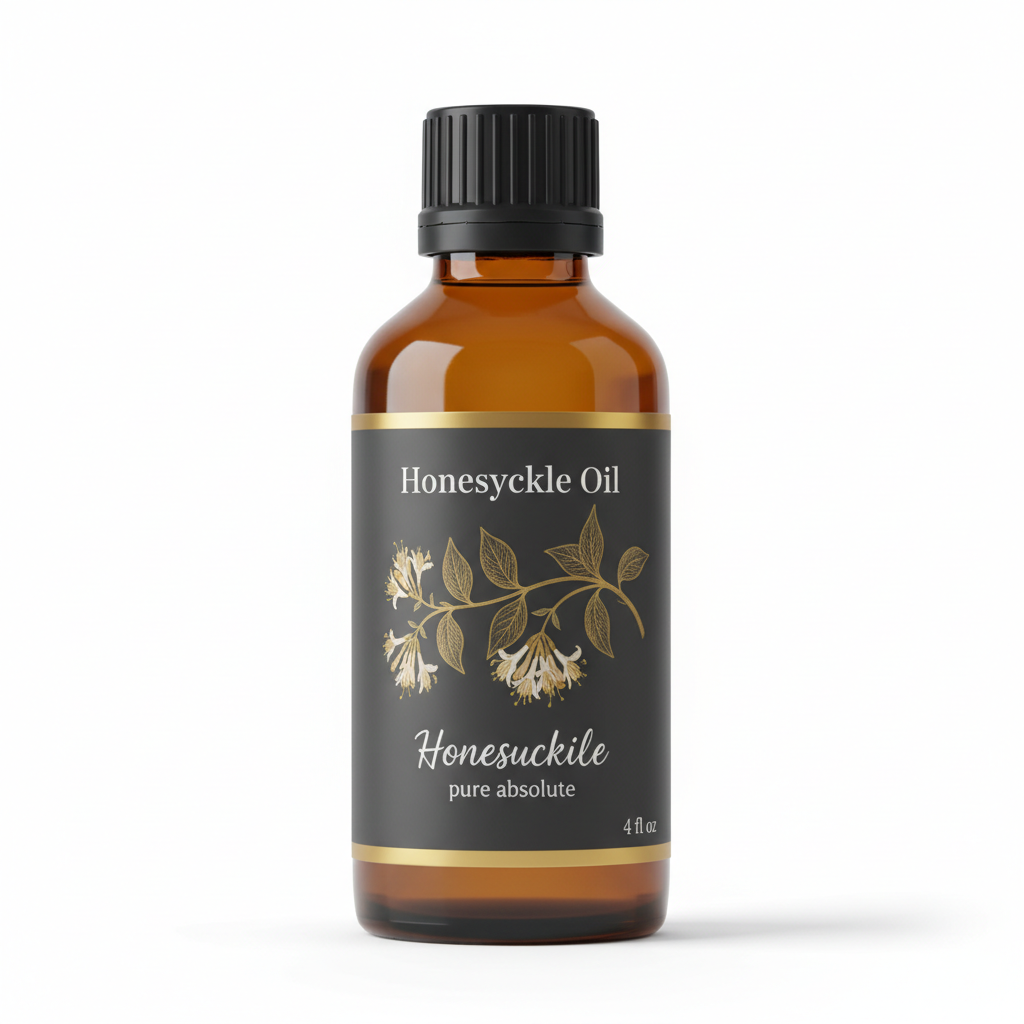
Honeysuckle Absolute
Our own Honeysuckle Absolute, in sizes from 0.5 oz to bulk.
From $13.99
Shop Now →This guide walks through a complete signature blend built around these two white floral legends, with a specific supporting cast chosen to let both stars breathe. At the center of the formula sits one particular frankincense variety that most blenders overlook in favor of its more famous cousins. That choice is deliberate, and worth explaining in detail.
If you're newer to working with honeysuckle in fragrance compositions, the foundational article on blending with honeysuckle is worth reading first. It covers base principles that inform every formula on this site.
The Character of the Pairing
Honeysuckle fragrance oil opens with a green, almost dewy freshness before settling into its signature nectar warmth. Jasmine, particularly in absolute or high-quality fragrance form, leads with a richer, more complex presence: fruity, slightly spiced, deeply floral. The two occupy slightly different registers, which is exactly why they work.
Think of it this way. Honeysuckle is the scent of the flower in the garden, caught on a breeze. Jasmine is the scent of the bloom at your shoulder, intimate and concentrated. Layering a honeysuckle jasmine fragrance oil blend means constructing that experience across time: the first impression of distance and lightness, then a deepening as the jasmine anchors everything in place.
For a fuller picture of what plays well alongside honeysuckle in the floral family and beyond, see 12 partners that work beautifully with honeysuckle.
Why Frankincense Serrata? The Case for an Undersung Variety
Most frankincense conversations default to carterii or sacra. Both are excellent. Serrata, however, has a character that is unusually suited to white floral blending, and it rarely gets the credit it deserves.
Boswellia serrata grows primarily across the Indian subcontinent. Its resin is lighter in color than many African varieties, and the essential oil that results from steam distillation has a softer, more citrus-forward profile. There's a faint spice quality to it, dry and powdery at the edges, without the deep camphoraceous notes that can sometimes overpower a delicate floral blend. In perfumery terms, serrata sits closer to the border between middle and base notes than its heavier relatives.
That positioning matters here. A honeysuckle jasmine oil pairing is already operating in the middle register: both florals have significant presence but neither is especially resinous or woody on its own. Carterii or sacra would anchor the blend, certainly, but they risk pulling focus downward and muddying the floral clarity. Serrata lifts while it grounds. It adds longevity and depth without competing with the florals for attention.
You can explore the full sourcing and aroma profile details for Boswellia serrata essential oil on the product page.
The Signature Blend: Summer Evening White Floral
This formula is designed for use in a personal fragrance roller, a linen spray, or a room diffuser. Measurements are given in drops for small-batch blending and milliliters for larger production. The total formula produces approximately 10 ml of concentrate before dilution.
Ingredients
| Ingredient | Role | Drops (in 10 ml batch) | Milliliters |
|---|---|---|---|
| Honeysuckle fragrance oil | Top/heart floral | 40 drops | 2.0 ml |
| Jasmine absolute or fragrance oil | Heart floral anchor | 30 drops | 1.5 ml |
| Frankincense serrata essential oil | Soft base, fixative character | 20 drops | 1.0 ml |
| Bergamot essential oil (bergapten-free) | Bright citrus bridge | 16 drops | 0.8 ml |
| Sandalwood fragrance oil (or Australian sandalwood EO) | Creamy base, longevity | 12 drops | 0.6 ml |
| Ylang ylang essential oil (extra or complete) | Exotic floral bridge | 6 drops | 0.3 ml |
| Fractionated coconut oil or 96% perfumer's alcohol | Carrier for dilution | To volume | To volume (see below) |
Note on jasmine: If you are using a jasmine absolute, be aware that it is highly concentrated and can be viscous at cooler temperatures. Warm the bottle briefly in your hands before measuring. A jasmine fragrance oil designed for skin-safe use may require slightly different proportions; adjust upward by 5 to 8 drops if the scent feels thin after initial blending.
Step-by-Step Blending Instructions
- Gather your equipment. You will need a small glass beaker or mixing vessel, a dropper or pipette for each ingredient, amber or cobalt glass storage bottles, and a scent strip or coffee beans for olfactory breaks between stages.
- Start with the base note. Add the frankincense serrata to your vessel first. Take a moment to smell it on its own, noting how light and citrus-edged it is compared to other frankincense varieties. This is your foundation.
- Add the sandalwood. Swirl gently (do not shake at this stage). The combination of serrata and sandalwood forms the blend's base structure.
- Add the ylang ylang. Six drops is the working number here; ylang ylang is assertive and can dominate if overused. Add it now so it integrates with the base before the primary florals arrive.
- Add the bergamot. This is the citrus bridge that will connect the deep base to the floral heart. Bergapten-free bergamot is strongly preferred for anything applied to skin, as it avoids photosensitivity concerns.
- Add the jasmine. This is the moment the blend begins to reveal itself. Smell the vessel after swirling. You should detect a rich, complex middle layer emerging from the base structure.
- Add the honeysuckle fragrance oil last. The honeysuckle lifts the entire composition, softening the jasmine's intensity and adding the characteristic green-nectar freshness of the white floral blend. Swirl gently and allow the blend to rest for 5 minutes before evaluating.
- Rest the concentrate. Cap the vessel and allow the undiluted concentrate to rest for at least 24 hours. Ideally, rest it for 48 to 72 hours. The serrata and sandalwood need time to marry with the florals, and the ylang ylang will mellow considerably during this period.
- Dilute to your intended use ratio. See the dilution section below.
Dilution Ratios and Safety Notes
The concentrate above is not intended to be used undiluted on skin. Proper dilution is essential for both safety and fragrance performance.
Recommended Dilution Ratios
- Personal fragrance roller (skin application): Dilute the concentrate to 3% in fractionated coconut oil. For a 10 ml roller bottle, this means approximately 6 drops of concentrate per 10 ml of carrier oil. This is a standard dilution for most adults; sensitive skin may prefer 1 to 2%.
- Linen or room spray (alcohol-based): Dilute to 5 to 8% in 96% perfumer's alcohol or high-proof ethanol. Do not use rubbing alcohol; it will affect the scent. For a 100 ml spray bottle, use approximately 5 to 8 ml of concentrate.
- Diffuser blend: Add 4 to 6 drops of concentrate per 100 ml of water in your diffuser. The fragrance oil components mean this is best suited to ultrasonic diffusers rather than heat-based ones, which can alter the top notes.
Patch Testing
Before applying any diluted blend to a larger area of skin, always perform a patch test. Apply a small amount of the diluted blend to the inside of your elbow or wrist. Wait 24 hours and monitor for any redness, itching, or irritation. If any reaction occurs, discontinue use immediately. Consult a qualified healthcare provider with any concerns.
Additional Safety Considerations
- Ylang ylang essential oil can cause sensitivity reactions in some individuals, even at low dilutions. If you have a known sensitivity, reduce to 3 drops or omit and increase the jasmine proportion slightly.
- Bergamot, even in bergapten-free form, should be kept away from eyes and mucous membranes.
- This blend is not formulated for use on children, during pregnancy, or while nursing without prior consultation with a qualified healthcare provider.
- Keep all essential oils and blends out of reach of children and pets.
Storage and Shelf Life
Store your finished concentrate and any diluted versions in amber or cobalt glass bottles with tight-fitting caps or roller stoppers. Keep bottles away from direct sunlight and heat sources. A cool, dark drawer or cabinet is ideal.
The undiluted concentrate, properly stored, should retain its aromatic quality for 12 to 18 months. The serrata and sandalwood base components are relatively stable; jasmine absolute is the most perishable element in the formula. If the blend begins to smell flat or slightly sour at the top, the jasmine component has likely begun to oxidize.
Alcohol-based sprays tend to have a shorter perceptible fragrance life after opening (approximately 6 to 9 months at optimal quality) compared to oil-based rollers. Label all bottles with the blend date so you can track freshness accurately.
Variations to Explore
Variation 1: Green and Dewy (Lighter, Daytime)
Reduce the jasmine by 10 drops and replace with violet leaf absolute (5 drops) and a light green tea fragrance oil (5 drops). Keep all other proportions the same. The result is a honeysuckle jasmine fragrance oil experience that leans fresher and more spring-like, less evening and more mid-morning. The serrata's dry citrus quality becomes more prominent in this version.
Variation 2: Warm and Resinous (Deeper, Eveningwear)
Add 8 drops of benzoin resinoid to the base stage (alongside the serrata and sandalwood). Reduce bergamot to 8 drops. The benzoin introduces a vanilla-adjacent warmth that brings the entire white floral blend closer to something you'd reach for on cooler evenings. This variation has excellent longevity on the skin.
Variation 3: Citrus-Forward Summer Diffuser Blend
For diffuser use only (not for skin application without reformulation), try doubling the bergamot to 32 drops, adding 10 drops of lemon essential oil, and reducing the sandalwood to 6 drops. This version emphasizes the bright, sunlit quality of the honeysuckle jasmine oil pairing and works beautifully in a room diffuser during warm afternoons. See the companion article on warm-weather fragrance ideas for more inspiration in this direction.
A Note on Sourcing Quality
The quality of your honeysuckle jasmine oil experience depends almost entirely on the sourcing decisions you make before blending begins. Honeysuckle, because it does not yield an essential oil through standard distillation (the flowers are too delicate), is almost always a fragrance oil or an enfleurage-derived product. That is not a compromise; a well-crafted honeysuckle fragrance oil can be extraordinarily close to the living flower. What to look for: a green top note that is distinct from the sweet nectar heart, and a dry-down that doesn't skew synthetic or sharp.
Jasmine absolute, when budget allows, will reward you with a complexity that synthetic jasmine fragrances can approach but rarely quite match. The natural absolute has a warmth and slight fermented quality that shifts beautifully as it dries on the skin.
For serrata specifically, seek out a supplier who provides GC/MS testing data and discloses the geographic origin of their resin. Indian serrata from sustainable harvest operations has become more traceable in recent years, and that traceability is worth seeking out both for quality assurance and for supporting responsible sourcing practices.
This white floral blend is one of the more rewarding fragrance projects you can undertake with honeysuckle as the lead note. It asks for patience during the resting period and attention to proportion during assembly, but the finished result is a composition that genuinely earns its complexity.