What Blends Well With Honeysuckle? 12 Partners for the Absolute
Honeysuckle absolute has a way of making other ingredients shine. Its scent profile sits in an interesting middle ground: sweetly floral without being powdery, lightly fruited without reading as candy, and just warm enough to anchor lighter top notes without stealing the show. That versatility is exactly why perfumers and home blenders return to it again and again.
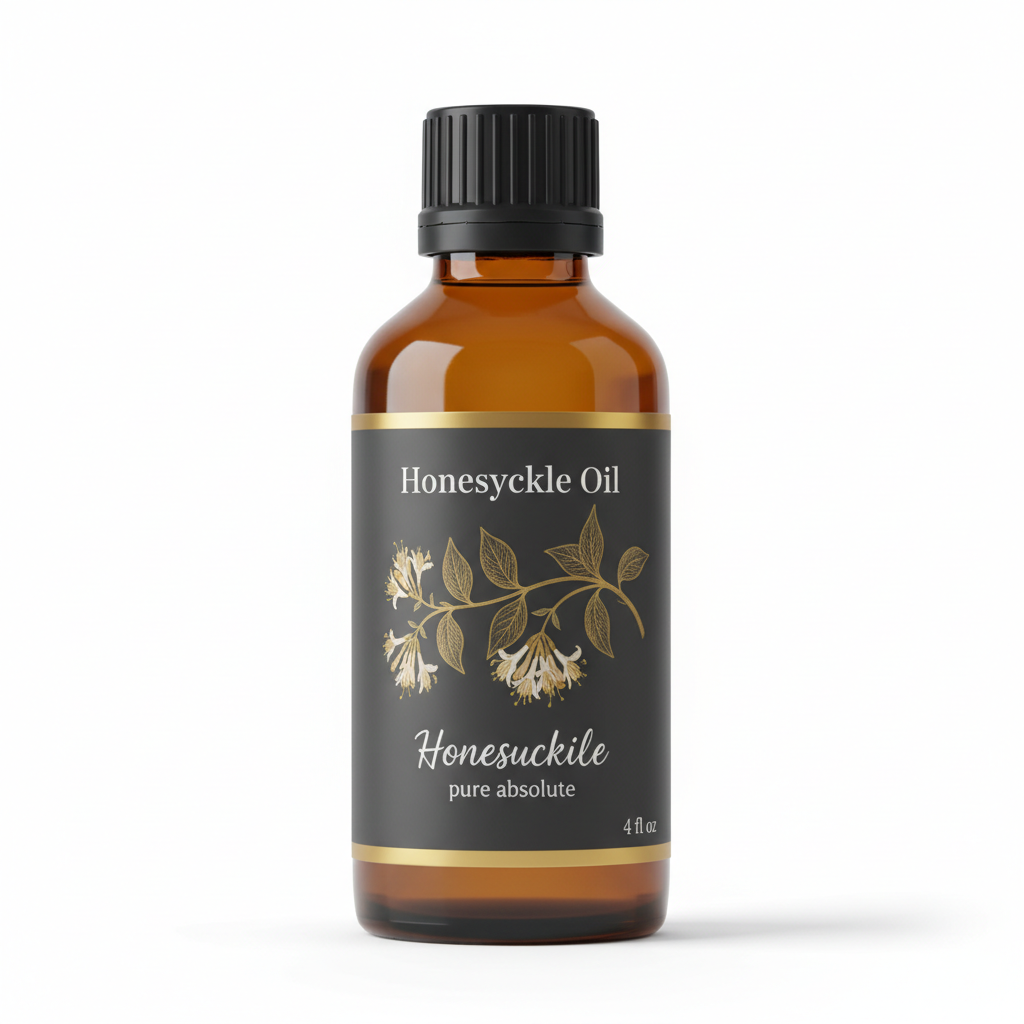
Honeysuckle Absolute
Our own Honeysuckle Absolute, in sizes from 0.5 oz to bulk.
From $13.99
Shop Now →If you are working with honeysuckle in candles, room sprays, personal fragrance blends, or body care formulations, knowing which partners will complement its character makes all the difference between a blend that smells muddy and one that feels genuinely composed. The following 12 pairings cover a wide range of fragrance families, so you can find the direction that suits your project. For a deeper dive into the craft side of working with this ingredient, see our guide on blending with honeysuckle: the ultimate floral perfumery.
A Quick Note Before You Blend
Honeysuckle is almost always available as an absolute (a solvent-extracted concentrate) rather than a steam-distilled essential oil. Absolutes are highly concentrated. For leave-on skin applications such as perfume balms or body oils, a dilution of 1 to 2 percent in a carrier oil is a reasonable starting point for most adults. Always perform a patch test on a small area of inner arm skin before broader use, and discontinue use if any sensitivity develops. Individuals who are pregnant, nursing, or have known fragrance sensitivities should consult a qualified healthcare provider before using concentrated floral absolutes.
-
1. Jasmine Absolute
Jasmine and honeysuckle are the two great white-flower romantics of the perfumer's palette, and they have a natural affinity that goes beyond superficial similarity. Where jasmine brings a rich, slightly indolic depth, honeysuckle contributes a cleaner, more transparent sweetness. Together, they create a white floral accord that feels layered rather than flat.
The ratio matters here. If you use equal parts, jasmine will typically dominate because of its stronger sillage. Try starting with a 3:1 honeysuckle-to-jasmine ratio and adjust from there. The result reads as a luminous, summer-evening floral with genuine complexity.
Practical takeaway: Use this pairing as the heart of a personal fragrance blend or a luxury soy candle. Keep the combined floral load under 15 percent of your total formula to avoid a headache-inducing sweetness.
-
2. Ylang Ylang
Ylang ylang is polarizing on its own. Its banana-custard facets can overwhelm a blend in seconds if overdosed. Honeysuckle has a quiet moderating effect on ylang ylang, softening those rubbery, almost medicinal high notes and drawing out the genuinely beautiful creamy floral underneath.
This pairing has a distinctly tropical warmth that suits diffuser blends and warm-weather body oils. Some blenders describe the combination as reminiscent of a garden at dusk near a coastline. The honeysuckle provides the light green lift that keeps the ylang ylang from sinking into heaviness.
Practical takeaway: Keep ylang ylang at no more than 10 to 15 percent of your floral portion. A 4:1 honeysuckle-to-ylang ratio is a forgiving starting point for first-time blenders.
-
3. Rose Absolute or Otto
Rose and honeysuckle is a pairing with deep historical roots in perfumery. Both are considered quintessentially feminine florals, but together they read as something softer and more wearable than either alone. Rose brings its characteristic green-rosy aldehydic character; honeysuckle adds a nectar-sweet clarity that lifts the blend into brighter territory.
This combination works particularly well in solid perfumes and roll-on fragrance oils. The warmth of a carrier like jojoba oil helps the two absolutes meld beautifully over time, so the scent evolves on skin rather than presenting as a single static note.
Practical takeaway: For a traditional floral perfume feel, combine rose and honeysuckle in a 1:1 ratio, then ground the blend with a small percentage of sandalwood or light musk.
-
4. Bergamot Essential Oil
Bergamot is the great opener. Its bright, citrus-edged top note creates immediate freshness, and it has a particular gift for making the first impression of a floral blend feel lifted rather than heavy. When you add it to honeysuckle, the combination smells clean, sunny, and approachable rather than purely sweet.
This pairing is one of the most versatile honeysuckle pairings for home fragrance applications. It works in room sprays, linen mists, and diffuser blends. Bergamot fades faster than honeysuckle, so the initial citrus brightness gradually gives way to the softer, nectar-like floral warmth underneath. That progression is genuinely pleasant to experience.
Practical takeaway: If using in a leave-on skin product, choose bergapten-free (FCF) bergamot to avoid photosensitivity concerns. In a diffuser blend, a 40:30:30 ratio of bergamot, honeysuckle, and a light wood note makes an easy starting formula.
-
5. Litsea Cubeba (May Chang)
Litsea cubeba is less well-known than lemon or bergamot, but it deserves a place in every blender's toolkit. It has a sharp, lemony brightness with a slightly floral character of its own, which makes it a natural partner for honeysuckle. The combination feels effervescent, almost sparkling.
This is a particularly good pairing for summer diffuser blends or bath and shower products, where a light, uplifting quality is the goal. Litsea cubeba can be slightly sensitizing at higher concentrations, so keep it well within the 1 to 3 percent range in leave-on formulations.
Practical takeaway: For a simple two-ingredient diffuser blend, combine honeysuckle and litsea cubeba at a 2:1 ratio. Add a drop of geranium if you want a rounder, more balanced result.
-
6. Geranium (Pelargonium)
Geranium essential oil occupies a useful middle ground in the perfumer's palette. It can lean rosy, slightly minty, or green depending on the variety, and it acts as an excellent bridge between floral and green notes in a blend. With honeysuckle, it reinforces the floral character while adding a subtle earthy greenness that prevents sweetness from becoming cloying.
Bourbon geranium is particularly well-suited to honeysuckle pairings because of its softer, more rose-adjacent character. Egyptian geranium will give a sharper, more green result. Both work well; the choice depends on the direction you want the finished blend to take.
Practical takeaway: Geranium is one of the most forgiving honeysuckle pairings to experiment with. A 50:50 blend is a good starting point, adjusted to suit your nose.
-
7. Neroli Essential Oil
Neroli, distilled from bitter orange blossoms, carries a bright, slightly honeyed floral character with a faint green bitterness underneath. That combination makes it an exceptional partner for honeysuckle. The two florals speak a similar language: both are white-flower adjacent, both have a light sweetness, and both suggest the idea of warm evenings in a garden.
Neroli is quite expensive, which means it is often used in small percentages even in professional formulations. A little goes a long way. In a honeysuckle-neroli blend, even a 5 to 10 percent neroli contribution can shift the character noticeably toward something more refined and complex. For more ideas on warm-weather fragrance directions, our article on honeysuckle for summer evenings: warm-weather fragrance ideas covers this territory in detail.
Practical takeaway: This pairing is particularly well-suited to high-quality personal fragrance work. Ground both florals with a small percentage of ambrette seed or light musk for a lasting, sophisticated result.
-
8. Cedarwood (Atlas or Virginian)
Not every honeysuckle partner needs to be a floral. Cedarwood is one of the most effective base notes you can use to ground a honeysuckle blend. Its dry, pencil-shaving warmth provides contrast to the sweet floral top, and it significantly improves the longevity of the overall composition on skin and in candles.
Atlas cedarwood is softer and slightly more camphoraceous. Virginian cedarwood is drier and more pencil-like. Both work with honeysuckle, and the choice is largely a matter of personal preference. The resulting blend occupies an interesting space: floral enough to read as feminine, woody enough to feel grounded and wearable across seasons.
Practical takeaway: In a three-part formula, try honeysuckle as the heart (50 percent), cedarwood as the base (30 percent), and a bright citrus or light green note as the top (20 percent). This is a solid structural starting point for a wearable personal scent.
-
9. Sandalwood (Australian or Mysore)
Sandalwood's creamy, milky warmth is one of perfumery's most dependable base ingredients. It has a particular affinity with white florals because it amplifies their softness without competing with their character. With honeysuckle, it creates a blend that is simultaneously light and rich, sweet and smooth.
Mysore sandalwood is increasingly rare and expensive. Australian sandalwood offers a comparable creamy warmth at a more accessible price point, with a slightly drier, less milky character. Either works well in honeysuckle formulations. This pairing is well-suited to body oils and solid perfume bases, where the carrier oils further enhance the sandalwood's warmth.
Practical takeaway: Sandalwood is one of the best fixatives for honeysuckle's more volatile top notes. Even a 10 to 15 percent sandalwood addition to a honeysuckle blend will noticeably extend the scent's staying power.
-
10. Vetiver
Vetiver is a bold choice as a partner for honeysuckle, and it is not for every application or every nose. Its smoky, earthy, deeply rooty character could hardly seem more different from honeysuckle's light floral sweetness. That contrast is precisely the point. Used carefully, vetiver adds a grounding complexity that elevates a simple honeysuckle blend into something genuinely unexpected.
Haitian vetiver tends to be smokier and more intense. Javanese vetiver is often described as cleaner and slightly brighter. For a honeysuckle pairing, a small amount of Javanese vetiver gives a softer contrast. Keep the vetiver percentage low (3 to 8 percent) to preserve the honeysuckle's character while adding depth. This combination has a distinctly evening-wear quality that suits darker, cooler months as much as summer.
Practical takeaway: This pairing requires patience. Blend a small test batch and let it rest for 48 hours before evaluating. Vetiver changes significantly as it integrates with other ingredients.
-
11. Green Tea Accord or Violet Leaf Absolute
Green tea accords (typically a blend of various naturals and aroma chemicals designed to replicate the scent of brewed green tea) and violet leaf absolute both occupy a similar olfactive territory: cool, slightly aquatic, and very green. Either makes an excellent pairing for honeysuckle when you want to push the blend toward a lighter, more transparent, freshly-cut direction.
Violet leaf absolute is a natural material with a strong, cucumber-green character. A single drop can radically shift a formula, so handle it carefully. Green tea accords are typically easier to dose. Both partners pull honeysuckle away from its warmer, nectarous character and into something that feels more like a garden in early morning, before the heat of the day arrives.
Practical takeaway: This direction is ideal for linen sprays, room diffusers, and bath products. Keep violet leaf absolute below 3 percent of your total formula to avoid overwhelming the honeysuckle.
-
12. Patchouli (Light or Dark)
Patchouli and honeysuckle might not be the first combination that comes to mind, but it has genuine merit. Dark patchouli brings a rich, fermented earthiness that creates a vintage-feeling floral chypre effect. Light (or aged) patchouli offers a cleaner, woodier earthiness that is considerably easier to work with for those who find traditional patchouli overwhelming.
The cultural resonance of this pairing is interesting too. Patchouli carries associations with particular eras and aesthetics, and combining it with honeysuckle softens that heaviness considerably, pushing the blend toward something more romantic and less exclusively retro. Honeysuckle also connects to a rich layer of cultural symbolism; our piece on the symbolism of honeysuckle: meaning, mood, and modern ritual explores those associations if you want to bring intentionality to your blending practice.
Practical takeaway: Start with a 5 to 8 percent patchouli addition to a honeysuckle-dominant base. Let the blend sit for 24 to 48 hours. The two ingredients take time to integrate, but the result is a genuinely warm, lasting, and layered fragrance.
How to Approach Blending Systematically
Working through 12 potential partners can feel overwhelming. A structured approach helps. Start by identifying the direction you want: do you want a lighter, fresher result, or a warmer, more lasting one? Citrus and green partners (bergamot, litsea cubeba, violet leaf) move the blend in one direction; woods and resins (cedarwood, sandalwood, vetiver, patchouli) move it in another. Florals (jasmine, rose, ylang ylang, neroli, geranium) expand the heart without radically changing the overall character.
Keep notes on every test blend you make. Record your ratios, your impressions at the time of blending, and your impressions after 24 and 48 hours of resting. Absolutes and essential oils shift significantly as they integrate, and a blend that smells muddy at the moment of creation may reveal something beautiful a day later.
Honeysuckle essential oil blends well with an unusually wide range of partners, which is part of what makes it such a rewarding material to work with. Its sweetness is bright rather than cloying, its floral character is specific without being demanding, and its transparency allows other ingredients to show through clearly. Whatever direction your project takes, there is almost certainly a honeysuckle pairing on this list that will serve it well.