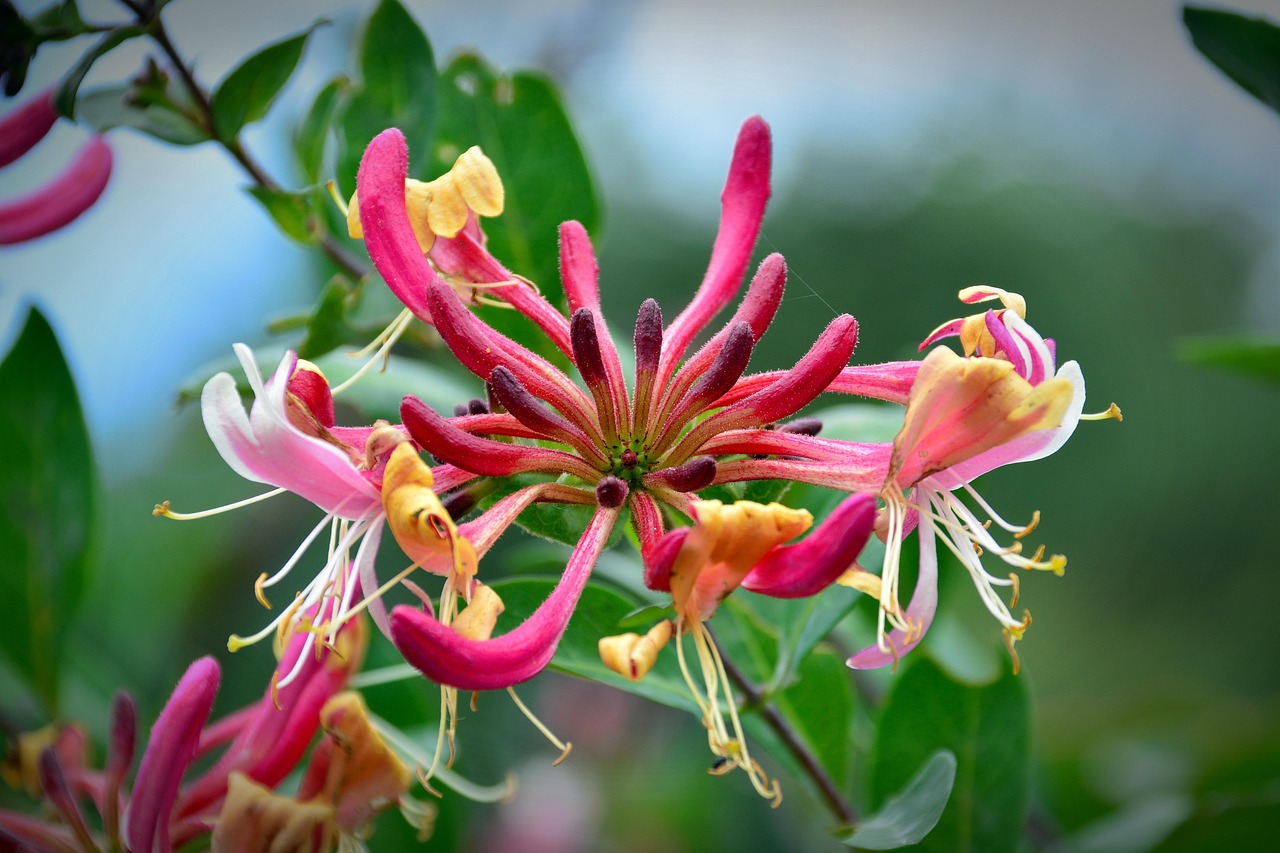
The Symbolism of Honeysuckle: Meaning, Mood, and Modern Ritual
There is something almost unfair about honeysuckle. The scent arrives before you see the vine, sweet and slightly intoxicating, woven into warm evening air in a way that feels less like a fragrance and more like a memory you forgot you had. For centuries, cultures across Europe, East Asia, and the Americas have assigned deep meaning to this climbing plant. Today, as interest in intentional living and aromatic ritual continues to grow, honeysuckle essential oil is finding its place at the intersection of botanical heritage and contemporary practice.
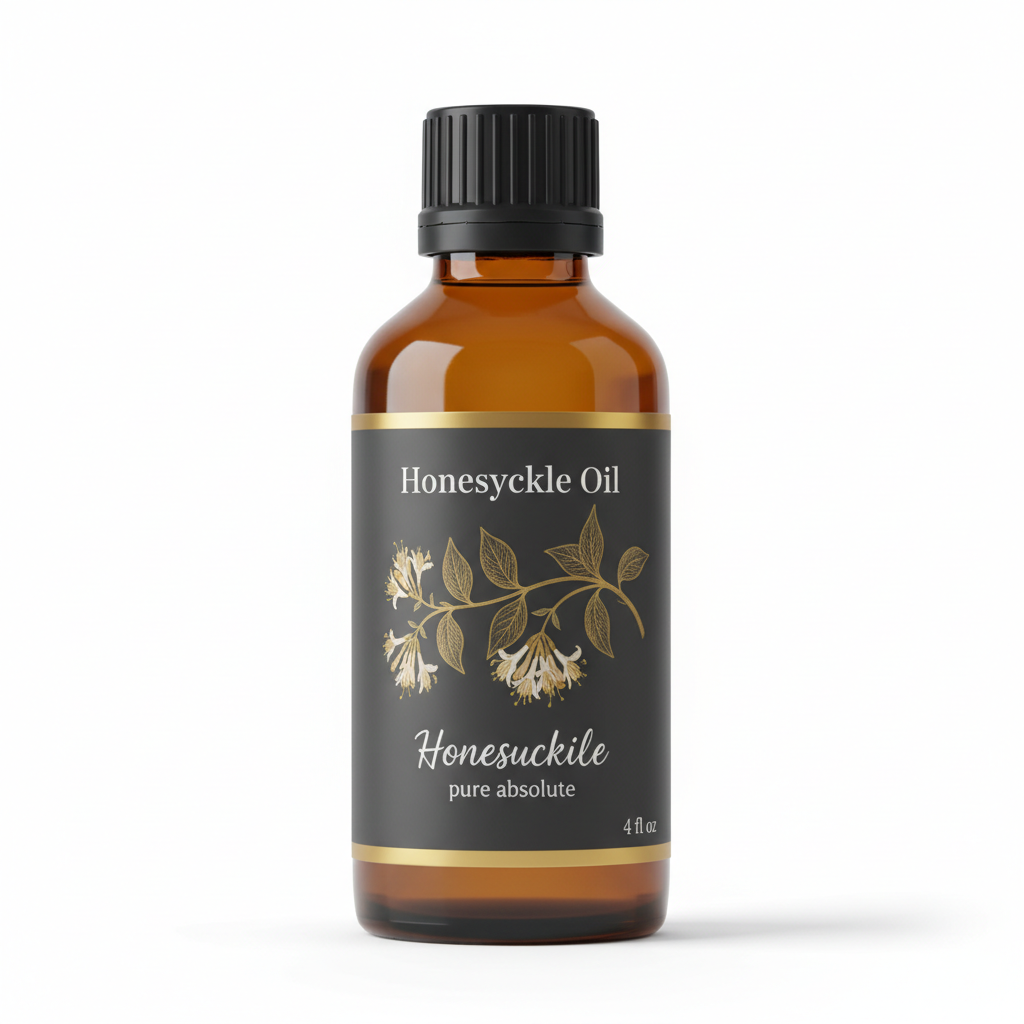
Honeysuckle Absolute
Our own Honeysuckle Absolute, in sizes from 0.5 oz to bulk.
From $13.99
Shop Now →This article traces honeysuckle from its symbolic roots through its chemical profile, then into the practical world of sourcing, safety, and seasonal ritual. Consider it a field guide to a flower that has always meant more than it first appears.
What Honeysuckle Has Meant Across Cultures
Honeysuckle symbolism is remarkably consistent across time and geography, which suggests the plant earns its meanings honestly. In the Victorian language of flowers (floriography), honeysuckle stood for devoted affection and the bonds of love. Giving a sprig was a way of saying: I am faithful, I will return. The vine's habit of twining and climbing gave it an obvious metaphorical shape.
In Celtic tradition, honeysuckle was considered a plant of protection and foresight. It appeared in folk practices around thresholds and doorways, places where the boundary between inside and outside felt meaningful. Chinese herbal traditions have worked with Lonicera japonica (Japanese honeysuckle) for well over a thousand years, though always within a framework that modern regulatory standards would classify separately from the aromatic use cases we focus on here.
Native American botanical knowledge also engaged with various Lonicera species, primarily for their aromatic and material properties. The scent itself carried significance. It was not merely pleasant but purposeful, used to mark seasonal transitions and ceremonial moments.
What links all of these traditions is an understanding of honeysuckle as a plant of connection: between people, between seasons, between the ordinary and the considered. That lineage gives the modern concept of honeysuckle ritual genuine depth. When you diffuse this oil before a quiet evening practice, you are participating in something with long roots.
The Chemical Composition of Honeysuckle Essential Oil
Understanding what is actually in the bottle matters, both for setting realistic expectations and for using the oil thoughtfully. Honeysuckle absolute and essential oil present a chemically rich profile that helps explain why the scent behaves the way it does.
Key Aromatic Compounds
The dominant volatile compounds identified in Lonicera species include linalool, benzyl alcohol, geraniol, eugenol, and various aldehydes. Linalool is particularly significant. It is the same compound associated with lavender's characteristic quality, which explains why honeysuckle shares lavender's soft, rounded character even while smelling distinctly different. Linalool is widely studied in the fragrance and cosmetic sciences.
Benzyl alcohol contributes the slightly warm, almost balsamic undertone you notice in the dry-down. Geraniol brings the faintly rosy facet that sits beneath honeysuckle's primary sweetness. Together, these compounds create a scent profile that perfumers describe as floral-nectar with green and woody base support.
It is worth noting that true honeysuckle essential oil is relatively rare in commerce. The flowers do not yield well to steam distillation. Most honeysuckle-forward products are either absolutes (extracted with solvents), CO2 extracts, or high-quality reconstructed accords built from individual aromatic molecules. Each has legitimate uses, but knowing what you are buying matters. We address this further in the sourcing section below.
Research Observations
Studies examining linalool specifically have produced some interesting observations. Research published in peer-reviewed fragrance and cosmetic journals suggests that linalool may support a subjective sense of calm when experienced aromatically. Participants in several observational studies reported lower perceived stress scores after linalool exposure in controlled settings. It is important to frame these findings carefully: this research describes self-reported mood states and does not constitute evidence that linalool or honeysuckle oil addresses any medical condition.
Geraniol has been studied in the context of cosmetic formulations, with some research suggesting it may support skin's appearance when used at appropriate concentrations in leave-on products. Again, these are cosmetic-use observations, not medical findings.
The broader aromatic literature also suggests that familiar, personally meaningful scents may support a sense of grounding and presence during mindfulness or reflective practices. Honeysuckle's strong associative qualities (many people connect it to specific childhood memories or places) may make it particularly effective in this context, though individual responses vary considerably.
Honeysuckle Spiritual Benefits: Symbolism as Practice
The phrase "honeysuckle essential oil spiritual benefits" appears frequently in search queries, and it is worth unpacking what people are actually looking for when they use it. Most are not seeking medical outcomes. They are asking how to use a meaningful, beautiful scent to support intentional routines: morning rituals, evening wind-downs, seasonal ceremonies, or creative work sessions.
In that framing, the symbolic history of honeysuckle becomes practically useful. A scent associated across multiple cultures with faithfulness, protection, and seasonal transition is well-suited to rituals that mark beginnings, endings, or commitments. Some people use it at the start of a journaling practice. Others diffuse it during the specific hour between day and evening when the quality of light changes and the pace of the day can shift with it.
Honeysuckle ritual does not require elaborate ceremony. It can be as simple as a single drop on a ceramic diffuser stone placed near a reading chair, chosen deliberately rather than by habit. The intentionality is what gives the scent its symbolic weight. As the perfumer and author Mandy Aftel has observed in her writing on natural perfumery, the act of choosing a scent mindfully already changes one's relationship to it.
For those interested in exploring honeysuckle as a component of a more complex aromatic practice, our guide on blending with honeysuckle in floral perfumery covers the compositional principles in detail. And if you want a ready-made starting point, the honeysuckle dusk blend for the diffuser was designed specifically for evening ritual use.
Sourcing and Quality Indicators
Because true honeysuckle essential oil is difficult to produce in commercial quantities, the market contains a wide range of product types sold under the honeysuckle name. Here is how to read what you are actually buying.
Absolute vs. Essential Oil vs. Accord
- Honeysuckle absolute: Solvent-extracted, rich and complex, closest to the living flower. Suitable for perfumery and leave-on cosmetic applications at appropriate concentrations. More expensive and produced in small quantities.
- CO2 extract: Uses pressurized carbon dioxide rather than chemical solvents. Produces a clean, full-spectrum extract. Good middle ground for quality and accessibility.
- Honeysuckle accord or fragrance oil: A reconstruction built from individual aromatic molecules. Not a natural extract, but not inherently inferior for all uses. Suitable for candles and many cosmetic applications. Should be clearly labeled as such.
- Diluted essential oil blends: Some products sold as honeysuckle essential oil are pre-diluted in a carrier. Check the ingredient list for carrier oils (jojoba, fractionated coconut, etc.) and adjust your usage rates accordingly.
Quality indicators to look for: GC/MS (gas chromatography/mass spectrometry) test results from the supplier, clear botanical Latin name on the label (Lonicera japonica or the specific species used), country of origin, extraction method, and lot number. Reputable suppliers make this information available without prompting.
For a closer look at how honeysuckle's sourcing considerations play out in fine fragrance construction, the case study on building a honeysuckle soliflore perfume walks through real sourcing decisions and their aromatic consequences.
Safety Profile and Contraindications
Using any aromatic oil well means understanding its safety parameters. Honeysuckle absolute and essential oil are generally considered safe for cosmetic use when properly diluted, but there are important considerations.
Dilution Guidelines
The International Fragrance Association (IFRA) sets concentration guidelines for fragrance ingredients based on dermal safety research. For most leave-on skin applications, a dilution of 0.5 to 1 percent is a reasonable starting point for honeysuckle absolute. Rinse-off applications (body wash, shampoo) allow slightly higher concentrations. Always calculate your dilution from the absolute or extract specifically, not from a pre-diluted product, to avoid compounding errors.
A standard guideline: 1 percent dilution equals approximately 6 drops of essential oil per 30 ml (one ounce) of carrier.
Patch Testing
Always perform a patch test before using any new aromatic product on skin. Apply a small amount of the properly diluted preparation to the inner forearm, cover loosely, and wait 24 hours. If redness, itching, or any skin response occurs, discontinue use. This is especially important with absolutes, which contain a broader range of molecular compounds than distilled oils.
Contraindications and Special Populations
- Pregnancy and nursing: Consult a qualified healthcare provider before using any essential oil or absolute during pregnancy or while nursing. This is not a precaution unique to honeysuckle; it applies broadly.
- Children: Use essential oils around young children only with guidance from a healthcare provider. Diffusion in poorly ventilated spaces is not recommended for infants.
- Sensitization: Some aromatic compounds, including geraniol and eugenol found in honeysuckle, are recognized potential sensitizers with repeated exposure. Rotating your aromatic products and maintaining recommended dilutions reduces this risk.
- Pets: Many cats and some dogs are sensitive to aromatic compounds that are safe for humans. Diffuse in ventilated spaces where pets can leave the room freely, and consult a veterinarian if you have concerns.
These are guidelines for cosmetic and aromatic use. They are not medical advice. Please consult a qualified healthcare provider with any specific concerns about your health or the health of those in your household.
Bringing It Together: Honeysuckle as a Seasonal Ritual Anchor
Honeysuckle blooms in late spring and carries through summer into early autumn. That seasonal arc gives it a natural role as a marker of warmer, longer days, and the particular emotional quality those days carry. Using honeysuckle oil intentionally during these months can support a felt sense of connection to that rhythm, even in urban environments far from any actual vine.
A simple practice: choose one consistent moment in your day, perhaps the transition between work and evening, or the first ten minutes after dinner. Diffuse a small amount of honeysuckle oil during that specific window, consistently, for a week or two. The scent begins to do something interesting. It becomes a signal. The aromatic association builds, and the transition itself starts to feel more distinct, more deliberate.
This is honeysuckle symbolism in its most practical form. Not mythology. Not marketing. Just the old human fact that scent carries meaning, and meaning, chosen carefully, can shape how a day feels from the inside.
The vine climbs toward light. So, in its own small way, can a ritual built around it.