
Making a Honeysuckle Body Oil: Silky, Softly Scented, Simple
There is something quietly satisfying about making your own body oil. You know exactly what went in. You chose the carrier, the scent, the texture. And when it comes to fragrance, few choices reward you as generously as honeysuckle: that warm, creamy, faintly sweet floral that seems to linger on skin like a memory of a summer evening.
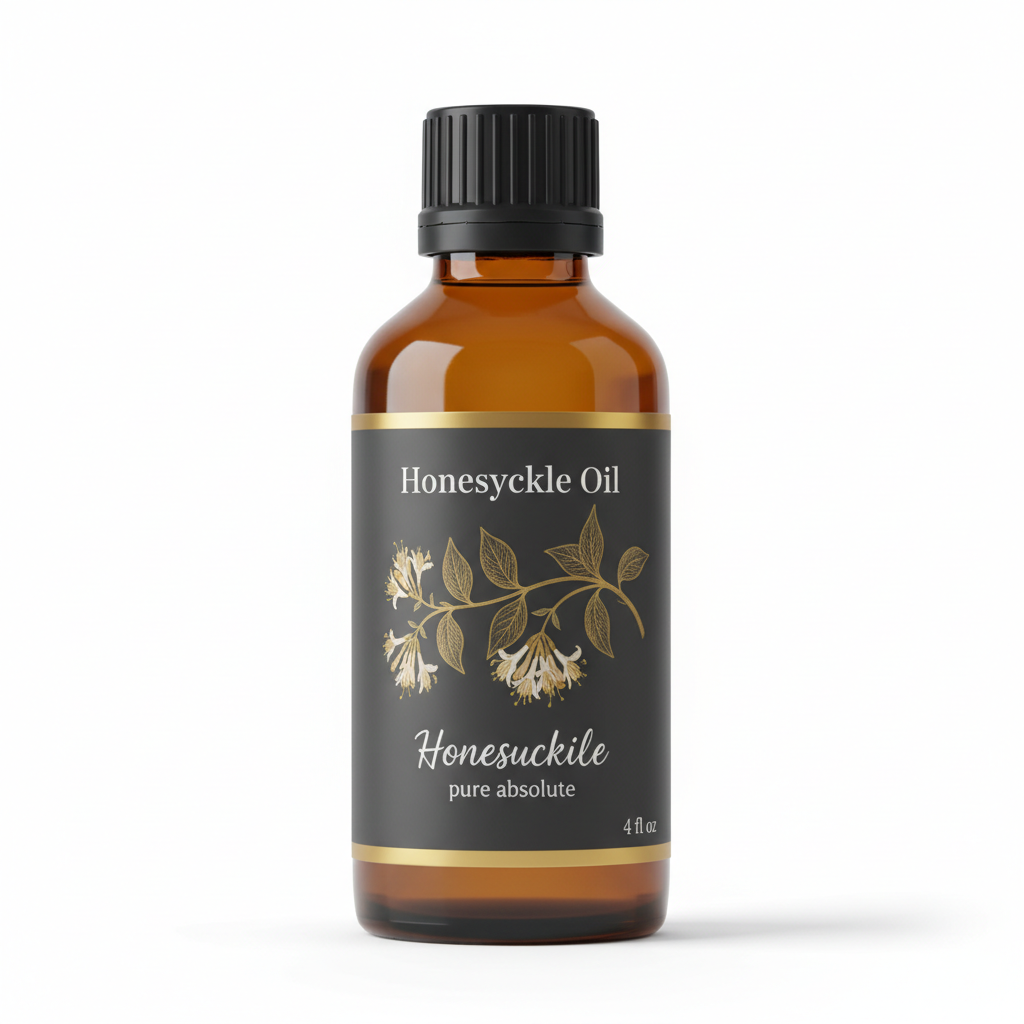
Honeysuckle Absolute
Our own Honeysuckle Absolute, in sizes from 0.5 oz to bulk.
From $13.99
Shop Now →This guide walks you through a complete honeysuckle body oil recipe from scratch. You will find a full ingredients list with measurements, clear step-by-step instructions, safety guidance, storage tips, and a handful of variations so you can make it your own. Prep time is under 20 minutes. No specialist equipment required.
Before You Begin: A Note on Honeysuckle Oil
True honeysuckle essential oil is rarely available in its pure steam-distilled form, largely because the flower yields very little volatile material through standard distillation. What you will typically find on the market falls into one of two categories: a honeysuckle absolute (a solvent-extracted concentrate with a rich, complex scent profile) or a honeysuckle fragrance oil (a blended aromatic compound, either fully synthetic or partially natural).
Both can work beautifully in a DIY body oil, but they behave differently. Absolutes are potent and skin-sensitizing at higher concentrations. Fragrance oils vary widely in quality and some contain components not suitable for leave-on skin products. Read the supplier's safety data sheet before using any aromatic material directly on skin. More on dilution below.
If you want to go deeper on working with honeysuckle as a fragrance ingredient, the guide to blending with honeysuckle in floral perfumery covers the full aromatic profile in detail.
What You Will Need
Equipment
- Small glass measuring jug or beaker (100 ml capacity)
- Digital kitchen scale accurate to 0.1 g (strongly recommended over volume measures for precision)
- Stirring rod or clean chopstick
- Pipettes or droppers for aromatic materials
- One 100 ml amber or dark glass bottle with a pump or dropper cap
- Labels and a permanent marker
Ingredients (Makes approximately 100 ml)
| Ingredient | Amount | Notes |
|---|---|---|
| Jojoba oil (golden or clear) | 50 ml | Primary carrier; very stable, absorbs well |
| Sweet almond oil | 30 ml | Adds slip and a soft skin feel |
| Squalane (plant-derived) | 15 ml | Lightweight, non-greasy finish; optional but recommended |
| Vitamin E oil (tocopherol) | 5 ml (approximately 1 tsp) | Antioxidant; extends shelf life of the carrier blend |
| Honeysuckle absolute or skin-safe fragrance oil | 0.5 ml (approximately 10 drops) | This gives a 0.5% dilution rate; see safety section |
Total aromatic dilution: 0.5%. This is a conservative starting point and is intentional. Leave-on skin products call for caution, especially with absolutes and fragrance oils where sensitization potential can be significant.
Step-by-Step Instructions
Step 1: Prepare Your Work Space
Wipe down your work surface with a clean cloth. Make sure your bottle, jug, and stirring rod are clean and fully dry. Water contamination in an oil-based product accelerates rancidity. If you have a small kitchen scale, set it up now.
Step 2: Measure and Combine the Carrier Oils
Pour the jojoba oil into your measuring jug first, followed by the sweet almond oil. If you are using squalane, add that now. These three carriers form the base of your floral body oil. Give them a gentle stir. You will notice the blend is already light and clear with a faint natural scent.
Step 3: Add the Vitamin E
Vitamin E oil is thick. Measure it carefully and add it to the carrier blend. Stir slowly until it is fully incorporated. This step is worth taking your time with: vitamin E disperses unevenly if the blend is poured too quickly into the final bottle.
Step 4: Add the Honeysuckle Aromatic
Using a clean pipette or the dropper included with your aromatic material, count out your drops carefully. Ten drops into 100 ml of carrier gives you a 0.5% dilution. Stir thoroughly for at least 30 seconds. The scent will bloom slightly as you mix: sweet, floral, with that characteristic honeyed warmth.
Do not be tempted to add more at this stage. You can always increase the dilution in your next batch once you know how your skin responds.
Step 5: Transfer to Your Bottle
Pour or pipette the finished blend into your amber glass bottle. Cap it immediately. Give it a gentle swirl rather than a shake (vigorous shaking introduces air bubbles and can stress the aromatic compounds over time).
Step 6: Label and Date
Write the date of preparation, the ingredients, and the dilution percentage on your label. This is not optional housekeeping. It matters for safety and for replicating a formula you love.
How to Use Your Honeysuckle Body Oil
Apply two to four pumps or drops to clean, slightly damp skin immediately after a shower or bath. The moisture on your skin helps the oil spread evenly and absorbs more quickly. Focus on areas that tend to feel dry: shins, elbows, the backs of hands. Allow a minute or two before dressing.
A small amount goes a long way. If your skin feels greasy after five minutes, you have used too much or your skin type may prefer an even lighter carrier blend (see variations below).
Safety Warnings and Contraindications
Please read this section fully before making or using this recipe.
Patch Testing
Always patch test a new body oil before full-body application. Apply a small amount to the inside of your elbow or wrist, cover loosely with a bandage, and wait 24 hours. If you notice any redness, itching, or irritation, discontinue use. Do not proceed to wider application until you are confident your skin is comfortable with the blend.
Dilution Ratios
The 0.5% dilution in this recipe is appropriate for a leave-on product intended for regular use on large areas of skin. If you want a stronger scent, increase gradually to a maximum of 1% for a leave-on body oil. Do not exceed 1% with absolutes or unknown fragrance blends on large skin surfaces without reviewing the safety data sheet for each aromatic material.
Sensitization Risk
Repeated use of high concentrations of any aromatic material can lead to sensitization over time. Sensitization is cumulative and permanent once it develops. Staying within recommended dilution rates is the most effective way to protect against it.
Nut Allergies
This recipe includes sweet almond oil, which is derived from tree nuts. If you have a known tree nut sensitivity, substitute fractionated coconut oil or sunflower oil in equal measure. See the variations section for details.
Pregnancy and Nursing
Some aromatic materials are not recommended during pregnancy or while nursing. Consult a qualified healthcare provider before using any new aromatic product during this time.
Children and Pets
This recipe is formulated for adult use. Keep all aromatic products away from children and pets. Do not use on children without guidance from a healthcare professional.
Sun Sensitivity
Some fragrance components can increase sensitivity to UV light. Avoid applying this oil to areas that will be directly exposed to strong sunlight, or apply it in the evening as part of a bedtime wind-down ritual instead.
Storage Instructions and Shelf Life
Store your honeysuckle body oil in a cool, dark place away from direct sunlight and heat sources. The amber glass bottle helps, but temperature stability matters more than the glass color alone.
Expected shelf life with this formula:
- Jojoba-dominant blends are among the most stable carrier combinations available. Jojoba is technically a liquid wax rather than an oil, and it resists rancidity exceptionally well.
- With the addition of vitamin E, this blend should remain fresh for 12 to 18 months when stored correctly.
- Sweet almond oil is the most vulnerable component. If you smell anything sour, stale, or crayon-like, the carrier has oxidized. Discard and make a fresh batch.
Do not store in the bathroom if it is humid. A bedroom drawer or a cool shelf is a better choice.
Variations and Substitutions
For a Lighter Finish
Replace the sweet almond oil entirely with additional squalane. The result is almost invisible on skin: no sheen, no residue. Ideal for oilier skin types or warmer climates.
For a Richer Feel
Swap 10 ml of the jojoba for rosehip seed oil. Rosehip has a heavier texture and a distinctly earthy scent of its own, so be aware it will subtly shift the aromatic profile of the finished oil. It also has a shorter shelf life, which will reduce the overall stability of the blend to approximately 6 to 9 months.
For a Layered Floral Scent
Honeysuckle pairs beautifully with jasmine absolute. The two white florals share structural aromatic similarities but jasmine brings a deeper, more indolic richness that lifts the honeysuckle's sweetness. If you want to explore that combination, the guide to blending honeysuckle and jasmine is a thorough starting point. Keep combined aromatic materials within the 0.5 to 1% total dilution limit.
Adding a Citrus Top Note
A single drop of bergamot or neroli (bergapten-free versions only, given the sun sensitivity note above) adds brightness to the opening of the scent. These evaporate quickly from skin, but they create a more complex initial impression. For guidance on which other botanicals work well alongside honeysuckle, the article on 12 partners that blend well with honeysuckle covers both classic and unexpected combinations.
Nut-Free Version
Replace sweet almond oil with an equal volume of fractionated coconut oil (which is liquid at room temperature and very light) or high-oleic sunflower oil. Both are well-tolerated by most skin types and do not introduce nut-related allergen concerns.
Dry Oil Variation
For a genuinely fast-absorbing formula with almost no residue, use a base of 70 ml squalane and 25 ml jojoba, omitting the sweet almond entirely. Keep the vitamin E at 5 ml. This produces what the cosmetic industry calls a dry oil: it spreads easily, absorbs within seconds, and leaves skin feeling smooth rather than coated.
Difficulty Level and Prep Time
- Difficulty: Beginner-friendly. No heat required. No emulsification. Just measuring, combining, and bottling.
- Active prep time: 10 to 15 minutes
- Settling time: Allow 24 hours before first use if possible. Aromatic materials often integrate more smoothly after a short resting period.
- Batch size: 100 ml, roughly a one to two month supply for daily use on one person
A Few Final Thoughts on Quality
The single factor that most affects the finished result is the quality of your honeysuckle aromatic material. A well-sourced absolute or a thoughtfully blended fragrance oil will produce a body oil that genuinely smells like honeysuckle: rounded, alive, and gently persistent on skin. A poorly sourced material will give you something thin, synthetic, or oddly sharp.
Take time to source carefully. Request samples from suppliers before committing to a full bottle. Read safety data sheets. And keep notes on what you make, even rough ones. The record of what worked and what you changed is what turns a one-time project into a personal signature scent.