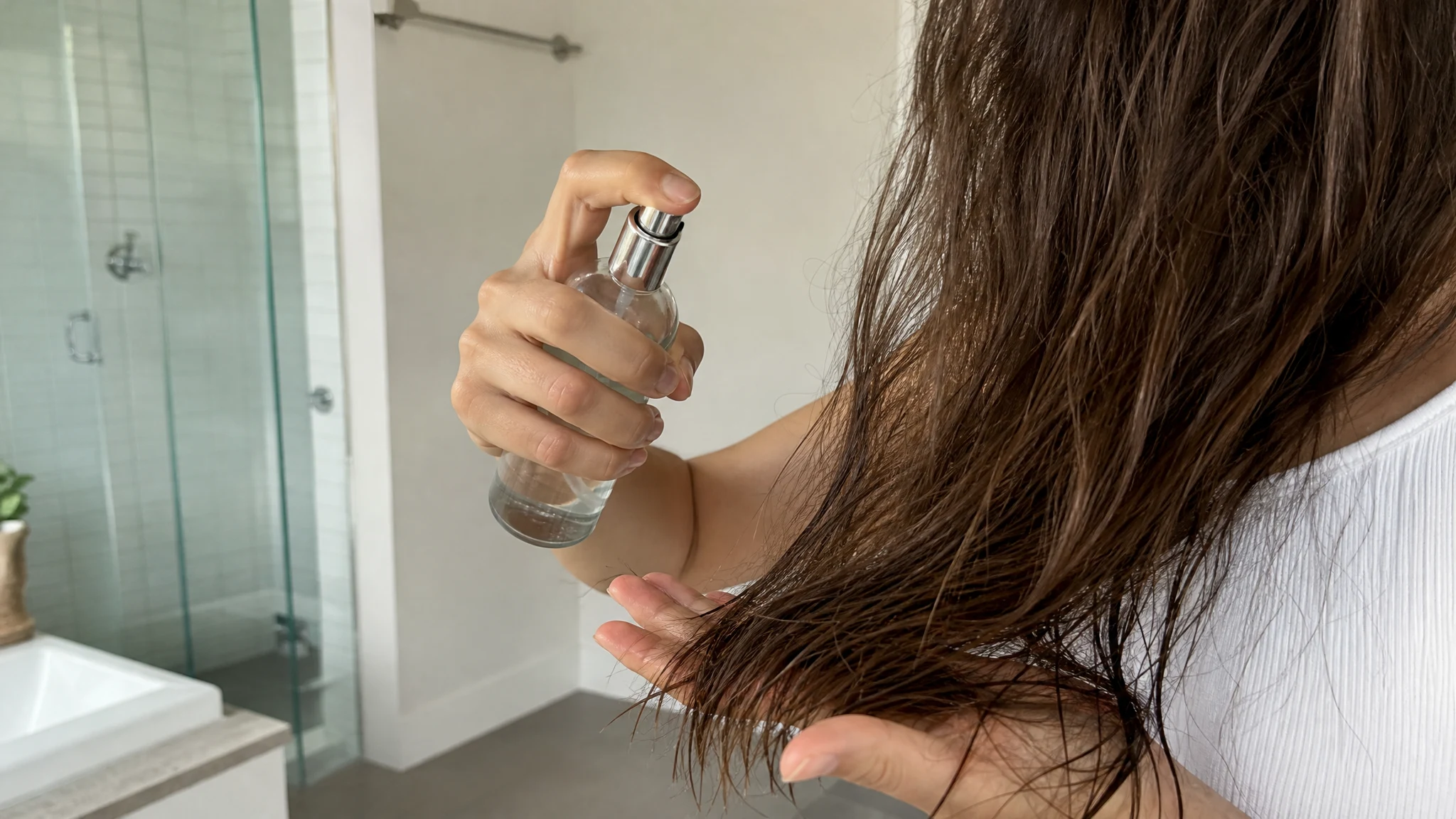
DIY Honeysuckle Hair Mist: Alcohol Base First, Water Later
If you make a honeysuckle hair mist, start with an alcohol-based one and leave the water-based version until you have a preservative you understand. An alcohol mist is the absolute in ethanol and nothing else, it needs no solubilizer, and it dries on its own. A water-based mist needs a solubilizer to hold an oily absolute in water and a preservative to keep the water from growing things, and neither is something we sell or can give you a ratio for. This is a formulation worked out from arithmetic and published hazard data. We have not made or tested it.
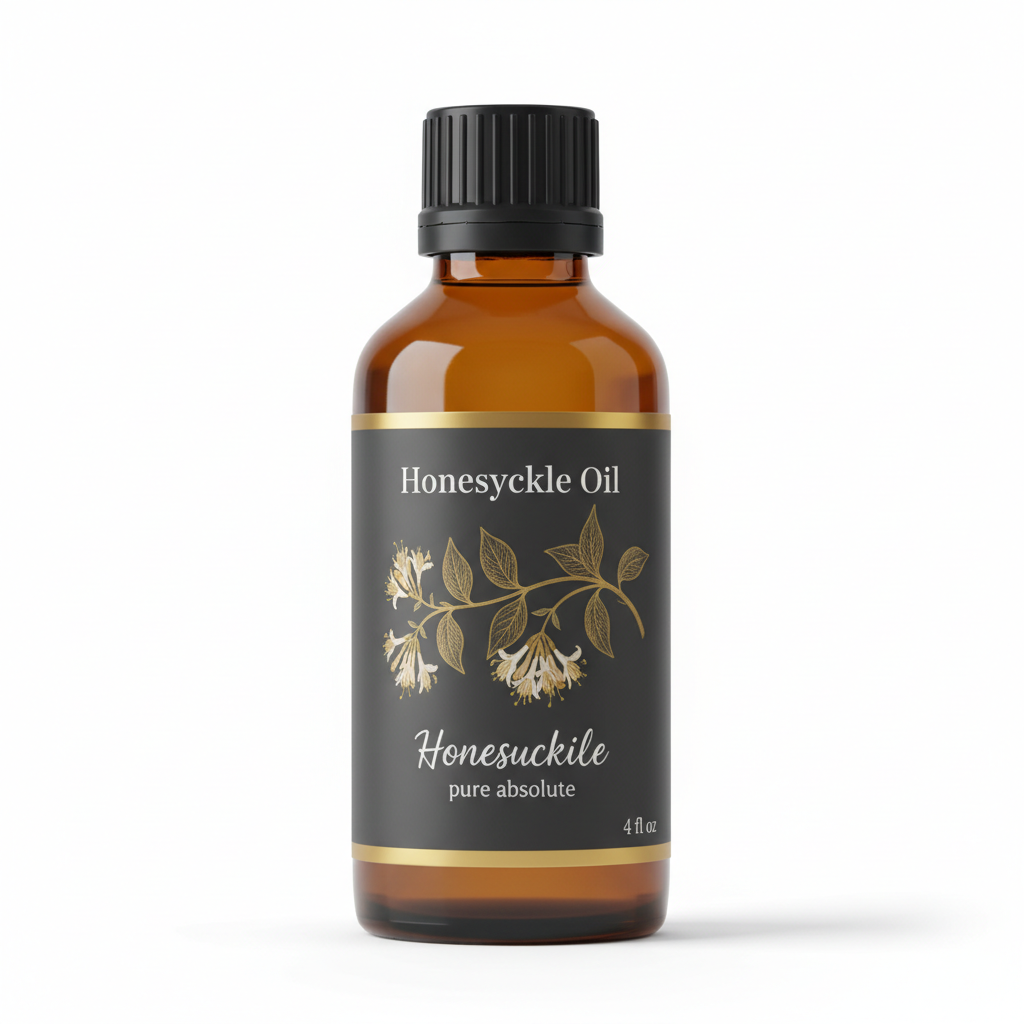
Honeysuckle Absolute
Our own Honeysuckle Absolute, in sizes from 0.5 oz to bulk.
From $13.99
Shop Now →Why not water first
Two problems come with water. The first is mixing: an absolute is an oily material, and by ordinary chemistry oil and water separate unless something holds them together. That something is a solubilizer, and the amount depends on the specific product, so the data sheet of the one you buy has to give the ratio. We have no figure for it and will not guess one.
The second is microbes. The FDA's eye cosmetic safety page says of dried-up mascara that "Adding water may introduce bacteria and will dilute the preservative" meant to protect against microbial growth. That advice is about mascara, an eye product, so it does not set a rule for hair mist. The mechanism does carry over: water you add yourself is a way to contaminate and to weaken a preservative system. A hobby batch of water, a solubilizer and no tested preservative has no one to catch a mistake. If you want a water-based mist later, the preservative choice, the dose and a challenge test are a job for a cosmetic chemist, and the supplier of your preservative will tell you its usage range.
The alcohol-based version
Ethanol carries the absolute, and it needs no water. Buy ethanol from a perfumery or chemical supplier (we do not sell it) and ask which denaturant it contains, as in the 10% dilution walkthrough, where the weighing is explained. Use the 10% stock from that article as your starting point, because 0.2% to 0.5% of absolute in a batch is below what a dropper can measure.
The flammability matters more here than in a stock vial, because you are spraying a fine droplet cloud. The CDC NIOSH Pocket Guide lists ethanol with a flash point of 55 F (about 13 C), explosive limits of 3.3% to 19% in air, and a Class IB flammable-liquid rating. Reasoning from those numbers, you should not spray the mist near a flame, a lit cigarette or a heat source, and we would not use it immediately before or during styling with a hot tool. Let it dry first, spray in a ventilated room, and do not store it in a hot place.
How much absolute: our recommendation
A scalp is skin, and a mist lands on the neck, face and ears too. Our safety copy for the absolute is 0.5% to 2% in a carrier oil, patch tested first, with the oil kept away from eyes, children and pets. A mist is a different vehicle and a less controlled dose, so we recommend 0.2% to 0.5%, which is at or below the floor of that range. That is our recommendation for this use and not a published limit from an authority. Start at 0.2% if you are unsure and go up only after a patch test and a few wears.
| Target (by weight, 100 g batch) | Absolute | Absolute in drops (about) | Or: 10% stock | Ethanol |
|---|---|---|---|---|
| 0.2% | 0.2 g | 4 | 2.0 g | 98.0 g (about 124 ml) |
| 0.3% | 0.3 g | 6 | 3.0 g | 97.0 g (about 123 ml) |
| 0.5% | 0.5 g | 10 | 5.0 g | 95.0 g (about 120 ml) |
The sums: 0.3% of 100 g is 0.3 g of absolute, which is the same as 3.0 g of a 10% stock (3.0 x 0.10 = 0.3). Ethanol makes up the balance, 97.0 g, and converts to millilitres by dividing by 0.79, the specific gravity NIOSH gives. Drops use relative density 0.989 from our published COA batch and about 20 drops per ml, and droppers vary. Because 100 g is a lot of mist to start with, halve everything for a 50 g test batch. A 0.5 oz bottle (about 14.6 g of absolute) holds enough for roughly 48 batches of 100 g at 0.3%, which says more about how little you use than about anything else.
Steps
- Weigh the empty spray bottle (glass with a fine-mist sprayer from a packaging supplier), tare, and add the 10% stock by weight.
- Add ethanol up to the total weight in the table, cap and swirl.
- Label it: material, percentage, date and the batch code from the absolute you used.
- Patch test a small amount of the finished mist on the inner forearm and wait a day.
- Test spray on a hidden hair strand before the head, and read the cautions below before you do.
The water-based alternative adds a solubilizer and a preservative at steps 1 and 2 and changes everything after it, which is why this recipe does not include one.
Keeping and reusing it
Store the finished mist tightly capped, cool and out of sunlight, the same conditions our safety copy gives for the absolute, and keep the sprayer closed between uses so the ethanol does not evaporate and concentrate the mix. We state no shelf life for the absolute and have none to state for a mist made from it. If the mist smells different, looks cloudy or leaves a residue on the nozzle, make a fresh batch. Do not top up an old bottle with new liquid, because the percentages then stop being the ones you calculated.
Keep a note of each batch: the target percentage, the actual weights, the date and the absolute's batch code. If you find a strength you like, the note lets you repeat it, and if you react to one, it tells you what to change.
Cautions specific to hair
- Colour-treated or chemically treated hair: we have no data on staining or on how a fragranced alcohol mist behaves on bleached, dyed or relaxed hair. The absolute's COA standard describes the liquid as pale yellow to yellow, which tells you its colour and nothing about whether it marks hair. Test on a hidden strand, and ask your colourist or stylist.
- Eyes and breathing: spray away from the face and from other people. Keep the mist away from eyes, children and pets, and do not spray it on pet fur. Not for internal use.
- Reactive skin: a scalp that reacts to products is a question for a dermatologist before you add a new fragrance.
- Claims: a mist is a fragrance, and it should stay one. The FDA says a product's status depends on its intended use, and that claims such as restoring hair growth are generally drug claims even for a product sold like a cosmetic. See the hair oil post for the same point at more length. If you plan to sell the mist, labelling and registration questions go to a regulatory consultant; the planned labelling article will cover them.
For a leave-in that does not rely on alcohol at all, the oil route in honeysuckle hair oil needs no preservative, and the carrier comparison explains what to buy.
Honeysuckle Absolute
Honeysuckle Absolute from our own shop, in sizes from 0.5 oz to bulk.
From $13.99
Shop Now →Sources & Further Reading
- US FDA. Eye Cosmetic Safety (consumer page). fda.gov/cosmetics/cosmetic-products/eye-cosmetic-safety
- CDC NIOSH. NIOSH Pocket Guide to Chemical Hazards: Ethyl alcohol. cdc.gov/niosh/npg/npgd0262
- US FDA, 2017. Definition of a drug (Drug Info Rounds). fda.gov/drugs/fda-drug-info-rounds-video/definition-drug-april-2017