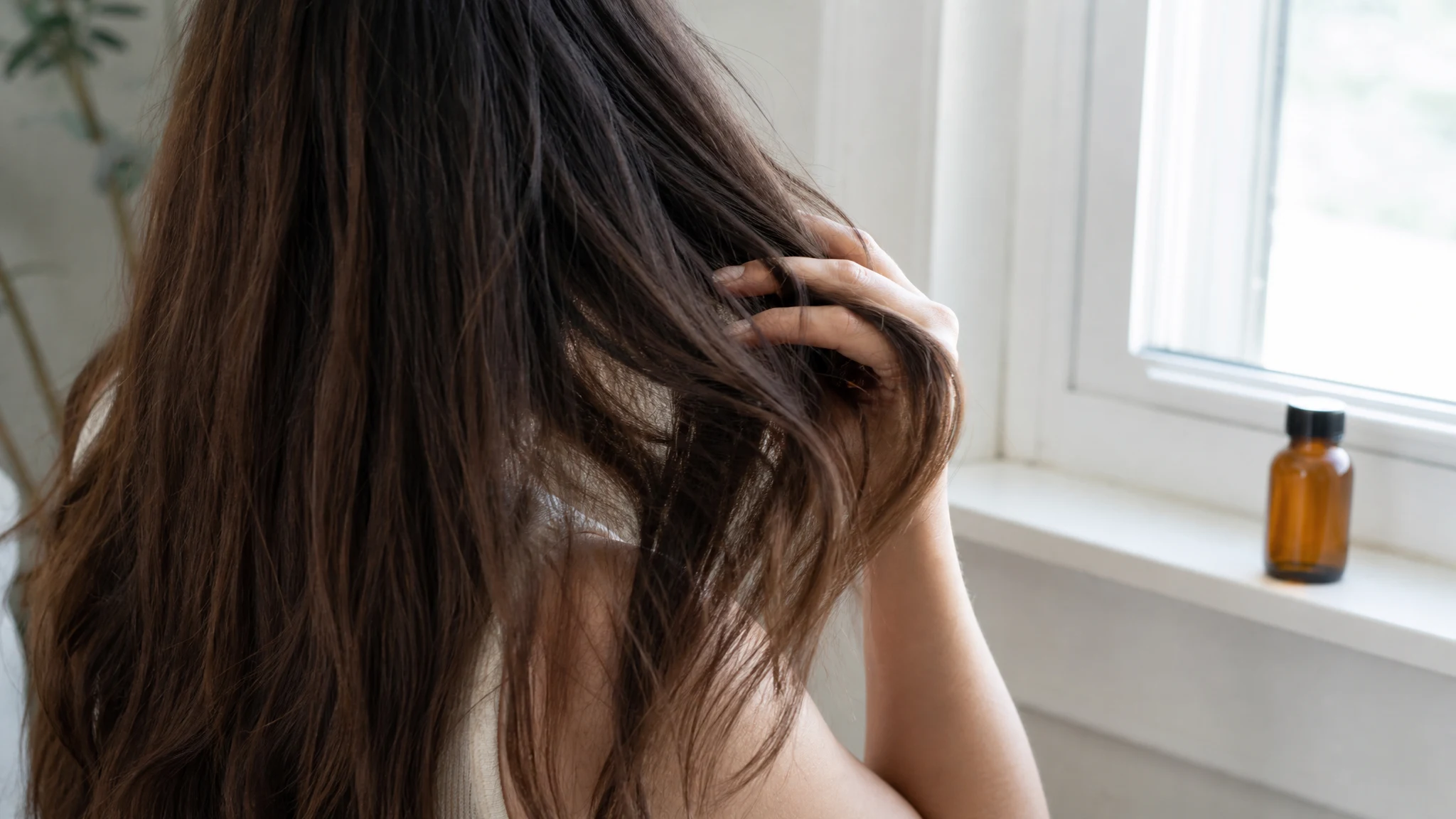
Honeysuckle Hair Oil: A Scent-Only Formulation in Jojoba
A honeysuckle hair oil is a scented carrier oil and should be described as exactly that. The recipe is easy: jojoba oil, a small weighed amount of the absolute, a bottle with a dropper or pump. What goes wrong is the wording on the label and the page, because the moment a hair product promises growth or a healthier scalp, US regulators read it differently. This is a formulation worked out from arithmetic and cited sources. We have not made or tested it, and we do not sell the carrier.
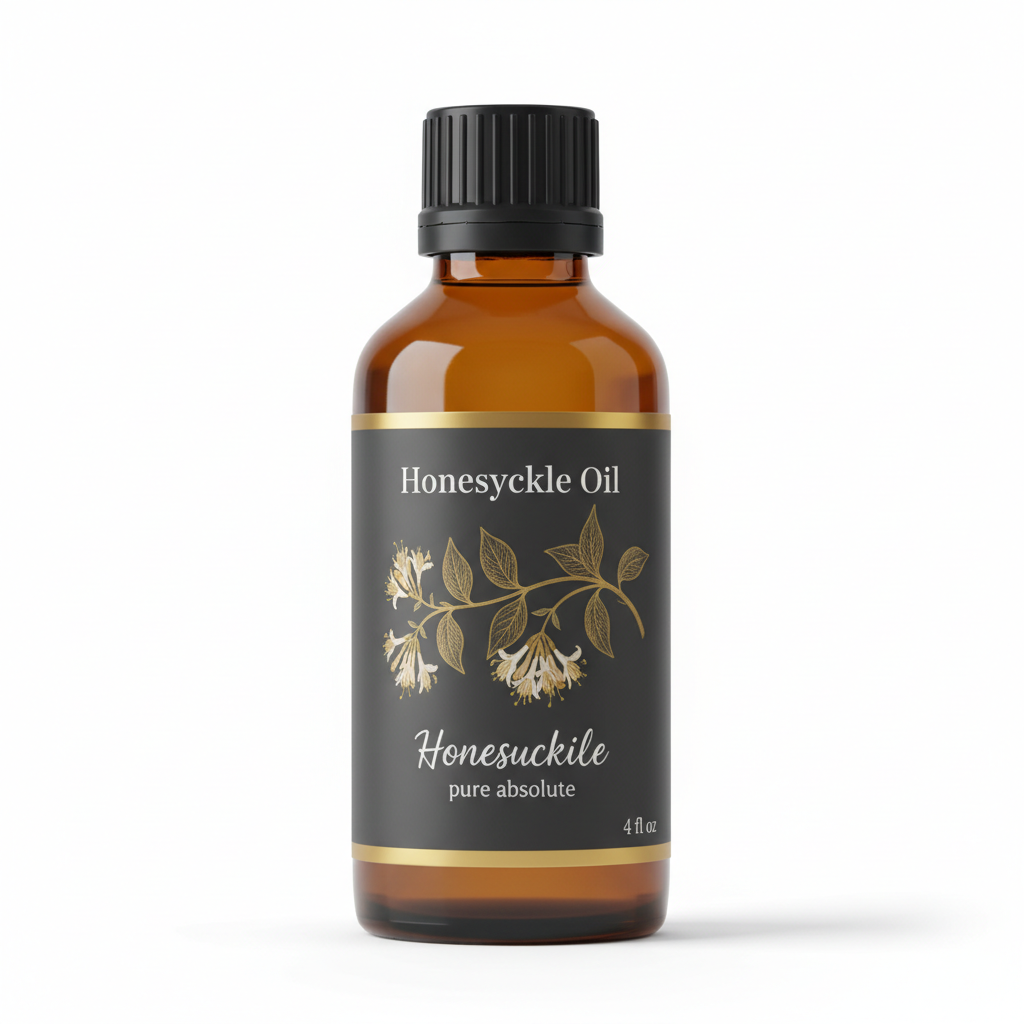
Honeysuckle Absolute
Our own Honeysuckle Absolute, in sizes from 0.5 oz to bulk.
From $13.99
Shop Now →Keep the claim at fragrance
The FDA's Drug Info Rounds transcript on the definition of a drug says a product's status is determined by its intended use. Cosmetics are defined by uses such as cleansing, beautifying, promoting attractiveness or altering appearance. Drugs are defined by disease-related purposes, such as diagnosis or cure. Its hair examples are plain: claims that a product can restore hair growth are generally drug claims, even when the product is marketed like a cosmetic, and a shampoo is a cosmetic because its intended use is to cleanse hair. The same page says the agency may look at labelling, advertising, internet pages and other promotional material.
That has one practical consequence for this recipe. The oil can be a fragrance and a conditioning product described in terms of how it looks and smells. It cannot carry a statement about hair loss, regrowth or scalp conditions, from you or from anyone you link to. We make no medical claim for the absolute. For a product you will sell, the claim wording and the registration and labelling duties are a question for a regulatory consultant or attorney, and the planned labelling article covers the basics.
Choose the carrier
Our recommendation is jojoba oil for this recipe, with fractionated coconut oil as the alternative if you want a lighter, thinner oil. A fuller comparison is in the carrier oil comparison. The reason for jojoba here is a stability argument from the literature. Tsuchimoto, Sakai and Fukui (2022, BPB Reports) from Osaka University describe jojoba oil as mainly liquid wax monoesters resembling human sebum wax. They heated jojoba oil, olive oil and squalene at 60 C for 60 days and measured acid, peroxide and carbonyl values: the acid value of jojoba did not change while the others rose, and its peroxide and carbonyl values were the lowest. The oils compared were different from the ones you will meet on a shelf (no almond, no coconut), the test was accelerated heating and not a bottle on a bathroom shelf, and the same paper found that oxidative stability and antioxidant activity varied among crude jojoba oils from different companies, countries and years. Deodorized and refined jojoba showed lower antioxidant activity than crude. So a jojoba oil is not automatically a stable one; buy a fresh, dated bottle from a supplier that gives a batch or best-before date.
Sweet almond oil is a common hair-oil base, and it is the one to avoid if anyone who will touch the product has a tree-nut allergy. FDA's food allergen labelling FAQ says coconut is no longer on the major tree nut list as of the 5th edition (entry dated 2025-03-26), which is a food-labelling rule and not a statement about skin products or about any one person's allergy. An allergist is the person to ask about almond, coconut or any other nut oil, since the rules for food labels do not decide it for you.
The arithmetic for 30 ml
Our skin guidance is 0.5% to 2% of the absolute in a carrier, patch tested first. A hair oil goes onto a scalp, which is skin, and drips onto the face and neck. We recommend 0.5% to 1% here, starting at 0.5%. Undiluted absolute at 20 drops per ml (droppers vary; our published COA batch has a relative density of 0.989) works out as follows:
| Target in 30 ml | Absolute | Drops, undiluted (about) | Or: 10% stock | Plain carrier |
|---|---|---|---|---|
| 0.5% | 0.15 ml | 3 | 1.5 ml (about 30 drops) | 28.5 ml |
| 1.0% | 0.30 ml | 6 | 3.0 ml (about 60 drops) | 27.0 ml |
Three drops cannot be measured reliably out of a thick, cold absolute, so use the stock. Make a 10% stock by weight in the same carrier: 0.5 g of absolute plus 4.5 g of carrier gives 5 g, which is about 5 ml: enough for one 1% batch (3 ml) with some left over, or three 0.5% batches (1.5 ml each). The stock is measured by weight and the table by volume; at these small amounts the difference is smaller than your dropper error, but if you want to be exact, weigh the finished oil and calculate the absolute from the weight. The 10% dilution walkthrough explains weighing a thick absolute. Warm the bottle in your hand for a minute so it pours.
A 0.5 oz bottle holds about 14.8 ml, so at 0.15 ml per batch it covers about 98 batches of 30 ml at 0.5%, or about 49 at 1.0%. That is arithmetic and ignores the film left on the glass.
Making it
- Weigh or measure the carrier into a clean dark glass bottle with a dropper or pump.
- Add the stock and swirl for a minute. The stock is already in carrier, so there is no separate solvent step.
- Label it with the carrier, the percentage, the date and the absolute's batch code.
- Patch test a drop on the inner forearm and wait a day before using it on hair.
Because the oil has no water in it, there is no preservative to choose, which is the main reason an oil is simpler than a water-based product. It can still go stale. We state no shelf life for the absolute and have none for a mix, so date every bottle, keep it capped, cool and away from sun, and discard it if it smells off.
Where it goes on the head
This is reasoning, not tested practice. Keeping the oil to the lengths and ends rather than rubbing it into the scalp reduces the skin contact, and it is the more cautious way to use a scented product with a reactive scalp. If you do use it near the scalp, the 0.5% version is the one to use. Keep it away from eyes, children and pets, and do not let a pet lick your hair. It is not for internal use. Oil on hair also transfers to pillowcases and collars, so expect marks on fabric.
Who should skip it
- Anyone with a nut allergy using an almond-based carrier, and anyone unsure about any nut-derived carrier, who should ask an allergist.
- Anyone with a reactive, inflamed or broken scalp, who should see a dermatologist before adding a fragrance.
- Anyone who is reading this to deal with hair loss or a scalp condition. A fragrance oil is not that, and a doctor is the person to ask.
If you would rather have a leave-in mist, see the alcohol hair mist. For body use, see the body oil recipe.
Honeysuckle Absolute
Honeysuckle Absolute from our own shop, in sizes from 0.5 oz to bulk.
From $13.99
Shop Now →Sources & Further Reading
- US FDA, 2017. Definition of a drug (Drug Info Rounds). fda.gov/drugs/fda-drug-info-rounds-video/definition-drug-april-2017
- Tsuchimoto S, Sakai H, Fukui K, 2022. Oxidative Stability and Antioxidant Activity of Crude Jojoba Oil. BPB Reports 5(6):121-124. jstage.jst.go.jp/article/bpbreports/5/6/5_121
- US FDA, 2025. Frequently asked questions: Food Allergen Labeling guidance for industry (5th edition). fda.gov (food allergen labeling FAQ)