How to Read a COA for Floral Absolutes, Line by Line
A certificate of analysis tells you what a laboratory measured, and nothing about what it did not. We publish one for our honeysuckle absolute, and the honest reading of it is narrow: it confirms three physical readings and two sensory checks on one batch, and it does not identify the material. This piece goes through our own certificate line by line, then lists what to ask for in writing from any supplier, including us.
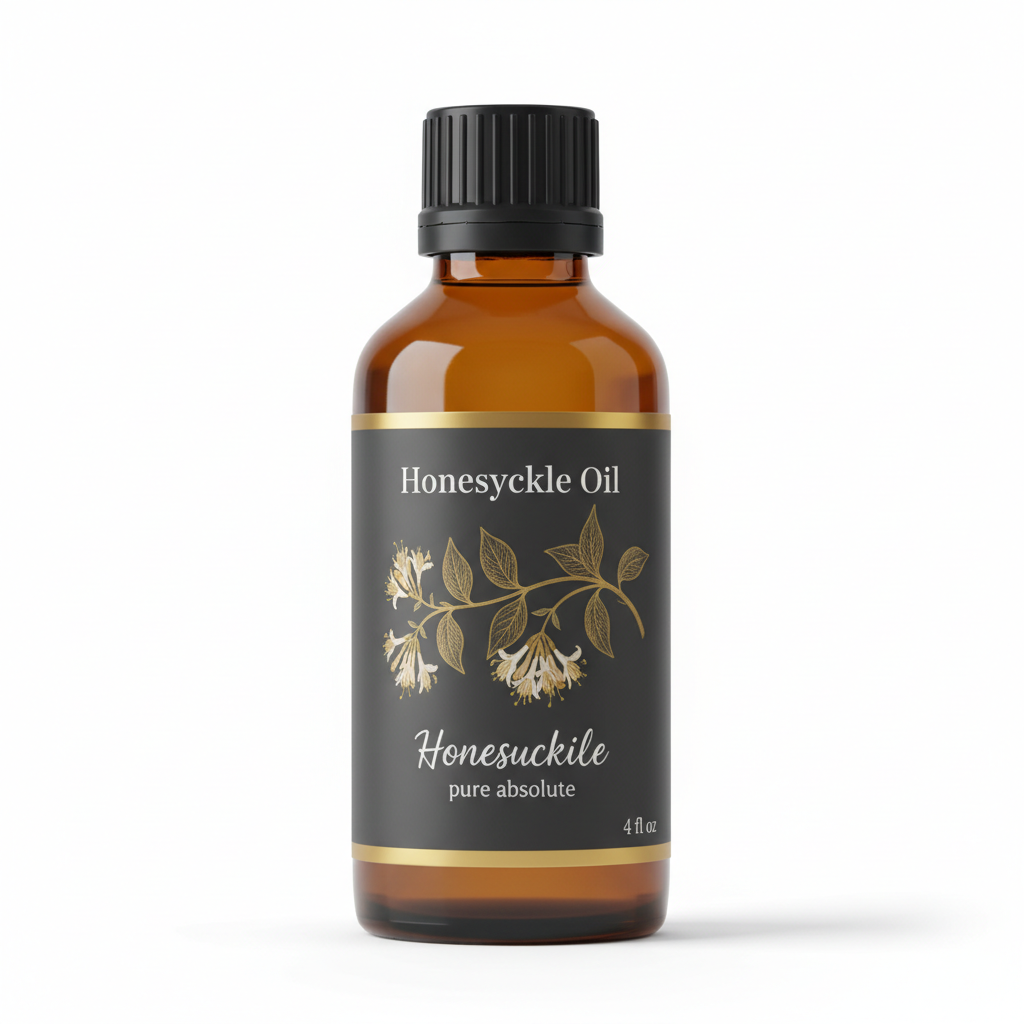
Honeysuckle Absolute
Our own Honeysuckle Absolute, in sizes from 0.5 oz to bulk.
From $13.99
Shop Now →The certificate we publish, line by line
The published certificate is for batch HONLUUUNUNC007A. It names the product "Honeysuckle Oil", the botanical name Lonicera japonica, the part used as flower, the extraction method as solvent extraction, and a criterion of "Pharmacopoeia". It prints a best-by of 02/05/2027 without saying whether that is 5 February or 2 May. The table shows every measured or checked line on the page.
| Test | Standard window | Batch result |
|---|---|---|
| Appearance | pale yellow to yellow liquid | complies |
| Smell | unique aroma of honey suckle | complies |
| Relative density at 20 C | 0.950 to 1.035 | 0.989 |
| Refractive index at 20 C | 1.410 to 1.530 | 1.509 |
| Optical rotation at 20 C | -5 to +5 degrees | +1.88 degrees |
The conclusion line says all tested parameters comply with pharmacopoeia standards for genuine Honeysuckle Oil (Lonicera japonica). That is the whole document. There is no GC-MS table, no constituent percentages, no residual solvent figure, no dilution or carrier check, no flash point, no peroxide value and no IFRA statement.
What each number can and cannot tell you
The three physical tests each have an ISO method for essential oils: ISO 279:1998 for relative density at 20 C, ISO 280:1998 for refractive index, and ISO 592:1998 for optical rotation. ISO's catalogue pages describe each as a method standard and show all three as confirmed in a 2026 review. We have read those catalogue entries, not the paid method texts, and the certificate does not say which method the laboratory used, so we cannot tell you it followed these editions.
The catalogue entry for ISO 592 adds one detail worth knowing: for solid, partially solid, highly viscous or highly colored oils, the reading is taken on a solution of the oil. An absolute is often viscous and colored, so an optical rotation figure raises a question the certificate does not answer: was it measured neat or in solution, and in which solvent?
Now the arithmetic on the windows. The density window runs 0.950 to 1.035, a span of 0.085. Our 0.989 sits 0.039 above the bottom, about 46 percent of the way through the window. The refractive index window runs 1.410 to 1.530, and 1.509 sits about 83 percent of the way up. The optical rotation window straddles zero, so any reading from -5 to +5 passes, and a reading of +1.88 is a pass that distinguishes almost nothing, since a large share of the possible values would have passed.
That is our plain verdict: the windows are wide, so the three numbers show a plausible liquid, not an identity. A fragrance oil, a blend or a diluted absolute could land inside the same windows. We cannot show from this document that a different liquid would have failed, because the document does not tell you what the windows were derived from. The "Pharmacopoeia" criterion does not name which pharmacopoeia, so you cannot look the window up.
What identification would look like
Identity for a plant extract normally rests on its chemistry, not three bulk properties. To see how many compounds are involved, consider one 2025 paper in Molecules (Dec 2025). It analyzed dried flower buds of Lonicera japonica, 32 samples from four Chinese origins, and found 80 volatile compounds by headspace SPME-GC-MS and 57 by headspace GC-IMS, with 34 volatiles that differed significantly between origins. The authors state that the study was not quantitative and that group sizes were small (5 to 10). It studied dried buds used in medicine, not an absolute, so it tells you about the scale of natural variation, not about our product.
The point for a buyer: an absolute made from this species carries a long list of volatile compounds, and a lab can report them as a chromatogram or table. Our certificate carries none. If your project needs to know that, say, a lot matches a reference profile, you need the GC-MS report, not this certificate.
Four documents to ask for in writing
- GC-MS report for the lot you will receive, with the lot number on it and the laboratory named.
- Residual solvent result. A hexane-then-ethanol process leaves a question about residues, and our own how-it-is-made page says residual hexane is quantified per lot, but the published certificate holds no such figure, so ask for the number for your lot, in writing, before you order. Our solvent residue explainer covers what the figure means.
- IFRA documentation. We publish no IFRA certificate. We read the compiled IFRA Standards, up to the 51st Amendment (January 2024), and found no Standard naming Lonicera or honeysuckle, though it does contain Restriction Standards for two jasmine absolutes. IFRA's 52nd Amendment was in consultation as of its 31 August 2026 update, so this can change. See IFRA usage limits for honeysuckle absolute, and ask a regulatory consultant if you sell finished products.
- Safety data sheet and a stated best-by basis. We publish no SDS. The certificate's best-by date is printed, but the shop pages disagree among themselves on storage life, so we do not state one. Ask any supplier what the date is based on.
A check you can do yourself
Weigh a measured volume. One ml of a liquid with relative density 0.989 weighs about 0.989 g, so 10.00 ml should weigh near 9.89 g on a decent scale. A reading of 9.2 g or 10.6 g would be a reason to ask questions, though a reading that matches proves little, for the reason above. It also depends on measuring at room temperature, since the certificate is stated at 20 C.
Smell is the other check the certificate lists, and it is the weakest: "complies" with "unique aroma of honey suckle" is the laboratory's judgment, not a described profile. Judge the scent against your own reference, and read the label-reading guide for the wording on bottles.
How this applies to any supplier
When you compare certificates, look for whether the lot number matches your bottle, whether the method standard is named, whether the windows are narrower than the three above, and whether anything beyond bulk properties is reported. A batch certificate for one lot says nothing about later lots, and ours is dated to the batch shown. For ranking criteria beyond paperwork, see the complete quality guide.
Our absolute is sold neat in sizes from 0.5 oz to 400 lb, and the same published certificate covers every size. If your use needs more evidence than that, request the documents above in writing before you buy.
Honeysuckle Absolute
Honeysuckle Absolute from our own shop, in sizes from 0.5 oz to bulk.
From $13.99
Shop Now →Sources & Further Reading
- ISO, 1998 (confirmed 2026). ISO 279: Essential oils, determination of relative density at 20 C, reference method. committee.iso.org/standard/25308
- ISO, 1998 (confirmed 2026). ISO 280: Essential oils, determination of refractive index. committee.iso.org/standard/25309
- ISO, 1998 (confirmed 2026). ISO 592: Essential oils, determination of optical rotation. committee.iso.org/standard/25311
- Molecules, 2025. Differential analysis of volatile and non-volatile compounds in Lonicerae japonicae flos across four origins. pmc.ncbi.nlm.nih.gov/articles/PMC12787219
- IFRA, 2024. The complete IFRA Standards up to and including the 51st Amendment. ifrafragrance.org (IFRA Standards PDF)
- IFRA, 2026. End of Consultation Letter, 52nd Amendment (news item, 31 Aug 2026). ifrafragrance.org/latest-updates