
Reading an Absolute's Label Before You Order: Extraction, Dilution, and Lot
A small bottle of honeysuckle absolute can cost anywhere from eight dollars to over a hundred. The label is often the only thing standing between a smart purchase and a disappointing one. Yet most buyers spend more time reading the shipping options than the product label itself.
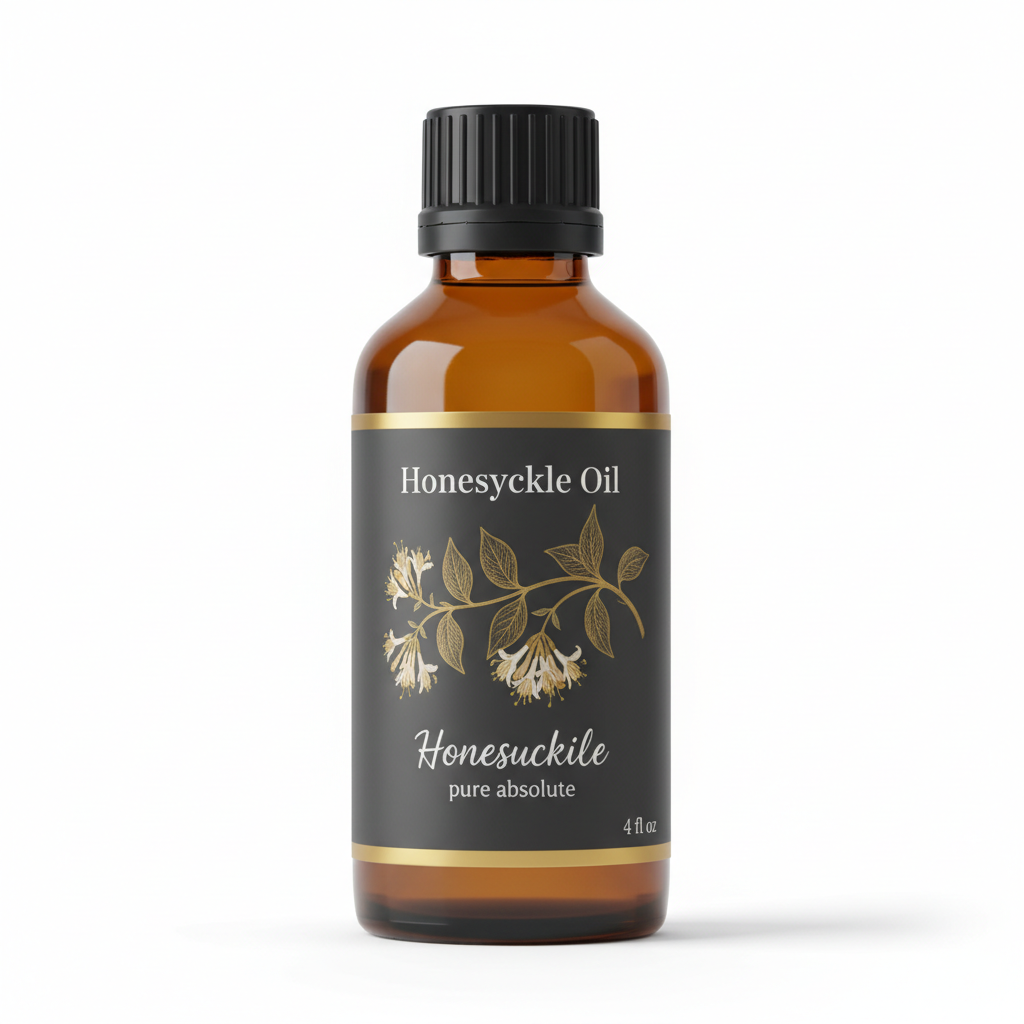
Honeysuckle Absolute
Our own Honeysuckle Absolute, in sizes from 0.5 oz to bulk.
From $13.99
Shop Now →This guide walks you through every meaningful field on an absolute's label, in the order you're most likely to encounter them. By the end, you'll know exactly which numbers and phrases to look for, which to question, and which missing details should make you pause before clicking "Add to Cart."
If you're still deciding between product types, the article on honeysuckle absolute vs. honeysuckle fragrance oil covers that foundational distinction first. For a broader purchasing framework, the complete quality guide to buying honeysuckle oil is a useful companion read.
What You Need Before You Start
You don't need lab equipment. You need a few minutes of focused attention and a short checklist. Keep the following on hand:
- The product listing page (open in a browser tab, not just the cart)
- The supplier's full ingredient or specification sheet, if available as a download
- A basic dilution reference (2% dilution equals roughly 12 drops per ounce of carrier oil)
- A notepad or phone notes app to log lot numbers for your records
- This article as a step-by-step reference
That's it. The process is methodical, not technical.
Step-by-Step: How to Read the Label
Step 1: Find the Common Name and the Botanical Name
Every reputable absolute label carries two names for the source plant. The common name ("honeysuckle") tells you what most people call it. The botanical name tells you the actual species.
For honeysuckle, the species you'll encounter most often in the absolute trade is Lonicera japonica. Some suppliers work with Lonicera caprifolium instead. Both are legitimate; they are different plants with different aromatic profiles. A label that says only "honeysuckle absolute" without a Latin name is giving you less information than you need.
What to do: Copy the botanical name into your notes. If neither name appears anywhere on the label or the listing, ask the supplier directly before ordering.
Step 2: Identify the Extraction Method
This is the field that separates a true absolute from other products. Absolutes are produced through solvent extraction, followed by alcohol washing to remove the waxy concrete. The label should say one of the following: "solvent extracted," "absolute," or occasionally "concrete" (a different, waxier intermediate product).
If the label says "steam distilled" alongside the word "absolute," that is a contradiction. Steam distillation produces essential oils, not absolutes. Honeysuckle blossoms do not yield a commercially useful essential oil through steam distillation; the delicate aromatic compounds are too fragile for that process. A label making that claim deserves serious scrutiny.
You can read more about why this matters in the article on spotting fake honeysuckle oil. The short version: a steam-distilled "honeysuckle essential oil" at a low price point is almost certainly a fragrance blend, not a botanical absolute.
What to do: Confirm the label says "solvent extracted" or simply "absolute." Note the solvent used if it's listed (hexane is industry standard; supercritical CO2 extraction is a newer alternative worth knowing about).
Step 3: Locate the Dilution Rate
This step is where many buyers get tripped up, often because they don't realize a dilution exists at all.
Honeysuckle absolute in its undiluted state is thick, deeply concentrated, and expensive. Many suppliers pre-dilute it in a carrier oil (jojoba and fractionated coconut oil are common choices) to make it easier to handle and more affordable per bottle. This is a completely standard and honest practice, provided it is disclosed clearly on the label.
A properly labeled diluted absolute will state something like: "10% honeysuckle absolute in jojoba oil" or "diluted: 20% in fractionated coconut oil." The percentage tells you how much true absolute you're getting per volume. A 10% dilution means 10 parts absolute to 90 parts carrier.
Why does this matter for ordering? Because it affects value comparisons directly. A 5 mL bottle of undiluted absolute and a 5 mL bottle of 10% diluted absolute are not the same purchase. You are getting one-tenth the absolute in the diluted version. Neither is wrong to sell; only the unlabeled version is a problem.
What to do: Find the dilution percentage and the name of the carrier oil. If the label says only "absolute" with no dilution disclosure and the price seems low, ask the supplier whether it's pre-diluted. Record the dilution rate in your notes alongside the price so you can compare across suppliers accurately.
Common mistake: Assuming a higher price always means undiluted. Some small-batch suppliers charge a premium for a well-sourced 10% dilution in a quality carrier. Price alone is not a reliable signal.
Step 4: Check the Country of Origin
Country of origin on a botanical absolute label is not window dressing. It tells you something about the growing conditions, the harvest season, and sometimes the extraction infrastructure available to producers in that region.
Much of the commercial Lonicera japonica absolute supply comes from China and India. France and Egypt produce smaller quantities of Lonicera-derived materials for the fine fragrance market. None of these origins is inherently better or worse. What matters is whether the supplier can tell you something specific about the region: province, cooperative, farm partner, or distillation facility.
A label that lists "origin: Asia" is being vague in a way that may or may not reflect the supplier's actual knowledge. A label that says "Yunnan Province, China" signals a supplier with closer contact to the supply chain.
What to do: Note the country of origin. If only a continent or region is listed, check whether the supplier's website or product page offers more detail.
Step 5: Read the Lot Number and Batch Date
This is the most overlooked field on an absolute label, and one of the most important for repeat buyers.
A lot number is a supplier's internal tracking code for a specific production batch. When you find a honeysuckle absolute you love, the lot number is the only way to request the same material again. Aromatic character can shift meaningfully between harvests and between extraction batches. The floral profile you fell in love with in lot 2024-HJA-04 may differ subtly from lot 2025-HJA-01, even from the same supplier and the same farm.
Batch date tells you how old the material is. Absolutes are more stable than essential oils, but they are not indefinitely shelf-stable. Most honeysuckle absolutes are best used within two to three years of the extraction date. A lot number without any associated date, or a product page that cannot supply a batch date on request, is a gap worth addressing before you order a large quantity.
What to do: Write down the lot number from the label or the product listing. If no lot number appears, contact the supplier and ask. Reputable operations track this information even when they don't print it prominently.
Tip: Keep a simple log: supplier name, lot number, order date, and a brief scent note from your first impression. Three months later, that log becomes genuinely useful.
Step 6: Look for Safety and Usage Guidance
A responsible supplier labels absolutes with basic usage guidance. For skin application, look for a recommended dilution range. For absolutes sold undiluted, 0.5% to 2% in a carrier oil is a widely cited starting point for most leave-on cosmetic applications, though exact figures vary by product and individual sensitivity.
The label should note whether the product is for external use only, and ideally whether it has been tested for dermal safety. Some suppliers include an IFRA (International Fragrance Association) compliance statement, which signals that the material has been evaluated against established cosmetic usage guidelines.
Always perform a patch test before applying any new absolute to a larger area of skin. Apply a small amount of your diluted blend to the inner forearm, cover lightly, and wait 24 hours before wider use. Consult a qualified healthcare provider if you are pregnant, nursing, or have underlying sensitivities, before adding new botanical products to your routine.
Common mistake: Skipping the patch test because "it's a small amount." Absolutes are concentrated extracts. Dilution matters, and individual responses vary.
Step 7: Cross-Reference the Label Against the Listing Description
Once you've worked through the physical or photographed label, compare every data point against the product listing text. Discrepancies are informative.
If the listing says "pure, undiluted" but the label mentions a carrier oil in the ingredient list, that's a conflict worth resolving before purchase. If the botanical name on the label differs from the name in the listing description, ask which is correct. Good suppliers welcome these questions. Suppliers who respond defensively or vaguely to straightforward label questions are telling you something important.
What to do: Use the label as the primary source of truth. The listing is marketing copy; the label is documentation.
A Quick Reference: What a Strong Absolute Label Includes
| Label Field | What to Look For | Red Flag |
|---|---|---|
| Botanical name | Full Latin binomial (genus and species) | Common name only |
| Extraction method | "Solvent extracted" or "absolute" | "Steam distilled" on a honeysuckle absolute |
| Dilution disclosure | Percentage and carrier oil named | No disclosure on a low-priced product |
| Country of origin | Specific country or province | Continent-level only with no detail available |
| Lot number | Alphanumeric batch code | No lot number, no batch tracking available |
| Batch or fill date | Year and ideally month of extraction or filling | No date information at all |
| Usage guidance | Dilution recommendation, external use statement | No guidance, no IFRA reference |
What to Expect After You Apply These Steps
Working through this checklist before ordering takes about five minutes per product. That small investment tends to produce noticeably better purchasing outcomes over time. Buyers who track lot numbers and dilution rates consistently report fewer surprises when their order arrives, and they're better positioned to reorder confidently when they find something that performs well in their blending or personal care routine.
You may also find that some products you were previously enthusiastic about no longer pass the label review. That's the checklist doing its job. A honeysuckle absolute label that answers all seven of these steps clearly is a supplier demonstrating transparency about what's in the bottle. That transparency is worth paying for.
For more on distinguishing quality sources before your first order, the complete quality guide to buying honeysuckle oil covers supplier vetting, GC/MS documentation, and pricing benchmarks in detail.