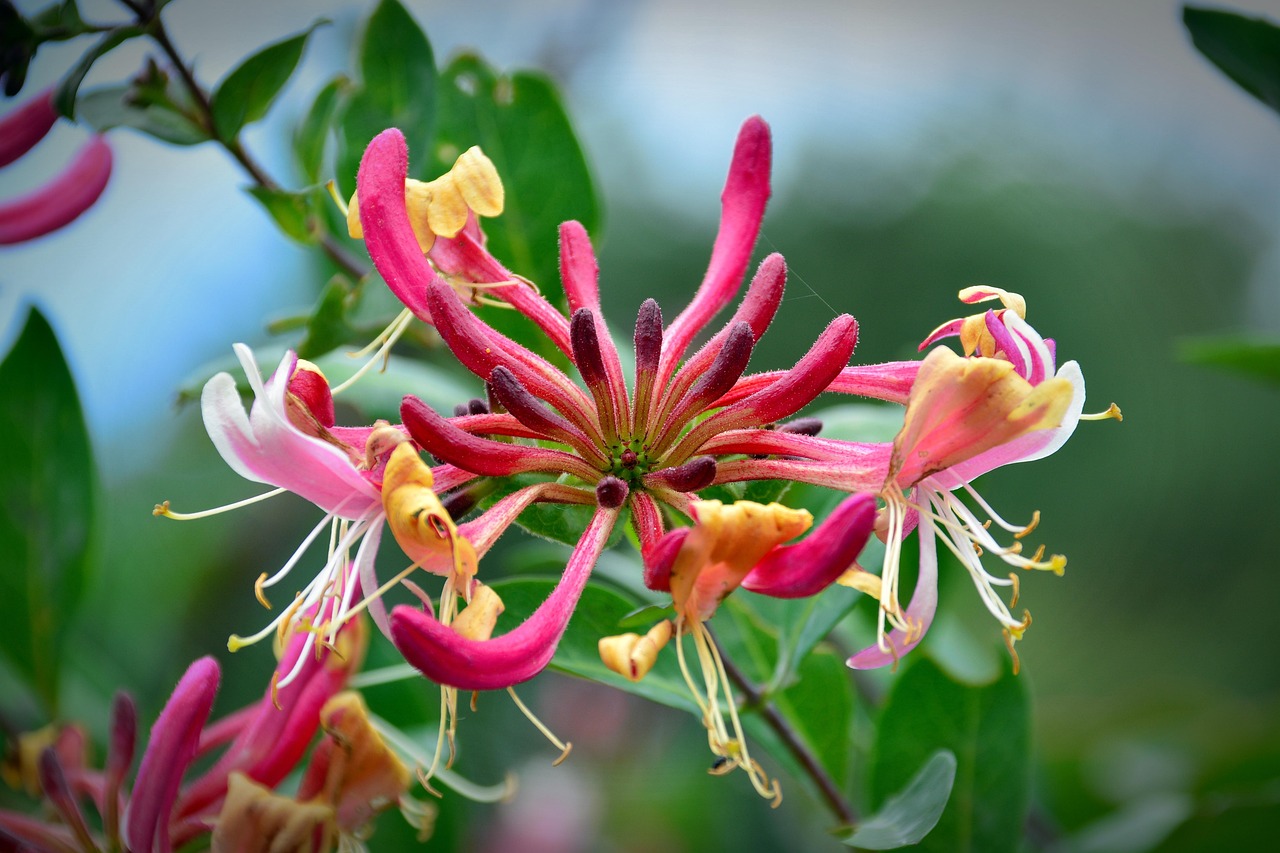
Spotting Fake Honeysuckle Oil: Why Most Bottles Are Not the Real Flower
Pick up almost any bottle labeled "honeysuckle essential oil" at a mass-market retailer, and the odds are not in your favor. The fragrance may be pleasant enough. The price may feel reasonable. But the liquid inside is almost certainly not what the label suggests. Understanding why requires a short detour into botany, extraction science, and the economics of the fragrance supply chain.
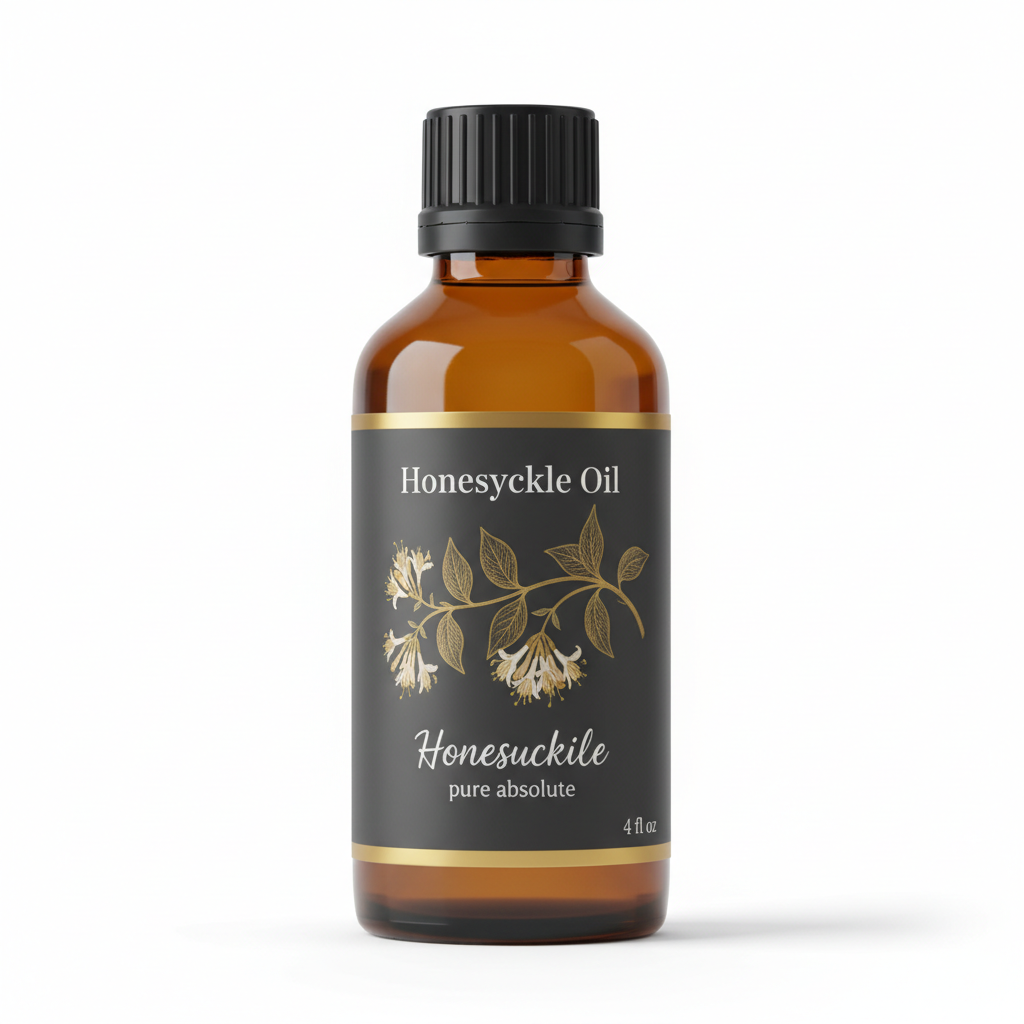
Honeysuckle Absolute
Our own Honeysuckle Absolute, in sizes from 0.5 oz to bulk.
From $13.99
Shop Now →This guide exists to help you cut through the noise. We will look at what genuine honeysuckle oil actually is, how to evaluate what you are buying, which red flags to watch for on a product listing, and where to find bottles that are genuinely worth your money. If you want the deeper sourcing and pricing context, our honeysuckle absolute price guide covers the economics in full detail.
The Core Problem: Honeysuckle Does Not Steam-Distill
Here is the fact that unlocks everything else: the flowering parts of honeysuckle (Lonicera japonica and related species) do not yield a stable essential oil through conventional steam distillation. The aromatic compounds in the blossom are delicate, largely water-soluble, and they do not survive the heat of a distillation still in any meaningful concentration.
True honeysuckle aromatic extracts exist, but they are produced through solvent extraction or CO2 extraction, and the resulting material is called an absolute or an extract, not an essential oil. Honeysuckle absolute is viscous, often a pale golden color, and carries a nuanced, slightly green, richly floral scent that synthetic versions rarely replicate convincingly.
So when a bottle reads "honeysuckle essential oil" and lists a price of eight to fifteen dollars for 10 ml, one of two things is true. Either the product is a synthetic fragrance oil mislabeled as an essential oil, or it is a carrier oil (often jojoba or fractionated coconut) blended with a synthetic honeysuckle fragrance compound. Neither is necessarily a bad product for general fragrance use, but neither is a pure honeysuckle oil derived from the actual flower.
What Fake Honeysuckle Oil Actually Contains
The word "fake" covers a spectrum. Some products are straightforwardly deceptive. Others are more accurately described as mislabeled fragrance blends.
- Pure synthetic fragrance oils: These are lab-created aromatic compounds designed to approximate the scent of honeysuckle. They are not derived from the plant. They are used widely in candles, soaps, and perfumery, and there is nothing wrong with them for those purposes. The problem arises when they are sold under language that implies botanical origin.
- Diluted fragrance in carrier oil: A synthetic honeysuckle fragrance is blended into a neutral carrier like sweet almond or jojoba at roughly 1 to 5 percent concentration, then sold as "honeysuckle oil" without clarifying that the aromatic component is synthetic.
- Essential oil blends with honeysuckle scent: Sometimes a blend of other botanical oils (ylang ylang, jasmine, geranium) is formulated to approximate honeysuckle and labeled as such. This is more defensible from a "natural" standpoint, but it is still not honeysuckle.
- Genuine honeysuckle absolute, mislabeled as essential oil: This is the least problematic category. The extract is real and botanical, but the terminology is incorrect. Some smaller producers use "essential oil" loosely.
Quality Indicators: What to Look For
Knowing what authentic product looks like makes it much easier to evaluate listings confidently.
Correct Botanical Terminology
Any reputable supplier of genuine honeysuckle extract will use precise language. Look for terms like "honeysuckle absolute," "Lonicera japonica absolute," or "Lonicera japonica CO2 extract." The Latin binomial on the label is a strong signal of quality sourcing. A label that says only "honeysuckle essential oil" with no Latin name and no extraction method listed is a red flag.
Extraction Method Disclosure
Legitimate producers disclose how their extract was made. Solvent extraction producing an absolute is the most common method for honeysuckle. Some producers use supercritical CO2 extraction, which leaves no solvent residue. Both are acceptable. If the listing makes no mention of extraction method, that absence is informative.
Country of Origin
The majority of the world's honeysuckle absolute comes from China, where Lonicera japonica cultivation is extensive and well-established. Some production also occurs in Japan and parts of Southeast Asia. A product with no country of origin listed, or one claiming European origin for honeysuckle absolute at a low price, warrants skepticism.
Price as a Quality Signal
Genuine honeysuckle absolute is expensive to produce. The flowers are hand-harvested at peak bloom (often pre-dawn, when aromatic intensity is highest), and solvent extraction yields are low relative to flower volume. A realistic price for authentic honeysuckle absolute starts around $30 to $50 for 1 to 2 ml from a reputable supplier, scaling upward depending on concentration and quality grade. If a 10 ml bottle is priced at $10 and labeled as pure honeysuckle, the math does not work.
Our full breakdown of why authentic florals cost what they do is in the honeysuckle absolute price guide, if you want to understand the supply chain in detail.
Supplier Transparency
The best suppliers provide gas chromatography and mass spectrometry (GC/MS) reports for their aromatic extracts. These reports show the chemical constituent profile of the oil, which serves as a kind of fingerprint for authenticity. If a supplier offers GC/MS data on request or publishes it openly, that is a strong credibility marker. If they cannot or will not provide it, you have less basis for confidence.
Key Features to Compare When Shopping
| Feature | Authentic Honeysuckle Absolute | Synthetic / Mislabeled Product |
|---|---|---|
| Label terminology | "Absolute" or "CO2 extract" with Latin name | "Essential oil" with no extraction detail |
| Color and viscosity | Pale yellow to golden, viscous | Clear and thin (if in carrier oil) |
| Scent character | Complex, slightly green-floral, evolves on the skin | One-dimensional, uniformly sweet, stable |
| Price range (1-2 ml) | $30 and above | Under $15 for 10 ml or more |
| GC/MS report available | Yes, typically | Rarely |
| Country of origin listed | Yes (usually China, Japan) | Often absent |
Red Flags to Avoid
These are the patterns that should prompt you to look elsewhere before purchasing.
- "100% Pure Honeysuckle Essential Oil" at drugstore prices. This phrasing combines a claim of purity with a product category (essential oil) that does not exist for honeysuckle at any price. Alarm bells.
- No Latin name on the label or listing. Reputable botanical suppliers always include the Latin binomial. Its absence suggests a fragrance house rather than a botanical supplier.
- Extremely uniform, candy-sweet scent with no complexity. Real honeysuckle absolute has green top notes, a slightly waxy mid-note, and an evolving dry-down. Synthetics tend to be consistently sweet and static.
- "Blended with carrier oil" buried in fine print. This is not inherently dishonest, but if the dilution ratio is not stated clearly, you have no way of knowing what percentage is aromatic versus carrier.
- Marketplace listings with no supplier backstory. Generic white-label products sold by accounts with no identifiable brand, no sourcing story, and no contact information beyond a fulfillment address deserve skepticism.
- Claims of water-distilled honeysuckle oil. As established above, steam distillation does not produce a commercially viable honeysuckle oil. Any supplier claiming otherwise is either misinformed or misleading you.
Top Picks at Different Price Points
Rather than naming specific brands (which can shift in quality or availability), we can describe the categories of suppliers that reliably deliver authentic product, and what to expect at each tier.
Entry Level: Quality Fragrance-Grade Blends ($8 to $20 for 10 ml)
If budget is the primary constraint, the honest move is to buy from a reputable fragrance oil supplier who is transparent about the synthetic nature of their product. Companies like Brambleberry, New Directions Aromatics (fragrance oil line), or similar cosmetic-grade fragrance suppliers offer honeysuckle scents that are clearly labeled as fragrance oils, not essential oils or absolutes. These work beautifully in candles, bath products, and DIY room sprays. The key is that the supplier is not pretending the product is something it is not.
Mid-Tier: Genuine Honeysuckle Absolute, Small Volume ($30 to $60 for 1 to 2 ml)
This is where authentic honeysuckle absolute becomes accessible for home perfumers and serious aromatics enthusiasts. Suppliers like Eden Botanicals, Hermitage Oils, and White Lotus Aromatics (among others in the specialty botanical extract market) offer small-volume absolutes with sourcing documentation. At this tier, you should expect a GC/MS report to be available, a clearly stated country of origin, and a scent that rewards close attention. A little goes a very long way at this concentration.
Professional and Perfumery Grade ($80 and above for 5 ml)
At this level, you are typically buying from perfumery ingredient suppliers such as Robertet, Berjé, or their authorized distributors. These products are intended for formulators and fragrance professionals. They come with full documentation, precise constituent profiles, and lot traceability. If you are building a botanical perfume or developing a product line, this is the appropriate tier. The scent quality at this level is noticeably more complex and true-to-flower than anything available at lower price points.
For a side-by-side look at how honeysuckle absolute stacks up against other white floral extracts in this price range, see our comparison of honeysuckle vs. jasmine absolute.
Where to Buy Pure Honeysuckle Oil
The short answer: buy from specialty botanical extract suppliers, not general marketplaces. Here is the longer version.
Specialty Aromatics Suppliers
Companies whose entire business model is built around botanical extracts have strong incentives to source accurately and label honestly. Their reputation depends on it. Look for suppliers who publish supplier relationships, participate in industry organizations, and respond to direct questions about sourcing.
Perfumery Ingredient Retailers
Platforms like Perfumer's Apprentice, Tisserand (for select items), and similar specialty retailers serve professional formulators and are therefore held to higher labeling standards. They also tend to offer genuine absolutes alongside synthetic accords, with clear distinction between the two.
Direct from Small-Batch Producers
A small but growing number of farms and artisan extract producers sell direct to consumers. If you can find a producer with a verifiable farm location, harvest documentation, and direct contact, this is often the most trustworthy source of all, though availability can be seasonal and limited.
Avoid These Channels for Authentic Product
Large general marketplaces (where any seller can list any product with minimal vetting), discount health food stores, and gift shops are rarely reliable sources of genuine honeysuckle absolute. They may carry pleasant honeysuckle-scented products, but authenticity is not a priority in those retail environments.
For a broader framework on evaluating any honeysuckle oil purchase, the complete honeysuckle oil quality guide walks through every checkpoint from label to scent to supplier vetting.
A Note on Using What You Buy
Whether you ultimately purchase a genuine honeysuckle absolute or a high-quality synthetic fragrance oil, a few practical points apply to both.
Genuine absolutes are highly concentrated and should be diluted before skin contact. For cosmetic use, a dilution of 0.5 to 1 percent in a carrier oil is a reasonable starting point. Always perform a patch test before broader skin application, as some individuals may find concentrated florals sensitizing. Synthetic fragrance oils vary widely in their skin-safety profiles; check IFRA (International Fragrance Association) compliance data from your supplier before using any fragrance oil in a leave-on product.
Storage matters for both types. Keep bottles cool, dark, and tightly sealed. Genuine absolutes can oxidize over time, which changes the scent profile. A small refrigerator dedicated to aromatics is not excessive if you invest in quality extracts.
The world of white floral extracts rewards patience and skepticism in equal measure. A bottle that smells right and costs very little is almost always telling you something. Take the time to ask the questions outlined here, and the honeysuckle you bring home will actually be honeysuckle.