
IFRA Limits and Honeysuckle Absolute: What We Could Check
There is no IFRA usage limit for honeysuckle absolute to quote, because we found no IFRA Standard that names it. On 27 October 2026 we searched the IFRA Standards library, which lists amendments up to the 51st, for Lonicera, honeysuckle, caprifolium and japonica, and for CAS 8023-93-6. Each search returned nothing. We publish no IFRA certificate for our absolute. This guide walks through what an IFRA limit is, how you would find one, and why "no Standard by that name" is a narrower statement than "no limit applies."
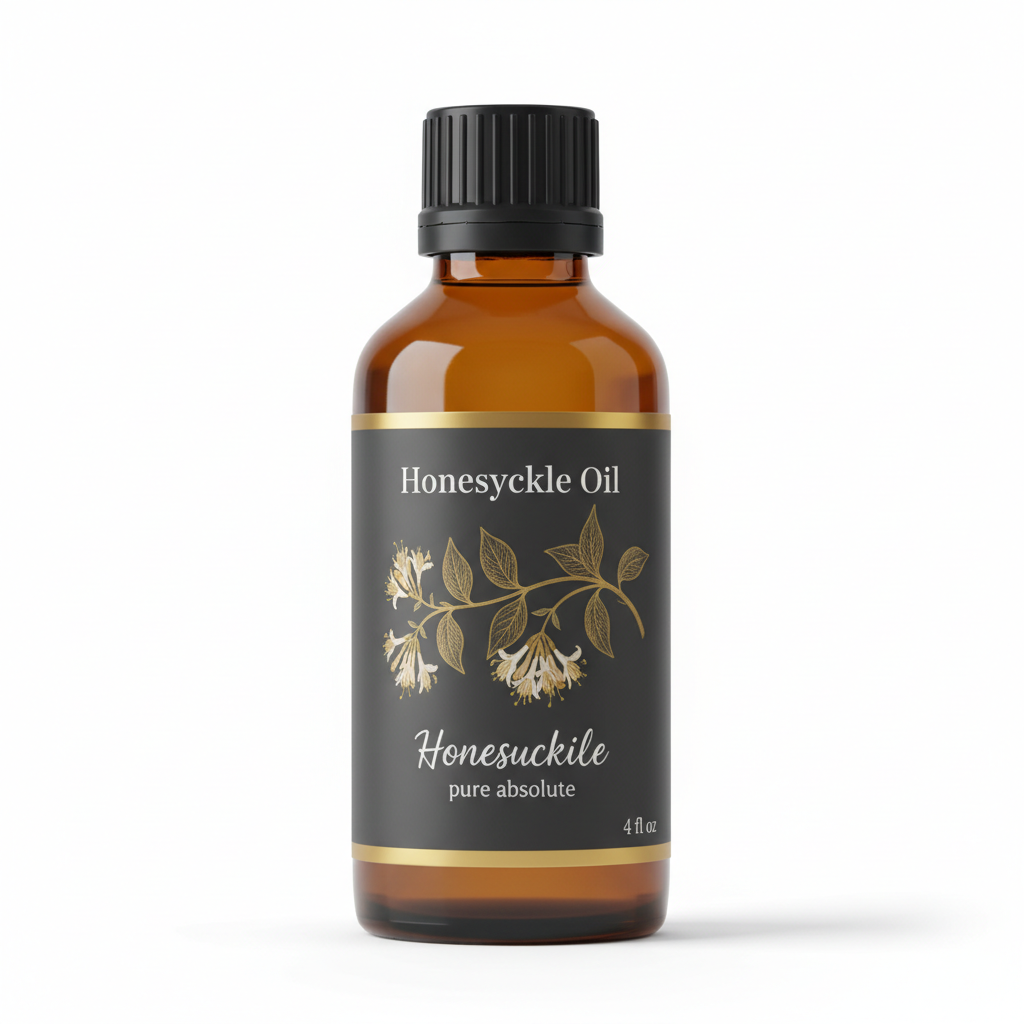
Honeysuckle Absolute
Our own Honeysuckle Absolute, in sizes from 0.5 oz to bulk.
From $13.99
Shop Now →Step 1: know what IFRA is and is not
IFRA, the International Fragrance Association, is the fragrance industry's self-regulatory body. Its Standards are drawn from safety assessments by RIFM (the Research Institute for Fragrance Materials), endorsed by an independent Expert Panel, and IFRA says they are compulsory for IFRA members, who it says produce around 80 per cent of the global volume of fragrance. They come in three types: a prohibition (a ban), a restriction (a maximum quantity and/or limits on the products in which a material can be used) and a specification (conditions such as purity criteria). IFRA's page also says the final responsibility for the safe use of any fragrance material rests with the company supplying it. A Standard is not a statute; the law in your market (the EU Cosmetics Regulation, US FDA rules) sits separately, IFRA says its Standards are recognized by government authorities and trade bodies around the world.
Scope matters. The 51st Amendment guidance (30 June 2023) says all fragranced consumer products are in scope except those not covered by the RIFM safety assessments, and it lists medical devices, prescription drugs, aromatherapy applications and consumer products used in occupational settings among the exclusions. So an IFRA limit would not answer every way people use honeysuckle absolute, and absence of one does not tell you an aromatherapy use is fine.
Step 2: find your product's category
Limits are set per product category, because the same fragrance dose on lips, in a candle and in a shower gel produces very different skin exposure. The 51st Amendment guidance sets out 12 categories, several with subcategories:
| Category | Products | Examples from the guidance |
|---|---|---|
| 1 | Applied to the lips | |
| 2 | Applied to the axillae | Deodorants and antiperspirants |
| 3 | Face or body with fingertips | Eye products |
| 4 | Fine fragrance | Fine fragrance products |
| 5A to 5D | Body, face, hand, baby products with palms, mostly leave-on | Body creams, oils and lotions are 5A; facial moisturizers 5B; hand cream 5C |
| 6 | Oral and lip exposure | Toothpaste |
| 7A, 7B | Hair, rinse-off and leave-on | Hair sprays |
| 8 | Significant anogenital exposure | Baby wipes |
| 9 | Body and hands, mainly rinse-off | Body washes, shower gels |
| 10A, 10B | Household care, mostly hand contact | |
| 11A, 11B | Minimal transfer to skin from an inert substrate | With or without UV exposure |
| 12 | Not intended for direct skin contact | Candles of all types |
Candles sit in category 12. The guidance's rationale for candles is that skin exposure is expected to be negligible, so for the sensitization endpoint "the concentration of fragrance ingredient is not restricted in the finished product." That statement concerns sensitization limits; it is not a blanket clearance, and other endpoints and your insurer's wishes can differ. For making candles, see scenting soy candles.
Step 3: search the library for the material
The IFRA Standards library at ifrafragrance.org is a searchable table of every Standard with CAS numbers, type (prohibition, restriction, specification), publication date and amendment. What we found: nothing for Lonicera, honeysuckle, caprifolium or japonica, and nothing for hexane or solvent. What does exist for context: "Jasmine absolute (grandiflorum)" and "Jasmine absolute (sambac)" are each restriction entries dated 2020-01 (49th Amendment), so a white-floral absolute can have a Standard, which is why a null result for honeysuckle is information rather than a gap in the tool. The 52nd Amendment is in progress: IFRA's documentation page reports an end-of-consultation letter dated 31 August 2026 after consultation closed on 12 June 2026. A Standard could therefore appear later; re-search before you rely on this, and note that this page describes one date.
Step 4: understand why a limit can attach to a constituent
A material with no Standard of its own may still carry a limit through what it contains. The library lists individual substances such as eugenol, methyl eugenol, citral, farnesol, benzyl alcohol and benzyl salicylate, each with its own Standard. A natural extract's contribution to those is a matter of its composition, which is why the IFRA guidance has an annex on contributions from other sources. Our published certificate has no constituent table, so we cannot tell you whether any listed substance is present in our absolute, or at what level. A GC-MS report from a supplier is how you would find out.
The arithmetic runs this way. The most absolute you can use equals the Standard's limit divided by the fraction of that substance in the absolute. The real example in the guidance is methyl N-methyl anthranilate, restricted to 0.10% in leave-on categories 1 to 5 and 0.50% in rinse-off categories (51st Amendment). The numbers below are hypothetical, for method only: if a substance with a 0.10% limit made up 4% of an absolute, the maximum use of that absolute is 0.10 / 0.04 = 2.5% in that category. At 10% of the absolute, 0.10 / 0.10 = 1%. So a limit written for a molecule can cap your absolute, and the same absolute can have a different cap in a rinse-off product. For honeysuckle we cannot fill in the fraction, so we do not supply a number.
Step 5: apply it to a blend, and hold the right paper
Our dilution guidance for skin is 0.5% to 2% in a carrier oil. That is our advice on the label, not an IFRA limit; see skin basics. Fine fragrance is category 4 and has its own limits; the 10% dilution article covers working at stronger dilutions. Whatever the dose, the sequence for a product you plan to sell is: identify the category; get the composition; ask the supplier for an IFRA certificate and the amendment it was issued against; run the arithmetic for each restricted constituent; keep the paperwork.
Two paper points. IFRA states that it does not itself certify compliance, and on its documentation page it provides a template certificate of conformity and a list of independent companies that certify. And the certificate is only as current as its amendment: IFRA ties compliance dates to the date a fragrance mixture leaves the fragrance house, so a certificate against an old amendment may not reflect today's Standards.
For what our certificate does show, see reading a COA. For allergens in labelling and the EU side, the allergy article; for residue, solvent residue.
What this means if you buy from us
We sell one material, the honeysuckle absolute, in sizes from 0.5 oz to 400 lb. The certificate on the product page is a certificate of analysis, not an IFRA certificate, and nothing on it states conformity to any IFRA Standard. Practically, that leaves you two routes for a product you intend to sell. You can ask any supplier, us included, in writing for composition data and an IFRA statement and keep what you receive. You can commission analysis yourself. Or you can keep the use rate low and the use personal, which avoids the paperwork but not the question of whether the dose is appropriate. Which of these suits a given product, market and insurer is a regulatory consultant's decision, not ours.
A missing Standard is a reason to ask for composition data and talk to a regulatory consultant before you sell anything, not a reason to assume the limit is generous.
Honeysuckle Absolute
Honeysuckle Absolute from our own shop, in sizes from 0.5 oz to bulk.
From $13.99
Shop Now →Sources & Further Reading
- IFRA. IFRA Standards library (searched 27 October 2026). ifrafragrance.org/standards-library
- IFRA. IFRA Standards (types, membership, certification, FAQ). ifrafragrance.org/ifra-standards
- IFRA. IFRA Standards documentation (51st Amendment essential guidance; 52nd Amendment news). ifrafragrance.org/ifra-standards-documentation
- IFRA, 2023. Guidance for the use of the IFRA Standards, 51st Amendment (30 June 2023). ifrafragrance.org guidance PDF