Honeysuckle Absolute Skin Basics: Dilution and Patch Tests
Honeysuckle absolute has a scent that stops people mid-sentence. Rich, green, faintly honeyed, it captures something that synthetic fragrance rarely manages to replicate. But before you work it into a facial oil or a bedtime body ritual, there are two fundamentals worth understanding properly: honeysuckle oil dilution and the fragrance patch test. Neither takes long. Both matter far more than most people expect.
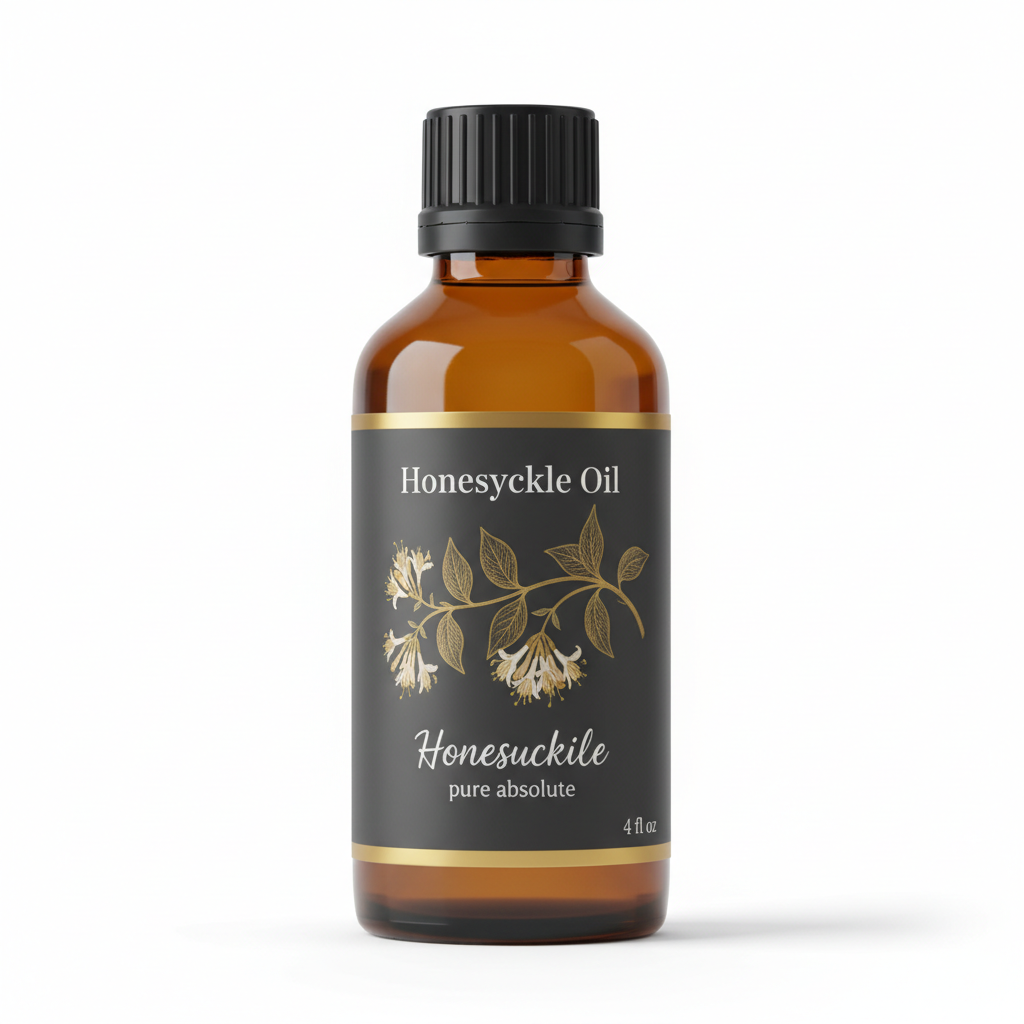
Honeysuckle Absolute
Our own Honeysuckle Absolute, in sizes from 0.5 oz to bulk.
From $13.99
Shop Now →This guide walks you through each step in plain language, with the reasoning behind every instruction. If you are new to working with absolutes and want background on what this ingredient actually is, the complete guide to honeysuckle absolute is a good place to start before coming back here.
Why Dilution and Patch Testing Are Non-Negotiable
Absolutes are concentrated botanical extracts. Unlike a diluted fragrance product you buy off a shelf, honeysuckle absolute arrives at near full potency. Applying it directly to skin without dilution increases the likelihood of sensitization, a process where repeated exposure gradually trains the immune system to react to a compound. Once sensitization develops, it tends to be permanent.
Dilution is not just a safety formality. It also affects scent performance. Highly concentrated absolutes can smell sharp or one-dimensional at full strength. Proper absolute dilution opens up the fragrance, allowing the green top notes and warm base tones to develop the way the botanical intended.
The fragrance patch test serves a separate purpose. Even at a safe dilution ratio, any ingredient can provoke a reaction in a specific individual. The patch test gives your skin a controlled introduction before you apply a product more broadly.
Materials You Will Need
- Honeysuckle absolute (see sourcing notes below)
- A carrier oil suited to your skin type (options discussed in the next section)
- A small clean glass vessel, such as a 5 ml or 10 ml amber bottle
- A pipette or dropper with clearly marked increments
- A digital scale accurate to 0.01 g, or a calibrated dropper that counts drops consistently
- A notebook or label for recording your formula
- A soft cotton pad or clean inner-wrist skin for patch testing
- A clock or timer
- Unscented liquid soap and water for cleanup
A note on carrier oils: jojoba, sweet almond, and fractionated coconut oil are popular choices because they are lightweight and have a mild scent profile that does not compete with the absolute. For facial applications, rosehip or squalane are worth considering. Avoid carriers that are already strongly scented, as blending them makes dilution percentages harder to assess by nose.
Understanding Dilution Percentages for Honeysuckle Absolute
Dilution percentage refers to how much absolute, by volume or weight, is present in your final blend. The appropriate percentage varies depending on how the product will be used.
| Application Type | Suggested Dilution Range | Notes |
|---|---|---|
| Leave-on facial products | 0.2% to 0.5% | Lower end recommended for sensitive or reactive skin |
| Leave-on body products | 0.5% to 1% | Larger surface area, slightly less sensitive than face |
| Rinse-off products (body wash, bath oil) | 1% to 2% | Contact time is brief; higher dilution is acceptable |
| Perfume oil (wrists, pulse points only) | 3% to 5% | Applied to small areas; start at 3% and adjust |
These ranges align broadly with guidance from the International Fragrance Association (IFRA), which publishes usage standards for fragrance materials including florals. For honeysuckle absolute specifically, working at or below IFRA-recommended limits for your product category is the responsible starting point. If you want deeper context on ingredient sourcing and extraction, the history of honeysuckle in garden and culture adds useful perspective on why quality varies so widely between suppliers.
How to Calculate Your Dilution: Step by Step
-
Decide on your batch size
Start small. A 10 ml test batch is enough to complete a patch test and assess scent performance without committing to a large quantity. If you love the result, scaling up is straightforward once your formula is confirmed.
-
Calculate the absolute volume needed
Multiply your batch size by your target dilution percentage. For a 1% dilution in 10 ml, the math is: 10 x 0.01 = 0.1 ml of absolute. That is a very small amount. A calibrated pipette that counts drops is essential here. Approximately 20 drops equal 1 ml for most thin-to-medium viscosity absolutes, so 0.1 ml is roughly 2 drops. Always verify with your specific pipette rather than assuming a universal drop size.
-
Measure your carrier oil
Add the carrier oil to your glass vessel first. For the 10 ml batch at 1% dilution, that means approximately 9.9 ml of carrier oil. Using a digital scale at this stage improves precision, since volume measurements for viscous liquids can carry small errors.
-
Add the absolute
Add your measured absolute to the carrier. Do this slowly. Honeysuckle absolute is viscous at cooler room temperatures. If it moves sluggishly in the bottle, briefly warm the absolute vessel in your palm for 30 to 60 seconds before drawing it into the pipette.
-
Mix gently and label immediately
Cap the vessel and roll it slowly between your palms for 30 seconds. Do not shake vigorously. Label the bottle with the date, dilution percentage, carrier oil used, and the absolute lot number if you have it. Good record-keeping saves time when you want to recreate a formula that worked well.
-
Allow time for blending
Let the blend rest for at least 24 hours before assessing the final scent. Absolutes continue to integrate with carrier oils over the first day or two. What smells slightly sharp at hour one often rounds out considerably by day two.
The Fragrance Patch Test: Step by Step
A fragrance patch test for a diluted absolute is straightforward and takes about 48 hours from start to conclusion. Do not skip this step, even if you have used honeysuckle-scented products before. Commercial products often use synthetic approximations rather than the actual absolute, so prior tolerance does not guarantee absence of reaction to the natural material.
-
Choose your test site
The inner forearm, just below the elbow crease, is the standard location. The skin there is relatively thin and sensitive, which makes it a useful indicator. Avoid testing on irritated, sunburned, or recently shaved skin.
-
Apply a small amount of your diluted blend
Apply two to three drops to the test area. Gently smooth it in. Do not rub aggressively. The goal is a thin, even layer over roughly a 2 cm patch of skin.
-
Leave it uncovered and undisturbed
Do not cover the area with a bandage unless you have a compelling reason to. Let the skin breathe. Avoid washing the area for at least 24 hours.
-
Check at 24 hours
Examine the patch site in good light. You are looking for redness, raised texture, small bumps, or any sensation that differs from the surrounding skin. If the area looks and feels completely normal, continue to the 48-hour check.
-
Final check at 48 hours
Some reactions develop slowly. A clear result at 24 hours does not guarantee a clear result at 48. Check again before proceeding to broader application. If both checks are clear, you can move forward with reasonable confidence.
-
What to do if you see a reaction
Rinse the area gently with water and mild unscented soap. Discontinue use of that blend. If any reaction is significant or does not resolve quickly, consult a qualified healthcare provider before experimenting further with the ingredient.
Common Mistakes and How to Avoid Them
Using volume estimates instead of measured drops
Eyeballing is the most common source of error in small-batch dilution. Two drops versus four drops sounds trivial, but in a 10 ml batch it doubles your concentration. Measure every time.
Testing on facial skin before patch testing
The face is more reactive than the inner arm. Always complete the arm patch test first, and give it the full 48 hours before applying anything to your face.
Rushing the blending rest period
Assessing a blend at hour one and deciding it smells wrong is premature. Give it the full 24 to 48 hour rest. You may be pleasantly surprised by how much the scent develops.
Storing diluted blends in plastic
Absolutes and carrier oils are best stored in glass. Some plastics can leach into the blend over time, altering both the scent and the composition of the product.
Ignoring sunlight exposure after application
Some botanical extracts may increase photosensitivity. After applying a honeysuckle absolute blend to exposed skin, it is a sensible precaution to avoid direct sun on the treated area for several hours, or to apply the blend in the evening as part of a nighttime routine.
What to Expect from a Well-Diluted Blend
At appropriate dilution, honeysuckle absolute applied to warm skin tends to unfold gradually. The initial impression is often green and slightly waxy. Over the first several minutes, the floral character becomes more present, with the warm, faintly sweet base emerging as the carrier oil warms to body temperature.
People who use well-diluted honeysuckle absolute blends in an evening routine often report a sense of calm and pleasant sensory transition from the activity of the day. That is an experiential observation, not a clinical one, and individual responses will vary. The scent is part of a ritual, not a formula.
If you find the fragrance too light at your initial dilution, increase by 0.5% increments. If it feels too forward or your skin shows any hint of sensitivity even without a full reaction, reduce accordingly. Formulating with absolutes is iterative by nature.
A Final Word on Quality
Dilution ratios and patch test protocols only work as intended when the starting material is what it claims to be. Adulterated or synthetic honeysuckle products labeled as absolutes are unfortunately common in the market. When sourcing, look for suppliers who provide GC-MS (gas chromatography-mass spectrometry) reports, clear origin information, and transparent extraction methods. The honeysuckle oil FAQ covers sourcing questions in detail and is worth reading before you purchase.
Getting the basics right at the start means every blend you make from here will be built on a reliable foundation. Dilute carefully, test before you commit, and keep records. The reward is a fragrance experience that stays consistent and stays safe.