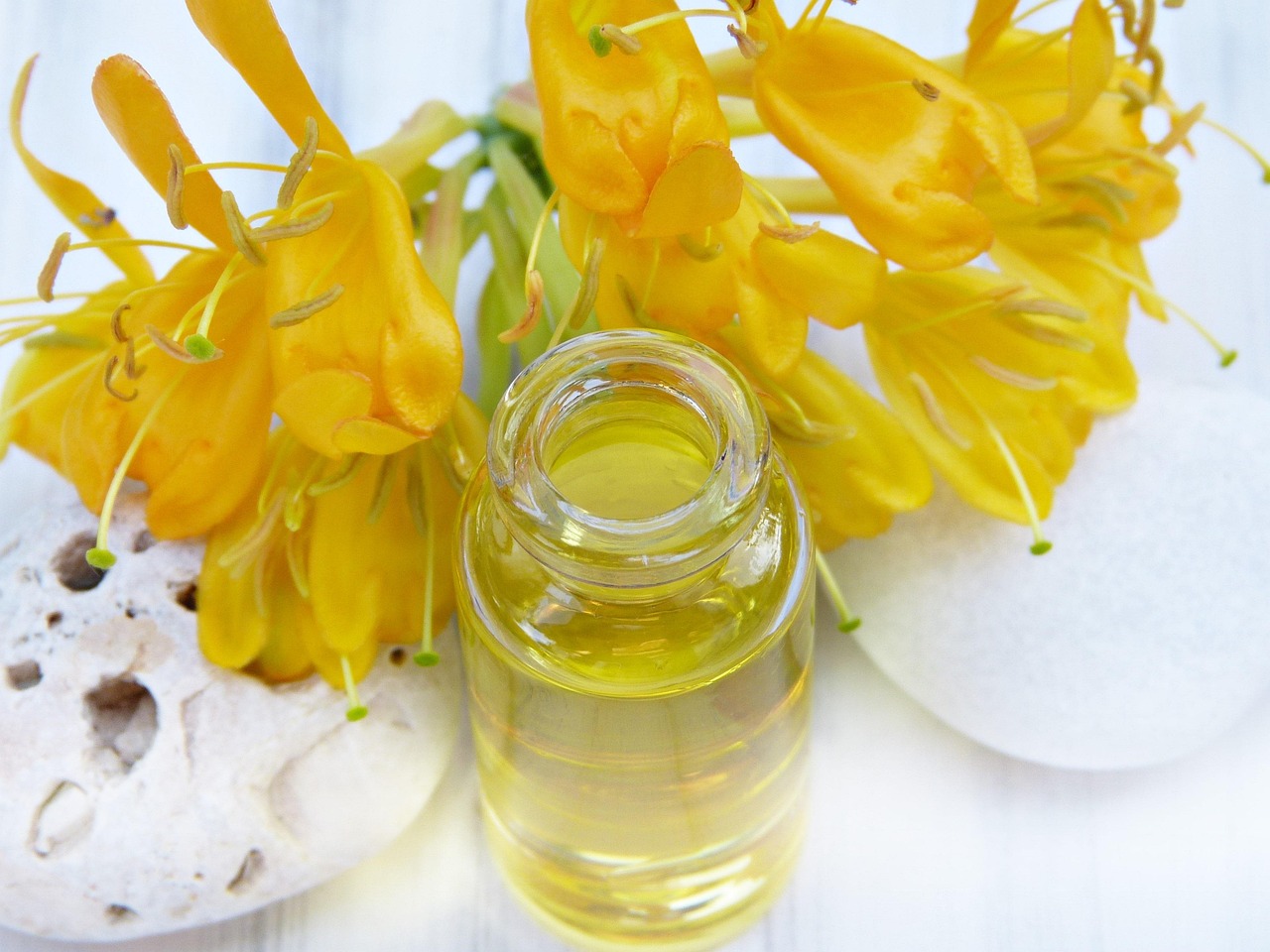
What Is Honeysuckle Oil? The Complete Guide to the Absolute
Key Takeaways
- True honeysuckle oil is an absolute, not a steam-distilled essential oil. The flower is too delicate for distillation.
- It is extracted from Lonicera japonica and related species using solvent extraction, producing one of floriculture's most complex aromatic materials.
- The scent is intensely floral, honey-like, and slightly green, with warm animalic undertones in high-quality absolutes.
- Most "honeysuckle essential oils" sold at retail are synthetic fragrance oils or diluted blends. Learning to read a label is essential.
- Honeysuckle absolute has a wide range of cosmetic and aromatic applications, from personal fragrance to skin-care formulation.
- Proper dilution, patch testing, and careful storage are required for safe, enjoyable use.
What Is Honeysuckle Oil?
The name "honeysuckle oil" circulates freely in the world of natural fragrance, skin care, and aromatics, yet it covers a surprisingly wide range of products. A bottle labeled honeysuckle oil might contain a genuine botanical absolute extracted from fresh blossoms, a synthetic fragrance compound designed to mimic the flower, a carrier oil infused with honeysuckle flowers, or some combination of these. Understanding which product you are actually holding changes everything: how you use it, what you can expect from it, and what you are paying for.
Honeysuckle Absolute
Our own Honeysuckle Absolute, in sizes from 0.5 oz to bulk.
From $13.99
Shop Now →At its most precise, honeysuckle oil refers to the aromatic absolute derived from the flowers of the Lonicera genus, most commonly Lonicera japonica (Japanese honeysuckle). This absolute is a concentrated, semi-viscous aromatic material, dark golden to amber in color, produced through a process called solvent extraction. It belongs to the same category of botanical extracts as jasmine absolute and rose absolute, two of perfumery's most prized floral materials.
The term "honeysuckle essential oil" is, strictly speaking, a misnomer. Steam distillation, the standard method for producing true essential oils, cannot adequately capture the volatile aromatic compounds of the honeysuckle flower. The blossoms are simply too fragile, and the heat of steam destroys the very molecules that give honeysuckle its characteristic scent. You can read a full explanation of why this matters at our article on why there is no steam-distilled honeysuckle essential oil.
This guide uses the terms honeysuckle oil and honeysuckle absolute interchangeably when referring to the genuine botanical extract. Where a distinction matters, it will be made explicit.
A Note on Carrier Oil Infusions
A separate category of honeysuckle oil exists: macerated or infused oils, produced by steeping dried or fresh honeysuckle flowers in a carrier oil such as jojoba or sweet almond. These infused oils carry mild floral notes and some of the plant's non-volatile components, but they are not absolutes and do not deliver the same aromatic intensity. They are used primarily in cosmetic formulation for their skin-feel properties. Throughout this guide, the focus is on the absolute unless otherwise specified.
The Plant Behind the Absolute: Lonicera japonica
To understand what makes honeysuckle absolute so unusual, you need to know the plant itself. Lonicera japonica is a vigorous, twining vine native to eastern Asia, including China, Japan, and Korea. It has naturalized widely across North America, Europe, and parts of Australia, where its enthusiastic growth has made it both beloved and, in some ecosystems, a concern for land managers.
The plant is named for Adam Lonitzer, a 16th-century German botanist, and the species epithet japonica reflects its early taxonomic association with Japan. Over 180 species of Lonicera exist worldwide. For aromatic and cosmetic purposes, however, L. japonica is by far the most significant, producing the volume and aromatic quality of flower required for absolute production.
Our dedicated botanical article on Lonicera japonica: the vine behind true honeysuckle absolute covers the plant's biology, growing regions, and agricultural characteristics in full depth. Here, we focus on the features most relevant to fragrance and cosmetic quality.
The Flower and Its Aromatic Chemistry
Lonicera japonica produces paired tubular flowers that open white and age to a warm golden yellow. This color change is directly tied to the flower's pollination biology: freshly opened white blooms are most fragrant and most attractive to pollinators. As they age and yellow, fragrance intensity decreases. This is why skilled harvesters pick blossoms in the early morning hours, before the heat of the day accelerates the aging process, and before much of the volatile fragrance has dispersed into the air.
The aromatic chemistry of honeysuckle flowers is extraordinarily complex. Analytical studies using gas chromatography have identified dozens of individual volatile compounds in the floral headspace. Key contributors to the scent include linalool (a smooth, floral-woody alcohol shared with lavender and coriander), various monoterpene hydrocarbons, benzyl alcohol, and a range of esters that contribute fruity, honey-like facets. The absolute also contains heavier, less volatile compounds not captured in headspace analysis, including some that contribute animalic warmth in high-quality extracts.
Growing Regions and Harvesting Seasons
The majority of commercially significant honeysuckle absolute production takes place in China, particularly in Shandong, Henan, and Guangdong provinces, where cultivation of L. japonica is a well-established agricultural practice. Flowers are harvested in late spring to early summer, roughly May through June in the Northern Hemisphere, when blooming is at its peak.
Harvesting is almost entirely done by hand. The flowers are small, and mechanical harvesting damages the blossoms and degrades aromatic quality. This labor intensity is a primary driver of honeysuckle absolute's cost. A single kilogram of high-quality absolute requires many hundreds of kilograms of fresh flower material, collected during a narrow seasonal window.
| Attribute | Detail |
|---|---|
| Botanical name | Lonicera japonica |
| Family | Caprifoliaceae |
| Common names | Japanese honeysuckle, gold-and-silver flower (Jin Yin Hua) |
| Key growing regions for extraction | China (Shandong, Henan, Guangdong) |
| Harvest season | Late May through June |
| Extraction method | Solvent extraction (absolute) |
| Absolute color | Dark golden to amber |
| Consistency | Semi-viscous to viscous |
How Honeysuckle Absolute Is Made: Solvent Extraction Explained
Producing a true honeysuckle absolute is a multi-stage extraction process that requires both industrial equipment and considerable botanical knowledge. The method is called solvent extraction, and it is the standard approach for capturing the full aromatic profile of delicate flowers that cannot withstand the heat of steam distillation.
If you want a detailed technical explanation of the process, our article on what is an absolute: solvent extraction explained walks through each stage. Below is a clear summary oriented toward understanding the final product.
Stage One: Producing the Concrete
Freshly harvested honeysuckle blossoms are loaded into an extraction vessel and washed with a non-polar solvent. Historically, petroleum ether or hexane has been the industry standard, though some producers have shifted toward ethanol-based or supercritical CO2 extraction methods in response to consumer and regulatory preferences. The solvent draws out both volatile aromatic compounds and non-volatile plant waxes, pigments, and other lipophilic material.
The solvent is then carefully evaporated at low temperature under reduced pressure, leaving behind a solid or semi-solid aromatic mass called the concrete. The concrete contains the full aromatic complement of the flower along with plant waxes that are not desirable in the finished fragrance material.
Stage Two: Producing the Absolute
The concrete is then mixed with high-proof ethanol. The aromatic compounds dissolve readily into the alcohol, while the plant waxes do not. The mixture is chilled, causing the waxes to solidify and precipitate out of solution. They are filtered away, and the ethanol is once again gently evaporated, leaving behind the absolute: a highly concentrated, complex, and aromatic material representing the true olfactory character of the honeysuckle flower.
CO2 Extraction: A Growing Alternative
Supercritical CO2 extraction has gained traction as an alternative to hydrocarbon solvents. In this process, carbon dioxide is pressurized until it behaves simultaneously as both liquid and gas, acting as an efficient and highly selective solvent. When the pressure is released, the CO2 simply evaporates, leaving no solvent residue. CO2 extracts of honeysuckle tend to have a slightly greener, more faceted scent profile compared to hexane-extracted absolutes, with some perfumers preferring the former for its perceived freshness and others preferring the latter for its warmer depth.
Why This Process Matters for Quality
Every decision in the extraction process affects the final aromatic character of the absolute. Flower quality and freshness at time of extraction, solvent choice, evaporation temperature, and the care taken in filtration all contribute to whether the resulting material smells vibrantly alive or flat and generic. This is why two honeysuckle absolutes sourced from different producers can smell noticeably different despite sharing the same species name on the label.
Residual solvent content is also a legitimate consideration for cosmetic use. Reputable suppliers will provide certificates of analysis (COAs) confirming that solvent residues fall within internationally accepted safety thresholds, typically governed by IFRA (International Fragrance Association) guidelines and national cosmetic regulations.
What Does Honeysuckle Oil Smell Like? A Full Scent Profile
Fragrance is subjective, but honeysuckle absolute has a distinctive character that most people recognize immediately, even if they struggle to describe it. It is the smell of warm evenings. It carries the memory of garden gates and cut-flower sweetness, but with more texture and depth than any simple floral note.
For a full analytical breakdown of the scent's individual facets, see our dedicated article: what does honeysuckle smell like? A full scent profile. Here is the essential overview.
The Opening: Sweet, Heady Floral
The first impression of honeysuckle absolute is intensely floral. There is sweetness, but it is not sugary or synthetic. It has the particular character of nectar rather than candy: slightly thick, rounded, and luminous. This opening phase is dominated by lighter volatile compounds, particularly linalool and various monoterpene esters, which give the scent its brightness and lift.
The Heart: Honey and Green
As the initial brightness settles, a warm honey-like quality emerges. This is one of honeysuckle's most distinctive characteristics, the sense of something slightly edible about the scent, without being overtly food-like. Alongside the honey note, there is often a gentle green undercurrent: leafy, slightly waxy, reminiscent of the vine itself rather than just the flower. This green facet prevents the absolute from becoming cloying and gives it botanical authenticity.
The Base: Warm and Slightly Animalic
High-quality honeysuckle absolutes develop a warm, slightly animalic base note as the lighter compounds dissipate. This base gives the absolute remarkable tenacity on skin and excellent fixative properties in formulation. Lower-quality absolutes, or those that have been over-processed or adulterated, often lack this base depth entirely, smelling clean and pretty but without staying power or complexity.
Fragrance Wheel Placement
In perfumery's fragrance wheel terminology, honeysuckle absolute sits firmly in the floral family, with strong connections to the white floral subfamily alongside jasmine, tuberose, and ylang ylang. Its green facets connect it to the floral-green bridging category, and its honey and animalic base notes give it a softness that many perfumers use to bridge white florals toward the warmer oriental family.
Comparisons That Help
If you are trying to situate honeysuckle absolute mentally:
- More luminous and less indolic than jasmine absolute.
- Sweeter and more honey-like than neroli or petitgrain.
- Less opulent and powdery than ylang ylang.
- More genuinely floral and less rosy than geranium.
- Lighter and brighter than tuberose, but sharing that quality of floral richness.
Real Absolute vs. Synthetic Fragrance: How to Tell the Difference
This is perhaps the most practically important section in this guide, because confusion between genuine honeysuckle absolute and synthetic honeysuckle fragrance is extremely common, and the market does not always make the distinction clear.
The Landscape of "Honeysuckle Oils" at Retail
A walk through any fragrance retailer or online marketplace will surface dozens of products labeled as "honeysuckle essential oil" or "honeysuckle oil." The price range is vast, sometimes from a few dollars for a small bottle to several hundred dollars per ounce. This price spread alone tells a significant story.
Genuine honeysuckle absolute is expensive to produce. It requires large quantities of hand-harvested flowers, precise extraction equipment, and careful quality control. A retail price of a few dollars for a 10ml bottle of "pure honeysuckle essential oil" almost certainly indicates a synthetic fragrance compound, not a botanical absolute.
How to Read a Label
Certain label terms help identify what you are actually buying:
| Label Term | What It Usually Indicates |
|---|---|
| Honeysuckle absolute | Most likely a genuine botanical extract. Verify with COA. |
| Lonicera japonica flower extract | Genuine botanical extract. INCI-compliant terminology. |
| Honeysuckle essential oil | Almost certainly synthetic or a blend. True steam-distilled honeysuckle oil does not exist at commercial scale. |
| Honeysuckle fragrance oil | Synthetic fragrance compound. May smell wonderful, but is not a botanical absolute. |
| Honeysuckle oil (no further specification) | Ambiguous. Request clarification from the supplier. |
| Natural honeysuckle flavor/fragrance | May be a natural isolate or blend, but not a whole botanical absolute. |
The INCI Name: Your Most Reliable Indicator
The International Nomenclature of Cosmetic Ingredients (INCI) system provides standardized names for cosmetic ingredients. For a genuine honeysuckle absolute used in a cosmetic product, the INCI name is Lonicera Japonica (Honeysuckle) Flower Extract or Lonicera Japonica Flower Extract. If the ingredient list shows only "fragrance," "parfum," or a vague term like "honeysuckle scent," the product contains a synthetic or proprietary fragrance blend, not a botanical absolute. This is not inherently a problem for fragrance purposes, but it matters if you are specifically seeking the botanical material.
Asking for Documentation
Any reputable supplier of genuine honeysuckle absolute should be able to provide:
- A Certificate of Analysis (COA) confirming identity, purity, and solvent residue levels.
- A Gas Chromatography/Mass Spectrometry (GC/MS) report identifying the constituent compounds of the absolute.
- Country of origin and, ideally, information about the specific growing region or harvest year.
- IFRA compliance documentation if the material is intended for cosmetic use.
If a supplier cannot or will not provide these documents, that is a meaningful signal about the quality and authenticity of what they are selling.
Does Synthetic Mean Inferior?
It is worth being direct here: synthetic honeysuckle fragrance compounds are not inherently inferior for all purposes. Many are beautifully crafted, consistent batch to batch, and perfectly suited for candles, room sprays, or products where aromatic effect rather than botanical provenance is the goal. The issue arises when a synthetic product is sold as or mistaken for a genuine botanical absolute, particularly when the buyer is paying absolute prices or expects the full complexity of the natural material.
"Know what you are buying and why. A well-made synthetic honeysuckle fragrance is an honest product. A synthetic sold as a pure botanical absolute is not."
Cosmetic and Aromatic Uses of Honeysuckle Absolute
Honeysuckle absolute has a long history of use in fine fragrance and a growing presence in artisan cosmetic formulation. Its applications range from wearing as a simple skin-scent to contributing heart notes in complex perfume compositions. For a comprehensive practical breakdown, see our full article on honeysuckle oil uses: 15 ways to wear and enjoy the absolute. Here is a structured overview of the main categories.
In Fine Fragrance and Perfumery
Honeysuckle absolute is a classic heart note material in floral and floral-oriental perfume compositions. Its particular value to perfumers lies in several qualities that are difficult to replicate with synthetics:
- Naturalness of facets: The green, honey, and animalic nuances in a genuine absolute give compositions a botanical complexity that tends to read as more convincing and nuanced on skin.
- Blending versatility: Honeysuckle absolute marries readily with other white florals (jasmine, neroli, magnolia), with citrus top notes, and with warm base materials such as sandalwood, musk, and benzoin.
- Fixative contribution: The heavier constituents of the absolute help anchor lighter top notes and extend the overall longevity of a composition.
In natural perfumery, where formulation is limited to materials of botanical origin, honeysuckle absolute is particularly prized precisely because achieving a convincing honeysuckle note without synthetic aroma chemicals is challenging. The absolute is one of the few materials that delivers the genuine experience.
As a Personal Fragrance
Properly diluted honeysuckle absolute can be worn directly as a skin fragrance without further formulation. A 5-10% dilution in a neutral carrier oil such as fractionated coconut oil or jojoba creates a simple, sophisticated personal scent with good lasting power on warm skin.
Wearing the absolute alone rather than as part of a complex composition allows the full character of the material to express itself: the evolution from bright opening to honey heart to warm base is genuinely pleasurable to experience over the course of several hours. Many people who explore natural fragrance materials report that honeysuckle absolute worn in this way is a memorable sensory experience.
In Skin-Care Formulation
Honeysuckle absolute appears in higher-end skin-care formulations primarily for its aromatic contribution. Its concentrated nature means that very small percentages (typically 0.1-0.5% or below, depending on IFRA guidelines for the specific product category) are sufficient to impart a detectable and pleasant scent to creams, serums, and body oils.
Separately from the absolute, Lonicera japonica flower extract in various forms (particularly water-soluble extracts) appears in skin-care products for its botanical profile. These extracts are a distinct ingredient from the aromatic absolute and are often used alongside other botanical actives in the formulation.
In Hair and Body Products
Body oils, bath salts, and hair-care products all offer good formats for honeysuckle absolute. Its warm, lingering scent is particularly well suited to rinse-off and leave-on body products, where it can develop on skin over time. In hair oils and serums, the absolute contributes a luxurious sensory element alongside carrier oils chosen for their hair-care properties.
In Candles and Room Fragrance
A note of caution here: genuine honeysuckle absolute is rarely used in candles and room fragrance products at scale, primarily due to cost. Most honeysuckle-scented candles use synthetic fragrance compounds. This is entirely appropriate for the category. However, the absolute can be used in very small-batch artisan candle-making, and diffuser blends for personal use are another context where the genuine material can be experienced. Given that heat affects delicate aromatic compounds, cold diffusion (ultrasonic diffusers, reed diffusers, or blotter applications) is generally preferred for preserving the full aromatic profile of the absolute.
Blending Notes for Formulators
If you are formulating with honeysuckle absolute, these blending partners tend to work particularly well:
- Citrus: Bergamot, lemon, and yuzu brighten the absolute's opening and add freshness.
- Other florals: Rose absolute, neroli, and ylang ylang at low levels deepen the floral accord.
- Green notes: Violet leaf absolute, galbanum, or a touch of litsea cubeba extend the green facets of the honeysuckle.
- Warm base notes: Sandalwood, cedarwood, benzoin, and natural musks provide a foundation that complements the absolute's own base warmth.
- Vanilla and tonka: Small amounts of vanilla absolute or tonka bean CO2 add a soft, slightly sweet depth without overwhelming the floral character.
Safety, Dilution, and Patch Testing
Honeysuckle absolute is a concentrated botanical material. Like all absolutes and essential oils, it requires responsible handling, appropriate dilution, and awareness of individual sensitivities. This section covers the core safety considerations for cosmetic and aromatic use.
Safety Notice
The information below is general educational guidance. Always consult a qualified healthcare provider before beginning any new topical routine, particularly if you are pregnant, nursing, have young children, or have known skin sensitivities. This content does not constitute professional medical advice.
Dilution Ratios
Honeysuckle absolute should never be applied undiluted (neat) to skin. It is a highly concentrated material, and even where no immediate irritation is apparent, long-term repeated undiluted use can sensitize the skin. Once sensitized, an individual may react to the material at any concentration, including very low ones. Sensitization is permanent and irreversible.
The following dilution ranges are general reference points based on IFRA guidance and established cosmetic formulation practice:
| Application Type | Suggested Maximum Dilution | Notes |
|---|---|---|
| Leave-on face products (serums, moisturizers) | 0.1 - 0.2% | Facial skin is more sensitive; err on the lower end. |
| Leave-on body products (body oils, lotions) | 0.5 - 1.0% | Always patch test first. |
| Rinse-off body products (body wash, bath products) | 1.0 - 2.0% | Rinse-off reduces exposure duration. |
| Personal fragrance (skin perfume oil) | 5 - 10% | Apply to pulse points; avoid eye area and mucous membranes. |
| Room fragrance / diffusion | No direct skin contact; follow diffuser guidelines. | Ensure good ventilation. |
These are guideline ranges, not absolute maximums for every individual or every formulation. IFRA periodically updates its specific usage standards for individual materials, and formulators should always verify current guidance at the IFRA website for their specific product category.
Patch Testing Protocol
Before using any new diluted honeysuckle absolute formulation on a larger area of skin, perform a patch test:
- Apply a small amount of the product (at its intended use dilution) to the inner forearm or the crook of the elbow.
- Cover loosely with a bandage if desired.
- Leave for 24 to 48 hours without washing the area.
- Check for redness, itching, bumps, or other signs of reaction.
- If any reaction occurs, discontinue use of that product immediately.
- If no reaction occurs, the product is likely suitable for your skin, though individual responses can vary with repeated use over time.
Specific Populations and Considerations
- Pregnancy and nursing: Many aromatic compounds have not been adequately studied in pregnant or nursing populations. Out of caution, use of concentrated botanical absolutes during pregnancy or nursing is best discussed with a qualified healthcare provider before proceeding.
- Children: Products formulated for adults should not be assumed safe for children. Many essential oil and absolute safety recommendations specify age-appropriate maximum dilutions. Consult qualified guidance for use around or on children.
- Sensitive skin: Those with a history of skin sensitivity, reactive skin, or fragrance sensitivity should start at significantly lower dilutions than the ranges above and patch test with particular care.
- Known fragrance allergy: Linalool, a major constituent of honeysuckle absolute, is a listed contact allergen. People with documented linalool sensitivity should avoid products containing honeysuckle absolute.
Photosensitivity
Honeysuckle absolute is not broadly documented as a photosensitizer in the way that certain citrus-derived materials are. However, any novel topical product should be treated with reasonable caution regarding sun exposure until you know how your skin responds. When in doubt, apply to areas that will be covered by clothing, or avoid direct sun exposure on treated skin for several hours.
Eye and Mucous Membrane Safety
Keep all essential oil and absolute preparations away from the eyes, inner ears, and mucous membranes. If contact occurs, flush thoroughly with a carrier oil (not water, which can drive aromatic compounds deeper into tissue) and seek appropriate care if irritation persists.
Sourcing and Storage: Getting the Best From Your Bottle
The quality of your honeysuckle absolute depends on two distinct phases: the decisions made before you buy, and the conditions maintained after the bottle is in your hands. Both matter considerably for a material as delicate and expensive as a genuine floral absolute.
For a complete storage protocol, see our dedicated guide on how to store honeysuckle absolute: keeping a delicate floral. The key principles are summarized here.
What to Look for When Sourcing
When purchasing honeysuckle absolute, prioritize suppliers who demonstrate transparency and botanical seriousness. Specifically, look for:
- Clear botanical identification: The species (Lonicera japonica or the specific Lonicera species used) should be stated, along with the plant part (flowers).
- Country of origin: Reputable suppliers state where the flowers were grown and processed.
- Extraction method: Hexane-extracted absolute, ethanol-extracted absolute, or CO2 extract should be specified. This affects scent character and consumer decision-making.
- GC/MS reports available: For genuine botanical material, compositional data should be available on request, if not published directly.
- Harvest year or batch information: Absolutes are natural products that vary by season. Better suppliers maintain batch records.
- IFRA compliance: For cosmetic formulation purposes, IFRA certification or compliance documentation is an important baseline.
Price as a Quality Signal
Genuine honeysuckle absolute at retail typically ranges from roughly $30 to $80 or more per gram for high-quality material, depending on origin, quality, and batch size. Prices vary, and this range will shift over time with market conditions. The important signal is not the absolute price but the relative one: if a "honeysuckle absolute" is priced at the same level as common lavender essential oil, scrutinize it carefully.
Storage Conditions
Honeysuckle absolute is vulnerable to three primary degradation factors: heat, light, and oxygen.
- Temperature: Store in a cool environment, ideally between 5°C and 15°C (41-59°F). A dedicated fragrance refrigerator is ideal for long-term storage. If refrigerated, allow the bottle to come to room temperature before opening to minimize condensation entering the container.
- Light: Store in opaque or dark-colored glass bottles, away from windows and artificial light sources. Ultraviolet light accelerates oxidation and degrades delicate aromatic compounds.
- Oxygen: Minimize headspace in storage bottles. If you have a large quantity, consider decanting into smaller bottles as you use the material, keeping the storage bottle full. Nitrogen blanketing (displacing the headspace air with inert nitrogen gas) is used by professional perfumers to preserve absolute quality over extended periods.
Shelf Life
Properly stored honeysuckle absolute can maintain excellent quality for two to four years, and sometimes longer. The scent will evolve over time, generally deepening and becoming more resinous as lighter top-note compounds dissipate. This evolution is not necessarily a sign of spoilage: some perfumers prefer aged absolutes for their added depth. Signs of actual degradation include a rancid, sharp, or markedly off-character smell, significant cloudiness or precipitate in a material that was previously clear, or a dramatic reduction in aromatic intensity.
Warming a Viscous Absolute
High-quality honeysuckle absolutes can be quite viscous, particularly in cool conditions, making them difficult to pour or measure accurately. The simplest approach is to warm the closed bottle gently in a bowl of warm (not hot) water for a few minutes before use. Avoid microwaving, which creates uneven heat and can damage aromatic compounds. A warm water bath of 35-40°C is sufficient to reduce viscosity without stressing the material.
Working With Tiny Quantities
Given the cost of genuine honeysuckle absolute, working with very small quantities is normal and expected. A pipette or glass dropper with precise control is an essential tool. Even a fraction of a gram represents significant aromatic value and significant investment. Accurate measurement also matters for safety: maintaining correct dilution ratios requires knowing exactly how much absolute is going into your formulation, not guessing by the drop.
A single gram of quality honeysuckle absolute, properly diluted at 5% in a carrier oil, yields 20ml of a personal fragrance oil. Used in skin-care formulation at 0.2%, that same gram scents 500 grams of product. Quantity goes further than it appears.
Bringing It All Together
Honeysuckle oil, understood properly as honeysuckle absolute, is one of the more distinctive and underappreciated materials available to the natural fragrance and cosmetic formulator. Its scent is genuinely complex in ways that synthetics have not yet fully replicated. Its botanical story, from the hand-harvested blossoms of Lonicera japonica in Chinese growing regions through the careful stages of solvent extraction, is worth knowing and appreciating.
The market noise around "honeysuckle essential oil" is real and can be confusing. Reading labels carefully, asking for documentation, and understanding the difference between a botanical absolute and a synthetic fragrance compound are practical skills that will serve you well across all natural fragrance purchasing, not just honeysuckle.
Used with proper dilution, appropriate safety awareness, and good storage practices, honeysuckle absolute is a long-lasting sensory indulgence with a great deal of creative range. It works beautifully as a simple skin scent, as a complex perfumery ingredient, and as a luxurious aromatic note in carefully formulated cosmetic products.
Ready to go deeper? Explore the full range of related topics below:
- What is an absolute? Solvent extraction explained
- Why there is no steam-distilled honeysuckle essential oil
- What does honeysuckle smell like? A full scent profile
- Lonicera japonica: the vine behind true honeysuckle absolute
- Honeysuckle oil uses: 15 ways to wear and enjoy the absolute
- How to store honeysuckle absolute: keeping a delicate floral