What Is an Absolute? Solvent Extraction Explained for Fragrance Lovers
If you have ever held a bottle of jasmine absolute or rose absolute and noticed that the label says nothing about steam distillation, you have already brushed up against one of the most important distinctions in natural fragrance. Absolutes are not essential oils. They are made differently, they smell different, and they behave differently in a formula. For honeysuckle lovers especially, understanding this distinction is not optional knowledge. It is the whole story.
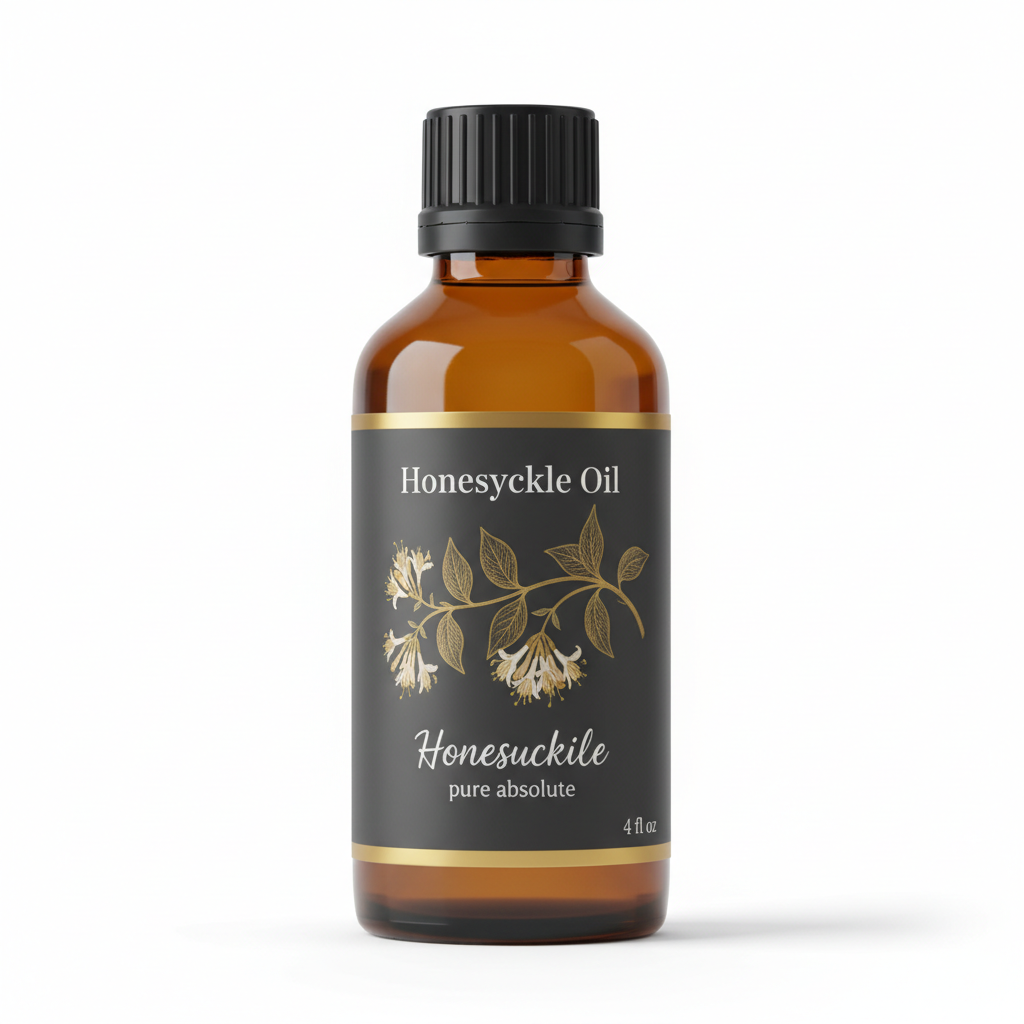
Honeysuckle Absolute
Our own Honeysuckle Absolute, in sizes from 0.5 oz to bulk.
From $13.99
Shop Now →This guide walks through the science of solvent extraction, explains what an absolute actually is at a chemical level, and covers the safety and quality considerations every serious fragrance user should know.
The Short Answer: What Is an Absolute?
An absolute is a highly concentrated aromatic extract produced through a two-stage solvent extraction process. The result is a thick, richly fragrant material that captures the full aromatic profile of a botanical with remarkable fidelity. Where steam distillation relies on heat and water vapor to pull volatile compounds from plant material, solvent extraction works at or near room temperature, which means heat-sensitive aroma molecules survive the process intact.
This matters enormously for delicate flowers. Honeysuckle, jasmine, tuberose, and gardenia all produce aromatic compounds that degrade or transform under the heat required for distillation. For these botanicals, solvent extraction is not simply an alternative method. It is the only method that produces a true-to-flower result. For a deeper look at why distillation simply does not work for honeysuckle specifically, see our article on why there is no steam-distilled honeysuckle essential oil.
Stage One: Creating the Concrete
The first stage of solvent extraction produces what is called a concrete. Fresh plant material, usually flowers harvested at peak bloom, is washed repeatedly with a non-polar hydrocarbon solvent. Hexane is the most common, though some producers use heptane or, in more artisanal operations, food-grade ethyl acetate.
The solvent acts as a carrier. It pulls both the aromatic compounds and the non-aromatic waxes, pigments, and plant fats from the botanical material. When the solvent is gently evaporated under low pressure, what remains is the concrete: a waxy, semi-solid substance that smells intensely of the original flower but also contains a significant portion of non-volatile plant waxes.
Concretes have their uses in perfumery and cosmetic formulation, but they do not dissolve readily in alcohol, which limits their application. The second stage solves this problem.
Stage Two: Washing the Concrete with Alcohol
In the second stage, the concrete is dissolved in high-proof ethanol and chilled to very low temperatures, often around -20°C (-4°F) or colder. At this temperature, the plant waxes solidify and precipitate out of the alcohol solution. The liquid is then filtered to remove them.
When the ethanol is evaporated under vacuum, what remains is the absolute. It is far more concentrated than the concrete, largely free of waxes, and soluble in alcohol. This makes it ideal for fine fragrance work, skin care applications, and aromatic blending.
The yield is characteristically small. It can take hundreds of kilograms of fresh honeysuckle flowers to produce even a modest quantity of absolute, which directly explains the cost of high-quality material.
Absolute vs Essential Oil Extraction: Key Differences
| Feature | Essential Oil (Steam Distillation) | Absolute (Solvent Extraction) |
|---|---|---|
| Extraction medium | Water and steam | Hydrocarbon solvent, then ethanol |
| Temperature during extraction | High (100°C or above) | Near ambient (solvent stage); sub-zero (wash stage) |
| Heat-sensitive compounds retained | Partially or not at all | Yes, to a much greater degree |
| Wax content | None | Low residual after alcohol wash |
| Scent fidelity to fresh flower | Moderate (varies by botanical) | High |
| Solubility in alcohol | Good | Good (better than concrete) |
| Trace solvent residue | None | Possible in low-quality material |
| Typical appearance | Clear to pale liquid | Thick, viscous, amber to dark |
The scent fidelity column is where absolutes consistently outperform distilled oils for floral materials. A rose absolute smells like rose petals. A rose otto (the steam-distilled version) smells beautiful but noticeably different, with waxy and spicy facets that emerge because the heat transforms certain molecules during distillation.
Chemical Composition of Honeysuckle Absolute
The aromatic complexity of honeysuckle absolute comes from a broad palette of volatile compounds, many of which would not survive conventional distillation. Gas chromatography-mass spectrometry (GC-MS) analysis of Lonicera japonica and related species has identified several key chemical families.
Linalool and Linalool Oxide
Linalool is a naturally occurring terpene alcohol found in hundreds of flowering plants. In honeysuckle absolute, it contributes the soft, slightly floral-woody character that sits underneath the sweeter top notes. Linalool oxide, a cyclic form of the same compound, adds a faintly earthy, woody nuance. Research in aromatic chemistry suggests linalool is one of the most commonly identified compounds in floral absolutes and is widely used as a reference standard in fragrance evaluation.
Benzyl Alcohol and Benzyl Benzoate
These benzenoid compounds contribute sweetness and a faint powdery quality. Benzyl benzoate, in particular, also functions as a fixative in fragrance formulation, helping other aromatic molecules persist longer on skin. Both compounds are present on international fragrance allergen lists at certain concentrations, a point covered in the safety section below.
Eugenol
Found in low concentrations in many honeysuckle absolutes, eugenol brings a warm, faintly spiced character that deepens the overall profile. It is the same compound responsible for the warm quality in clove and certain rose varieties.
Geraniol and Nerol
These terpene alcohols are closely related structurally (they are geometric isomers of each other) and contribute soft, rosy-citrus facets. Their presence helps explain the slight brightness that honeysuckle absolute can carry when diffused at low concentrations.
Methyl Anthranilate and Indole
These two compounds are responsible for what perfumers sometimes describe as the "animalic" or "narcotic" quality of certain white florals. Methyl anthranilate adds a grape-like sweetness at trace levels. Indole, present in jasmine and many honeysuckle varieties, contributes a rich, almost creamy depth. At higher concentrations, indole can read as heady or overripe, which is why a well-made absolute captures it at precisely the right ratio. For a full exploration of how these compounds interact in the nose, see our article on what honeysuckle smells like.
Research Observations on Key Compounds
Some research suggests that linalool may support a sense of calm during evening wind-down routines, based on observational studies involving aromatic exposure. These findings are consistently framed in the research literature as preliminary, with authors noting the need for further investigation.
Separately, geraniol has been studied in the context of its behavior in skin care formulations, with some researchers observing that it interacts with other terpene compounds in ways that may influence how a fragrance evolves on skin over time. This is primarily relevant to formulators managing the top-to-dry-down arc of a blend.
Benzyl benzoate has been studied extensively as both a fragrance fixative and as a compound that appears on sensitization watchlists at higher concentrations. The research here does not suggest avoiding it entirely. It suggests awareness of concentration thresholds, which is the foundation of responsible formulation.
It is worth stating plainly: this research informs cosmetic and aromatic formulation decisions. It does not support claims that any of these compounds identify, prevent, or address any condition. Always consult a qualified healthcare provider for any health-related questions.
Safety Profile and Contraindications
Absolutes share some safety considerations with essential oils, but they also carry a few that are specific to the extraction method.
Dilution
Honeysuckle absolute is highly concentrated. For leave-on skin applications such as body lotions or perfume blends, the International Fragrance Association (IFRA) guidelines and general cosmetic formulation practice suggest using absolutes at well under 1% in the final product. Undiluted application directly to skin is not recommended. A standard starting point for a personal fragrance blend in a carrier oil is 0.5% to 1%, with patch testing before broader use.
Patch Testing
Always perform a patch test before using any new absolute-containing product. Apply a small amount of the diluted blend to the inner forearm, leave for 24 hours, and monitor for any reaction. This step is not optional for people with known fragrance sensitivities.
Fragrance Allergens
Several compounds naturally present in honeysuckle absolute, including linalool, geraniol, benzyl alcohol, benzyl benzoate, and eugenol, appear on the EU and IFRA allergen lists. This does not mean they are inherently unsafe for all users. It means their presence should be disclosed on product labels at regulated concentrations and that individuals with known fragrance sensitivity should approach them with appropriate care.
Solvent Residue
This is the safety consideration unique to absolutes. Reputable producers test finished absolutes to confirm that residual hexane or other extraction solvents fall below internationally accepted thresholds (typically below 1 ppm in cosmetic-grade material). When evaluating suppliers, requesting a certificate of analysis (COA) that includes residual solvent testing is a reasonable and important step.
Contraindications
Fragrance use during pregnancy and while nursing warrants extra caution. Many aromatherapy guidelines suggest avoiding highly concentrated botanical extracts during these periods. People with known multiple chemical sensitivities should approach all concentrated fragrances carefully and consult a healthcare provider before introducing new aromatic materials into their routines.
Solvent Extraction Fragrance: Sourcing and Quality Indicators
Not all honeysuckle absolutes are created equal. The quality of the starting plant material, the extraction method, and post-extraction handling all affect the final product.
What to Look for in a Supplier
- Species identification: Look for Latin name disclosure. Lonicera japonica (Japanese honeysuckle) is the most commonly used species for absolute production, but the species should always be specified.
- Country of origin: China produces the majority of commercial honeysuckle absolute. Some smaller producers in parts of Europe and India offer material as well. Country of origin affects both scent character and traceability.
- GC-MS analysis: A quality supplier should be able to provide a current GC-MS report for each lot. This confirms the chemical profile and helps identify any adulteration with synthetic compounds.
- Residual solvent testing: As noted above, this is non-negotiable for skin-application use.
- Lot traceability: The ability to trace a batch back to a specific harvest season and source region is a mark of a serious supplier.
Signs of Adulteration
Honeysuckle absolute is expensive to produce, which makes it a frequent target for adulteration. Common adulterants include synthetic linalool, added benzyl acetate, or dilution with a cheaper carrier. A too-low price is often the first signal. A GC-MS report showing an unusually clean or perfectly symmetrical compound ratio can also suggest a reconstituted or synthetic blend rather than a true absolute. Natural materials show complexity and slight batch-to-batch variation. Synthetics do not.
For a full overview of what to look for and what to avoid when purchasing, our guide on honeysuckle oil and the complete guide to the absolute covers supplier evaluation in detail.
Why This Process Produces a Superior Floral Fragrance
The reason solvent extraction fragrance consistently outperforms distillation for flowers comes down to chemistry and temperature. Many of the compounds that make a white floral smell alive and dimensional are esters, indolic compounds, and certain alcohols that begin to transform above about 60°C. Steam distillation operates well above that threshold.
The cold solvent stage of absolute production captures these molecules intact. The subsequent alcohol wash removes the heavy waxes that would make the extract difficult to work with, while leaving the aromatic fraction remarkably complete. What you smell in a well-made honeysuckle absolute is as close to the actual flower as current extraction technology can achieve.
This is why perfumers, cosmetic formulators, and aromatic product developers consistently reach for absolutes when floral accuracy matters. It is also why honeysuckle exists only in this form. The flower gives its full character only through this process, or not at all.
A well-made honeysuckle absolute should smell recognizably of honeysuckle in bloom: sweet without being cloying, creamy with a faint green lift, and warm at the base. If it smells flat, sharp, or primarily of alcohol, the quality is likely not there.
Working with Absolutes in Practice
Absolutes are thick and viscous, especially in cool temperatures. Warming the bottle gently in your hands or placing it in a small bowl of warm water for a few minutes will make it easier to dispense. A clean glass dropper rod or a calibrated pipette gives more accurate measurements than trying to pour directly from the bottle.
When building a blend, add the absolute last after establishing the structure with carrier oils or other less expensive aromatic materials. This lets you adjust the precious material precisely rather than working around an excess of it.
Store absolutes in a cool, dark location, ideally in amber or dark glass. Heat, light, and air exposure all accelerate oxidation. A well-stored absolute can retain its quality for several years. A poorly stored one can become dull or develop off-notes within months.
The science behind solvent extraction fragrance is, at its core, a story about respecting the chemistry of the flower. Every decision in the process, from the choice of solvent to the filtration temperature to the final quality testing, is designed to honor what the plant actually produces. When it works well, the result is extraordinary.