
Honeysuckle Oil FAQ: Your Questions Answered
Whether you discovered honeysuckle oil through a perfume blend or spotted it in a skincare ingredient list, the questions tend to pile up fast. What exactly is it? Is it safe? Why does it cost more than other botanicals? This honeysuckle oil FAQ collects the most common honeysuckle oil questions we receive and gives you straightforward, honest answers. No fluff, no overclaiming.
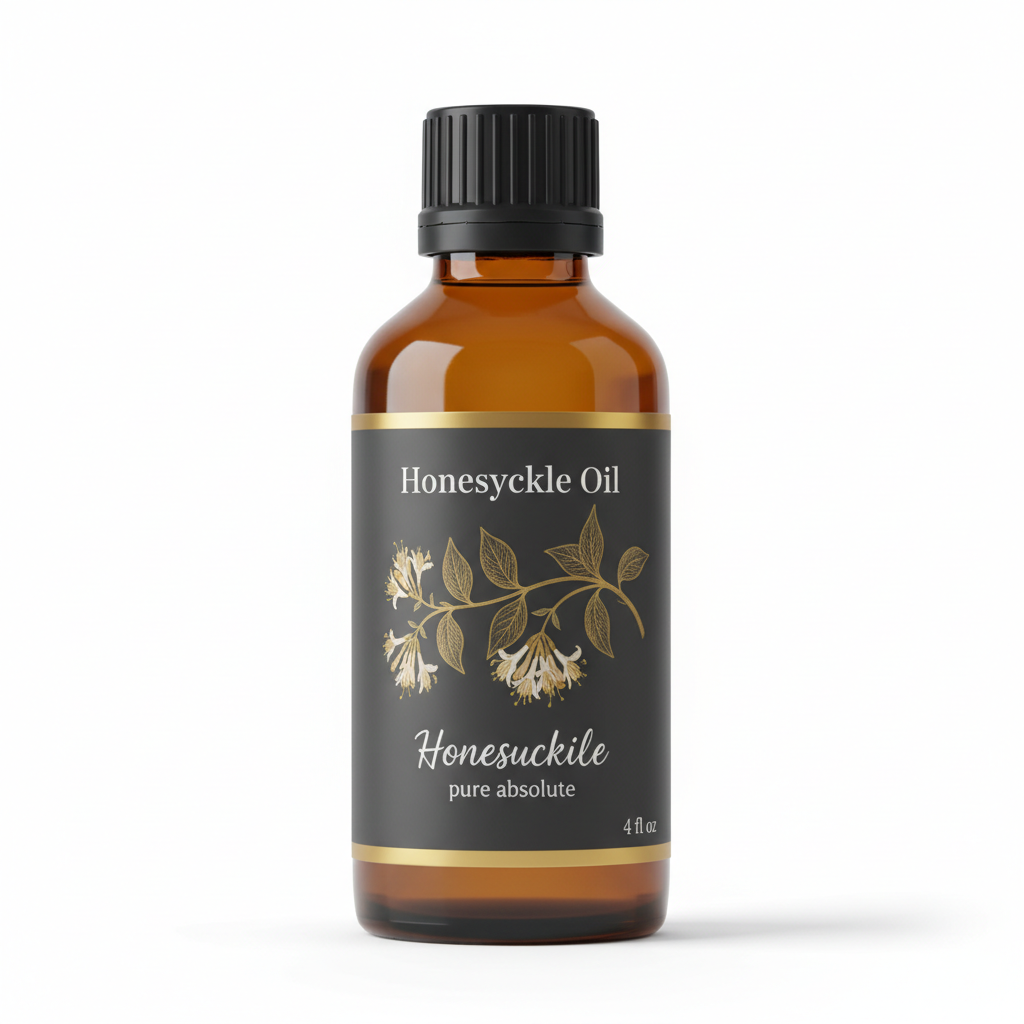
Honeysuckle Absolute
Our own Honeysuckle Absolute, in sizes from 0.5 oz to bulk.
From $13.99
Shop Now →What Honeysuckle Oil Actually Is
1. What is honeysuckle oil?
Honeysuckle oil is a concentrated aromatic extract made from Lonicera japonica or related Lonicera species blossoms. The term covers a few different product types, most commonly a solvent-extracted absolute or a diluted perfume oil. For a full breakdown of what sets each type apart, the complete guide to honeysuckle oil and the absolute is a good starting point.
2. Is honeysuckle oil a true essential oil?
Technically, no. Honeysuckle blossoms do not yield a usable oil through steam distillation because the delicate petals cannot survive the heat and pressure required. What is sold as honeysuckle "oil" is almost always an absolute (solvent-extracted) or a nature-identical fragrance blended into a carrier oil. The article on why there is no steam-distilled honeysuckle essential oil explains this in detail.
3. What is a honeysuckle absolute?
An absolute is an extremely concentrated aromatic extract produced by solvent extraction rather than steam distillation. The process pulls a broader range of fragrance molecules from the flower, resulting in a scent that is remarkably close to the living bloom. You can read a deeper explanation of the method in our guide to solvent extraction and what an absolute is.
4. What does honeysuckle oil smell like?
A high-quality honeysuckle absolute smells intensely floral, sweet, and slightly honeyed, with a warm, green undertone that anchors the top notes. It captures that specific late-summer evening quality: ripe, close, and a little intoxicating. Cheaper synthetic versions tend to lean harsher and more one-dimensional by comparison.
5. Which species of honeysuckle is used?
Lonicera japonica (Japanese honeysuckle) is the most widely used species in commercial extraction, prized for its strong, sweet fragrance yield. Some producers also work with Lonicera caprifolium (Italian honeysuckle) for a slightly different aromatic profile. The species and growing region both influence the final scent character, so sourcing details matter.
Sourcing, Quality, and What to Look For
6. Why is high-quality honeysuckle oil expensive?
Flower-to-extract ratios are the main factor. It takes a very large volume of fresh blossoms to produce even a small quantity of absolute, and harvesting must happen at peak bloom, by hand, often within a narrow morning window. Combine that with solvent extraction processing costs and you have a product that cannot be cheap if it is genuinely flower-derived.
7. How can I tell if a honeysuckle oil is genuine or synthetic?
Look for clear labeling that states "absolute" or specifies solvent extraction and names the botanical species. A genuine absolute will typically be sold in very small quantities (1 ml to 5 ml) at a correspondingly higher price per milliliter. If a large bottle is priced the same as a decent carrier oil, it is almost certainly a synthetic fragrance, which is not necessarily bad but should be labeled honestly.
8. What should I look for on the label?
Prioritize labels that include: the Latin species name, country of origin, extraction method, and whether the product is diluted in a carrier oil. Reputable suppliers also share lot numbers and, ideally, gas chromatography (GC) or mass spectrometry (MS) test results. Transparency about sourcing is a strong indicator of overall quality commitment.
9. Are there different grades of honeysuckle absolute?
Yes. Perfumery-grade absolutes prioritize aromatic complexity and are typically undiluted. Cosmetic-grade products may be pre-diluted in a carrier oil for easier formulation at lower cost. Neither grade is inherently superior: the right choice depends entirely on your intended use and whether you need the concentrated form or the ready-to-use dilution.
10. Where is most honeysuckle absolute produced?
China is the largest producer of Lonicera japonica absolute, with significant cultivation regions in Shandong, Henan, and Hebei provinces. Some French and Italian producers work with Lonicera caprifolium for the niche perfumery market. Origin affects both price and aromatic character, so a supplier who specifies origin is one worth trusting.
Scent, Blending, and Perfumery Use
11. What fragrance family does honeysuckle oil belong to?
Honeysuckle sits comfortably in the floral family, often closer to the "white floral" subcategory alongside jasmine, tuberose, and gardenia. Its green undertone gives it a slightly outdoorsy quality that prevents it from reading as purely powdery or heavily indolic. This makes it very versatile in blending.
12. What notes does honeysuckle pair well with in a blend?
Honeysuckle blends beautifully with other white florals, light musks, soft woods like sandalwood and cedarwood, and citrus top notes such as bergamot or yuzu. Vetiver and oakmoss can ground it into something earthier and more complex. A small amount of vanilla or benzoin in the base adds warmth without overwhelming the floral brightness.
13. Is honeysuckle oil a top, middle, or base note?
In perfumery classification, honeysuckle typically functions as a heart (middle) note, providing the core floral character of a composition. That said, its lighter, greener facets can behave like a top note in early dry-down, while its honeyed depth lingers longer in the base. This complexity is part of what makes it interesting to work with.
14. Can I use honeysuckle oil in candles or diffusers?
If you are working with a genuine absolute, high heat (as in candle-making) can alter or destroy some of its more delicate aromatic compounds. For candles, a high-quality synthetic fragrance oil designed for that purpose will typically perform more predictably. Cold diffusion, reed diffusers, or room sprays using diluted absolute are gentler options that better preserve the nuanced scent profile.
Cosmetic and Topical Use
15. Can I apply honeysuckle oil directly to skin?
No. A concentrated honeysuckle absolute should always be diluted in a carrier oil before any skin contact. Undiluted absolutes can cause significant irritation, especially on sensitive skin. A standard starting point for adults is a 1% to 2% dilution, which means roughly 6 to 12 drops of absolute per 30 ml (1 ounce) of carrier oil. Always perform a patch test before wider application.
16. What are common cosmetic uses for honeysuckle oil?
Formulators use properly diluted honeysuckle absolute to scent facial serums, body lotions, hair oils, and solid perfumes. Its floral character adds a naturally derived scent dimension that synthetic fragrance often cannot replicate with the same depth. Some formulators also work with honeysuckle extract (a different, water-based ingredient) for its skin-conditioning properties.
17. How do I do a patch test?
Apply a small amount of your diluted blend to the inside of your wrist or the crook of your elbow. Leave it undisturbed for 24 hours and watch for any redness, itching, or discomfort. If any reaction occurs, rinse the area thoroughly and discontinue use. Consulting a qualified healthcare provider is advisable if you have a history of skin sensitivities.
18. Is honeysuckle oil safe during pregnancy?
This is an area where caution is genuinely warranted, and the honest answer is: we cannot tell you it is safe to use. Many aromatic extracts are avoided during pregnancy as a precaution, particularly in the first trimester. Please consult a qualified healthcare provider or a certified aromatherapy practitioner before using any concentrated botanical extract during pregnancy or while nursing.
19. Is honeysuckle oil safe for children or pets?
Children and pets have different sensitivities than adults, and concentrated botanical extracts that are well-tolerated by adults can be inappropriate for them. Keep all absolutes and essential oils out of reach of children and away from pets. A qualified healthcare provider or veterinarian should be your first point of contact before using aromatic products around vulnerable individuals.
Storage, Shelf Life, and Practical Tips
20. How should I store honeysuckle oil?
Store honeysuckle absolute in a sealed amber or dark glass bottle, away from direct light, heat, and humidity. A cool, consistent environment (a drawer, a cabinet, or a dedicated aromatics box) is ideal. Proper storage significantly extends the usable life of a concentrate that you have likely paid a fair amount for.
21. How long does honeysuckle absolute last?
A well-stored honeysuckle absolute can remain aromatically stable for two to three years, sometimes longer. Signs of degradation include a noticeably sour, sharp, or flattened scent compared to the original. Pre-diluted products in carrier oils may have a shorter usable window because the carrier oil itself can oxidize.
22. My honeysuckle absolute is thick and hard to work with. Is that normal?
Yes. Many absolutes are naturally viscous at room temperature because of the full range of molecular weight compounds they contain. Gently warming the bottle between your palms for a minute or two usually loosens it enough to work with. Avoid using direct heat sources, as that can alter the scent profile.
Common Misconceptions
23. Is honeysuckle oil the same as honeysuckle extract?
No, and the distinction matters in formulation. Honeysuckle extract is typically a water- or glycerin-based product made from the flowers or leaves, used in cosmetics for its conditioning and botanical properties. Honeysuckle absolute or oil is an aromatic concentrate used primarily for scent. They are different ingredients with different roles and should not be substituted for each other.
24. Will honeysuckle oil make me smell like sunscreen or a cheap candle?
A low-quality synthetic honeysuckle fragrance can absolutely read that way. A genuine absolute or a well-formulated honeysuckle perfume oil, blended thoughtfully, smells nothing like that. The key variables are the quality of the aromatic ingredient and how it is combined with other notes. Starting with a reputable source makes the difference.
25. I have seen honeysuckle listed in skincare products. Is that the same thing?
Probably not. Skincare products listing honeysuckle in the INCI ingredient list are most often using Lonicera japonica flower extract, a cosmetic botanical quite different from the aromatic absolute. The fragrance version would typically appear in the "parfum" or "fragrance" portion of an ingredient list rather than as a named botanical. Reading the full ingredient list carefully is always worthwhile.
Still have questions? The complete guide to honeysuckle oil covers sourcing and quality in much greater depth, and our piece on how solvent extraction works is a useful read if you want to understand what you are buying before you buy it.