
Organic and Wildcrafted Honeysuckle: What the Labels Really Mean
The honeysuckle oil section of any reputable supplier's catalog can feel like a vocabulary exam. Organic. Wildcrafted. Absolute. CO2 extract. Single-origin. Each term signals something specific about how the material was grown, harvested, and processed. Some signals are meaningful. Others are marketing gloss with very little behind them.
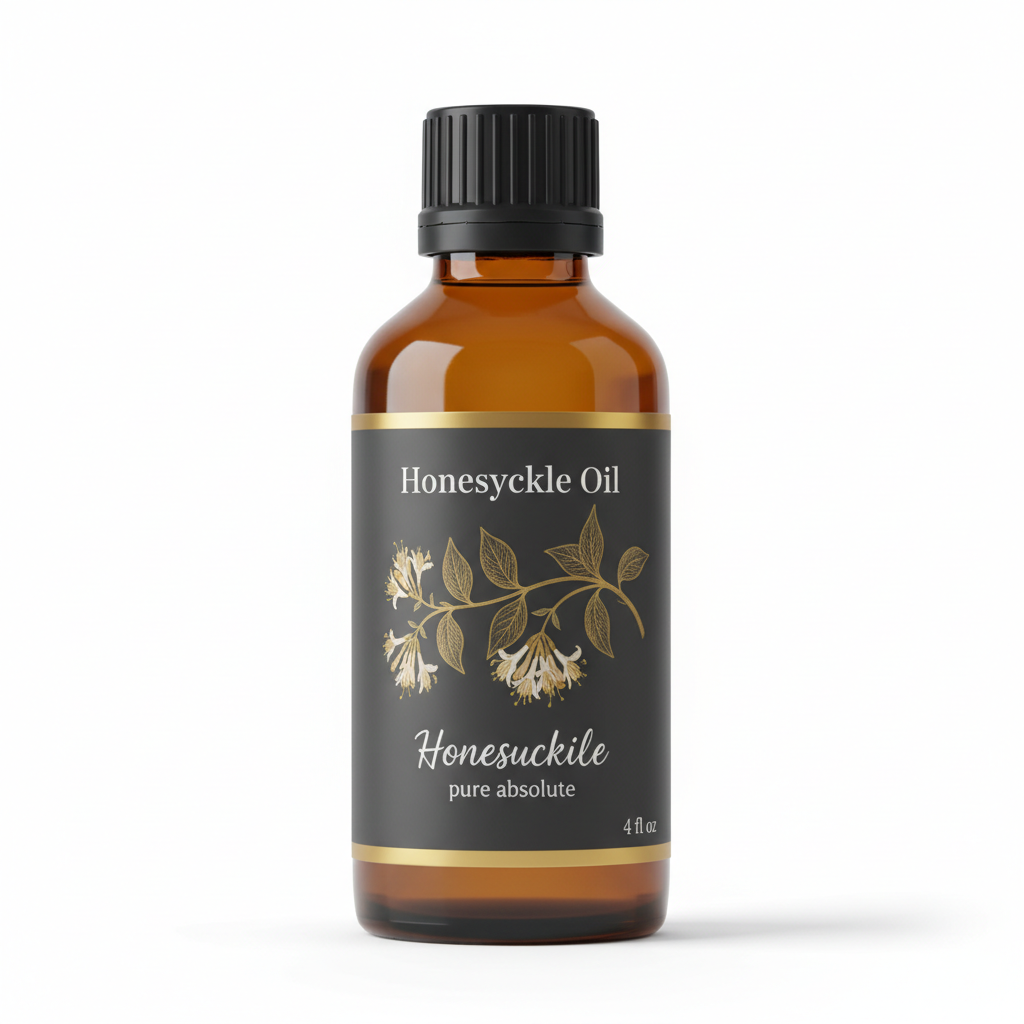
Honeysuckle Absolute
Our own Honeysuckle Absolute, in sizes from 0.5 oz to bulk.
From $13.99
Shop Now →This guide cuts through the noise. If you are shopping for organic honeysuckle essential oil, a wildcrafted honeysuckle absolute, or any certified organic absolute for personal blending or professional use, understanding what these labels actually certify (and what they leave unaddressed) will save you money and help you choose better materials.
First, a Quick Note on Honeysuckle "Essential Oil"
True honeysuckle blossoms do not yield a steam-distilled essential oil in any commercially viable sense. The flowers are delicate and their aromatic compounds break down under heat. What the market actually sells under honeysuckle oil falls into a few distinct categories, and knowing which one you are buying matters enormously.
- Honeysuckle absolute: Extracted via solvent extraction (typically hexane, then ethanol), this captures the richest, most faithful floral scent. It is the standard for perfumery and high-end cosmetic blending.
- CO2 extract: Uses supercritical carbon dioxide as a solvent. Cleaner residue profile than traditional solvent extraction, though availability for honeysuckle specifically is limited.
- Carrier-diluted or reconstructed oils: A fragrance compound or blend diluted into a carrier oil and sold as "honeysuckle oil." Common in the mass market. Not an absolute. Often not botanical at all.
- Infused oils: Fresh or dried honeysuckle blossoms macerated in a carrier oil. A legitimate product with a gentle scent, but categorically different from an absolute.
When a listing says "organic honeysuckle essential oil," the first question to ask is: which of these is it? A genuine supplier will tell you clearly.
What "Organic" Actually Certifies
For a honeysuckle product to carry a legitimate organic label in the United States, it must be certified under the USDA National Organic Program (NOP) or an internationally recognized equivalent such as ECOCERT, COSMOS Organic, or the Soil Association. Certification means the botanical material was grown without synthetic pesticides, synthetic fertilizers, or prohibited substances, and that the processing facility has also passed inspection.
Organic certification covers the agricultural and processing chain. It does not certify scent quality, extraction method, or final potency. A certified organic absolute can still be a mediocre product if the raw material was poorly handled post-harvest or the extraction was rushed.
What to look for on the label or product page:
- The certifying body named explicitly (USDA, ECOCERT, COSMOS, etc.)
- A certificate number or verifiable certification ID
- The country of origin for the botanical, not just the bottler
- Lot or batch numbers that allow traceability
If the listing only says "made with organic ingredients" or "crafted from organic botanicals" without naming the certifying body, that language carries no legal weight in the U.S. It is marketing, not certification.
What "Wildcrafted" Actually Means
Wildcrafted honeysuckle is harvested from plants growing in their natural environment rather than cultivated on a farm. Proponents argue that wildcrafted botanicals develop a more complex aromatic profile because the plants respond to natural stressors, variable soil conditions, and seasonal rhythms that controlled cultivation cannot replicate.
There is genuine logic to this, and experienced perfumers often describe wildcrafted honeysuckle absolutes as rounder and more nuanced than their cultivated counterparts. The caveat is that wildcrafted is not a regulated term in the United States. Anyone can use it.
Responsible wildcrafting follows sustainability principles: harvesting at the right growth stage, leaving enough biomass for plant recovery, rotating harvest areas, and avoiding protected species or habitats. Irresponsible wildcrafting strips populations without regard for regeneration.
When evaluating a wildcrafted product, look for suppliers who disclose:
- The specific region of harvest (not just the country)
- Harvesting practices or a sustainability statement
- Whether the harvest complies with local environmental regulations
- Third-party verification, if available (some suppliers pursue FairWild certification)
A supplier who cannot describe where or how their wildcrafted honeysuckle was collected deserves skepticism. For a deeper look at what separates quality sourcing from vague labeling, see our complete quality guide to buying honeysuckle oil.
Key Features to Compare When Shopping
1. Extraction Method
For absolutes, solvent extraction is the norm. Ask whether the supplier tests for solvent residuals and whether those results are available. CO2 extracts are increasingly available and command a premium for their cleaner profile.
2. GC/MS Testing
Gas chromatography/mass spectrometry analysis breaks down an oil's chemical constituents. Reputable suppliers publish GC/MS reports for each batch. For a honeysuckle absolute, these reports confirm that the product is genuinely botanical rather than a synthetic reconstruction. If a supplier cannot provide GC/MS data on request, that is a meaningful red flag.
3. Botanical Species and Part Used
The species matters. Lonicera japonica (Japanese honeysuckle) is the most common source for absolutes. Lonicera caprifolium (Italian honeysuckle) appears in some European products. Each has a distinct aromatic character. The label should name the Latin binomial. "Honeysuckle" alone is insufficient.
4. Country and Region of Origin
China produces the majority of L. japonica absolute. France, India, and Morocco source smaller quantities. Scent profiles vary by terroir. A supplier worth trusting will tell you exactly where the botanical was grown and processed.
5. Dilution and Concentration
Most honeysuckle absolutes are sold pre-diluted in a carrier (jojoba is common) because undiluted absolute is thick, viscous, and difficult to work with at small quantities. The dilution ratio should be stated clearly: 10%, 20%, 50%. If it is not stated, ask before purchasing.
Top Picks at Different Price Points
The price range for honeysuckle absolute is wide, reflecting genuine differences in sourcing, certification, and concentration. Here is a practical framework by budget tier.
| Tier | Typical Price Range (10ml) | What to Expect | Best For |
|---|---|---|---|
| Entry | $8 to $18 | Usually a carrier-diluted fragrance oil or low-concentration absolute. Minimal documentation. May be synthetic. | Casual home fragrance, candle blending (verify ingredients first) |
| Mid-range | $20 to $45 | Genuine diluted absolute, often 10 to 20% in jojoba. GC/MS available on request. Origin usually stated. | Home blending, personal fragrance, cosmetic formulation |
| Premium | $50 to $120+ | Certified organic absolute or verified wildcrafted material. Batch-specific GC/MS. FairWild or equivalent sustainability documentation. | Professional perfumery, certified organic formulations, discerning personal use |
| Bulk / Wholesale | Varies by volume | Undiluted or high-concentration absolute. Requires proper handling. Full documentation expected. | Commercial formulators, perfume houses. See our bulk guide for perfumers. |
Avoid anchoring purely on price. A $12 "honeysuckle oil" with no documentation may be entirely synthetic. A $60 certified organic absolute with traceable sourcing and published GC/MS data represents real value for anyone who cares about what goes into their formulations.
Red Flags to Avoid
Certain patterns in listings and product pages should give you pause before purchasing.
- "Pure essential oil" with no mention of extraction method. Honeysuckle cannot be steam distilled at commercial scale. If a listing calls it a pure essential oil without clarifying it is an absolute or infused oil, something is off.
- No Latin binomial on the label. Generic "honeysuckle" naming hides substitution and mislabeling.
- Organic claims with no certifier named. The word organic without a certification body behind it is unverified. Check for the USDA seal or an international equivalent.
- Suspiciously low prices for "undiluted" absolute. Genuine honeysuckle absolute is labor-intensive to produce. Rock-bottom prices on "pure" material almost always indicate synthetic reconstruction or extreme adulteration.
- No batch numbers or lot codes. Without traceability information, there is no way to verify origin claims or match a product to its testing data.
- Health or wellness claims on the listing. Responsible suppliers focus on scent, sourcing, and formulation use. Listings that veer into medical language are often trying to inflate perceived value without substantive product quality to back it up.
Quick reference: When in doubt, ask the supplier for the GC/MS report, the certifying body documentation, and the harvest region. A confident, knowledgeable supplier will answer without hesitation.
Where to Buy
The most reliable sources for certified organic absolutes and responsibly wildcrafted honeysuckle products share a few common traits: transparent sourcing pages, accessible testing documentation, and staff who can answer specific botanical questions.
Specialty aromatics suppliers (as opposed to general wellness marketplaces) tend to offer better documentation and more consistent quality. Look for companies that specialize in raw perfumery materials or certified organic botanicals rather than broad lifestyle brands that include oils as one of dozens of product categories.
Domestic suppliers (U.S.-based) who import directly and test each batch on arrival generally offer more accountability than drop-ship resellers working from generic bulk inventory. Farmers market and craft fair vendors can occasionally offer genuinely local infused products, but these are a different category from solvent-extracted absolutes.
For a full checklist of what to verify before completing a purchase online, our shoppers checklist for buying honeysuckle oil online walks through each step in detail.
Putting It Together: A Label-Reading Checklist
- Is the product type clearly stated? (Absolute, CO2 extract, infused oil, or fragrance oil)
- Is the Latin binomial present? (Lonicera japonica or equivalent)
- Is the country and ideally region of origin disclosed?
- If organic is claimed, is the certifying body named with a verifiable certificate?
- If wildcrafted is claimed, is there a sustainability or sourcing statement?
- Is dilution concentration stated, and in what carrier?
- Is batch-specific GC/MS data available?
- Does the supplier respond to direct sourcing questions?
Eight checkboxes. A product that clears all eight is worth your confidence and your budget. One that clears fewer than five deserves more scrutiny before you commit.
Honeysuckle absolute is one of the more evocative raw materials in natural perfumery. The scent of a genuine, well-sourced organic absolute is worth seeking out carefully. Labels reward the reader who knows what to look for.