
Wholesale Honeysuckle Absolute: A Bulk Guide for Perfumers
Sourcing bulk honeysuckle absolute is one of those decisions that shapes every formula that follows. Get the supplier right, and your blends carry that unmistakable green-floral warmth that makes honeysuckle worth using. Get it wrong, and you are paying premium prices for something that smells faintly of synthetic musks and disappointment.
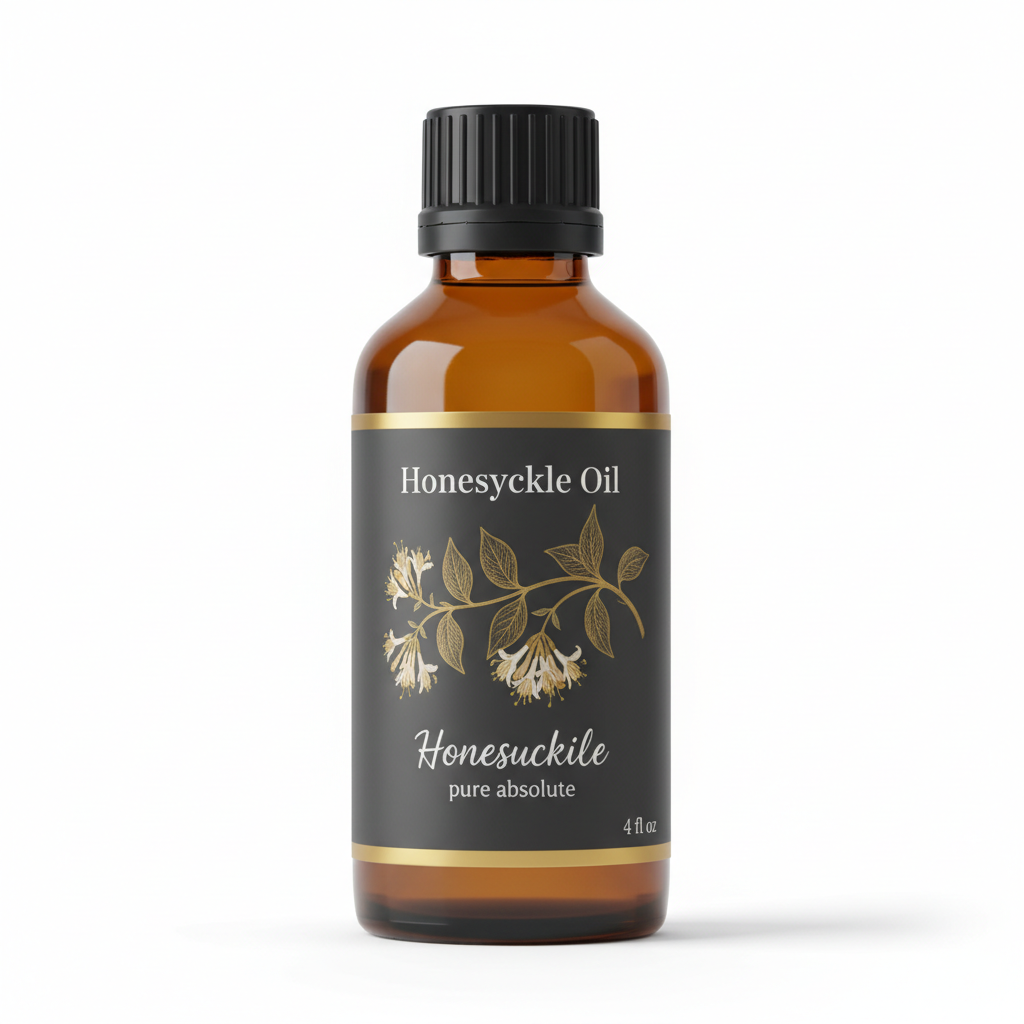
Honeysuckle Absolute
Our own Honeysuckle Absolute, in sizes from 0.5 oz to bulk.
From $13.99
Shop Now →This guide is written for working perfumers, cosmetic formulators, and indie fragrance brands purchasing at commercial volume. It covers what quality actually looks like in this material, how to compare suppliers honestly, which price tiers deliver genuine value, and the warning signs that should send you looking elsewhere. If you are newer to honeysuckle as a raw material, our complete quality guide to buying honeysuckle oil is a useful starting point before committing to bulk quantities.
Understanding What You Are Actually Buying
Honeysuckle absolute is a solvent-extracted material, typically produced from Lonicera japonica or Lonicera caprifolium flowers. Because honeysuckle blossoms are delicate and their aromatic compounds do not survive steam distillation well, absolute extraction is the standard commercial method. What you receive should be a viscous, deeply colored liquid: usually a warm amber to greenish-gold depending on origin and vintage.
It is worth being precise about terminology here. "Honeysuckle oil" in a wholesale context may refer to any of the following:
- True honeysuckle absolute: Solvent-extracted from fresh flowers. Rich, complex, and expensive.
- CO2 extract: Less common commercially, but increasingly available. Different aromatic profile.
- Reconstituted or blended honeysuckle: A constructed fragrance oil using isolated aromatic molecules to approximate the natural scent. Lower cost, consistent, but not a true botanical extract.
- Honeysuckle fragrance oil: Fully synthetic. No botanical origin whatsoever.
Reputable wholesale honeysuckle oil suppliers will state clearly which category their product falls into. If that information is buried or absent, consider it a red flag.
Quality Indicators: What to Evaluate Before You Order
Documentation
A professional honeysuckle supplier operating at wholesale scale should provide, without negotiation, a current Certificate of Analysis (COA), a Gas Chromatography-Mass Spectrometry (GC-MS) report, a Safety Data Sheet (SDS), and clear country-of-origin labeling. For naturals, a statement of solvent residue levels is also standard practice.
GC-MS reports are particularly useful for bulk honeysuckle absolute because they let you compare chemical profiles across batches and suppliers. Look for the presence of characteristic honeysuckle markers such as linalool, benzyl acetate, and indole. A profile that looks unusually simple or that skews heavily toward a single synthetic compound deserves scrutiny.
Appearance and Viscosity
True honeysuckle absolute is viscous at room temperature. It may need gentle warming (water bath, not direct heat) to pour easily. If what arrives is thin and water-clear, something is off. Viscosity alone does not confirm quality, but its absence in a claimed absolute is informative.
Scent Profile
Genuine honeysuckle absolute has a layered quality. There is an initial green, slightly indolic note, followed by the soft floral heart, and then a honey-like warmth in the dry-down. It is not a one-dimensional sweetness. If a sample smells uniformly sweet and linear from top to dry-down, it is very likely a reconstructed or synthetic material regardless of what the label says.
Request samples before committing to bulk quantities. Any serious wholesale honeysuckle oil supplier will expect this request and accommodate it.
Batch Consistency and Vintage Disclosure
Naturals vary by harvest year, growing region, and extraction conditions. Good suppliers disclose this. They will note the vintage and acknowledge that the current batch may differ from the previous one. This transparency is a mark of a supplier who understands the material. Suppliers who promise absolute batch-to-batch uniformity for a true botanical extract are either misleading you or selling something heavily reconstituted.
Key Features to Compare Across Suppliers
| Feature | What to Look For | Red Flag |
|---|---|---|
| GC-MS report | Current, batch-specific, accessible on request | Unavailable, outdated, or shared only under NDA |
| Country of origin | Clearly stated (China, Morocco, France) | Listed as "various" or omitted entirely |
| Minimum order quantity | Scaled options (100g, 500g, 1kg, 5kg) | Single large minimum with no flexibility |
| Sample policy | Samples available before bulk commitment | No samples offered at any volume |
| Packaging | Dark glass or UN-rated aluminum for shipping | Clear plastic containers for bulk orders |
| Storage guidance | Shelf life and storage conditions documented | No guidance provided |
| IFRA compliance | IFRA conformity certificate available | Unfamiliar with IFRA standards |
Price Tiers: What the Market Looks Like
Pricing for bulk honeysuckle absolute spans a wide range, and that range reflects real differences in material quality, not just supplier markup.
Entry Tier: $80 to $150 per kilogram
At this price point, you are almost certainly purchasing a reconstituted honeysuckle material or a fragrance-forward blend rather than a true botanical absolute. These products have their place in high-volume applications where cost matters more than botanical authenticity. They are predictable, consistent, and IFRA-compliant. Just be accurate in your marketing about what they are.
Mid Tier: $300 to $700 per kilogram
This is the range where genuine bulk honeysuckle absolute becomes accessible, particularly material from Chinese Lonicera japonica cultivation. Chinese-origin honeysuckle absolute is the most commercially available true extract, and at this tier from a reputable supplier, it should come with full documentation. Scent quality varies meaningfully within this range. Sample first.
Premium Tier: $1,000 and above per kilogram
French and Moroccan-origin absolutes, or certified organic material from any origin, sit here. These are niche quantities and niche price points. For a perfume house building a signature around honeysuckle, the investment can justify itself. For general formulation work, the mid-tier material is usually sufficient.
A note on dramatically low pricing: if a supplier lists "honeysuckle absolute" at $40 per kilogram, the material is not what the label describes. True floral absolutes require significant quantities of raw flowers and substantial extraction infrastructure. The economics simply do not support that price for genuine material.
Red Flags to Avoid
The wholesale botanical market has its share of misrepresentation. These are the signals worth taking seriously.
- No documentation on request. If a supplier cannot produce a COA and GC-MS report when you ask, walk away. Full stop.
- Inconsistent labeling. Product pages that use "essential oil," "absolute," and "fragrance oil" interchangeably for the same SKU suggest the supplier does not understand the distinctions.
- Unusually broad botanical claims. "Wildcrafted and organically grown" sounds appealing but means nothing without certification documentation to support it.
- No physical address. Established wholesale honeysuckle oil suppliers have real locations. A contact form and a social media handle are not sufficient for a commercial sourcing relationship.
- Pressure to order without sampling. Any supplier who discourages sampling before a large commitment is not a long-term partner.
- Packaging that does not protect the material. Honeysuckle absolute degrades in light and air. A supplier shipping bulk quantities in clear plastic with no inert gas flushing does not handle the material correctly.
Where to Source Bulk Honeysuckle Absolute
Established Natural Raw Material Distributors
Companies like Robertet, Givaudan, and Firmenich supply naturals at scale, though access at smaller bulk quantities (under 10kg) can be limited to account holders with established relationships. For mid-sized perfume brands, regional distributors who purchase from these houses and resell in smaller volumes are often more accessible.
Specialty Natural Perfumery Suppliers
A number of suppliers serve the natural and indie perfumery market specifically. Tisserand, Eden Botanicals, and Hermitage Oils are examples frequently referenced in professional forums. These suppliers tend to offer strong documentation, transparent sourcing, and accessible minimum orders. They are a practical starting point for brands purchasing in the 100g to 5kg range.
Direct Import from Origin
Sourcing directly from extraction facilities in Yunnan province (for Chinese Lonicera japonica absolute) or through trade platforms like Global Sources or Alibaba is possible, but it demands careful supplier vetting. Request third-party lab verification for any material sourced this way. Our online sourcing checklist covers the verification steps in detail.
Trade Shows and Industry Events
World Perfumery Congress, Esxence, and the IFEAT conference create direct access to raw material suppliers in a context where you can evaluate samples in person and build relationships before placing orders. For a buyer making significant annual purchases, these events pay for themselves quickly.
Sizing Your Order Correctly
Bulk honeysuckle absolute has a shelf life. Properly stored (cool, dark, sealed, ideally with nitrogen blanketing), true absolute can remain usable for two to four years. Overstocking ties up capital and risks material degradation before you can use it.
A practical approach: calculate your annual usage from current formulation volumes, then order a six-month supply to start with a new supplier. This gives you enough material to evaluate consistency across production runs without overcommitting before the relationship is established.
If you are still working out what quantity makes sense for your scale of production, the size selection guide works through the math by production volume.
Building a Reliable Supplier Relationship
The best wholesale relationships in naturals are ongoing conversations, not transactional purchases. Suppliers who alert you to crop shortages in advance, who proactively share updated GC-MS data when a new batch arrives, and who are willing to hold allocated stock for reliable buyers are genuinely valuable. Regard them accordingly.
Pay invoices on time. Provide feedback on material quality. Ask questions that show you understand what you are purchasing. Suppliers who work primarily with knowledgeable buyers tend to prioritize those accounts when supply is tight, and honeysuckle absolute supply is, periodically, tight.
The quality of your finished fragrances starts here, with the sourcing decision. A little extra diligence at the supplier selection stage saves a significant amount of reformulation effort later.