Your First Bottle of Honeysuckle Absolute: Which Size to Order
Honeysuckle absolute is one of the more considered purchases in the natural fragrance world. Unlike a synthetic accord you can reorder endlessly, a genuine absolute represents a specific harvest, a specific extraction, and a finite supply. Getting your first bottle right matters. Order too large and you may find the oil has sat longer than ideal before you've used it. Order too small and the per-gram cost climbs steeply, leaving you frustrated before you've had a chance to explore the material properly.
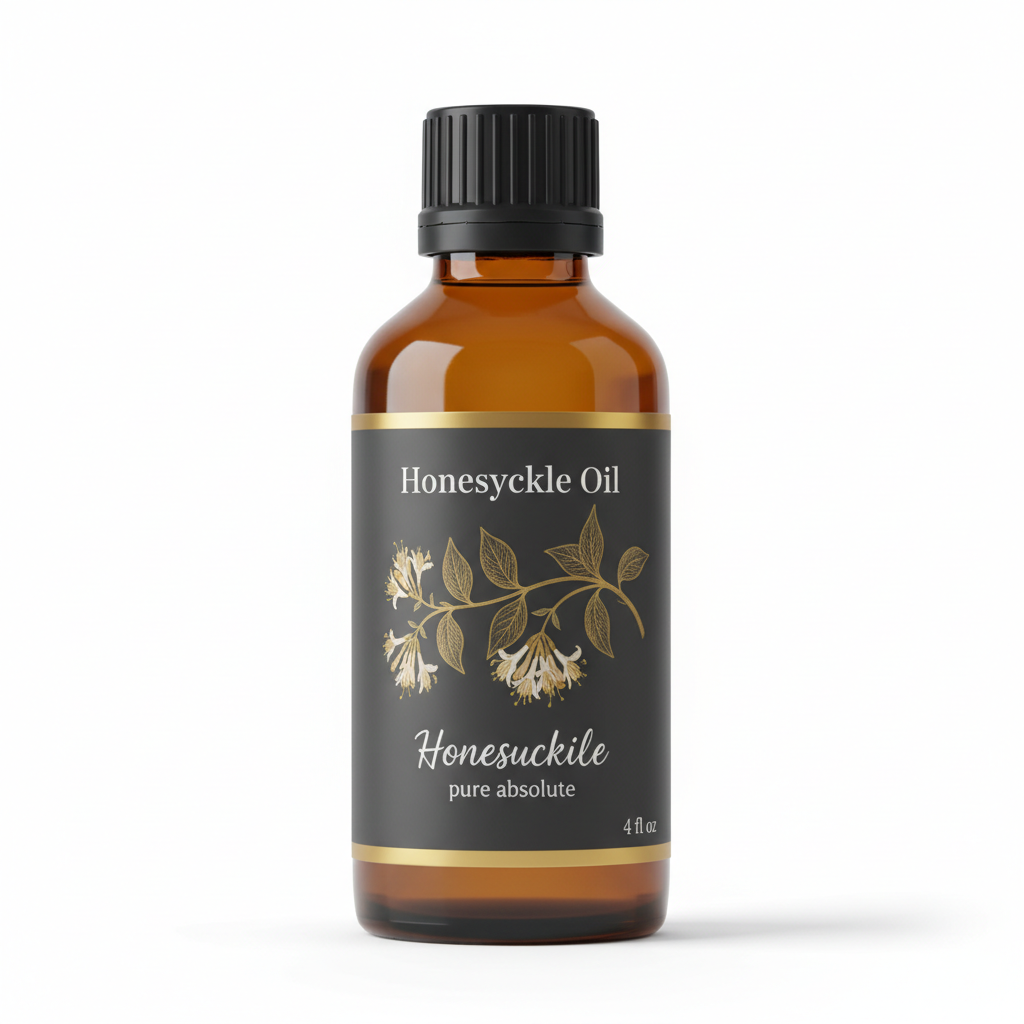
Honeysuckle Absolute
Our own Honeysuckle Absolute, in sizes from 0.5 oz to bulk.
From $13.99
Shop Now →This guide walks through everything you need to know before clicking "add to cart" on your first honeysuckle absolute bottle: what sizes exist, how to read quality signals, which price points are worth considering, and which red flags should send you elsewhere.
Understanding Honeysuckle Absolute: A Quick Orientation
Honeysuckle absolute is extracted from Lonicera japonica or related species using a solvent-based process, typically hexane followed by ethanol. The result is a concentrated, waxy-to-viscous material that carries the full aromatic complexity of the fresh flower: green topnotes, a milky sweetness in the heart, and a soft, almost honeyed drydown.
It is not an essential oil. Steam distillation cannot capture honeysuckle's fragrant compounds in any meaningful quantity, which is why the absolute route exists. If you see something labeled "honeysuckle essential oil" at a low price, you are almost certainly looking at a fragrance oil or a diluted accord, not a genuine botanical extract. The distinction matters enough that we've covered it in depth in our guide to honeysuckle absolute vs. honeysuckle fragrance oil.
Honeysuckle Oil Sizes: What the Market Typically Offers
Suppliers selling genuine absolute generally offer it in gram-based increments rather than fluid-ounce bottles. Here is what you'll typically encounter when shopping for honeysuckle oil sizes.
| Size | Best For | Typical Price Range | Notes |
|---|---|---|---|
| 1 g sample vial | First sniff, blending trial | $8 to $18 | High per-gram cost; worth it to vet a supplier |
| 2 g to 3 g bottle | Serious sampling, first solo project | $18 to $38 | Sweet spot for most first-time buyers |
| 5 g bottle | Regular blenders, small-batch makers | $35 to $70 | Good per-gram value; commit only after a sample |
| 10 g bottle | Formulators producing multiple batches | $60 to $120 | Meaningful savings; requires proper storage |
| 25 g and above | Professional blending, small production | $120 and up | Only once you know a supplier's quality |
For a first absolute order, the 2 g to 3 g range is genuinely the most sensible entry point. It is enough material to blend several experimental batches, evaluate how the absolute behaves at different dilutions, and decide whether you want to reorder from that particular supplier. It is not so much that you've spent heavily on an unknown quantity.
What to Look For: Quality Indicators
Quality signals for honeysuckle absolute sit in several places: the supplier's documentation, the physical appearance of the material, and the scent profile itself. Here is what to check before and after your first absolute order arrives.
Documentation and Transparency
A reputable supplier provides, at minimum, a Certificate of Analysis (COA) and a Safety Data Sheet (SDS). The COA should show the batch number, country of origin, extraction method, and any relevant testing data such as GC/MS results. Suppliers who share GC/MS reports are a meaningful step above those who don't. That data lets you verify that the aromatic profile matches what you'd expect from genuine Lonicera absolute rather than a reconstituted blend.
Country of origin matters here. China is the dominant producer of Lonicera japonica absolute, and quality varies considerably between suppliers. Some French and Italian producers work with Lonicera caprifolium for a somewhat different aromatic character. Knowing which species and which region you're buying helps you interpret the scent more accurately. Our guide to reading an absolute's label breaks down exactly what those origin and extraction details mean for the material in your bottle.
Physical Appearance
Genuine honeysuckle absolute is typically amber to golden-yellow and ranges from a thick, pourable liquid to a semi-solid paste depending on the temperature of your room. If a product arrives as a perfectly thin, clear liquid at room temperature, that is a signal to look more carefully at the dilution level or the actual nature of the product. Many absolutes are sold pre-diluted in a carrier (often jojoba or fractionated coconut oil) at 10% concentration. That is completely fine and actually practical for most users, but the listing should say so clearly.
Scent Profile
Fresh honeysuckle has a recognizable arc: a green, almost grassy opening that blooms into a warm, milky-floral heart, then settles to a soft, slightly waxy drydown. The absolute should echo that structure, even though it will smell more concentrated and complex than the fresh flower. If your sample smells uniformly sweet with no green topnote and no development over time, you may be smelling a fragrance oil or a heavily reconstituted product. Honeysuckle absolute has depth. A flat, candylike sweetness is a flag.
Key Features to Compare Across Suppliers
When you are comparing options for your first honeysuckle absolute bottle, run through this checklist.
- Botanical name listed: The listing should name the species, not just "honeysuckle absolute."
- Extraction method: Solvent extraction (hexane/ethanol) is standard for absolutes. CO2 extraction produces a different material with a different profile.
- Concentration: Is the product neat (100%) or diluted? At what percentage and in what carrier?
- Batch information: A supplier who can tell you the batch number and harvest year is one who is tracking their inventory properly.
- Return or satisfaction policy: For a first purchase, knowing you can contact the supplier if something seems wrong matters.
- Sample availability: Suppliers who sell samples before a full bottle are generally more confident in their product quality.
For a more exhaustive breakdown of what quality actually looks like across sourcing, testing, and labeling, our complete quality guide to buying honeysuckle oil covers the full picture.
Top Picks at Different Price Points
Rather than naming specific brands (whose stock and quality can shift between seasons), it is more useful to describe what a good purchase looks like at each tier.
Budget Tier: Under $20
At this price point, you are shopping for a sample or a very small vial. This is appropriate for your very first encounter with the material. Prioritize suppliers who provide a COA and list the botanical name clearly. Expect a 1 g to 2 g quantity. Do not expect the cheapest option to be undiluted neat absolute; many entry-level offerings are 10% dilutions in jojoba. That is fine for learning the scent, but know what you are buying.
Mid-Range: $25 to $60
This is where a first absolute order starts making practical sense. A 3 g to 5 g bottle from a transparent, documentation-forward supplier gives you enough material to develop a real understanding of the absolute. Look for GC/MS availability even if it costs a small extra step to request. Suppliers in this range who also sell larger quantities of other absolutes tend to be more serious about sourcing than those who carry only a small, generic catalog.
Premium: $60 to $120 and Above
At this level, you are buying from dedicated natural perfumery suppliers or direct importers who specialize in botanical extracts. The documentation should be comprehensive, the sourcing should be traceable, and the scent profile should be noticeably more complex and true-to-flower than budget options. This tier is worth the investment once you have confirmed, via a sample, that a supplier's material meets your expectations. Do not jump here for a first purchase without prior vetting.
Red Flags to Avoid
Some of these are obvious once you know the category. Others are subtle enough that even experienced buyers occasionally miss them.
- "Honeysuckle essential oil" at low prices: Honeysuckle does not yield a commercially viable steam-distilled essential oil. This labeling almost always means fragrance oil or a synthetic accord.
- No botanical name on the listing: Serious suppliers name the species. No species name often means the product is a blend or a reconstitution.
- Vague origin such as "imported" or "natural source": Origin matters for quality assessment. Vagueness here protects the seller, not you.
- Price that seems too low for the quantity: Genuine honeysuckle absolute is labor-intensive to produce and relatively expensive. A 10 g bottle listed at $12 deserves serious scrutiny.
- No SDS available: Any legitimate supplier of a concentrated botanical extract provides safety documentation. No SDS is a basic compliance issue.
- Health claims in the product listing: Listings that make specific wellness claims about an absolute should raise your skepticism. Those claims are not supported by the regulatory framework that governs cosmetic and aromatic products, and their presence suggests a supplier who is not being careful about what they say.
Where to Buy
Several categories of supplier are worth considering, each with different strengths.
Specialist Natural Perfumery Suppliers
Companies that focus specifically on natural aromatic materials tend to carry the most rigorously documented absolutes. They often stock GC/MS reports as a standard part of the product listing, and their staff can answer sourcing questions directly. Examples include suppliers whose catalogs are organized by extraction type and botanical family rather than by general "wellness" category.
Direct-Import Aromatic Houses
Some importers buy directly from distilleries or extraction facilities in producing countries and sell wholesale or retail. The traceability is often excellent, but the interface can be less polished. Worth the extra effort for premium purchases.
Reputable Online Marketplaces (with Caution)
Larger e-commerce platforms carry honeysuckle absolutes, but quality varies enormously between sellers. Use the red flags checklist above carefully. Filter for sellers who provide COAs and list botanical names explicitly. Read reviews with attention to whether buyers are describing genuine absolute characteristics or simply commenting on a pleasant floral scent.
What to Avoid
Avoid general beauty supply wholesalers whose aromatic offerings are a small section of a much larger catalog. These suppliers typically carry fragrance oils and labeled them imprecisely. The honeysuckle listing may look credible at first glance, but the documentation trail is usually thin.
How to Use Your First Bottle Wisely
Once your first honeysuckle absolute bottle arrives, resist the impulse to use it heavily right away. Start by evaluating the neat material on a perfumer's strip, noting how the scent evolves over 30 minutes and then again at the two-hour mark. That drydown tells you a great deal about the quality and complexity of what you've purchased.
When diluting for use in personal fragrance blends or cosmetic applications, work within established dilution guidelines. Most perfumery references suggest absolutes like this be used at 0.5% to 2% in a final blend, depending on the application. Always perform a patch test before applying any new blend to skin, and consult the SDS for any relevant guidance on concentration limits.
Keep your bottle stored away from light and heat, ideally in a cool, dark cupboard. A well-stored absolute in an amber glass bottle can hold its character for two to three years. A poorly stored one can shift noticeably within months.
Making Your Decision
For most people placing their first absolute order, the right answer is a 2 g to 3 g bottle from a supplier who provides a COA, names the species on the listing, and has GC/MS data available on request. Spend the mid-range budget. Vet the supplier with a sample if one is available. Read the label carefully before you commit.
Honeysuckle absolute rewards patience. It is not a material you can fully appreciate on first sniff in a shop. Give it time on the strip, give it time in a blend, and give yourself the room to learn the material before scaling up your order size. Get the small bottle right, and the larger ones become much easier decisions.