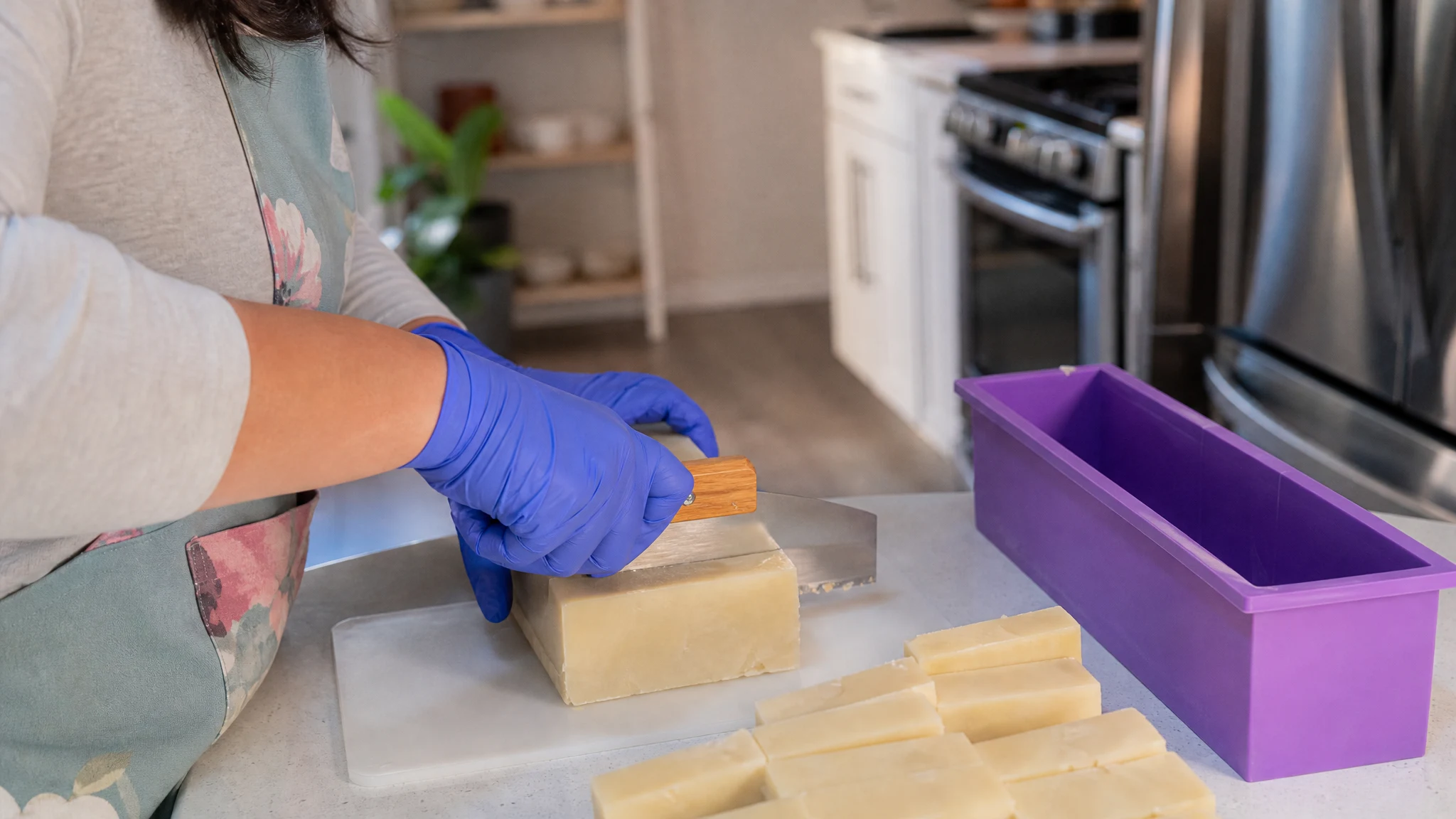
Honeysuckle Cold Process Soap: A Worked Recipe and Test Plan
Make one 100 g test batch before you commit a bottle of absolute to a full run. This recipe is a formulation worked out from published saponification values and a stated fragrance rate; we have not made it, and nothing we can cite says how a solvent-extracted honeysuckle absolute behaves in lye. The batch sheet below gives the exact grams for a 100 g test and a 500 g full batch, and the later sections say what to watch for and what is still unknown.
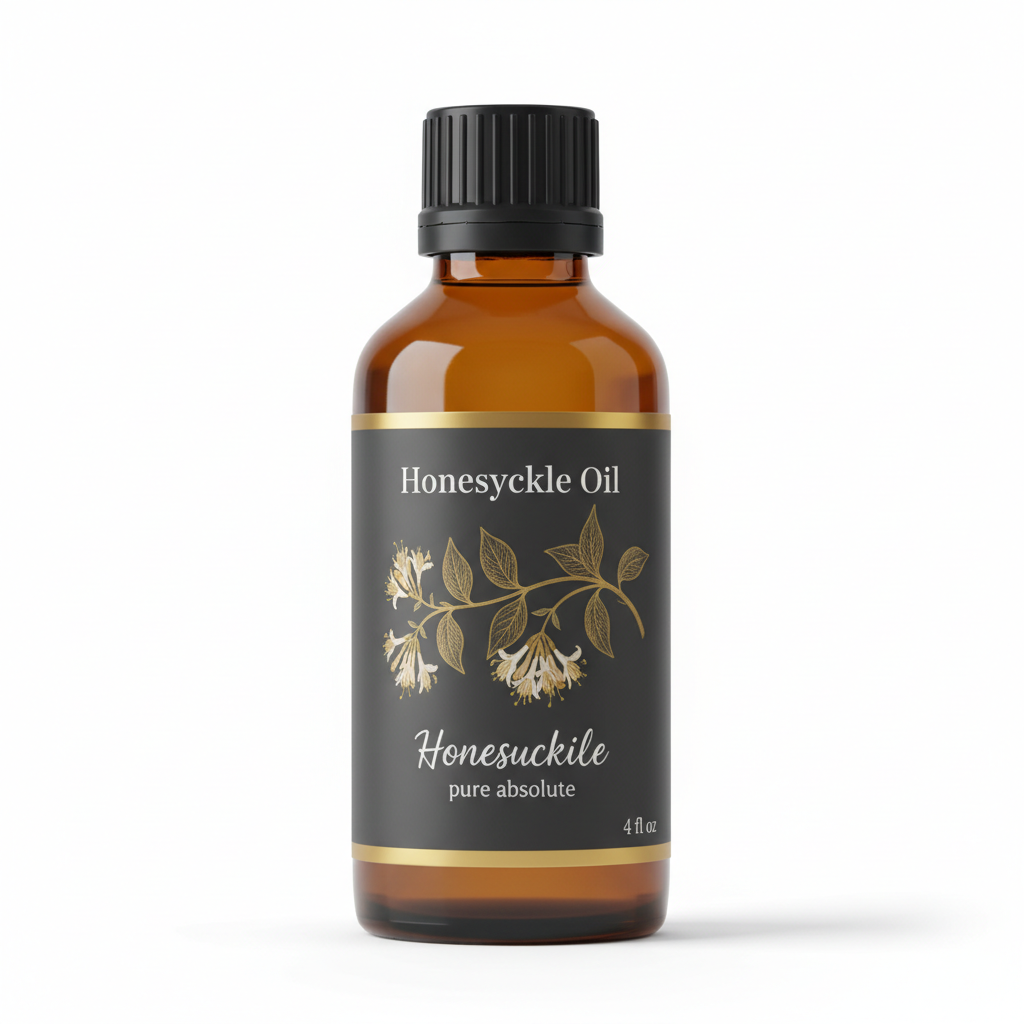
Honeysuckle Absolute
Our own Honeysuckle Absolute, in sizes from 0.5 oz to bulk.
From $13.99
Shop Now →The batch sheet
Oils: 60% olive, 30% coconut, 10% shea. Superfat: 5%. The saponification values are the sodium hydroxide figures from Certified Lye's chart (compiled in 2006, which the page calls averages): olive 0.1353, refined coconut 0.1910, shea 0.1296 grams of lye per gram of oil. The 5% superfat and the 33% lye concentration are our choices; the same page's own worked example discounts lye to 96%, so 4% is also common.
| Ingredient | 100 g test | 500 g batch | Working |
|---|---|---|---|
| Olive oil | 60 g | 300 g | 300 x 0.1353 = 40.59 g lye |
| Coconut oil | 30 g | 150 g | 150 x 0.1910 = 28.65 g lye |
| Shea butter | 10 g | 50 g | 50 x 0.1296 = 6.48 g lye |
| Lye at 100% | 15.14 g | 75.72 g | sum of the three lines |
| Lye at 5% superfat | 14.4 g | 71.9 g | x 0.95 |
| Water | 29.2 g | 146 g | lye is 33% of the lye solution |
| Honeysuckle absolute | 1 g | 5 g | 1% of oil weight |
Check the water line: 71.9 g lye with 146 g water is 71.9 / 217.9, or 33.0%. The fragrance line is 1 g (about 1.0 ml, about 20 drops at 0.989 g/ml and 20 drops per ml) or 5 g (about 5.1 ml, about 101 drops). Weigh it; a scale that reads to 0.01 g matters at 1 g. In the finished test batch of about 144 g, 1 g of absolute is about 0.7%, which is inside our 0.5% to 2% skin guidance. Because saponification values are averages, rerun the figures through a lye calculator using your supplier's values before you weigh any lye. Too much lye is the error that burns skin.
Why 1%, and why it may not be enough
Bramble Berry's Soap Queen blog (25 March 2025) gives up to 0.8 oz of fragrance or essential oil per pound of cold process soap for a strong scent, which is 5% by weight, and bases it on IFRA and RIFM maximums for its own tested materials. At 5% a 500 g batch would take 25 g of our absolute. We recommend starting at 1% because it is cheap to test, sits inside our own skin range and leaves room to go up. IFRA's June 2023 guidance puts bar soap in Category 9, rinse-off, and limits there are set per fragrance material. We found no IFRA Standard naming Lonicera japonica in the library pages we could read, and we publish no IFRA certificate; the IFRA article covers how to check.
The same Soap Queen post recommends pairing light scents with deeper, earthier ones to anchor them. Reasoning from that, a soft floral like honeysuckle is the kind of scent a base note would help hold, though the sources we could read give no data on absolutes in soap and none on honeysuckle. Whether this absolute accelerates trace, discolors the bar or fades during cure is unknown. Our COA lists the standard appearance as pale yellow to yellow liquid and shows no constituent data, so it cannot predict any of those. That is why the test bar comes first.
Lye safety before you open anything
Sodium hydroxide is the dangerous ingredient in this recipe, not the absolute. The NIOSH Pocket Guide lists it as irritating and burning to eyes, skin and mucous membranes, with a ceiling exposure limit of 2 mg/m3 for airborne dust or mist. It says contact with water can generate enough heat to ignite nearby combustibles, and lists aluminum, tin and zinc among the metals it attacks. Use stainless steel, heat-safe plastic or glass instead.
- Wear eye protection, gloves and long sleeves, and mix in a ventilated space. NIOSH advises preventing skin and eye contact and having an eyewash available.
- Add the lye to the water, never the reverse; Certified Lye states this directly.
- If lye reaches skin or eyes, NIOSH says flush immediately with water. If it is swallowed, seek medical attention at once; call emergency services or a physician rather than treating it yourself.
- Keep lye away from children and pets. Our own copy also says to keep the absolute away from eyes, children and pets, and it is not for internal use.
The steps
- Weigh the lye and water separately. Pour the lye into the water, stir until clear, and let the solution cool.
- Melt the coconut oil and shea, add the olive oil, and bring the oils to a temperature you are comfortable with. We state no target temperature because we cite none.
- Weigh the absolute into a small cup. Our absolute thickens in the cold; warm the bottle in your hand for a minute so it pours, as our how-its-made page says.
- Combine lye solution and oils and stick-blend to light trace. Add the absolute, stir with a spatula and pour at once. If it thickens fast, you have learned something about the absolute; write it down.
- Soap Queen notes that soap can reach about 180 F in gel phase and suggests avoiding gel with low flash point scents. Our COA has no flash point, so we cannot say where this absolute sits. Keep the test bar in a cool place and do not insulate it.
Make a second 100 g control batch with the same recipe and no absolute. Compare the two at unmolding, after a week, and as the bars age: color, smell, and how the soap behaves in the first wash. Then patch test a small area of skin, following the skin basics guide, before giving anyone a bar.
What to write down
A test batch only pays off if you record it. Note how long the control batch took to reach light trace and how long the absolute batch took, since a faster trace would be acceleration. Note the color of each bar at unmolding and again later, the strength of the scent at each check, and whether it reads as honeysuckle or only as generic floral soap. Decide in advance what result would make you buy more: for example, a scent you can still identify from the bar in your hand after it has aged, at a rate you can afford across the bars you plan to make.
When not to make this
If your goal is a loud scent in a high-volume bar, an absolute at 1% will not deliver it, and at 5% it will use the bottle quickly; the arithmetic is in the soap and body care guide. If you want the easier first try, melt and pour avoids handling lye. If you plan to sell the bar, read the labeling guide and ask a regulatory consultant or attorney about your classification. We sell only the honeysuckle absolute; oils, lye and molds come from a soap supply shop.
A 1 oz bottle is about 29.3 g, enough for about 29 of the 100 g test batches or about 5.8 full batches, so the smallest size is the sensible way to find out whether the scent survives.
Honeysuckle Absolute
Honeysuckle Absolute from our own shop, in sizes from 0.5 oz to bulk.
From $13.99
Shop Now →Sources & Further Reading
- CDC NIOSH. NIOSH Pocket Guide to Chemical Hazards: sodium hydroxide. cdc.gov/niosh/npg/npgd0565.html
- Certified Lye. Saponification values and lye soap notes (chart compiled 2006). certified-lye.com/lye-soap.html
- Soap Queen (Bramble Berry), 2025. Fragrance usage and scent handling in soap (25 March 2025). soapqueen.com/?p=75268
- IFRA and RIFM, 2023. Guidance for the Use of IFRA Standards, 51st Amendment. ifrafragrance.org guidance PDF