Honeysuckle Absolute in Soap and Body Care: Decision Guide
Our honeysuckle absolute is a better accent than a main scent in soap and body care. It is sold neat, it is a solvent-extracted absolute rather than a steam-distilled essential oil, and the arithmetic below shows why a bottle goes a long way at the low rates that make sense for it and runs out fast at the rates soap suppliers quote for ordinary scents. This guide gives the decision order a maker should follow: which product, which regulatory bucket, what rate, and what size to buy.
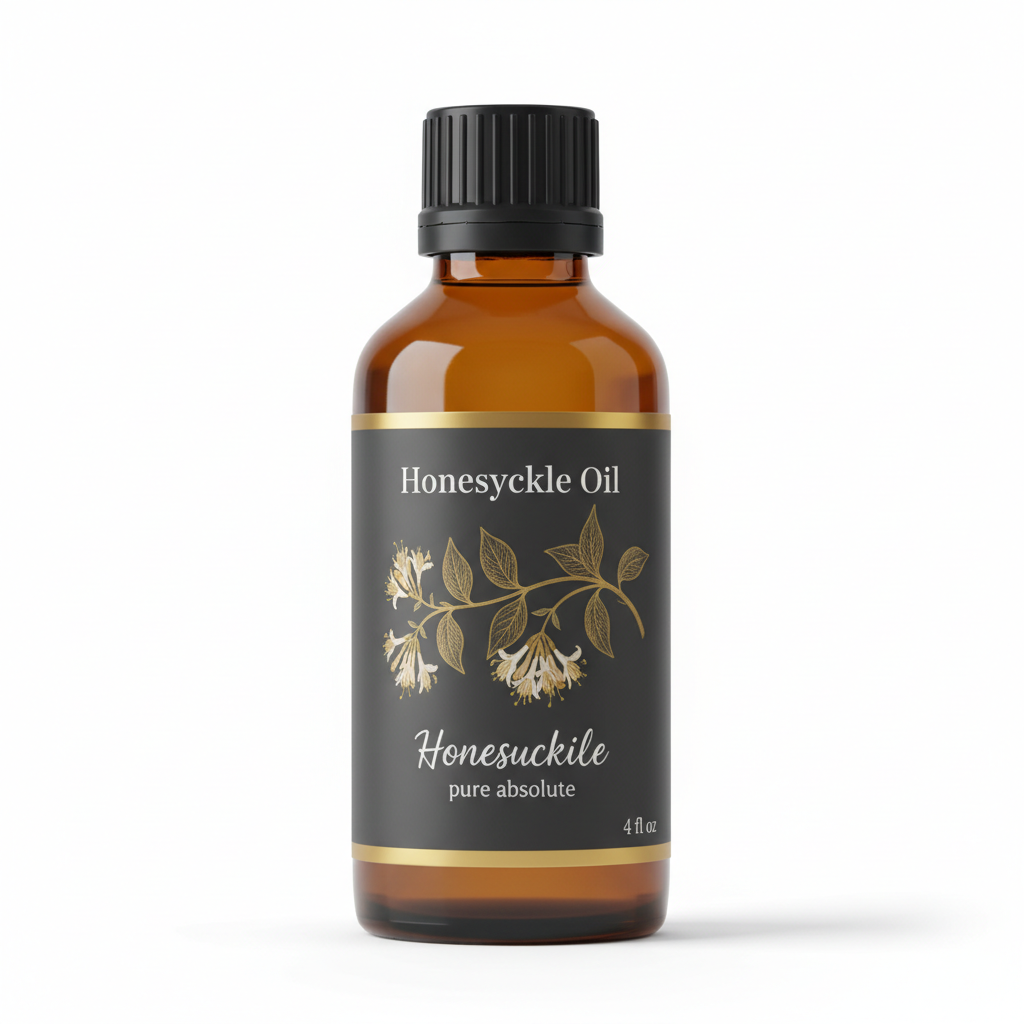
Honeysuckle Absolute
Our own Honeysuckle Absolute, in sizes from 0.5 oz to bulk.
From $13.99
Shop Now →Step 1: pick the product before you pick the rate
The same absolute behaves differently in a bar of cold process soap, a melt and pour bar, a lotion and a butter, because the rate is set by the product type and by what rules apply to it. Here is the arithmetic for each, worked from our published COA batch (relative density 0.989 at 20 C, so one ml weighs about 0.989 g) and an assumed 20 drops per ml. Droppers vary and the absolute thickens in the cold, so weigh it on a scale that reads to 0.01 g rather than counting drops.
| Product | Batch | Rate | Absolute | About (ml / drops) |
|---|---|---|---|---|
| Cold process soap | 500 g oils | 1% of oil weight | 5 g | 5.1 ml / 101 |
| Melt and pour soap | 500 g base | 0.5% of base | 2.5 g | 2.5 ml / 51 |
| Lotion | 200 g | 0.5% to 2% | 1 to 4 g | 1.0 to 4.0 ml / 20 to 81 |
| Body butter | 100 g | 0.5% to 2% | 0.5 to 2 g | 0.5 to 2.0 ml / 10 to 40 |
The soap rates are choices, not findings. Our own safety copy says to dilute to 0.5% to 2% in a carrier for skin use. For the two leave-on rows we simply apply that range to the whole product, which is an extrapolation from carrier oil to lotion and butter, and the lotion and butter recipes are worked in the lotion article and the body butter article. For soap, the 1% of oil weight in cold process works out to about 0.7% of the finished batch (5 g in roughly 723 g), which sits inside our 0.5% to 2% range even before you allow for the soap being rinsed off. We have not made any of these products; each is a formulation from cited guidance and arithmetic, so make a small test first.
Step 2: decide whether it is soap or a cosmetic
This decides who regulates the product and what must be on the label. The FDA soap FAQ (page content current as of 20 August 2024) says all three conditions of 21 CFR 701.20 must be met for a product to be regulated as soap: it is composed mainly of alkali salts of fatty acids, those salts are the only material that gives the cleaning action, and it is labeled and marketed only for use as soap. FDA says a product intended for moisturizing, making the user smell nice or deodorizing is a cosmetic, and one with germ-killing or skin-condition claims is a drug. A product that meets the soap definition falls to the Consumer Product Safety Commission, not FDA.
The practical consequence for a scent ingredient is uncomfortable: a bar sold for its honeysuckle fragrance sits close to the line FDA draws at "smell nice". Whether your marketing words tip it over is a legal judgment, not ours; the labeling guide reports the primary texts, and a regulatory consultant or attorney should decide your case. A melt and pour base made with synthetic detergents is a cosmetic by FDA's own test, so ask the base supplier for its ingredient list.
Step 3: choose the rate with the right ceiling in mind
Three different numbers get confused here.
- Supplier rates for their own tested scents. Bramble Berry's Soap Queen blog (25 March 2025) says up to 0.8 oz of fragrance or essential oil per pound of cold process soap for a strong scent, and 0.25 oz of essential oil per pound in melt and pour. That is 5% and about 1.6% by weight. They describe the "strong" level as based on IFRA and RIFM maximums for their materials and warn that more can irritate skin. It does not mention absolutes.
- A base maker's limit. One melt and pour base maker's listed specification caps fragrance at 1% of base and total additives at 3% (details in the melt and pour recipe). Note the disagreement: the blog's 0.25 oz per pound is above that 1% cap. Different bases, different limits; the data sheet for the base you use wins.
- IFRA's category. IFRA's June 2023 guidance puts "products with body and hand exposure, primarily rinse off" in Category 9, with bar soap as the product that drives it, and leave-on body products in Category 5 (5A is body lotion). Limits are per fragrance material and per category. We found no IFRA Standard naming Lonicera japonica or honeysuckle in the pages of the Standards library we could read, and we publish no IFRA certificate for our absolute, so a maker who sells soap must get that assessment elsewhere. See the IFRA article.
Our position follows from this: at the 5% a supplier would call a strong scent, a 500 g batch would take 25 g of absolute, so a 1 oz bottle (about 29.3 g) would scent only about 1.2 batches. At 1% of oil weight the same bottle covers about 5.8 batches. The absolute earns its place at the low rate, as an accent on top of a soap-approved base scent, not as the whole scent of a high-volume bar.
Step 4: size the bottle from the batches you plan
A 0.5 oz bottle holds about 14.8 ml, or 14.6 g at our batch density. A 1 oz bottle holds about 29.3 g. A 500 g oil batch of cold process soap yields roughly 720 g of fresh soap, about seven 100 g bars before cure loss, so 5 g of absolute is about 0.7 g per bar.
| Bottle | Cold process batches at 5 g | Melt and pour batches at 2.5 g |
|---|---|---|
| 0.5 oz (14.6 g) | about 2.9 | about 5.9 |
| 1 oz (29.3 g) | about 5.8 | about 11.7 |
Check the shop page for the current price per size and divide by grams before you decide the absolute fits your bar price. Our sizes run from 0.5 oz to 400 lb, and the same absolute is in every size, so there is no reason to buy large before a one-bar test tells you the scent survives. Storage matters once a bottle is open: our guidance is to decant working amounts into smaller airtight bottles; see the storage guide.
What we do not know, and who to ask
We do not know how this absolute behaves in lye: whether it accelerates trace, discolors, or fades during cure. Our COA shows density, refractive index, optical rotation, appearance and smell for one batch, and no constituent breakdown, so nothing on it predicts saponification behavior. The supplier sources we could read give no data on absolutes in soap; they advise pairing light scents with deeper ones to anchor them. A buyer who needs residual-solvent or GC-MS data for a sold product should ask in writing before ordering. We do not sell soap base, lye, oils, butters, or other scents; a soap or craft supply shop does. For a sold product, a regulatory consultant or attorney handles the label and an insurer handles liability.
If you want to try the absolute in soap, start with a single small bar, keep the rate at the low end, and judge the scent at unmolding and again as the bar ages. The cold process and melt and pour recipes are the next steps.
Honeysuckle Absolute
Honeysuckle Absolute from our own shop, in sizes from 0.5 oz to bulk.
From $13.99
Shop Now →Sources & Further Reading
- FDA, 2024. Frequently Asked Questions on Soap (content current as of 08/20/2024). fda.gov/cosmetics/cosmetic-products/frequently-asked-questions-soap
- IFRA and RIFM, 2023. Guidance for the Use of IFRA Standards, 51st Amendment (30 June 2023). ifrafragrance.org guidance PDF
- Soap Queen (Bramble Berry), 2025. Fragrance usage rates in cold process and melt and pour soap (25 March 2025). soapqueen.com/?p=75268
- Stephenson, listed by Voyageur Soap & Candle. No Sweat White Melt & Pour Soap, fragrance and additive limits. voyageursoapandcandle.com
- CPSC. Soap. cpsc.gov/Soap