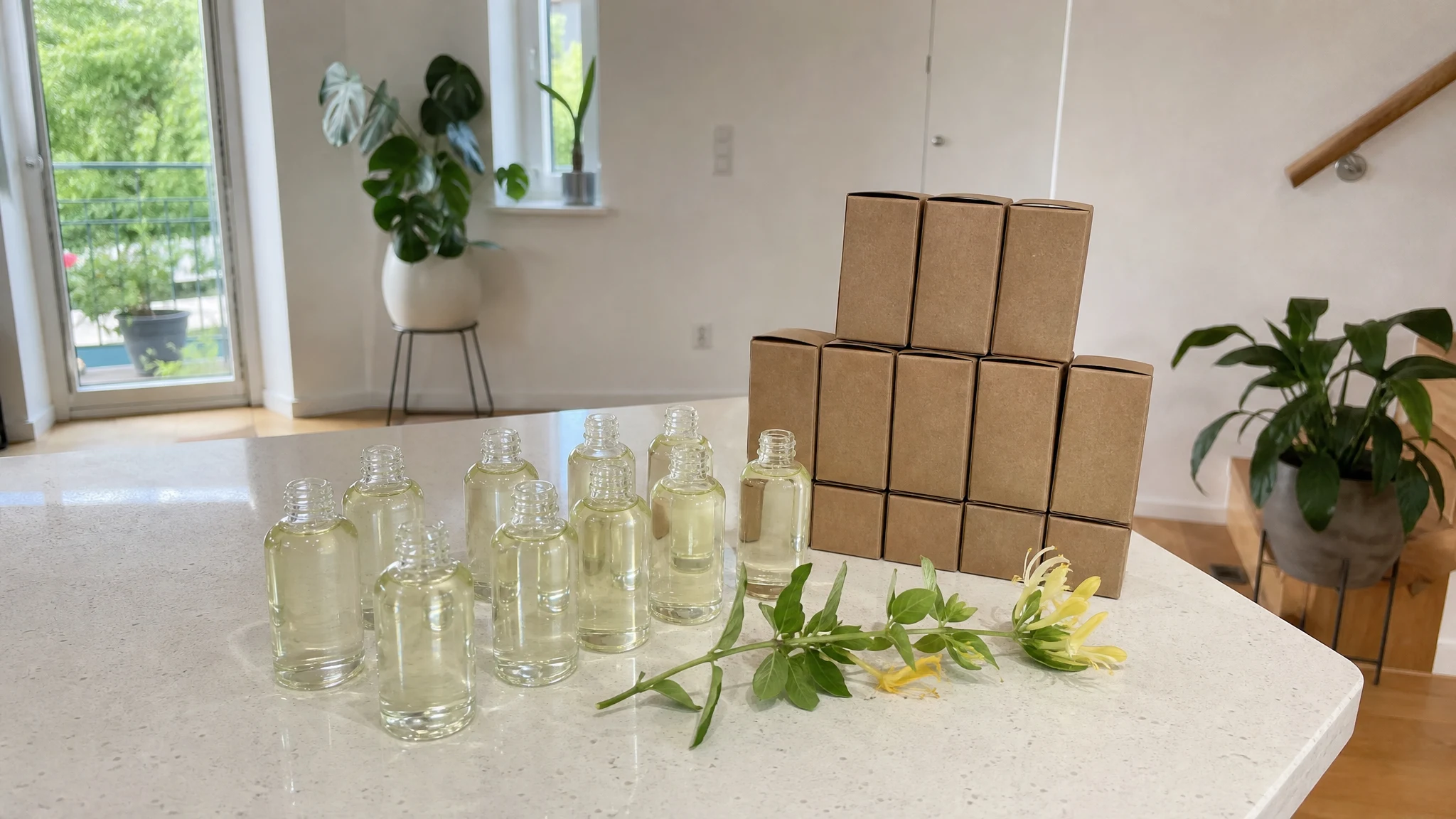
Honeysuckle Oil Label Guide: What the Words Really Mean
Most people assume "honeysuckle oil" means a distilled essential oil, the way lavender oil is. For honeysuckle that assumption is the one worth questioning, because the flower's scent does not survive steam distillation the way many others do. Once you understand why, a confusing set of product listings sorts itself out quickly.
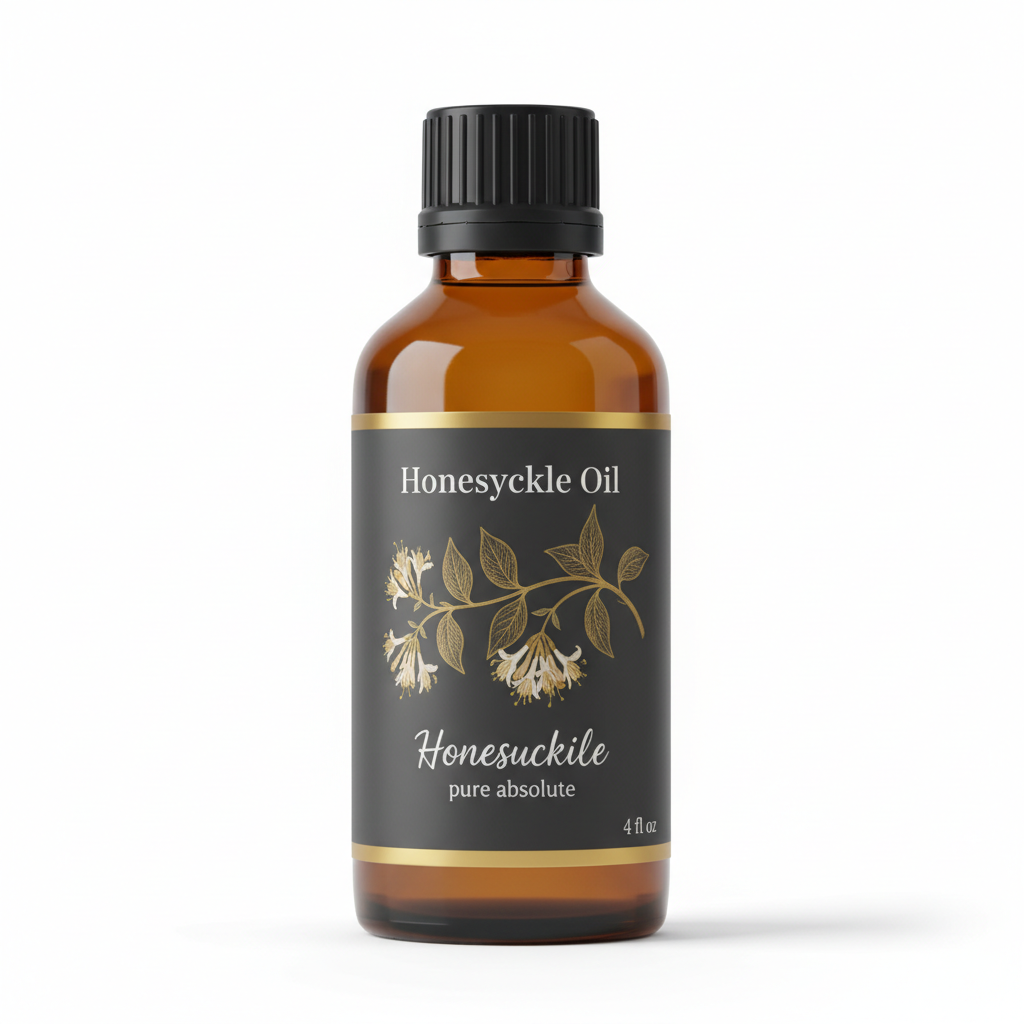
Honeysuckle Absolute
Our own Honeysuckle Absolute, in sizes from 0.5 oz to bulk.
From $13.99
Shop Now →What the flower actually gives up
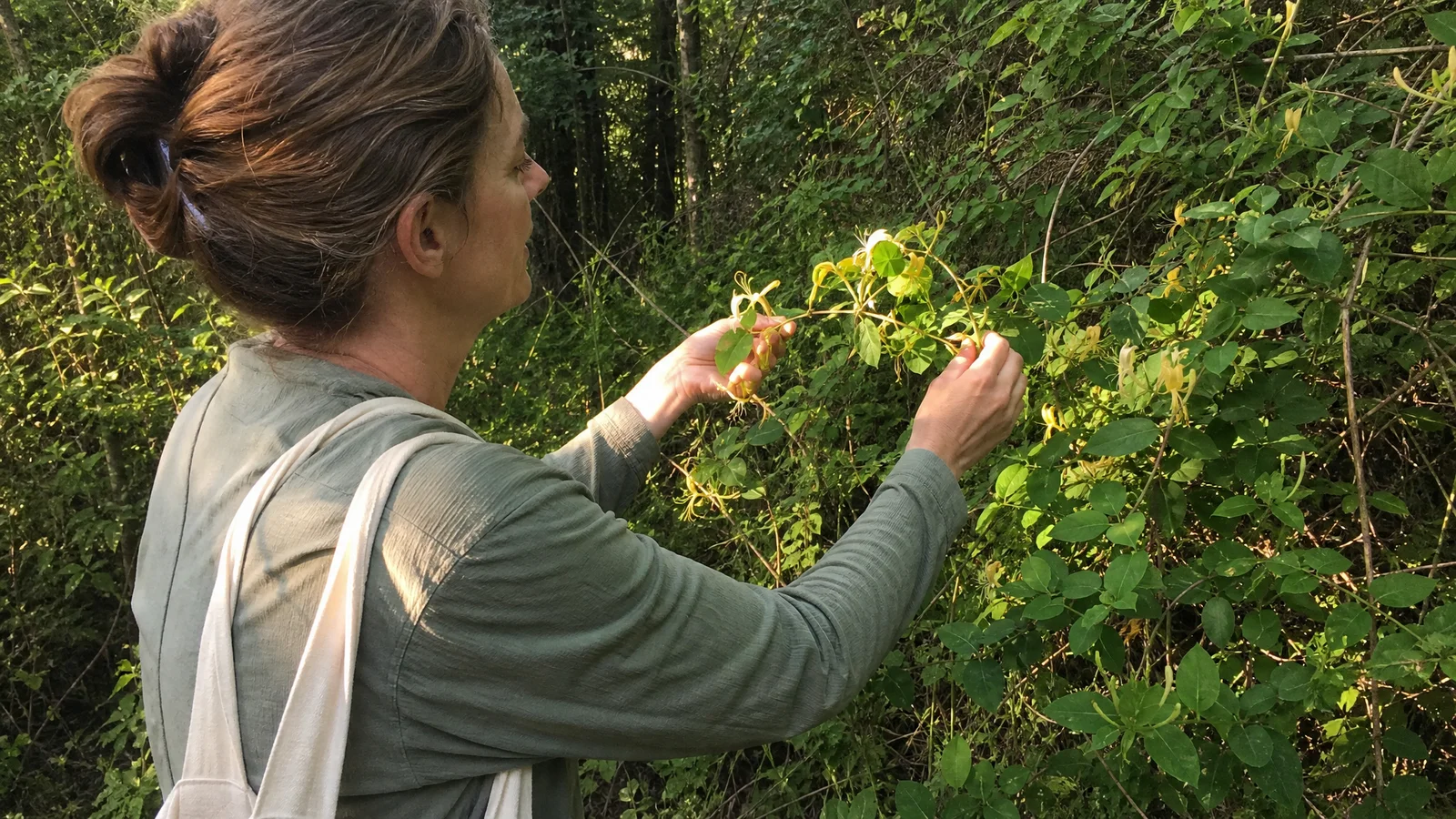
A 2011 review of Lonicera japonica gathers several older chemical studies, and the contrast is striking. A Japanese study of flower concrete (the waxy first extract) identified around 150 compounds, with linalool, (Z)-jasmone, (Z)-jasmin lactone and methyl jasmonate as key markers. The same work found that living flowers give off the most scent around midnight, which fits every garden walk you have taken on a summer night.
Steam distillation told a different story. In a 2009 study, the leading components of the distillate were methylcyclohexane and hexadecanoic acid, with no linalool or jasmone among the top entries. And in a study comparing fresh and dried flowers, fresh flowers had more than 14% linalool while dried ones had under 0.4%, with the authors attributing the loss to heating and light during drying.
These are reports on particular samples, not statements about any product for sale. Still, they support a sensible conclusion: a steam-distilled product from this flower, particularly from dried flowers, would probably smell little like the living vine. That is why we sell an absolute, made by solvent extraction, and why our article on steam distillation goes deeper.
Start with your nose, then the paperwork
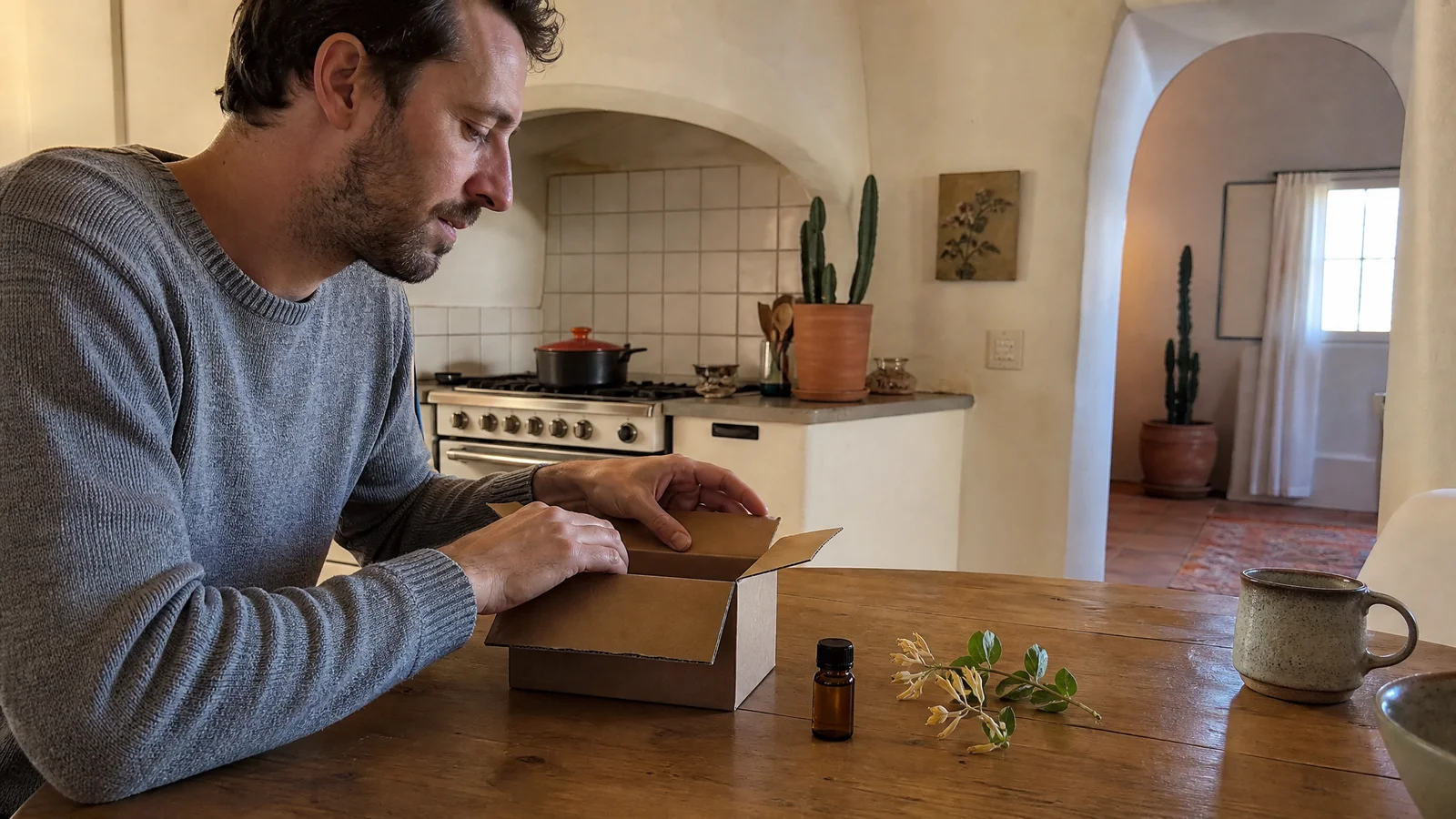
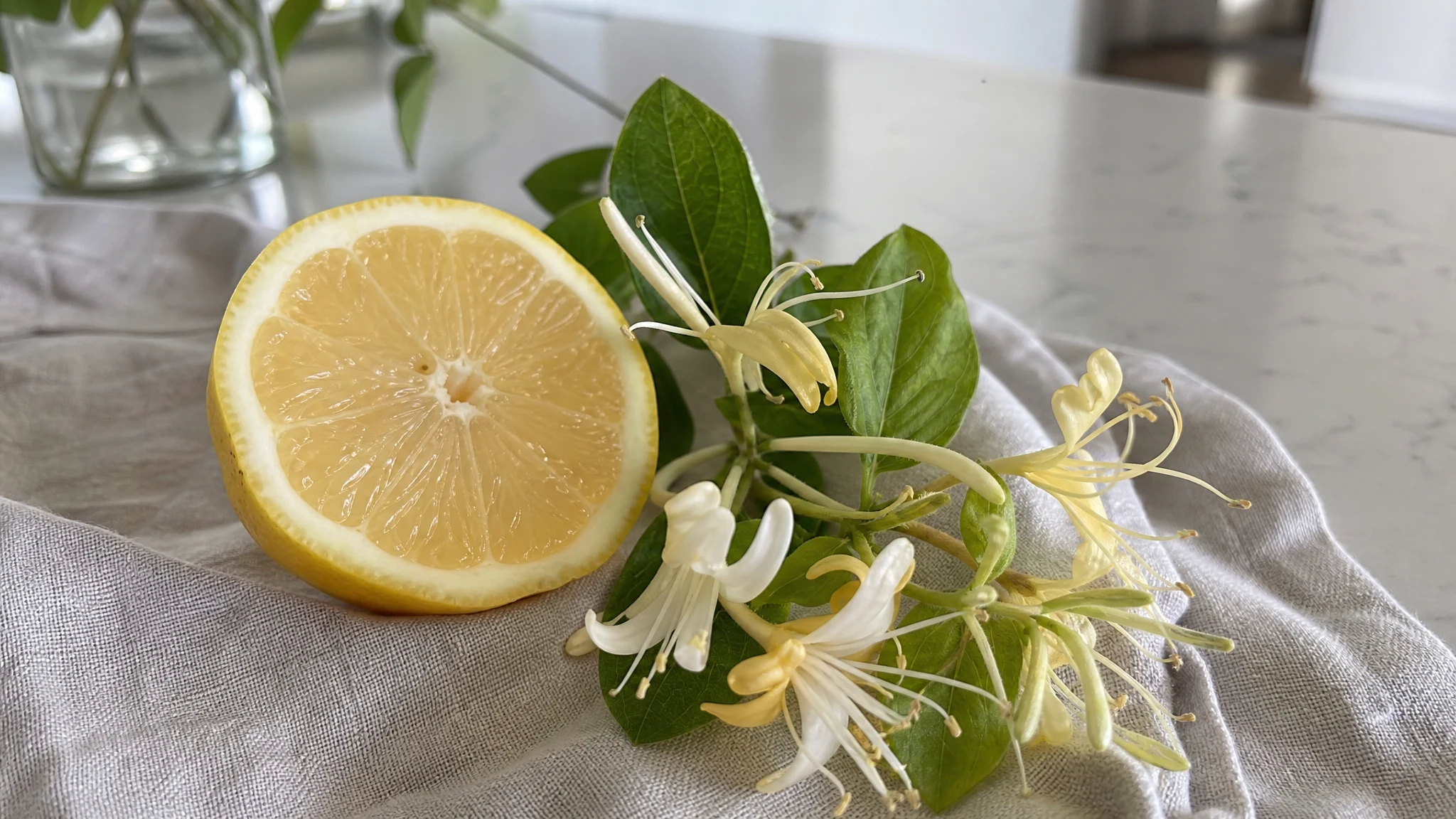
We love a good label, but we trust an honest nose just as much. Whatever you end up with, open the bottle and smell it on a paper strip before you do anything else. A floral extract of the living vine tends to come across as nectarous and green, with a warm, jasmine-like softness underneath. If what reaches you is a flat, sugary candy note with nothing green in it, that is a clue worth following up with the seller.
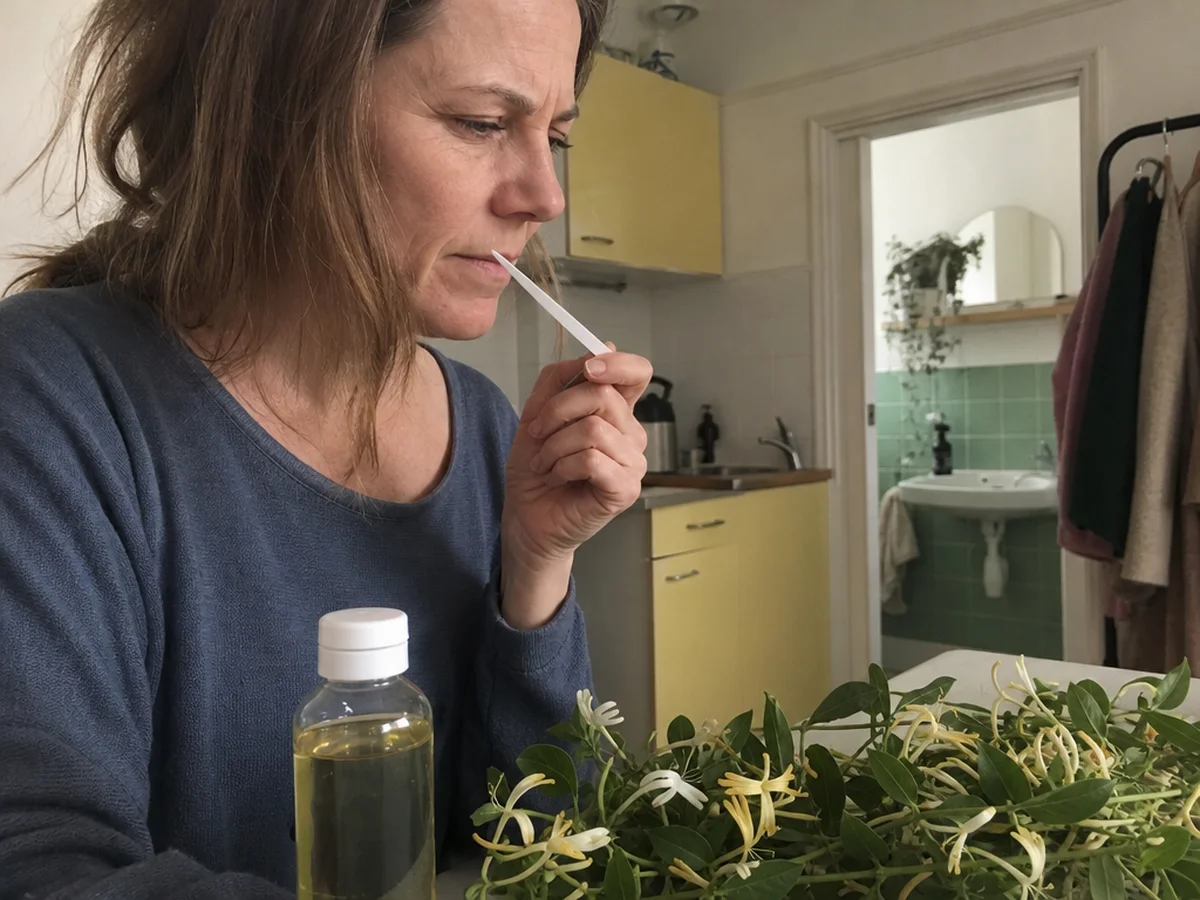
Smell is never proof, and it will not tell you how something was made. What it does is point you at the first question to ask, which is often more useful than a long list of them.
Sorting a listing in four questions
Take any listing and walk down this list.
- Does it name the plant? Lonicera japonica and the part used are what you want to see. "Honeysuckle" alone covers many species.
- Does it say how it was made? "Absolute" or "solvent extracted" points to a hexane-then-ethanol route. "Steam distilled" on honeysuckle is worth a follow-up question, and no method at all is an unanswered one.
- Is it one neat ingredient? Words like "fragrance", "parfum" or "scent" describe a compounded scent. The FDA notes that fragrance ingredients can be listed simply as "Fragrance", so a finished product need not say what its scent is made from.
- Does a lot number connect to a certificate? This is where claims become checkable.
A compounded honeysuckle fragrance is a perfectly good product for the right job; candles on a budget and consistent scent are two. Our comparison of absolute and fragrance oil covers the trade-offs. The only thing we would object to is a fragrance sold under the name of an extract.
What a certificate can and cannot tell you
The Certificate of Analysis we publish is for one batch, number HONLUUUNUNC007A. It lists a relative density of 0.989 against a standard window of 0.950 to 1.035, a refractive index of 1.509 against 1.410 to 1.530, and an optical rotation of +1.88 degrees against a window of -5 to +5. Those windows are generous, so many liquids would land inside all three. In plain terms, the numbers show a plausible liquid and are not a fingerprint of honeysuckle.
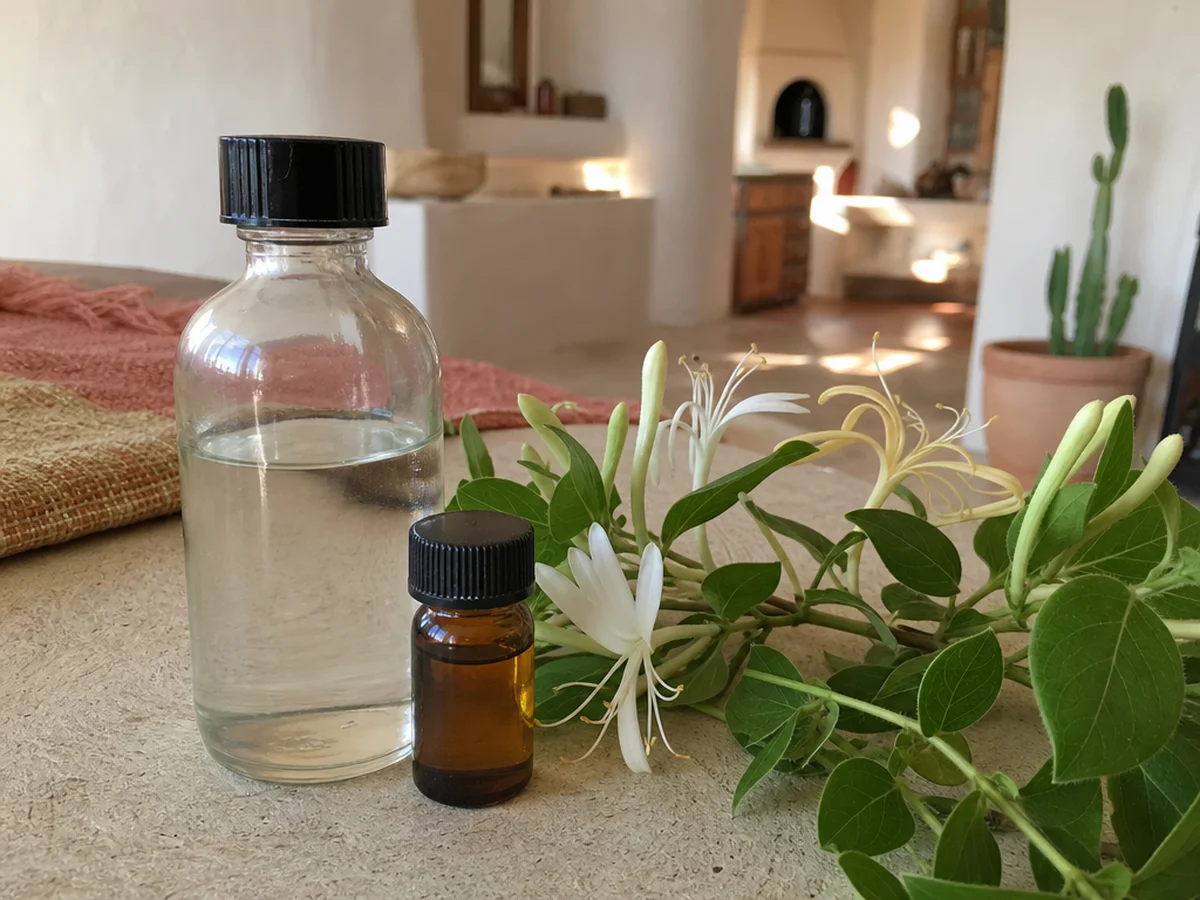
The test that does discriminate is a GC-MS profile, which shows whether compounds like linalool and the jasmonates are present. If you need one, or a residual-solvent report, ask any seller in writing before you order, and that includes us through the contact page. Keep the reply. Our guide to reading a COA for floral absolutes explains what each line of a certificate is for.
Three made-up listings, sorted
| Listing says | Sort it as | Next question |
|---|---|---|
| "Honeysuckle essential oil, 100% natural, 10 ml" | Unknown: no plant, method or dilution | Which plant, how made, neat or diluted? |
| "Honeysuckle fragrance oil" | Compounded scent | What use rate does the maker give for my product? |
| "Lonicera japonica absolute, solvent extracted, lot 123" | Extract, claim checkable | Can I see the certificate for lot 123? |
A habit worth keeping
Keep a small notebook, or a note on your phone, for every bottle you open: the name on the label, the lot number, the date it arrived, and a line or two on how it smelled. When you reorder months later, you have something to compare against. We recommend it for any aromatic material, and it takes about a minute per bottle.
It also makes asking questions easier. "Lot 123, listed as steam distilled, arrived in March" is a far better opening for an email than "the oil I bought last year".
Price on its own tells you little, and neither does a pretty label. The words that matter are the plain ones: which plant, which process, which lot.
Honeysuckle Absolute
Honeysuckle Absolute from our own shop, in sizes from 0.5 oz to bulk.
From $13.99
Shop Now →