How to Read a Floral Absolute COA, Line by Line
A certificate of analysis is a snapshot of one batch on one day, and it is only as useful as your understanding of what it measured. We publish one for our honeysuckle absolute, so we know it well. Here is how to read it, line by line, and how to read anyone else's just as sensibly.
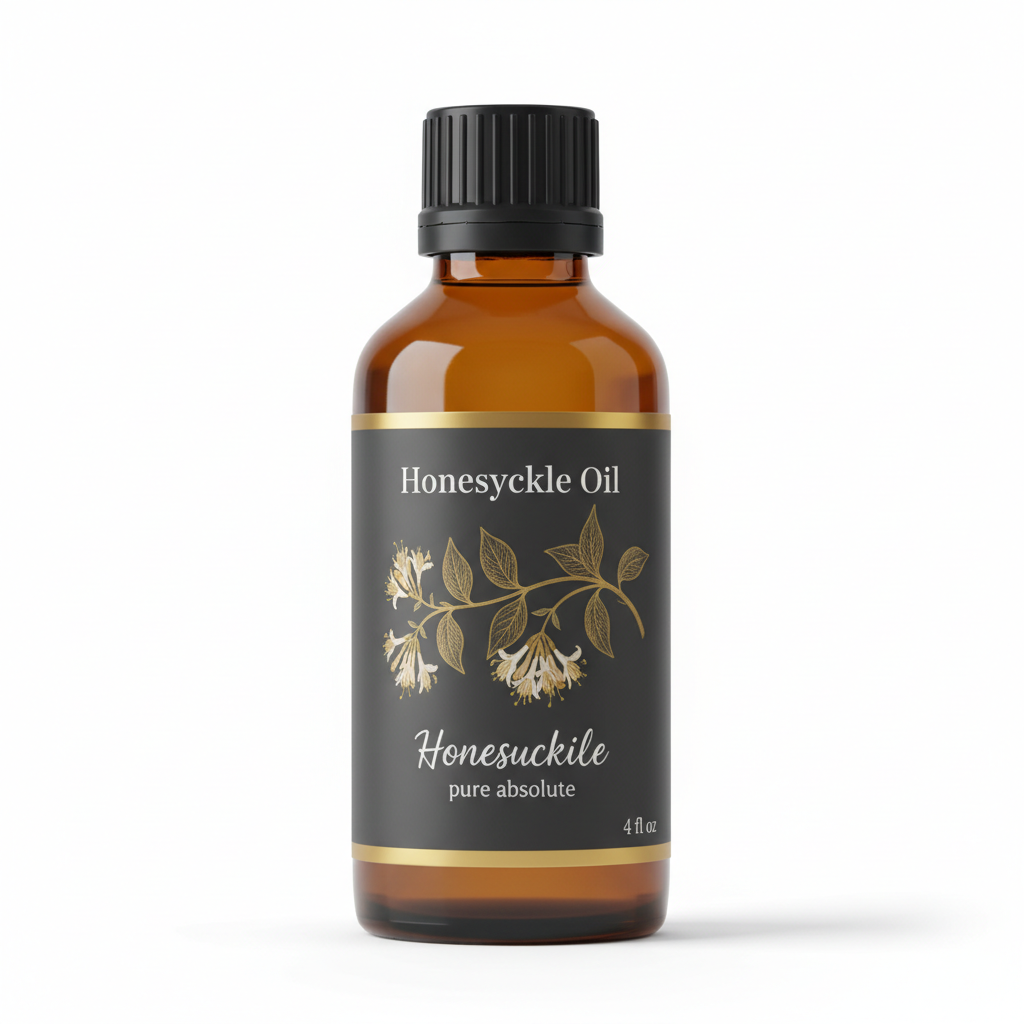
Honeysuckle Absolute
Our own Honeysuckle Absolute, in sizes from 0.5 oz to bulk.
From $13.99
Shop Now →What our certificate says
The certificate covers batch HONLUUUNUNC007A. It names the botanical as Lonicera japonica, the part used as flower, the extraction method as solvent extraction, and gives a best-by of 02/05/2027. Then come five checks.
| Test | Standard window | Batch result |
|---|---|---|
| Appearance | pale yellow to yellow liquid | complies |
| Smell | unique aroma of honey suckle | complies |
| Relative density at 20 C | 0.950 to 1.035 | 0.989 |
| Refractive index at 20 C | 1.410 to 1.530 | 1.509 |
| Optical rotation at 20 C | -5 to +5 degrees | +1.88 degrees |
The closing line says every tested parameter complies with pharmacopoeia standards for Honeysuckle Oil (Lonicera japonica). That is the full page.
If you have never opened a certificate before, it can look like a wall of codes. The trick is to read it the way you would read a recipe card: top to bottom, one line at a time, asking what each line is for.
What the three numbers are really for
Density, refractive index and optical rotation are the classic physical checks on natural aromatic materials, and each has an ISO method: ISO 279 for relative density, ISO 280 for refractive index and ISO 592 for optical rotation. They are quick, cheap and good at spotting a liquid that is obviously not what it claims to be. They are not an identity test.
The reason is the width of the windows. Our density of 0.989 sits just under halfway through its window, and our refractive index sits about four fifths of the way up. The optical rotation window straddles zero, so any reading from -5 to +5 passes. Put plainly, the three numbers describe a believable liquid of the right general sort. Plenty of other absolutes could land in the same ranges, so we read them as a reassuring baseline rather than a fingerprint. ISO 592 also notes that viscous or strongly coloured oils are measured as a solution, which is worth keeping in mind for any absolute.
Where identity actually lives
The thing that tells one botanical extract from another is its chemistry, the full list of aroma compounds a gas chromatograph can separate. Honeysuckle is a good example of how long that list gets. One 2025 study of dried Lonicera japonica flower buds from four Chinese regions found 80 volatile compounds, and 34 of them differed meaningfully from one origin to the next (Molecules, 2025). Those were medicinal buds, not an absolute, but the scale is the point: a natural floral is a complicated thing, and a three-number certificate was never going to capture it.
If your project needs that depth, because you are formulating something to sell or you need a residual solvent figure for your lot, ask us in writing through the contact page before you order, and put the same request to any supplier. Name the lot, and ask for the report in writing.
Questions to bring with you
When you pick up any certificate, a short list of questions keeps you from drifting. Is it for the lot in front of me? Does it name the plant and the part? Does it say how the material was made? Are the windows narrow or wide? Is there anything on it that I need and do not see? Write the missing items down and send them to the seller, because a missing line is usually a prompt for a conversation, not a reason to panic.
A quick check at your own bench
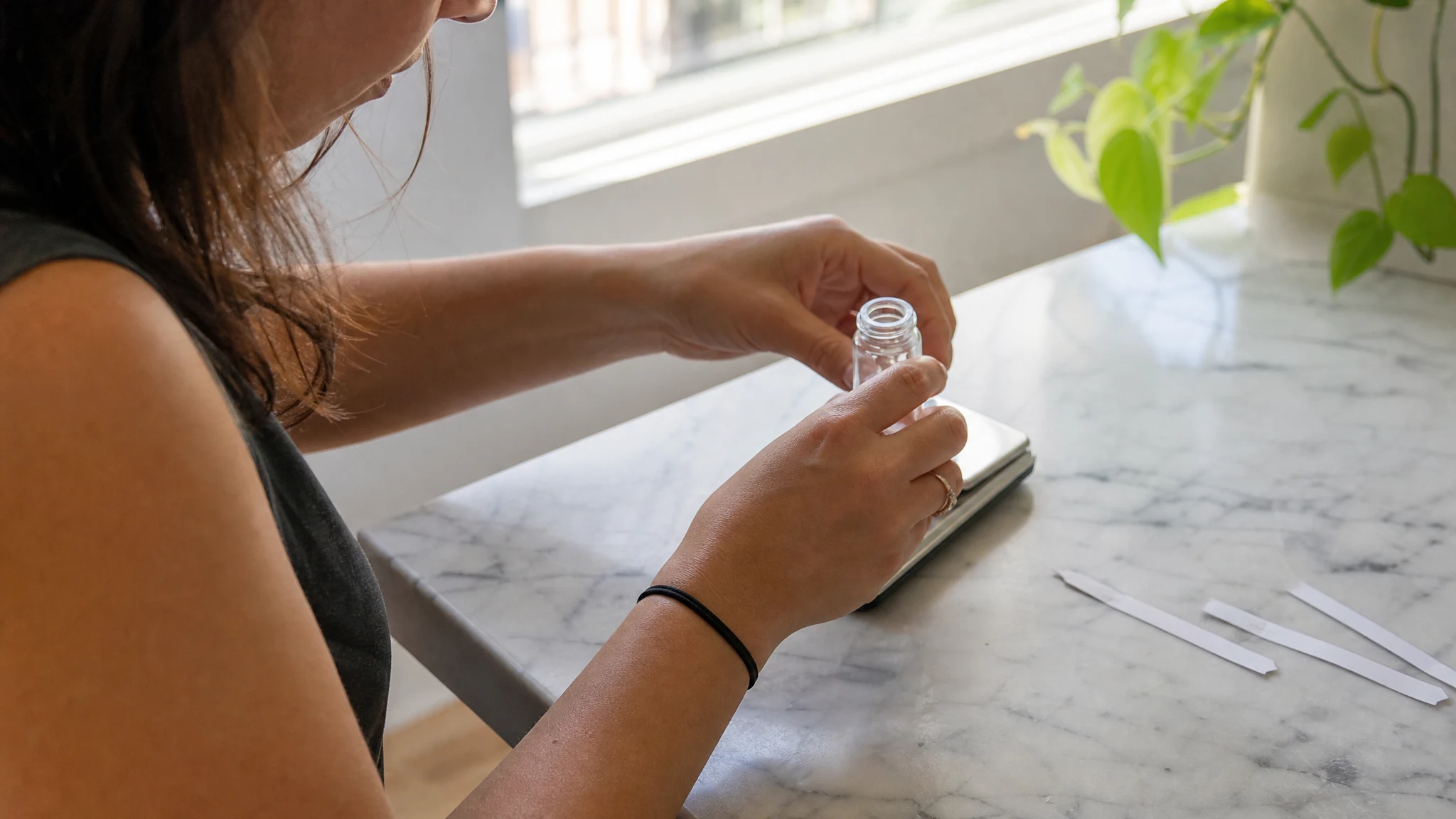
You can sanity-check a bottle with a kitchen scale. A liquid with a relative density of 0.989 should weigh close to 9.89 g for 10.00 ml at room temperature. A big miss in either direction is a reason to write to the seller, while a match is a mild reassurance, for the same reason the certificate is. Smell is the other check on the page, and the lab's word "complies" is a judgment, not a description, so trust your own nose against a reference you know.
Keep it with the bottle
A small habit that pays off: print the certificate or save it as a PDF, and file it with the lot number in the name. When you make a batch of anything, write that lot number in your notes. Months later, if a batch smells different, you will know which bottle it came from, and you will be able to ask a sharper question than "something seems off".
Comparing certificates from different suppliers
A few habits make any certificate easier to weigh. Check that the lot number matches the bottle in your hand. See whether the method standards are named. Look at whether the windows are narrow or wide, and whether anything beyond bulk physical properties is reported. A certificate for one batch speaks for that batch, and ours does the same. For the paperwork around buying, see our quality guide, and for how the label itself should read, see reading an absolute's label. The solvent residue explainer covers one of the most useful figures to ask for.
A certificate answers the questions it was designed for, and the best use of it is knowing which ones those are.
Honeysuckle Absolute
Honeysuckle Absolute from our own shop, in sizes from 0.5 oz to bulk.
From $13.99
Shop Now →Sources & Further Reading
- ISO, 1998 (confirmed 2026). ISO 279: Essential oils, determination of relative density at 20 C, reference method. committee.iso.org/standard/25308
- ISO, 1998 (confirmed 2026). ISO 280: Essential oils, determination of refractive index. committee.iso.org/standard/25309
- ISO, 1998 (confirmed 2026). ISO 592: Essential oils, determination of optical rotation. committee.iso.org/standard/25311
- Molecules, 2025. Differential analysis of volatile and non-volatile compounds in Lonicerae japonicae flos across four origins. pmc.ncbi.nlm.nih.gov/articles/PMC12787219