Is There Hexane in Absolutes? What Remains and Why
Whether hexane was used to make an absolute is an easy question, because the answer is almost always yes. That is what the word implies. The more useful questions come after: how much is left, how was it measured, and which number is it judged against? The last one is where things get interesting, because the best-known hexane limits were written for medicines and food, not for fragrance.
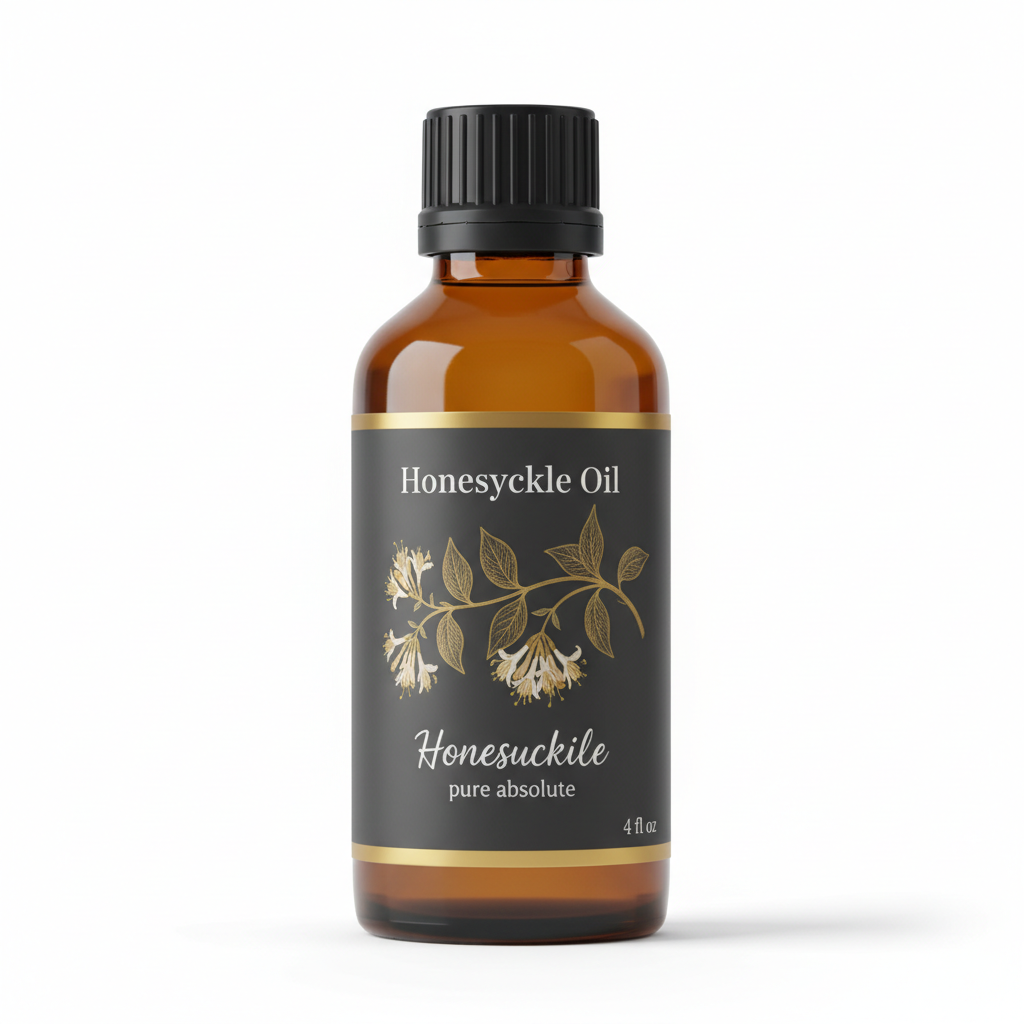
Honeysuckle Absolute
Our own Honeysuckle Absolute, in sizes from 0.5 oz to bulk.
From $13.99
Shop Now →Where hexane fits in the process
Our absolute is solvent-extracted. A hydrocarbon solvent, in practice hexane, is circulated through the blossom and drawn off to leave a waxy concrete. The concrete is then washed in high-proof ethanol and chilled so the waxes drop out, and the filtered result is the absolute. Our guide to how an absolute is made walks through each stage. Hexane evaporates easily, and what matters is how completely it has gone from a given lot.
Hexane has a reputation, so a word of context. ATSDR says breathing high concentrations of n-hexane can cause tingling or numbness in the hands and feet, and that workers recovered after exposure ended (ATSDR, ToxFAQs for n-Hexane). That describes heavy workplace air exposure. It is not a statement about what is in a bottle of absolute.
Two numbers that exist, and what each was written for
The first comes from pharmaceuticals. The international guideline for residual solvents in medicines, ICH Q3C(R8), puts hexane in Class 2, solvents to be limited, with a permitted daily exposure of 2.9 mg per day, which it translates to 290 ppm if a product is taken at up to 10 g a day. It applies to all dosage forms and routes, and it adds that higher levels may be acceptable in some cases, including topical application, justified case by case (ICH Q3C(R8), April 2021). Ethanol, by contrast, sits in Class 3, the low-toxicity group.
The second comes from food. The EU extraction solvents directive, in the retained UK text, allows 1 mg/kg of hexane in fats, oils and cocoa butter made with it, and the same 1 mg/kg in flavourings prepared from natural materials (Directive 2009/32/EC, Annex I). Check the current consolidated text for your market, because limits can change.
The gap between 290 ppm and 1 ppm is not a disagreement about hexane. It reflects different assumptions about how much of a product a person takes in and how often, set by different regulators for different jobs. Borrowing either number for a perfume material means borrowing a yardstick built for something else. Which limit, if any, applies to a cosmetic fragrance ingredient in your market is a question for a regulatory consultant.
What a number looks like once it is diluted
Dilution does a lot of the work. As a purely illustrative sum, suppose an absolute carried hexane at 290 ppm. Blended at 2% in a carrier, the finished oil would carry 290 x 0.02 = 5.8 ppm, and at 0.5% it would carry 1.45 ppm. The figure for the lot you buy matters most, and the sum shows why a neat material's number shrinks quickly in a finished product. It is arithmetic for scale, not a statement about any absolute and not a safety claim.
Why we talk about it openly
We would rather you hear about hexane from us than come across it in a footnote. Our How It's Made page names the solvent plainly, and we describe our absolute as extracted, not distilled. Anyone who loves a floral absolute should know what stands behind the bottle, because the same process gives you the lush scent and the question you are reading about now.
Don't be frightened, and don't be hurried
The word hexane can make people either nervous or dismissive. Both reactions skip the useful part. A supplier who is happy to talk about methods, units and lots is giving you something real to work with. A short, polite written question costs nothing, and the reply tells you a good deal about how a seller works.
A simple record to keep
If you make products to sell, start one page per ingredient lot. Put the supplier, the lot number, the date you received it, and any written answers you were given about solvents. Pin the page to the batch record for every product that lot goes into. When a question comes up months later, you will be glad the answer is on one sheet and not in an inbox.
Questions worth asking any supplier
The Certificate of Analysis we publish for one batch lists density, refractive index, optical rotation, appearance and smell. It has no residual-solvent figure. If you need one for your lot, ask us in writing through the contact page before you order, and get the answer in writing. These questions work with any supplier:
- Which solvents were used, and is residual solvent measured for each lot?
- By what method, with what detection limit, and in what units (ppm means mg/kg)?
- For which batch number, and on what date?
- Against what limit is the result judged, and who set it?
A bare "low ppm" with no method, lot or date is only half an answer. For other things a certificate should show, see our guide to reading a COA, and for label wording, reading an absolute's label.
Ask the question before the order goes in, and keep the answer with your lot records.
Honeysuckle Absolute
Honeysuckle Absolute from our own shop, in sizes from 0.5 oz to bulk.
From $13.99
Shop Now →