Why Honeysuckle Absolute Is Thick: What's Normal
Open a bottle of honeysuckle absolute on a chilly morning and it may barely move when you tip it. That surprises people who expect something like a carrier oil, but it is exactly how a concentrated floral extract behaves. Thickness is a first-day fact of life with an absolute, and a few small habits make it easy to work with.
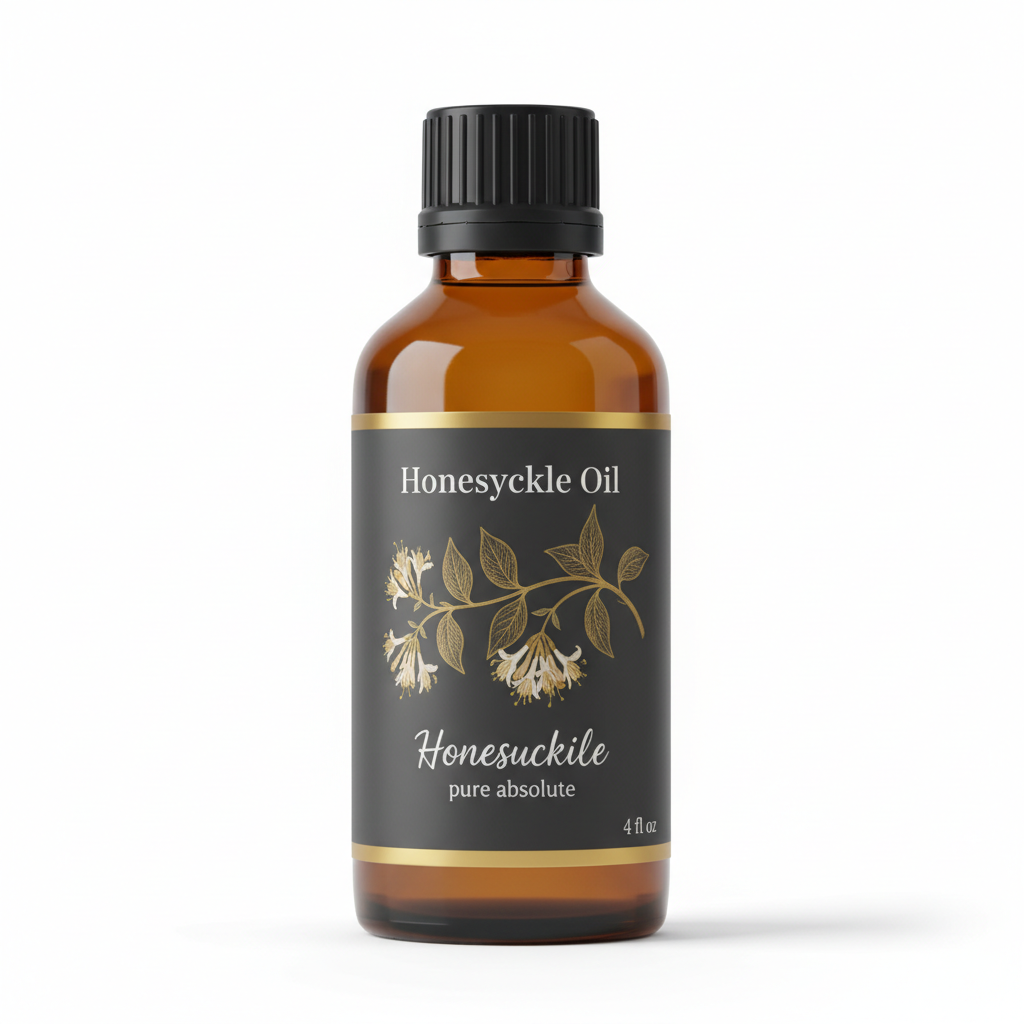
Honeysuckle Absolute
Our own Honeysuckle Absolute, in sizes from 0.5 oz to bulk.
From $13.99
Shop Now →Thick and slow is normal
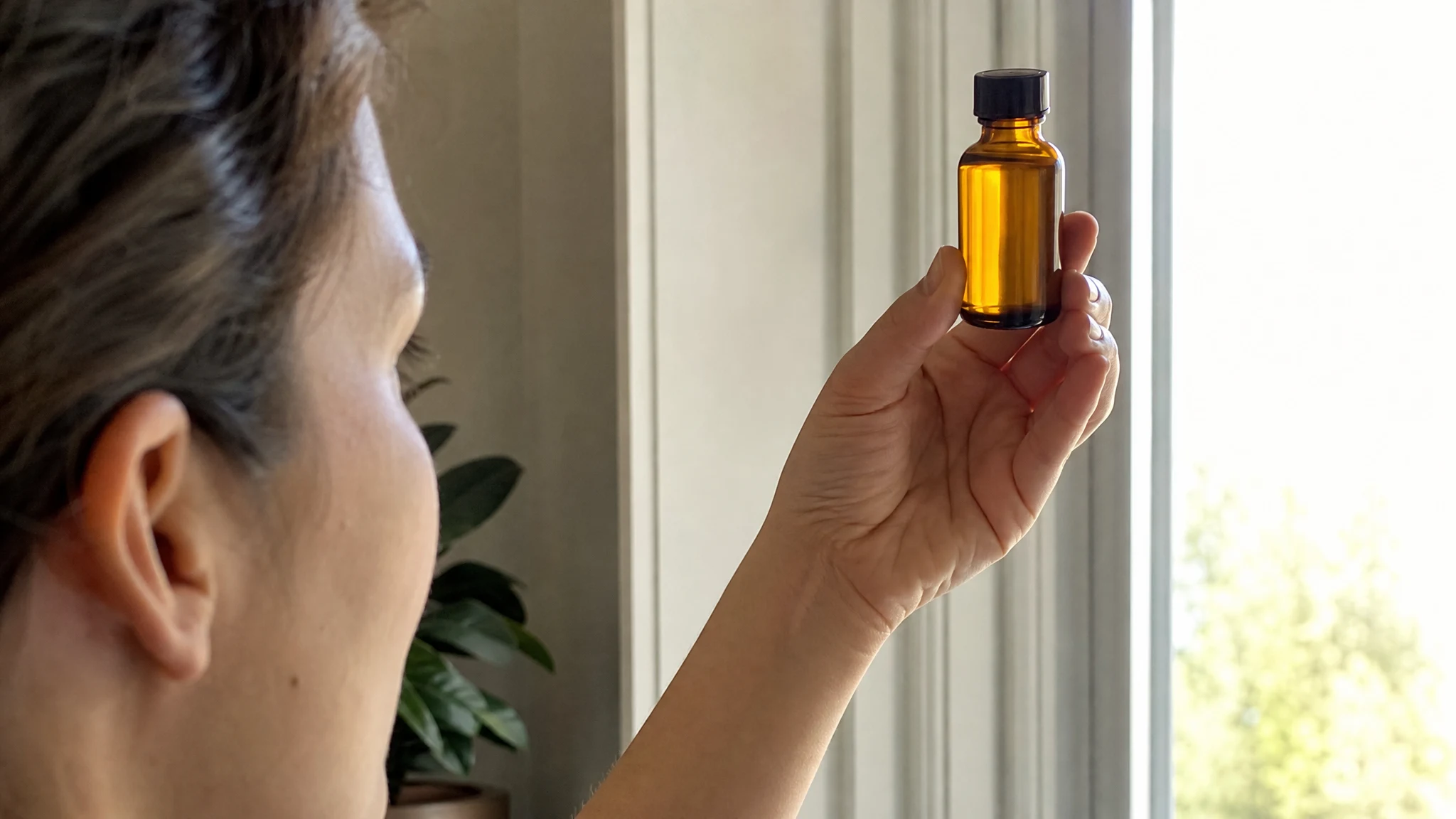
Our How It's Made page puts it plainly: the absolute thickens with age and thickens further in the cold, and that is normal and not a fault. Warm the bottle in your hand for a minute and it pours again. Robert Tisserand says much the same about chilled aromatic oils in general: they thicken in the fridge and loosen when warmed in the hand (Tisserand, 26 July 2013).
Hand warmth is the method we like, because it is gentle and you can see the result. If the absolute is still stiff after a minute, give it another minute, not a hotter source. A heat gun or a hot bath is not worth the risk to a delicate floral.
Weigh it, do not count drops
Thickness changes the size of a drop. A cold, stiff absolute forms small, slow drops, so counting them is a quiet way to under-dose, and a warm, loose one forms larger ones. The skin guidance we give is a dilution of 0.5% to 2% in a carrier, and at that scale a few drops matter. Here is a hypothetical to show the direction: if a cold bottle gave 15 drops to the milliliter and you counted out 20 for a 1% blend of 100 g, you would be putting in about a third more than you planned, closer to 1.3%. We have not measured the drop size of our absolute at any temperature, so use that only as an illustration.
A small scale that reads to 0.01 g takes the guesswork away. The batch on our Certificate of Analysis has a relative density of 0.989, so 1 ml weighs very close to 1 g, and that makes the arithmetic easy: 1 g of absolute in 99 g of carrier is a 1% blend.
What about color?
Color is the one thing we would rather you judge against the paperwork than against a memory. The appearance line on the Certificate of Analysis we publish gives the standard as "pale yellow to yellow liquid", and the batch on the certificate is recorded as complying. A plant extract can differ from lot to lot, and a study of 32 dried Lonicera japonica bud samples from four Chinese origins found 34 volatile compounds that differed between origins (Ning et al., Molecules 2025). That study measured aroma compounds in dried buds, not color in an absolute, so it supports only the general point that natural materials vary.
If your bottle looks different from the standard on that certificate, tell us through the contact page and include the lot number from the label. That is a better first step than guessing.
Smell is the better test
When a bottle has changed, your nose gives more information than your eyes. A honeysuckle absolute that has been stored warm, in light, or opened many times can lose its fresh, green sweetness and take on something sharper or flatter. Tisserand's page on oxidized oils lists heat, light and moisture as the things that encourage oxidation, and notes that a lot of air in a bottle speeds it up (Tisserand Institute, oxidized oils). It is written about essential oils, but the sensible habits carry over. Keep the cap tight, store it cool and dark, and decant what you are using into a smaller airtight bottle so the large one stays closed. Our storage guide has the details.
There is a skin reason to care as well. Linalool, a common fragrance terpene, forms a hydroperoxide when it sits in air; in a 2002 study, an oxidized sample sensitized guinea pigs while fresh linalool did not (Sköld et al., Contact Dermatitis 2002). That was one compound, not honeysuckle absolute, but it is a good reason to patch test and to leave a bottle alone if its smell has gone odd. Stop using any product that irritates your skin.
Little habits at the bench
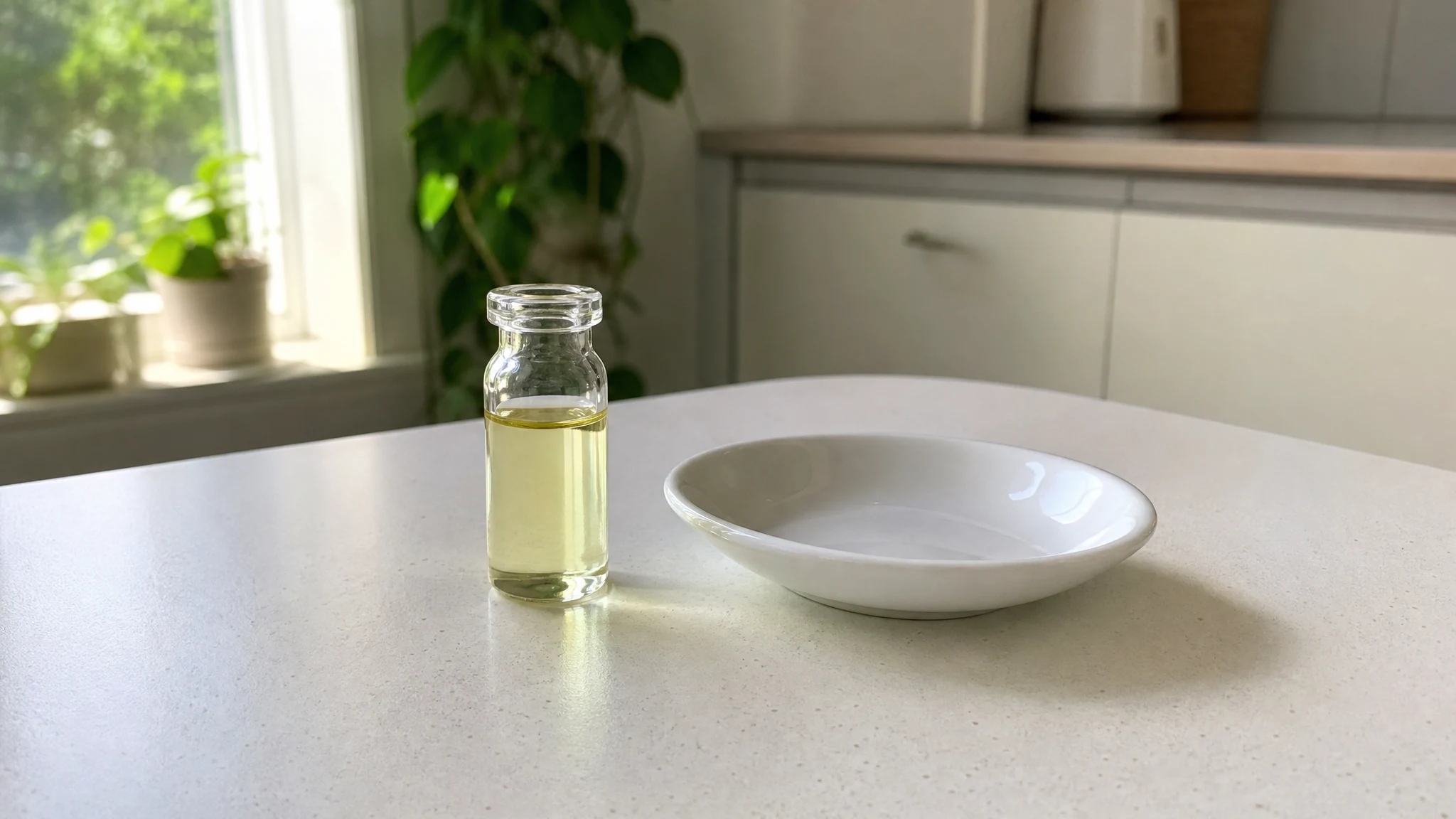
Keep a small saucer under the bottle while you pour so any slow drip has somewhere to go, and wipe the neck with a tissue before you cap it. A sticky neck can make the cap stiff to turn later, and it can leave a film on the outside of the bottle. If you work in a cool room, set the bottle in your hand or pocket while you prepare everything else, and by the time you are ready to weigh it will be loose.
A simple routine
- Warm the bottle in your hand, then pour or weigh.
- Write the lot number and the date you opened it on a label.
- Smell a fresh blotter each time you start a new batch of anything.
- For a new bottle, smell it beside the old one in the same light.
Used this way, a thick, slow absolute is simply a concentrated one, and a few minutes of patience is all it asks for. For help diluting it, our 10% dilution guide shows the weighing step by step, and our guide to reading a COA explains what the certificate numbers mean.
Honeysuckle Absolute
Honeysuckle Absolute from our own shop, in sizes from 0.5 oz to bulk.
From $13.99
Shop Now →Sources & Further Reading
- Robert Tisserand, Lemon on the rocks: keep your essential oils cool (26 July 2013)
- Tisserand Institute, Is my bottle of essential oil oxidized or no longer good to use?
- Sköld M, Börje A, Matura M, Karlberg AT, 2002. Studies on the autoxidation and sensitizing capacity of the fragrance chemical linalool. Contact Dermatitis 46(5):267-272
- Ning et al., 2025. Molecules 31(1):4, differential analysis of Lonicerae japonicae flos from four origins