Honeysuckle Oil FAQ: Absolute, Safety and Sizes
Honeysuckle oil raises the same handful of questions again and again, and they are good ones. Here they are in the order a new buyer usually meets them, with short answers and links when a topic deserves more room.

Honeysuckle Absolute
Our own Honeysuckle Absolute, in sizes from 0.5 oz to bulk.
From $13.99
Shop Now →What is honeysuckle oil?
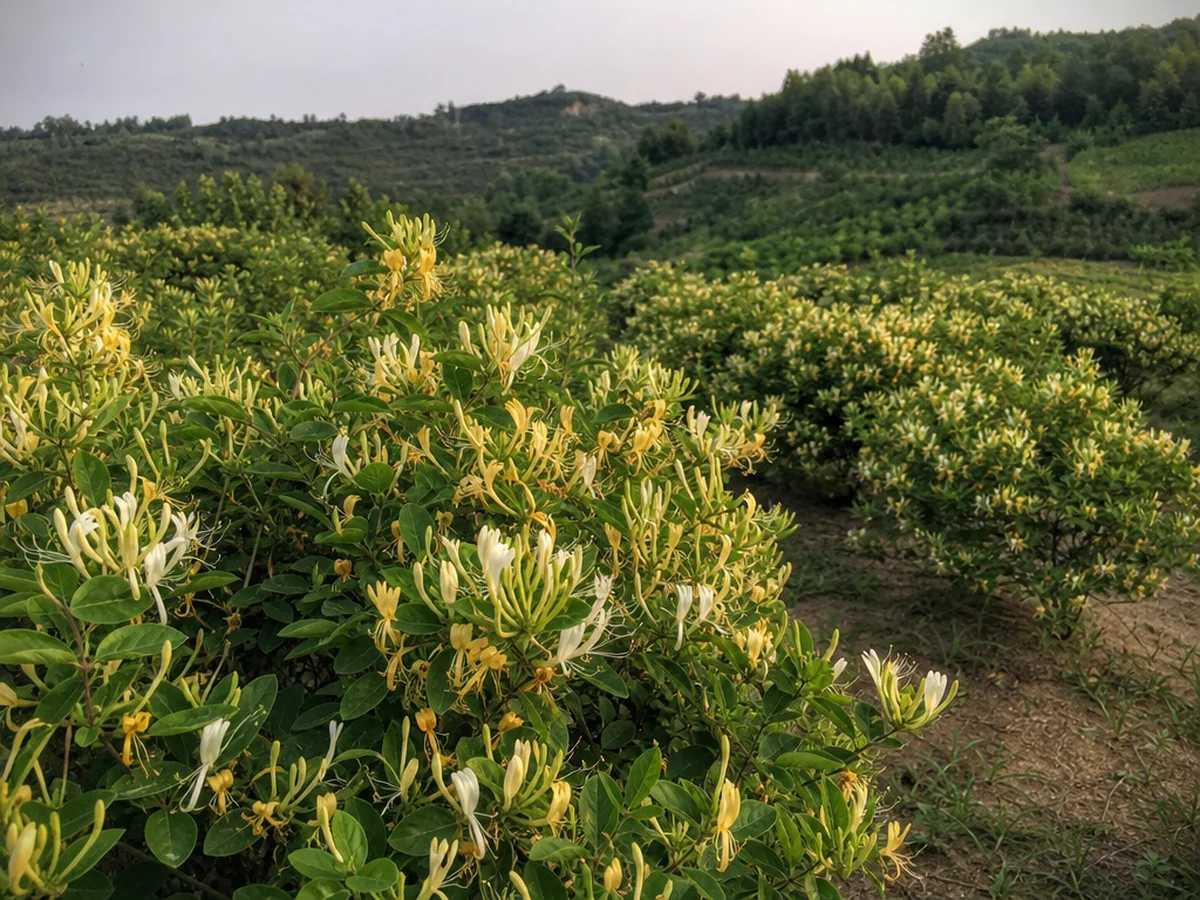
On our site, honeysuckle oil is our Honeysuckle Absolute, made from the flowers of Lonicera japonica and sold neat, with no carrier in the bottle. It is made by solvent extraction: a hydrocarbon solvent, in practice hexane, is circulated through the blossom to leave a concrete, the concrete is washed in high-proof ethanol and chilled, and the filtered result is the absolute. A name on a label is not a method, and elsewhere "honeysuckle oil" can mean a fragrance oil or a flower infused in a carrier. Our overview of the absolute sorts out the types.
Is it an essential oil?
Ours is not. There is no steam or still involved at any stage. Honeysuckle flowers give very little oil under steam, and researchers who have made volatile oil from dried flower report it as a laboratory material, so the delicate fresh-flower scent that perfumers want comes from extraction (Shang et al., 2011). If a listing says "essential oil", ask how it was made. The longer story is in why there is no steam-distilled honeysuckle essential oil.
How much can I use on skin?
We recommend diluting to 0.5% to 2% in a carrier oil, patch testing first on a small area, keeping it away from eyes, children and pets, and stopping if irritation appears. Jojoba and fractionated coconut oil are the carriers we usually suggest, and you will find them at a craft or soap-supply shop. The arithmetic is easy: 1 g of absolute in 99 g of carrier is 1%. Because the absolute is thick, most people weigh it, or make a 10% stock first, as our dilution guide shows.
Does it have an IFRA limit?
The IFRA Standards are compulsory for IFRA members, and IFRA says final responsibility for safe products rests with the companies that make them (IFRA Standards). If you sell what you make, ask for an IFRA statement and composition information for your own formulation, and check the current Standards for each material in it. Our IFRA article goes through how to do that.
Can I use it in pregnancy, or around pets?
We cannot say it is safe for either, and we make no such claim. For pregnancy, talk to your midwife or obstetrician; for pets, talk to your veterinarian. We gather what the sources say in our pregnancy article and our pets article.
Can I swallow it or cook with it?
No. It is a cosmetic fragrance material for external use and is not for internal use. Honeysuckle used as an herb, or the nectar of the plant, is a different material from a solvent-extracted absolute. If a bottle is swallowed or spilled on someone, call a poison control center or a physician.
Is it a cosmetic or a drug?
FDA decides by intended use. A product meant only to cleanse or make someone more attractive is a cosmetic, a product meant for a therapeutic purpose is a drug, and plant origin does not change that (FDA, Aromatherapy). We sell the absolute for fragrance and cosmetic use and make no medical claims for it.
What can I make with it?
Our shop lists fine perfumery, body oils and lotions at low dilution, solid perfumes, hair mists, room and home fragrance, soap and candles. A trace perfumes a whole blend, so a small bottle goes a long way. Our recipe articles give the arithmetic, and the soap and body care guide is a good place to begin. We sell only the absolute, so carrier oils, waxes, soap bases and bottles come from a craft or perfumery-supply shop.
Why is my bottle so thick?
It thickens with age and thickens further in the cold, and that is normal and not a fault. Warm the bottle in your hand for a minute and it pours again. We go further in our guide to thickness.
How should I smell it the first time?
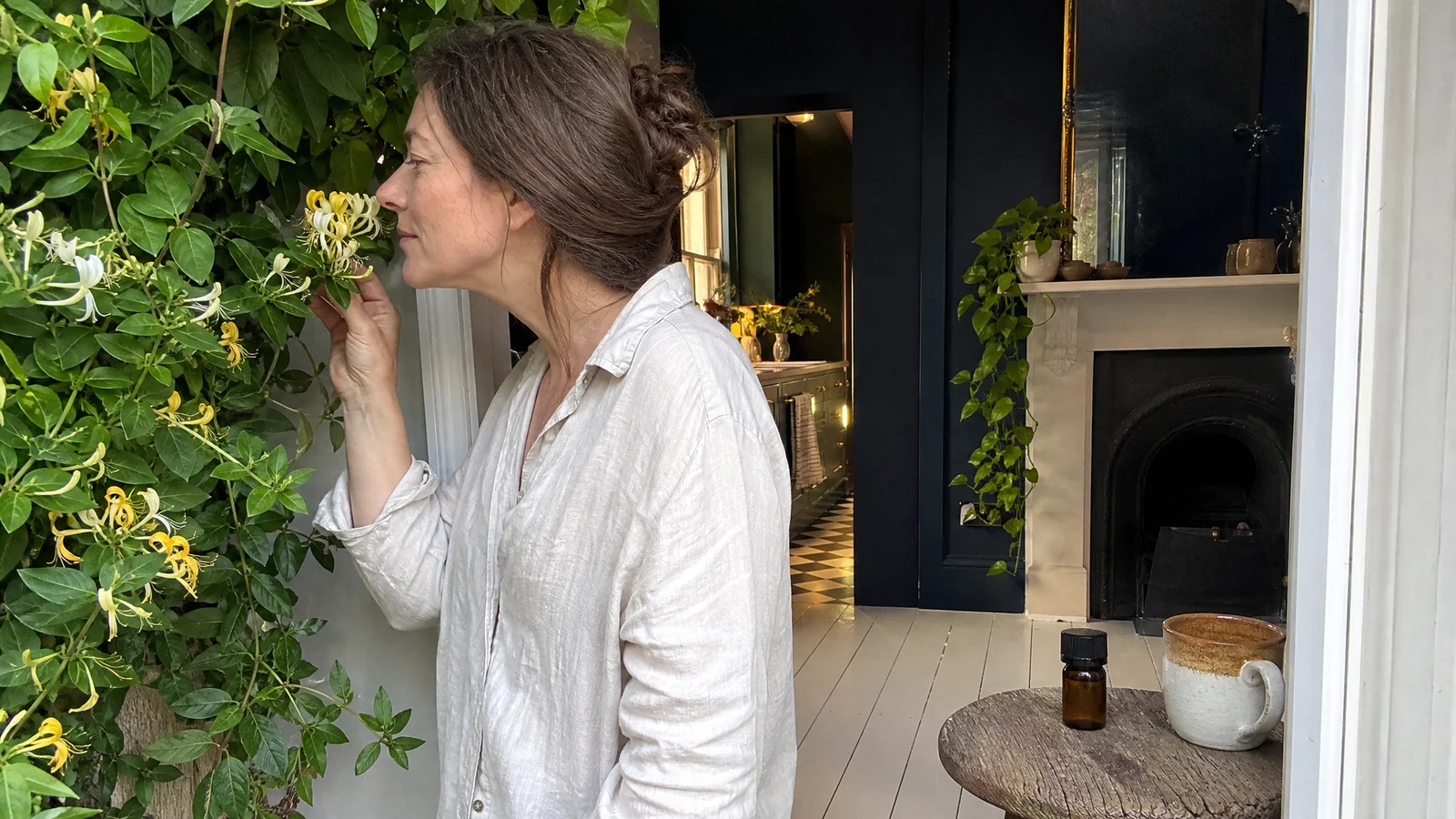
Open the bottle slowly and hold it a little way from your nose rather than putting your face straight over it. A concentrated absolute can seem stronger than you expect, and a few gentle sniffs tell you more than one deep breath. For a truer picture, put a small drop on a paper blotter and come back to it after a few minutes and again after an hour.
How do I store it?
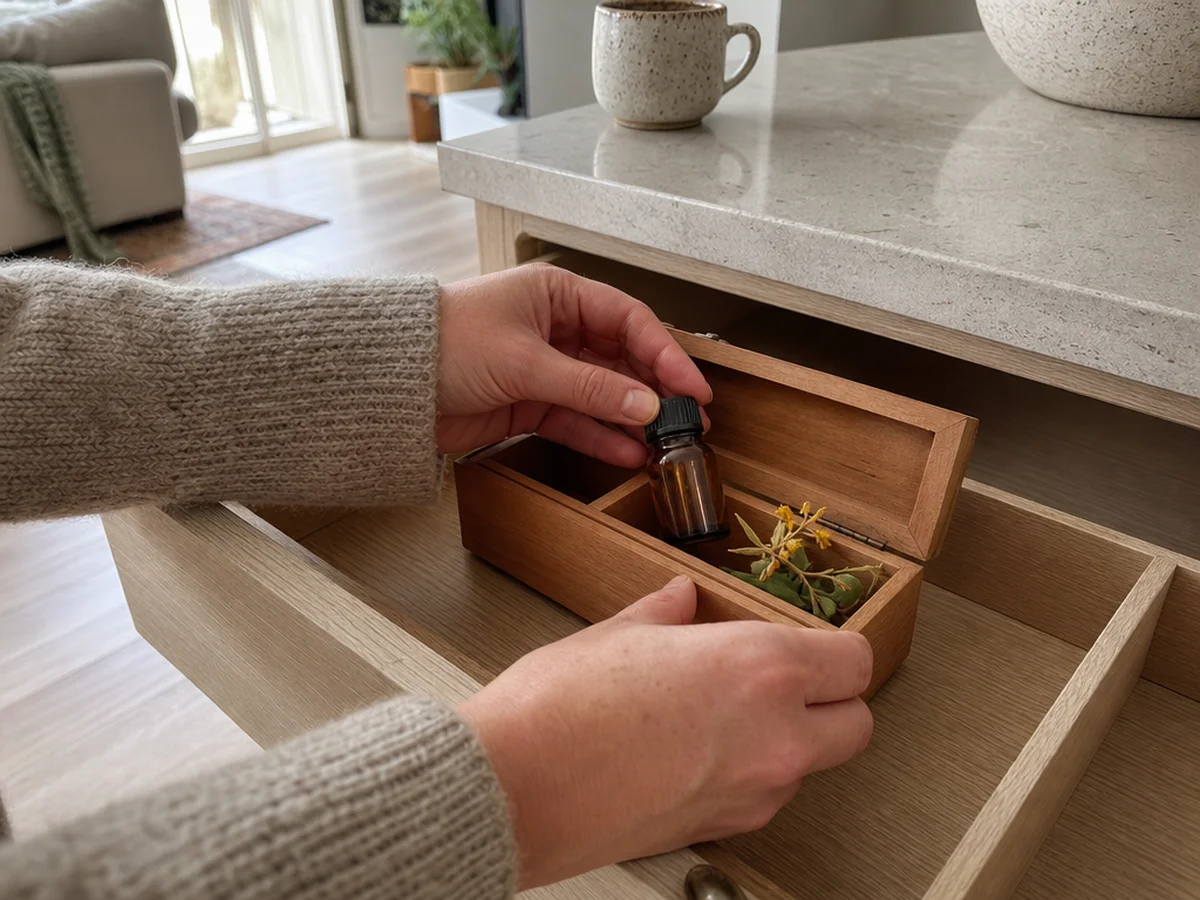
Keep it tightly capped in a cool, dark place. If you are using one of the large sizes, we suggest decanting a working amount into a smaller airtight bottle rather than leaving the big container open.
Which size should I order first?
We suggest 0.5 oz or 1 oz while you learn how the scent behaves in a blend. We sell nine sizes, 0.5, 1, 2, 4, 8 and 16 oz and 5, 25 and 400 lb, all the same absolute in amber glass, and larger quantities are available on request through the contact page. The shop page shows the current price for each size. Orders ship within 1 to 2 business days, and 5 lb and up may need extra handling. More on the reasoning is in our first-bottle guide.
What does the certificate show?
The Certificate of Analysis we publish is a single page for one batch, HONLUUUNUNC007A. It lists a relative density of 0.989, a refractive index of 1.509 and an optical rotation of +1.88 degrees, each inside a wide standard range, and records the appearance and smell as complying. Its best-by date is 02/05/2027. If you need GC-MS or residual-solvent information for your lot, ask us in writing through the contact page before ordering and get the answer in writing. Our guide to reading a COA explains each line.
If your question is not here, the contact page is the quickest way to reach us.
Honeysuckle Absolute
Honeysuckle Absolute from our own shop, in sizes from 0.5 oz to bulk.
From $13.99
Shop Now →