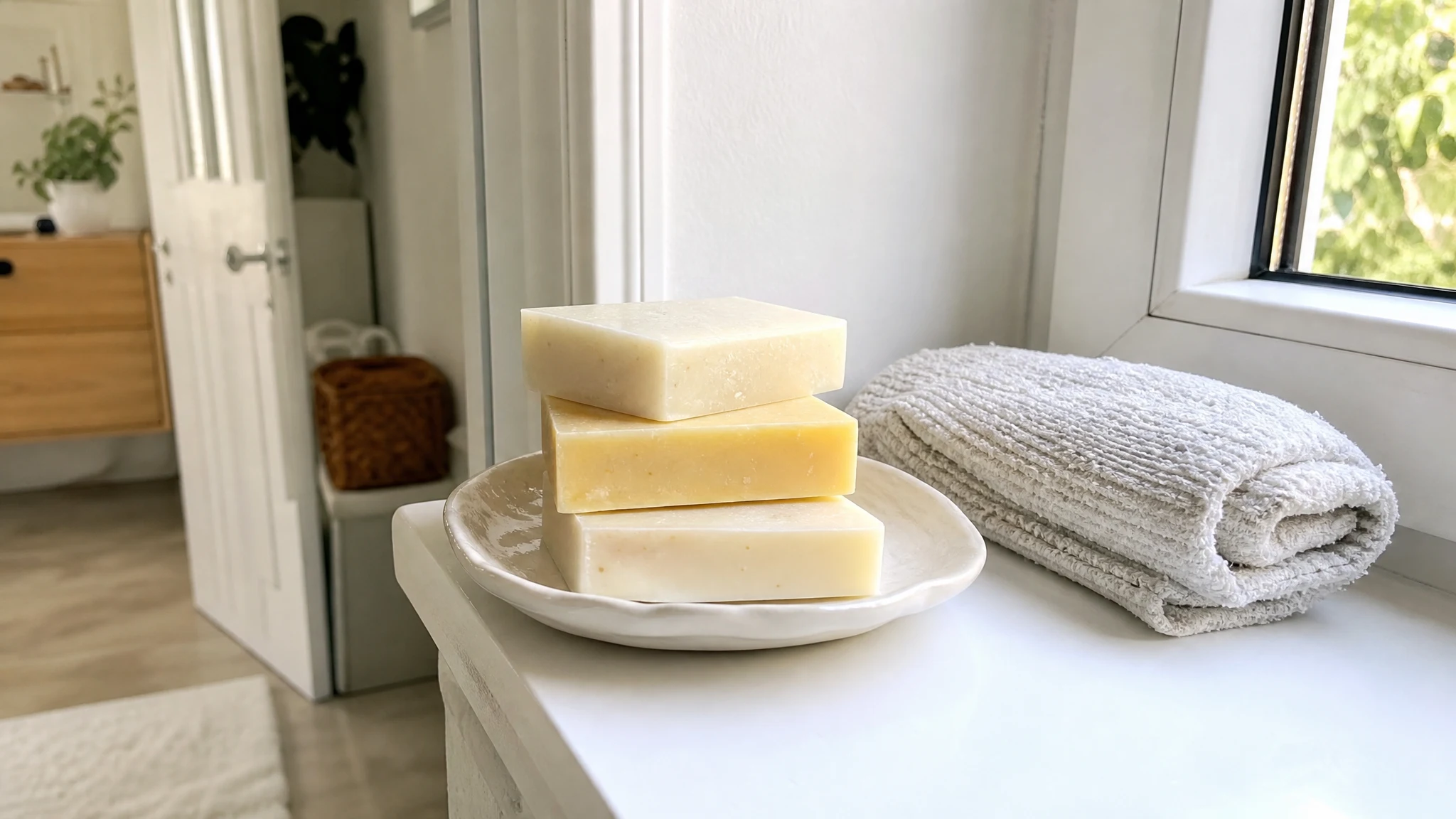
Honeysuckle in Soap and Body Care: How Much to Use
Soap makers are used to scenting at generous rates, and honeysuckle absolute rewards a lighter hand. We think of it as an accent, a floral top layer over a base scent, rather than the whole fragrance of a high-volume bar, and the arithmetic below shows why a bottle stretches so far when you work that way.
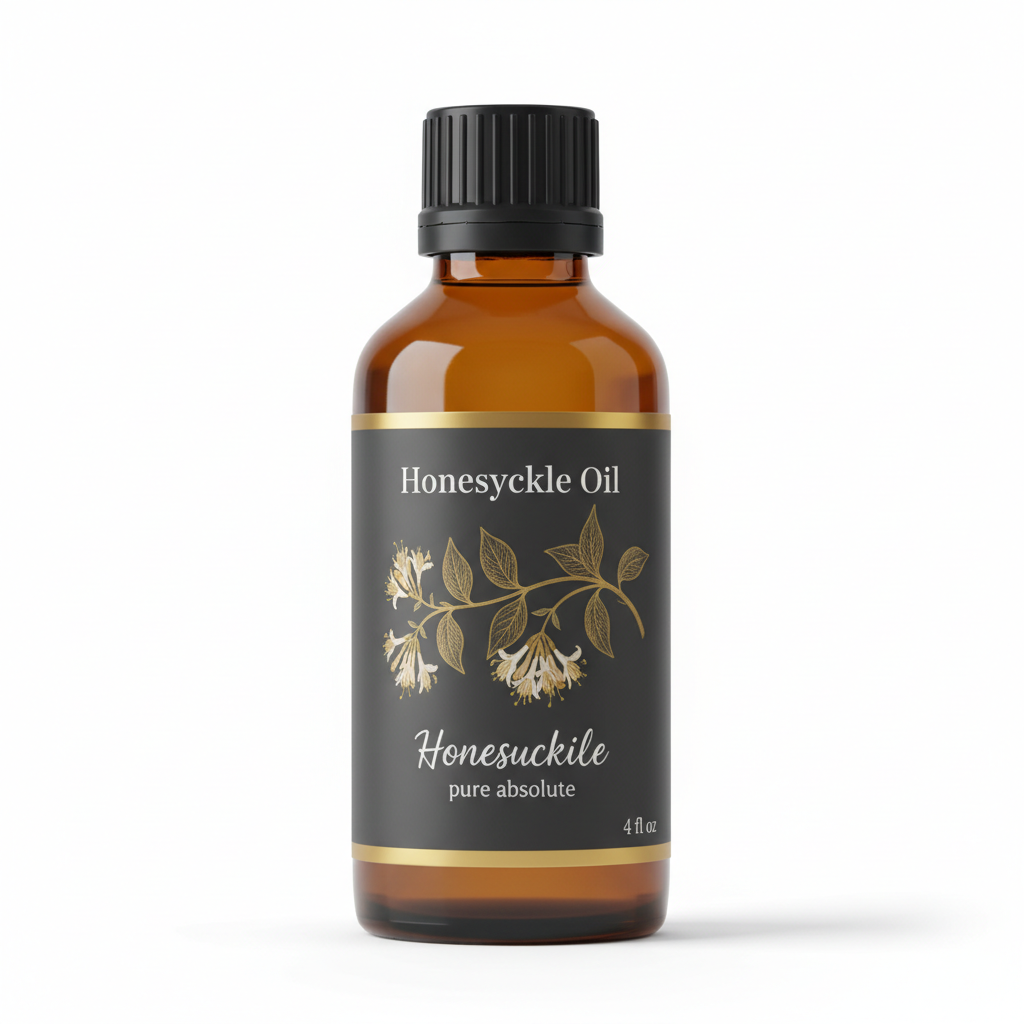
Honeysuckle Absolute
Our own Honeysuckle Absolute, in sizes from 0.5 oz to bulk.
From $13.99
Shop Now →Start with the product
The same absolute behaves differently in cold process soap, melt and pour, lotion and butter, because the rate depends on the product. Here is the maths for a batch of each, worked from the relative density of 0.989 on the Certificate of Analysis we publish for one batch (so 1 ml weighs about 0.989 g) and a rough 20 drops to the millilitre. The absolute is viscous and thickens in the cold, so a scale reading to 0.01 g is better than counting drops.
| Product | Batch | Rate | Absolute | About |
|---|---|---|---|---|
| Cold process soap | 500 g oils | 1% of oil weight | 5 g | 5.1 ml, 101 drops |
| Melt and pour soap | 500 g base | 0.5% of base | 2.5 g | 2.5 ml, 51 drops |
| Lotion | 200 g | 0.5% to 2% | 1 to 4 g | 1.0 to 4.0 ml |
| Body butter | 100 g | 0.5% to 2% | 0.5 to 2 g | 0.5 to 2.0 ml |
Our own dilution guidance for skin is 0.5% to 2% in a carrier, with a patch test first. For the leave-on rows we apply that range to the whole product, and the worked recipes are in the lotion article and the body butter article. The soap rates are choices rather than findings: 1% of oil weight is about 0.7% of the finished batch, comfortably inside our range even before allowing for a bar that gets rinsed off. For comparison, one supplier guide lists 3% to 6% of oils and butters for ordinary soap fragrance oils, and 0.5% to 3% for lotion, and says to treat an IFRA certificate's maximum as a firm ceiling. Honeysuckle absolute sits well below the soap range, and the right ceiling for any material you sell is the one on its own IFRA assessment; our IFRA article covers what we could check.
Is it soap or a cosmetic?
This is worth a minute before you design a label. FDA's soap FAQ explains that a product is regulated as soap only when all three conditions of 21 CFR 701.20 are met: it is mainly alkali salts of fatty acids, those salts are the only source of cleansing, and it is labeled and marketed only as soap. Moisturizing, fragrance or deodorizing claims make it a cosmetic, and germ-killing or skin-condition claims make it a drug. True soap falls to the Consumer Product Safety Commission, which says it has no specific soap requirements and that soap made mainly for children 12 and under counts as a children's product. A bar sold on its honeysuckle fragrance sits close to FDA's line, so the wording is a question for a regulatory consultant or attorney. Our labeling article sets out the primary texts.
How far a bottle goes
A 0.5 oz bottle holds about 14.6 g at that density and a 1 oz bottle about 29.2 g. That works out as follows:
| Bottle | Cold process batches at 5 g | Melt and pour batches at 2.5 g |
|---|---|---|
| 0.5 oz (14.6 g) | about 2.9 | about 5.8 |
| 1 oz (29.2 g) | about 5.8 | about 11.7 |
At 5% of oil weight, which some ordinary scents use, the same 1 oz bottle would scent only about one 500 g batch, so the low rate is where the absolute earns its keep. We sell the same absolute in every size from 0.5 oz to 400 lb, and our advice is to begin with 0.5 oz or 1 oz and learn how the scent behaves before buying more; see the shop page for the current price for each size. Once opened, decant working amounts into smaller airtight bottles, as in our storage guide.
Choosing the base scent underneath
Because we think of honeysuckle as an accent, the scent you put underneath it matters. A quiet partner such as a light citrus or a soft wood keeps the floral on top where you can smell it. A loud base will bury it. Smell your candidates together on a strip before you commit a batch, and give each combination a few minutes to settle.
Two things to test on your own bar
How a floral absolute behaves in lye, whether it speeds trace, shifts colour or softens during cure, depends on your recipe, so make one small bar first and judge it fresh from the mold and again as it cures. Colour is worth a look too: the absolute can lightly tint pale soaps, lotions and candles. The Certificate of Analysis we publish shows density, refractive index, optical rotation, appearance and smell for one batch, so if you want constituent data for a product you sell, ask us in writing before you order. Base, lye, oils and butters come from a soap or craft supply shop.
Keeping notes as you go
A soap maker's best tool is a notebook. For each batch write down the rate, the base scent, the date poured, and how the bar smelled when you unmoulded it and again weeks later. Floral accents behave differently from one recipe to the next, and your own notes will tell you more than any general table. When you find a combination you love, you will be able to make it again, and that is the real reward of working at low rates with a material you enjoy.
Start with a single bar at the low rate, with a soap-friendly base scent underneath, and let the honeysuckle ride on top. Then move on to the cold process recipe or the melt and pour recipe.
Honeysuckle Absolute
Honeysuckle Absolute from our own shop, in sizes from 0.5 oz to bulk.
From $13.99
Shop Now →