Labeling Handmade Lotions and Butters: FDA Basics
If you make lotions, butters or scrubs with honeysuckle and plan to sell them, three questions come up in a fixed order: what are you claiming for the product, does the small business exemption cover you, and what does the label need to say? This guide reports what the primary texts say and the dates on the pages we read. It is not legal advice, so for anything you sell, a regulatory consultant or an attorney who handles FDA cosmetics should have the last word, and an insurer can tell you what it requires.
Honeysuckle Absolute
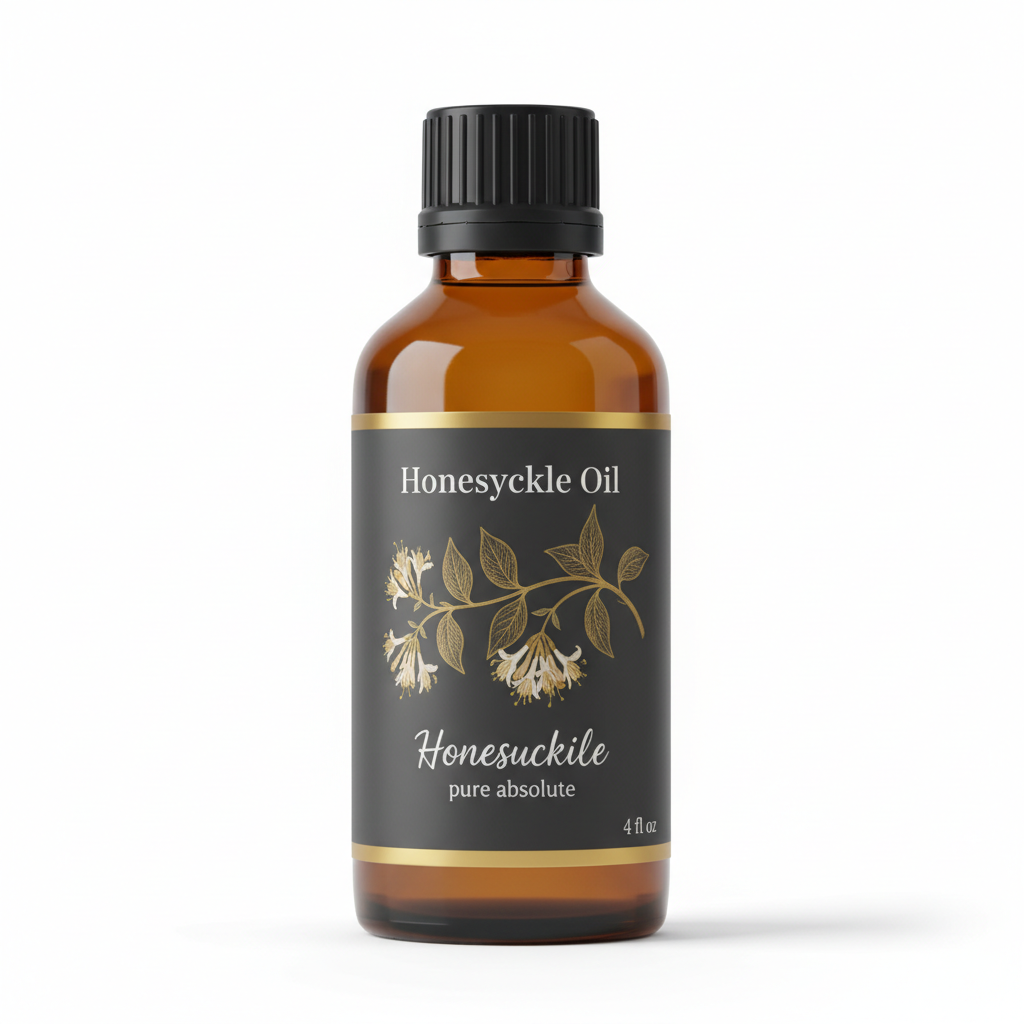
Our own Honeysuckle Absolute, in sizes from 0.5 oz to bulk.
From $13.99
Shop Now →First: soap, cosmetic or drug?
FDA sorts products by intended use. Its soap FAQ (current as of 20 August 2024) says a product is regulated as soap only when all three conditions of 21 CFR 701.20 are met: it is mainly alkali salts of fatty acids, those salts are the only source of the cleansing action, and it is labeled and marketed only for use as soap. Moisturizing or fragrance claims make it a cosmetic; disease claims make it a drug; and a product can be both. Real soap falls under the Consumer Product Safety Commission, which says it has no specific soap requirements and treats soap meant mainly for children 12 and under as a children's product with tracking, lead testing and a certificate. A bar sold for its honeysuckle scent sits near FDA's line, and whether your wording crosses it is a question for your adviser. What follows assumes a cosmetic, which covers lotion, butter, scrub and a bar made with detergents.
Second: does the small business exemption apply?
FDA's MoCRA page (current as of 29 October 2026) says the law exempts certain small businesses from good manufacturing practice, facility registration and product listing. The statute, 21 U.S.C. 364h, sets the line at average U.S. cosmetic sales below one million dollars a year over the previous three years, adjusted for inflation, so check the current figure. The exemption does not apply to anyone making products that regularly contact the eye's mucous membranes, injected products, products for internal use, or products meant to change appearance for more than 24 hours without customary removal. A body butter is none of these; an eye-area product may be.
The exemption works by lifting sections 364b and 364c. Serious adverse event reporting is described separately on FDA's page: a responsible person reports a serious event within 15 business days and includes a copy of the label. Ask your adviser how that applies to you before assuming it does not. Records supporting safety substantiation are expected as well.
Third: what goes on the label?
| Element | What the text says | Source |
|---|---|---|
| Statement of identity | On the principal display panel, in bold type, by common name, descriptive name or an illustration of use | 21 CFR 701.11 |
| Net quantity | Weight for solid, semisolid or viscous products, fluid measure for liquids; placed in the bottom 30 percent of the principal panel, with exceptions for very small panels | 21 CFR 701.13 |
| Ingredients | Descending order of predominance, or those over 1 percent first and the rest in any order; colors last; "fragrance" allowed for substances that fit its common meaning | 21 CFR 701.3 |
| Contact for adverse events | A domestic address, domestic phone number or electronic contact, which can be a website | 21 U.S.C. 364e(a) |
The 1 percent rule is where honeysuckle arithmetic meets the label. At our 0.5% to 2% skin range, an absolute at 0.5% of a lotion would fall in the any-order group and at 2% in the descending group. The worked lotion maths is in the lotion article. Whether a single absolute is named or declared as fragrance is a good question for your consultant, since the fragrance term covers only substances that fit its common meaning. The bottom-30-percent placement and the bold statement of identity are easy to build into a design from the start.
Allergen labeling is still coming
The same statute, 364e(b), requires fragrance allergens to be identified on the label and leaves it to FDA to decide which substances count and at what thresholds, taking account of international rules such as the European Union's. It told FDA to propose the rule within 18 months of December 2022. The FDA page we read describes the requirement without a list of substances or thresholds, so there is nothing to quote yet and the page dates are worth checking before each print run.
For makers using our absolute, the practical step is simple: the Certificate of Analysis we publish for one batch shows density, refractive index, optical rotation, appearance and smell, and we publish no IFRA certificate or allergen declaration. If you will sell finished products and want constituent data, ask us in writing before you order; see the COA guide and the IFRA article.
Draft the label early
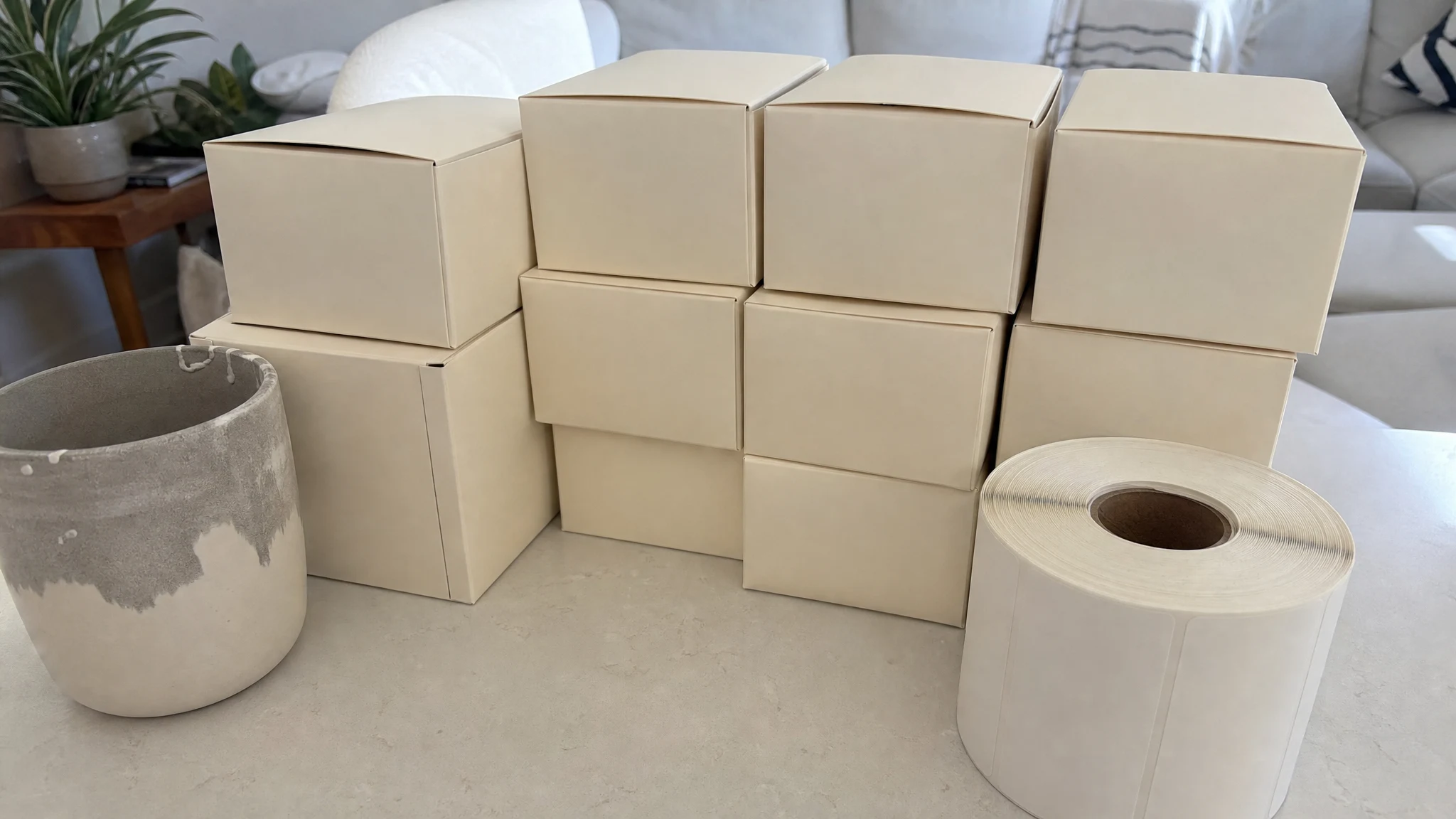
Our recommendation is to sketch the label before you finalize the recipe. Print one sheet at actual size, tape it to a jar, and look at where the product name sits, whether the net quantity fits in the bottom of the panel, and whether the ingredient list is readable. It is much easier to adjust a jar size or a font on paper than after a print run arrives.
A checklist before the first sale
- Write what each product is for in plain words and compare it with the soap, cosmetic and drug definitions.
- Check your three-year average cosmetic sales against the current threshold and the four excluded product types.
- Draft the label against the table and have a professional review it.
- Decide who receives adverse event reports and how, and keep the label with each one.
The wider decision order, from product to rate to bottle size, is in the soap and body care guide. Labels, legal review and insurance are the maker's side of the table, and a little care with them early makes every later batch simpler.
None of this has to be done in a day. Take it one question at a time, keep your notes together, and the label will come together with them.
Honeysuckle Absolute
Honeysuckle Absolute from our own shop, in sizes from 0.5 oz to bulk.
From $13.99
Shop Now →Sources & Further Reading
- FDA, Modernization of Cosmetics Regulation Act of 2022 (MoCRA)
- FDA, Frequently Asked Questions on Soap
- CPSC, Soap Business Guidance
- 21 U.S. Code 364h, Small businesses
- 21 U.S. Code 364e, Labeling
- 21 CFR 701.3, Designation of ingredients
- 21 CFR 701.11, Identity labeling
- 21 CFR 701.13, Declaration of net quantity of contents