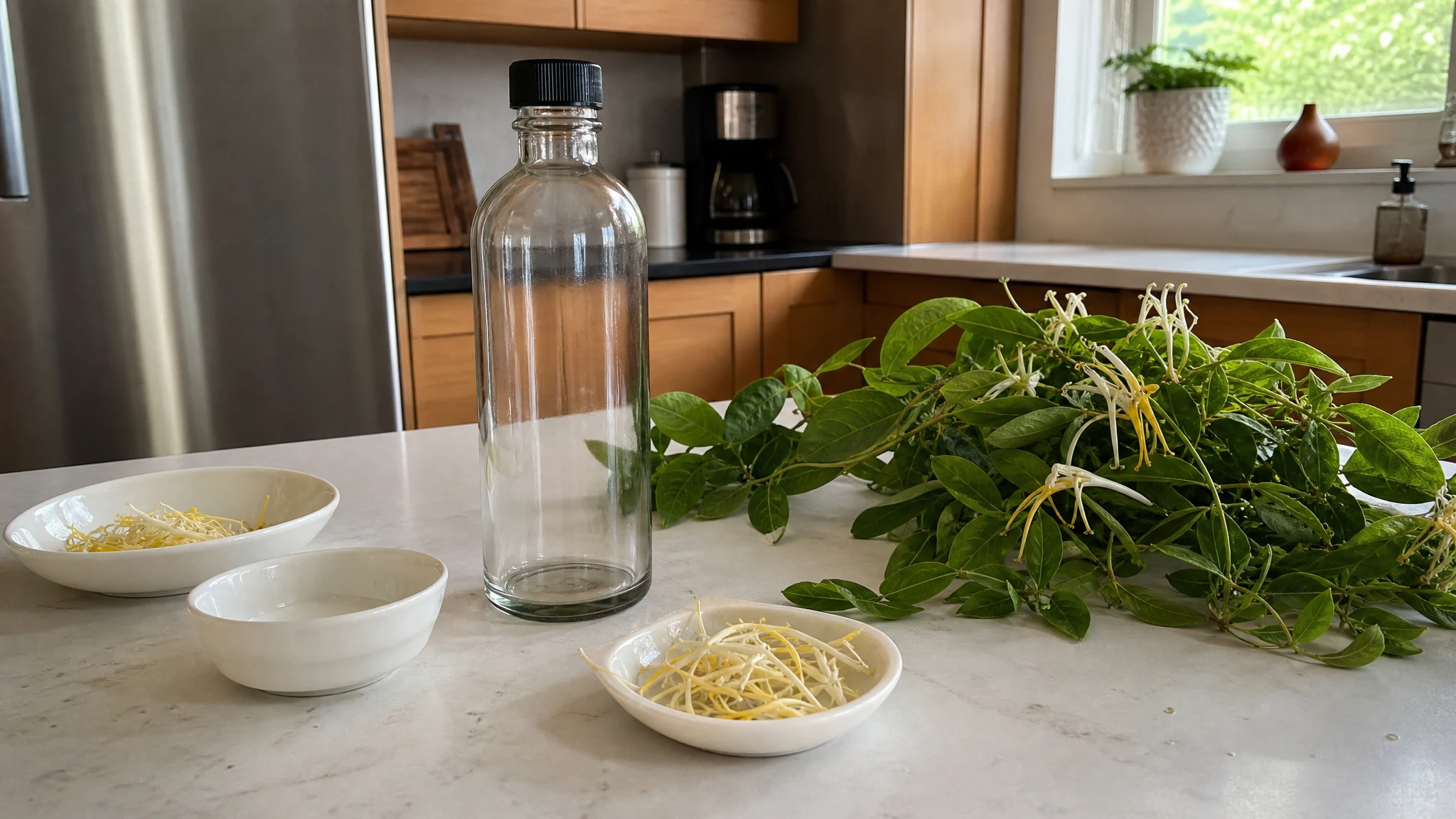
How to Tell if Honeysuckle Absolute Is Good Quality
Nobody can judge an absolute from the label alone, and the honest way to think about quality is as three things working together: the paperwork you can read, your own nose, and the notes you keep. Here is how we would go about it with any bottle, ours included.
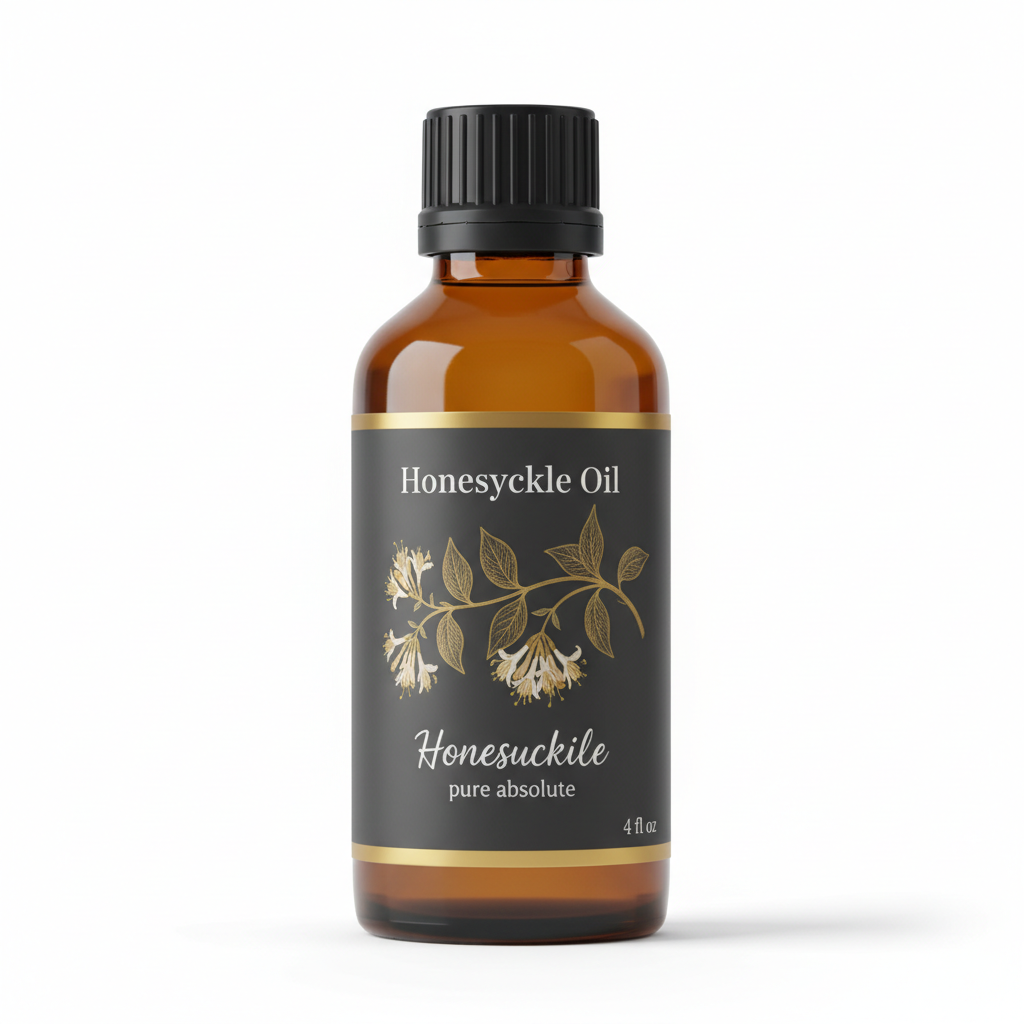
Honeysuckle Absolute
Our own Honeysuckle Absolute, in sizes from 0.5 oz to bulk.
From $13.99
Shop Now →What our certificate gives you
The Certificate of Analysis we publish is one page for one batch, HONLUUUNUNC007A. It names the botanical as Lonicera japonica, the part as flower and the method as solvent extraction, with a best-by date of 02/05/2027. It reports a relative density of 0.989 at 20 C, a refractive index of 1.509 and an optical rotation of +1.88 degrees, each inside a standard window (0.950 to 1.035, 1.410 to 1.530 and -5 to +5 degrees). Those windows are wide, so the numbers tell you it is a plausible liquid rather than confirming identity. If you need a residual-solvent or GC-MS report for your lot, ask us in writing through the contact page before you order and get the answer in writing. Our line-by-line COA article walks through each entry, and the solvent article covers what limits exist.
Why your nose needs a reference
A natural material moves with its plant. Two Lonicera japonica cultivars at the same stage both gave 243 volatile compounds, but 153 differed, and one scent compound was about 154 times higher in the strongly scented cultivar. A study of dried samples from four Chinese origins found a handful of compounds only in particular origins. A review also cites a study in which fresh flowers held over 14% linalool and dried flowers under 0.4%. These are flowers, not absolutes, but the lesson carries over: if plant, origin and handling shape the scent, a maker is wise to record what each lot smelled like instead of trusting memory.
Let your nose do the first pass
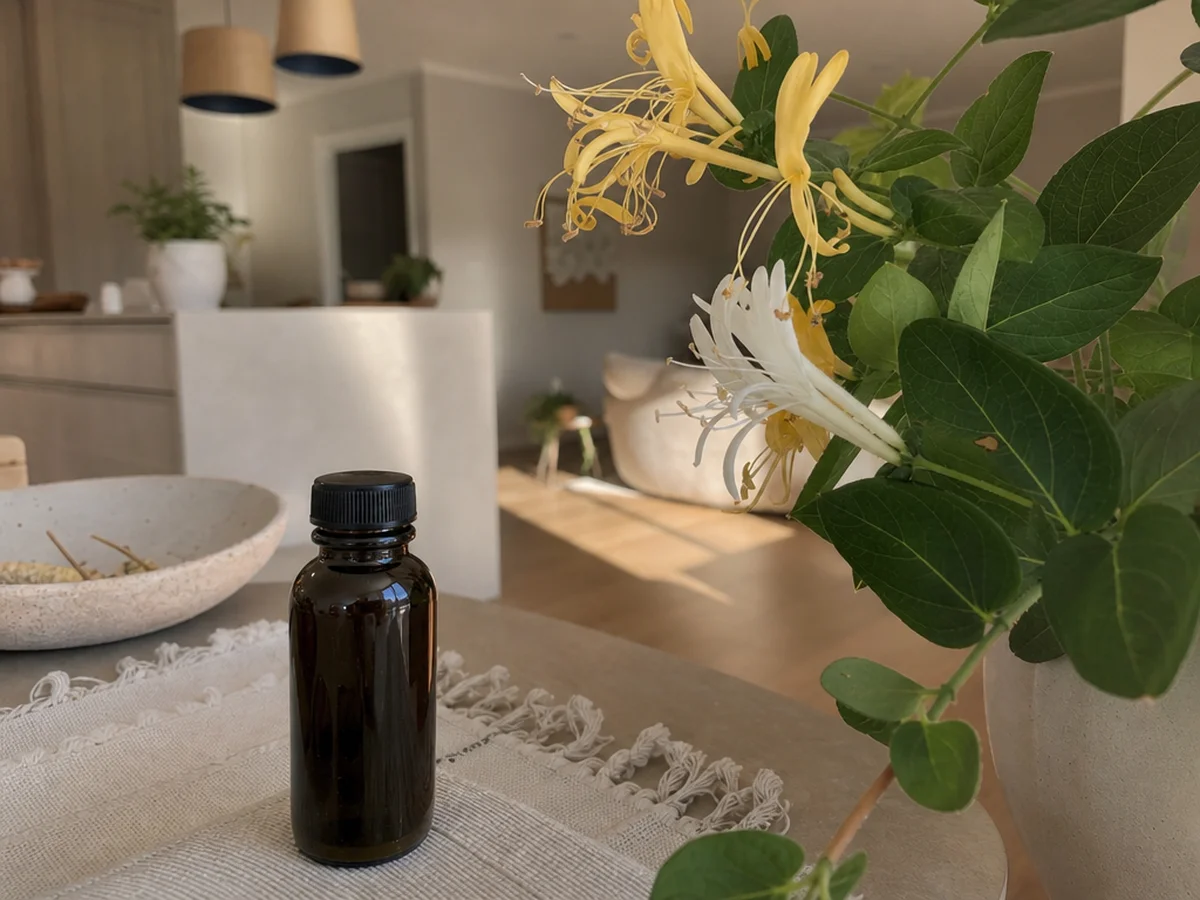
Our own description of the scent is nectarous, lush and green-floral, like the living vine, with a soft jasmine-adjacent warmth. Hold a dipped blotter a few centimetres from your nose, not against it, and breathe slowly. Notice the first impression, then what is left after ten minutes. A honeysuckle you can clearly recognise as honeysuckle is a good sign, though it is only your impression, and that is exactly why a written note helps.
Keep a small notebook next to the bottle. A line such as "lot, date, fresh and green, a little sweet" is enough. Over a few bottles those lines become your own reference, and they will tell you more about what you like than any description we could write.
If you are comparing it with another honeysuckle you own, smell the two on separate blotters in the same light and write a short line for each. Do it on a day when you are not rushed, because a hurried sniff is the least reliable one.
A receiving routine
- Record the lot. The label carries the lot number and Chinese origin. Write down the lot, the size and the date it arrived.
- Look at the colour. The certificate's standard reads "pale yellow to yellow liquid." Compare your bottle with that wording, and if it looks different, tell us.
- Check the pour. The absolute thickens with age and thickens further in the cold; that is normal. Warm the bottle in your hand for a minute and it pours again.
- Smell it on a blotter at stock strength, not neat. Our 10% dilution article shows how. Smell at the start, after ten minutes, an hour and the next day, and write words rather than scores.
- Decant working amounts into smaller airtight bottles and keep the large one sealed, cool and out of direct light.
- Keep a reference. Seal a few grams with the lot number and date to smell against the next lot.
Air, time and the bottle
Oxidation is the part of quality a buyer can influence. Tisserand Institute notes that essential oil components react with air over time and that heat, light and moisture speed this up, with refrigeration roughly doubling useful life; it writes about essential oils rather than absolutes. In one animal study, linalool left in air for 10 weeks dropped to about 80% of its starting amount and formed a hydroperoxide, and the oxidised material sensitised guinea pigs where fresh linalool did not. That was one compound in animals, not our absolute, but since linalool is among the markers reported for honeysuckle flower, it is a good reason to keep caps tight and to be cautious with old, long-open bottles on skin. We name no shelf life for the absolute; if you need one for something you sell, ask us in writing.
If you sell what you make
Keep the lot number of every ingredient with each product batch and keep supplier documents for that lot, so any question can be traced back. Our labeling article sets out the cosmetic labeling basics, and a regulatory consultant or attorney should confirm what applies to your product.
When something seems off
If a new lot smells, looks or behaves unlike your notes, warm it to room temperature, repeat the blotter test, then write to us through the contact page with the lot number and your notes, and hold it back from anything you sell until you have an answer. Skin reactions belong with a dermatologist or allergist; our allergy article explains the mechanism.
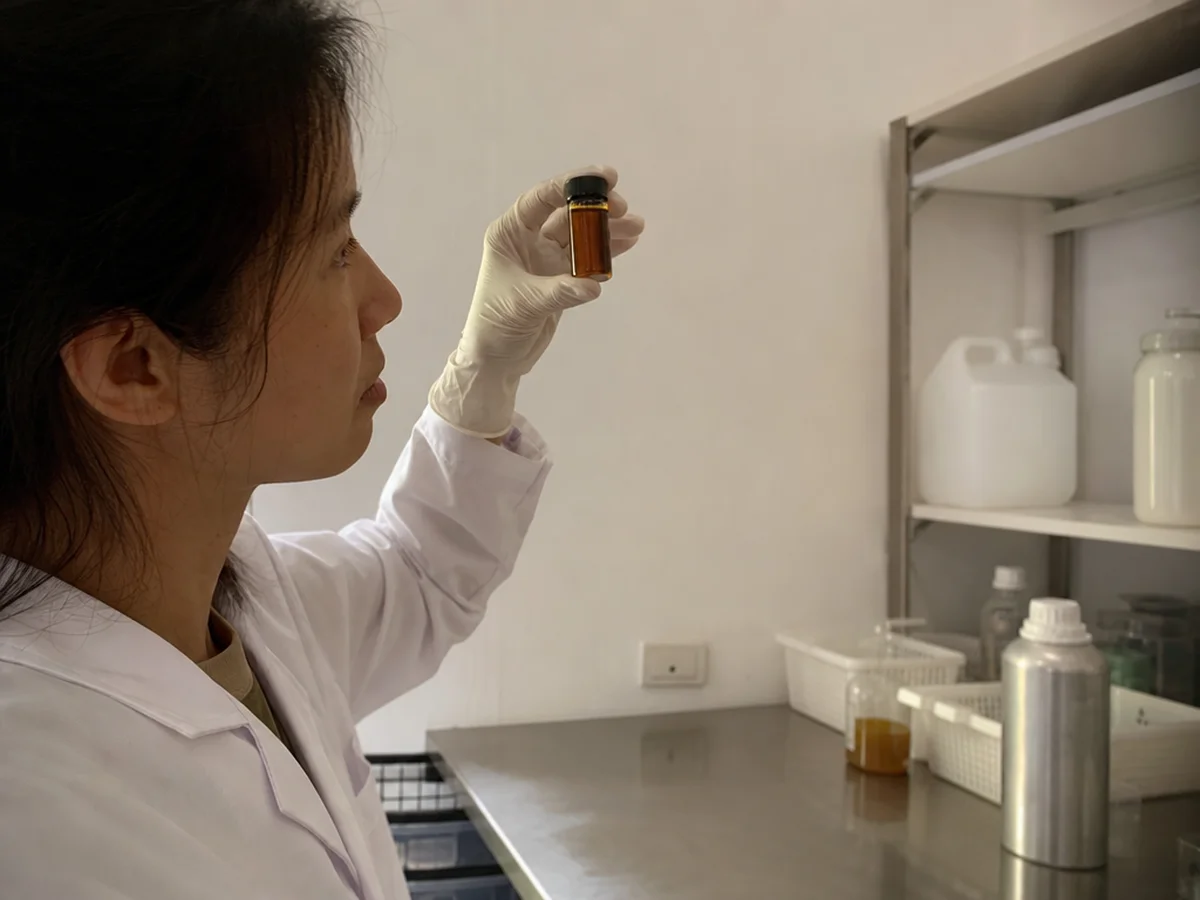
A routine like this will not prove identity or cleanliness, which only a laboratory can, but it builds a record, and a record turns a surprise into a specific question.
Honeysuckle Absolute
Honeysuckle Absolute from our own shop, in sizes from 0.5 oz to bulk.
From $13.99
Shop Now →Sources & Further Reading
- Li et al. 2022, Integrated volatile metabolomic and transcriptomic analysis of floral scents between two contrasting varieties of Lonicera japonica (Front Plant Sci 13)
- Ning et al. 2025, Molecules 31(1):4, Lonicerae japonicae Flos across four origins
- Shang et al. 2011, Lonicera japonica Thunb.: ethnopharmacology, phytochemistry and pharmacology (J Ethnopharmacol 138(1):1-21)
- Sköld et al. 2002, Studies on the autoxidation and sensitizing capacity of the fragrance chemical linalool (Contact Dermatitis 46(5):267-272)
- Tisserand Institute, Is my bottle of essential oil oxidized or no longer good to use?