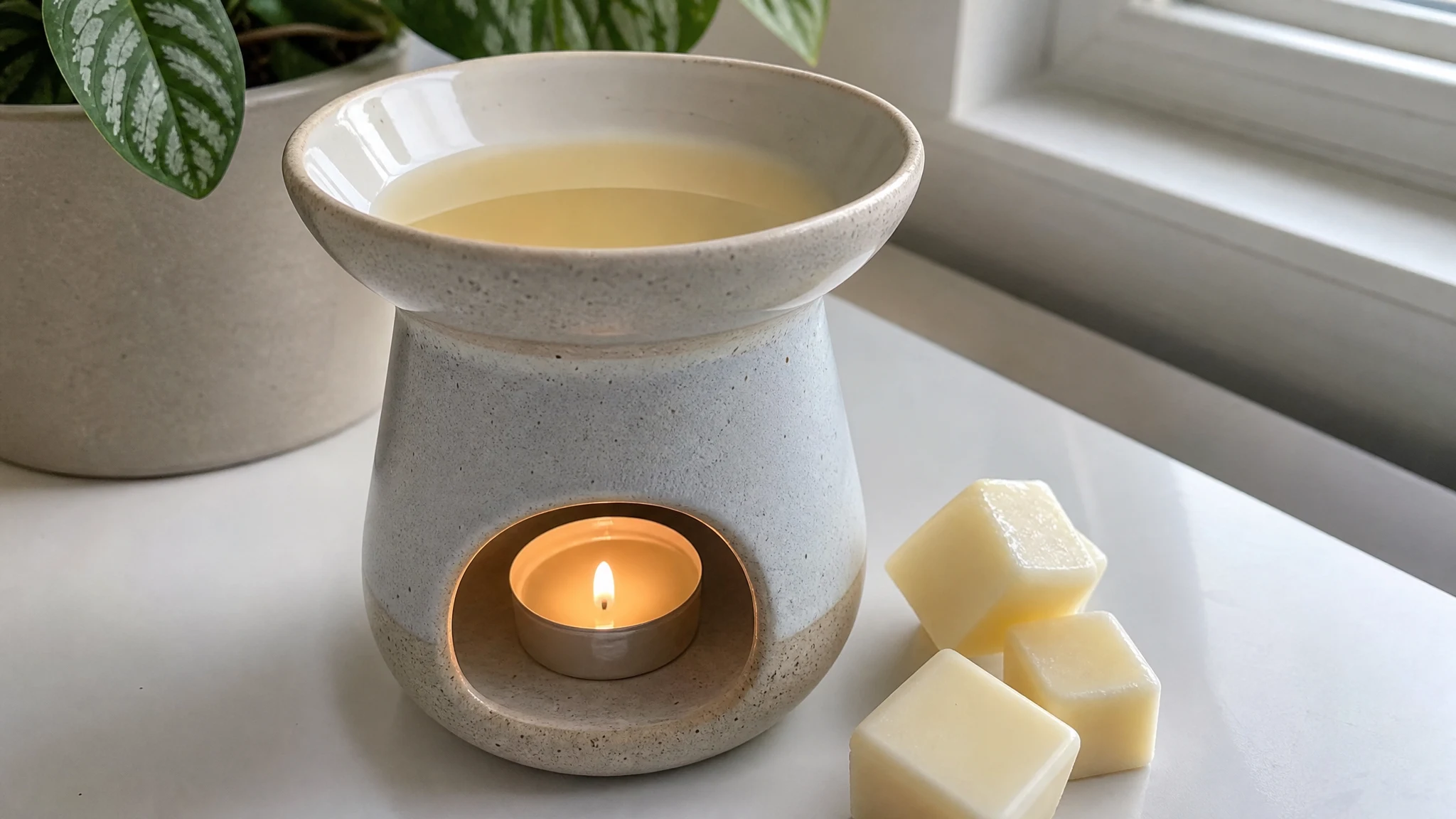
Honeysuckle Wax Melts: Flash Point, Load and Arithmetic
Wax melts look like the easy home-fragrance project, but the number that decides whether honeysuckle absolute belongs in one is not on our Certificate of Analysis: the flash point. A melt sits on a warmer for hours with a fragrance load several times higher than a candle's, so the first question is how hot your warmer gets and what the oil does at that temperature. Below is the arithmetic for a batch, what the wax data sheets say, and the one document you should have in hand before you sell a single melt.
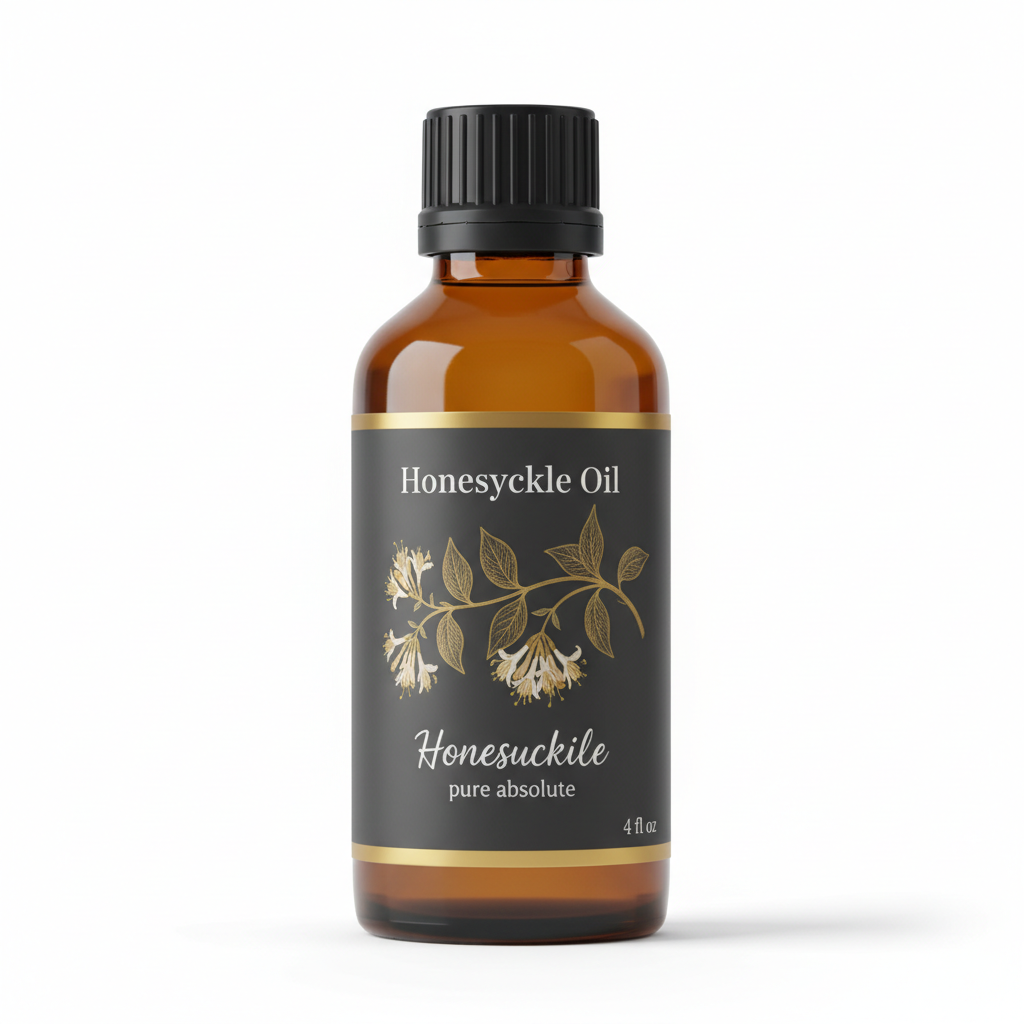
Honeysuckle Absolute
Our own Honeysuckle Absolute, in sizes from 0.5 oz to bulk.
From $13.99
Shop Now →The problem to solve first: a flash point we do not publish
A flash point is the lowest temperature at which an oil gives off enough vapour to ignite when a flame or spark is present. One candle-supply company's support page defines it as the temperature at which a fragrance oil can combust when exposed to an open flame or spark, and notes that fragrance oils with a flash point of 141 F or lower cannot ship by USPS (CandleScience support, undated). That is a shipping rule for fragrance oils from one retailer, not a statement about absolutes, but it shows why makers who sell melts ask for the number.
The batch of honeysuckle absolute on our published COA lists appearance, smell, relative density (0.989), refractive index (1.509) and optical rotation (+1.88 degrees). It lists no flash point, and we publish no safety data sheet. Our process page says an absolute is a solvent process, hexane in practice, then an ethanol wash and chill. Reasoning from that, ethanol is a flammable solvent, so a residue could in principle matter to the flash point, but we hold no figure and we will not guess one. If you plan to sell melts, ask in writing for the flash point and a safety data sheet for the lot you are buying and keep the reply with your product file.
The second unknown is your warmer. We searched for a published surface or melt-pool temperature for scent warmers and found none from a manufacturer or standards body, so we do not quote one. Measure yours: set the warmer on a stable surface, fill the dish with plain unscented melt, and read the pool with a probe thermometer after an hour. Compare that reading to the flash point you receive. If the pool is within reach of it, do not use that warmer with this oil.
Who should skip this project
Skip it if the warmer will run unattended in a child's room, near pets, or in a home where someone has asthma. Steinemann surveyed 1,137 US adults in 2018: about a quarter reported a diagnosis of asthma or an asthma-like condition, and 64.3% of those reported at least one adverse effect from fragranced products, 41.0% of them from air fresheners or deodorizers (Steinemann, 2018, Air Quality, Atmosphere and Health). It was a self-reported online survey and says nothing about honeysuckle specifically, but a melt perfuming a whole room is the opposite of a dose you control. Our safety copy says to keep the oil away from children and pets. Ask a physician about asthma in the household and a veterinarian about pets.
The arithmetic: what a load of 6% to 10% costs in absolute
Loads in data sheets are given as a share of the wax. The soy container wax data sheet we read allows fragrance "up to 10-12%" (supplier technical data sheet v5.0, revised 26 August 2020), and a coconut-apricot container wax is listed at 10% or 1.6 oz per pound (CandleScience product page). Those are ceilings for candles from the supplier's own testing, and both documents tell the user to test. A melt is not a candle, so treat 10% as the upper edge and plan around 6%.
Our absolute is sold neat, so the maths is yours. At the COA's relative density of 0.989, one ml weighs about 0.989 g, and at roughly 20 drops per ml (droppers vary, so weigh instead) one drop is about 0.05 g. One 1 oz bottle is 29.57 ml, about 29.2 g.
| Batch of finished melts | Load | Absolute needed | About |
|---|---|---|---|
| 100 g | 6% | 6 g | 6.1 ml, 121 drops |
| 100 g | 10% | 10 g | 10.1 ml, 202 drops |
| 500 g | 6% | 30 g | 30.3 ml, 607 drops |
| 1 kg | 6% | 60 g | 60.7 ml, about 2 oz |
One 1 oz bottle (29.2 g) therefore perfumes about 487 g of melts at 6%, or 292 g at 10%. The 0.5 oz size (about 14.6 g) covers roughly 243 g at 6%. Multiply by the current price per size on the shop page to see what a clamshell of melts costs you in oil before wax, packaging and labelling. For most hobby batches that figure is the argument for a very small first batch, or for a different project: a few drops on a sachet (see the linen spray and sachets guide) uses a fraction of this.
A formulation to test, not a tested one
We have not made or tested this. It is worked out from the data sheets above. Treat it as a starting point for a small test batch.
- Choose a soft, low-melting wax. The soy container wax sheet gives a typical melting point of 45.5 C (specification 42 to 48 C) and a congealing point of 39.0 C; the coconut-apricot product lists 49.4 to 55.0 C (121 to 131 F). Reasoning: a lower melting point means the pool forms at a lower warmer temperature, which keeps the oil away from heat it does not need.
- Melt the wax to about 70 C, which is the heating temperature the soy sheet gives for undyed wax, then let it cool. The same sheet says to add fragrance and mix at the chosen pour temperature, "immediately prior to pouring," and not to hold the wax above 85 C for long. Fragrance added to hot wax is lost to the air; reasoning from that guidance, add the absolute late and cool.
- For 100 g, weigh 94 g of wax and 6 g of absolute. Warm the closed bottle in your hand first: our process page says the absolute thickens in the cold, and a thick oil is hard to weigh accurately.
- Pour into a mould, let it set, then test in your own warmer with an attendant present. Smell it cold and hot, and write down the pool temperature you measured.
The soy sheet warns that fragrances may bleed or give poor surfaces, and that fragrances designed for paraffin do worse in natural waxes. A floral absolute is not a paraffin fragrance oil, but whether honeysuckle bleeds or sweats in a given wax is a question only your own small batch will answer.
Where honeysuckle absolute is the wrong choice for melts
The same oil that suits a candle that burns for a few hours or a balm that rides on skin is a poor match for an all-day melt. Absolute is the expensive route to a strong room fragrance, and, reasoning from the heat involved, a delicate floral is the kind of fragrance most exposed to loss on a warmer that runs for hours. We have no data on honeysuckle's behaviour on a warmer. If you want a room-filling melt at a fixed price, a fragrance oil made for wax is the usual answer and is sold by craft suppliers, not by us; see absolute versus fragrance oil for the difference. If you still want the absolute, go lighter: a 2% to 3% load in a small batch for personal use costs a fraction as much and keeps the oil well under the data-sheet ceilings. That range is our recommendation from the arithmetic, not a tested figure.
For wax choice generally, our wax comparison lays out the data-sheet figures side by side, and the soy candle guide covers pouring. Storage notes for the bottle are in the storage guide.
Selling melts: what we cannot answer for you
Selling scented products raises labelling, product-liability and insurance questions. Those need an attorney, a regulatory consultant or your insurer, not a supplier. At minimum, have the flash point and safety data sheet in writing, a warmer you have measured, and a written record of the batch, wax and warmer you used.
Honeysuckle Absolute
Honeysuckle Absolute from our own shop, in sizes from 0.5 oz to bulk.
From $13.99
Shop Now →Sources & Further Reading
- Supplier technical data sheet, 2020. Soy Wax Container, version 5.0 (revised 26 August 2020; supplier not named in the file). cdn.shopify.com/.../Soy_Wax_Container_Technical_Data_Sheetv5.0.pdf
- CandleScience, undated. CandleScience Coconut Apricot Wax (product page). candlescience.com/wax/candlescience-coconut-apricot-wax
- CandleScience, undated. What does the fragrance flashpoint mean? support.candlescience.com
- Steinemann A, 2018. Fragranced consumer products: effects on asthmatics. Air Quality, Atmosphere and Health 11(1):3-9. researchonline.jcu.edu.au/52402