Honeysuckle Absolute Labels: What to Check First
Picture a listing: "Honeysuckle Oil, 1 oz, natural, botanical," with a photo of a vine and not much else. You cannot tell whether the bottle holds an absolute, a fragrance blend, or a few percent of either in a carrier. A few specific fields answer that, and once you know them, you can read any listing in a minute.

Honeysuckle Absolute
Our own Honeysuckle Absolute, in sizes from 0.5 oz to bulk.
From $13.99
Shop Now →Adjectives are decoration
"Natural" and "botanical" sound like statements and are not measurements. DermNet notes that a product listing botanical, herbal or natural ingredients can still contain fragrance that is not clearly declared (DermNet, fragrance allergy). The FDA says "organic" has no definition for cosmetics in the rules it administers, and adds that an ingredient's source does not determine its safety (FDA, organic cosmetics). So we read labels by their fields. Our guide to organic and wildcrafted claims goes deeper on those two words.
The fields worth checking
| Field | What it tells you | Question if it is vague |
|---|---|---|
| Botanical name, Lonicera japonica | Which plant the seller says it is | Which species, and which part? |
| Plant part | Flower, leaf or something else | Flower only? |
| Process | Absolute, concrete or essential oil | What solvent, and is a residue figure available for the lot? |
| Neat or diluted | Whether drops are comparable | What percentage, in what carrier? |
| Lot number | Whether paperwork can be tied to a bottle | What documents exist for this lot? |
| Net quantity | How much is in the bottle | Weight or fluid ounces? |
| Origin | A claim about place | Where grown, where extracted? |
Why the word "absolute" matters
The industry's naming system for natural materials is built on ISO 9235. IFRA's Transparency List follows the 2013 edition and pairs a letter for the plant part with a number for the process: F for flower, 2.1 for absolute, 2.7 for concrete, and 2.12 for essential oil by steam distillation (IFRA, nomenclature for natural complex substances). These are three separate categories with three separate numbers, not three marketing synonyms.
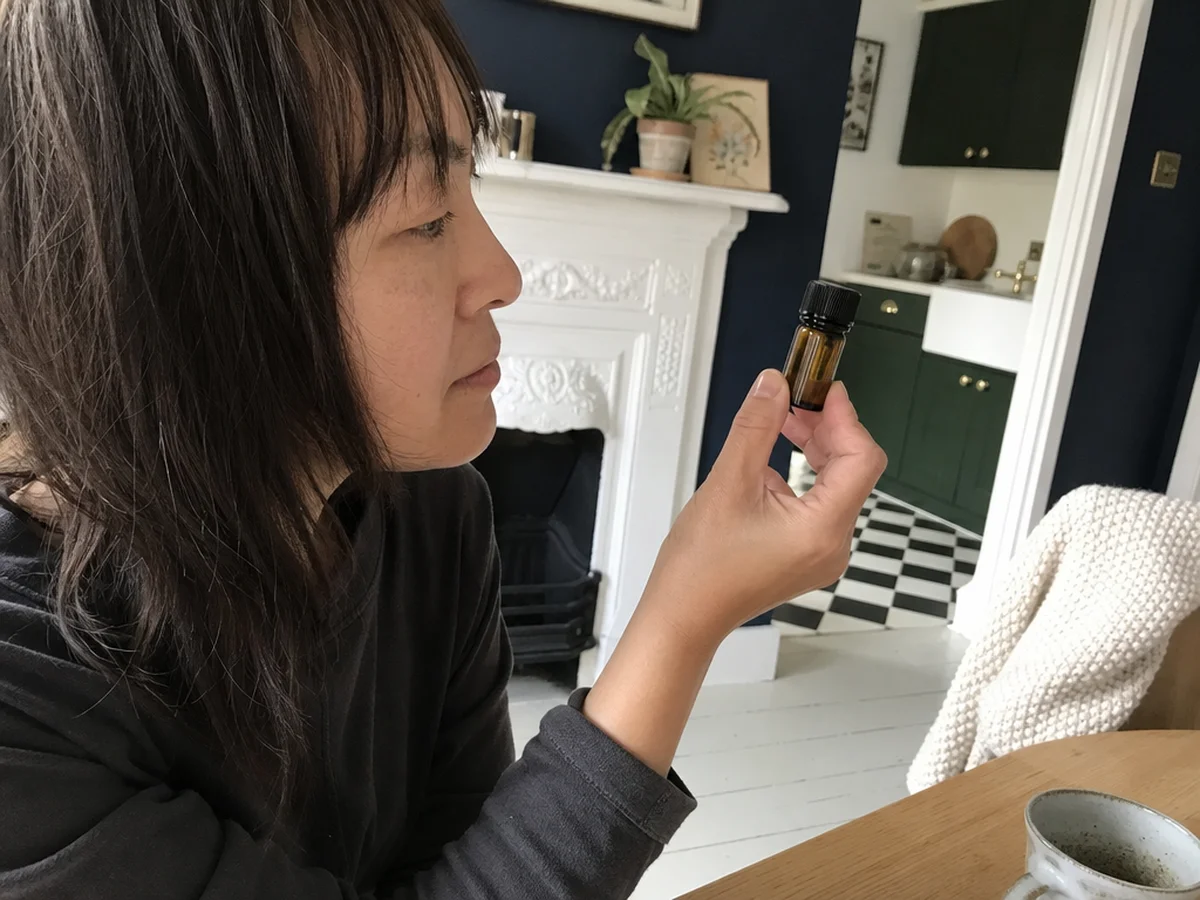
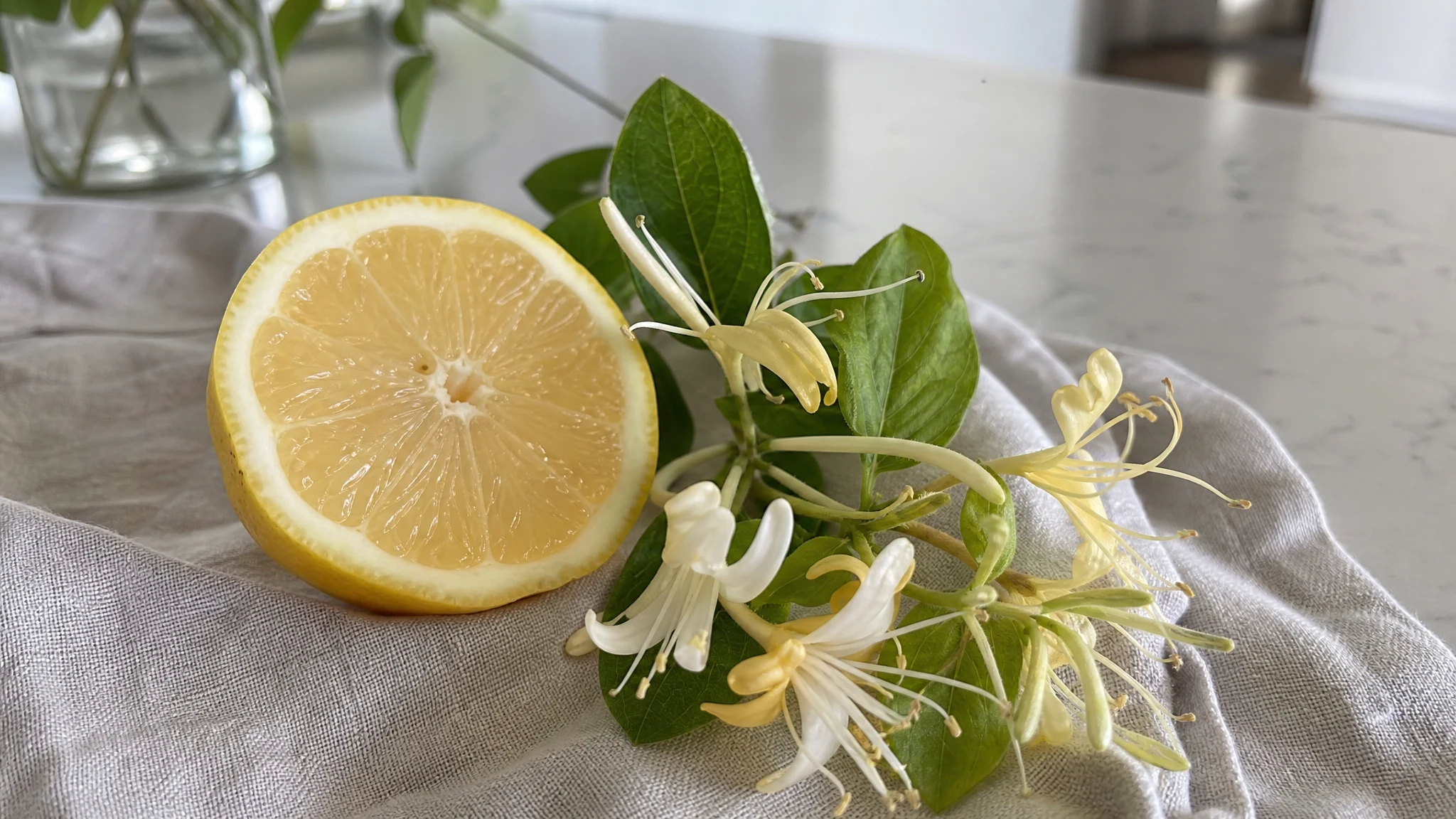
It matters for honeysuckle in particular, because the flowers do not give a meaningful essential oil under steam, which is why ours is an absolute. We explain the chemistry in why there is no steam-distilled honeysuckle essential oil. A listing that promises a steam-distilled honeysuckle essential oil is a good prompt to ask what is really in the bottle, and our guide to spotting fake honeysuckle oil has the follow-up questions.
Dilution changes the maths
A bottle with no stated percentage may be neat or may be a few percent in a carrier, and that is a tenfold difference in how much scent a drop carries. When a percentage is given, divide the bottle's price by the grams in it times the fraction that is absolute to compare real cost. A 10% dilution costs ten times as much per gram of absolute as its sticker suggests. To plan your own use, a 1 oz carrier at 2% needs about 0.59 ml of absolute, or roughly 12 drops at the usual 20 drops per ml, and our guide to weighing a 10% dilution shows the more accurate route. Our absolute is sold neat with nothing added to the bottle, and our dilution guidance for skin is 0.5% to 2% in a carrier oil with a patch test first.
If you only remember one thing from this list, make it the lot number, because everything else you want to ask can be tied to it.
Ounces of what?
An "oz" can mean weight or fluid volume. For a liquid with a relative density near 0.989, as on the certificate we publish for one batch, the two sit close together: a fluid ounce is 29.57 ml, which weighs about 29.2 g, while an ounce by weight is 28.35 g, about 3% less. For a thick butter or a heavy carrier blend the gap is larger. If you are costing a formula, check which is printed and weigh the first bottle.
Lot numbers and paperwork
A lot number is only useful if something is attached to it. The certificate we publish is one page for one batch, listing product name, batch number, botanical name, part used, best-by date, extraction method, appearance, smell, relative density, refractive index and optical rotation. Our line-by-line guide explains what each of those can tell you. If you need a laboratory report, residual solvent data or an aroma profile for your own file, name your lot and ask us in writing through the contact page before you buy, and ask any seller the same.
Finished products are a different game
Ingredient lists on finished perfumes and lotions follow different rules. The FDA says fragrance and flavour ingredients can be listed simply as "Fragrance" or "Flavor", that trade secrets need not be disclosed, and that it lacks the allergen-labelling authority for cosmetics that it has for food (FDA, fragrances in cosmetics). The word "Fragrance" alone does not tell you whether something is flower-derived. If you make products to sell, see labeling handmade cosmetics.
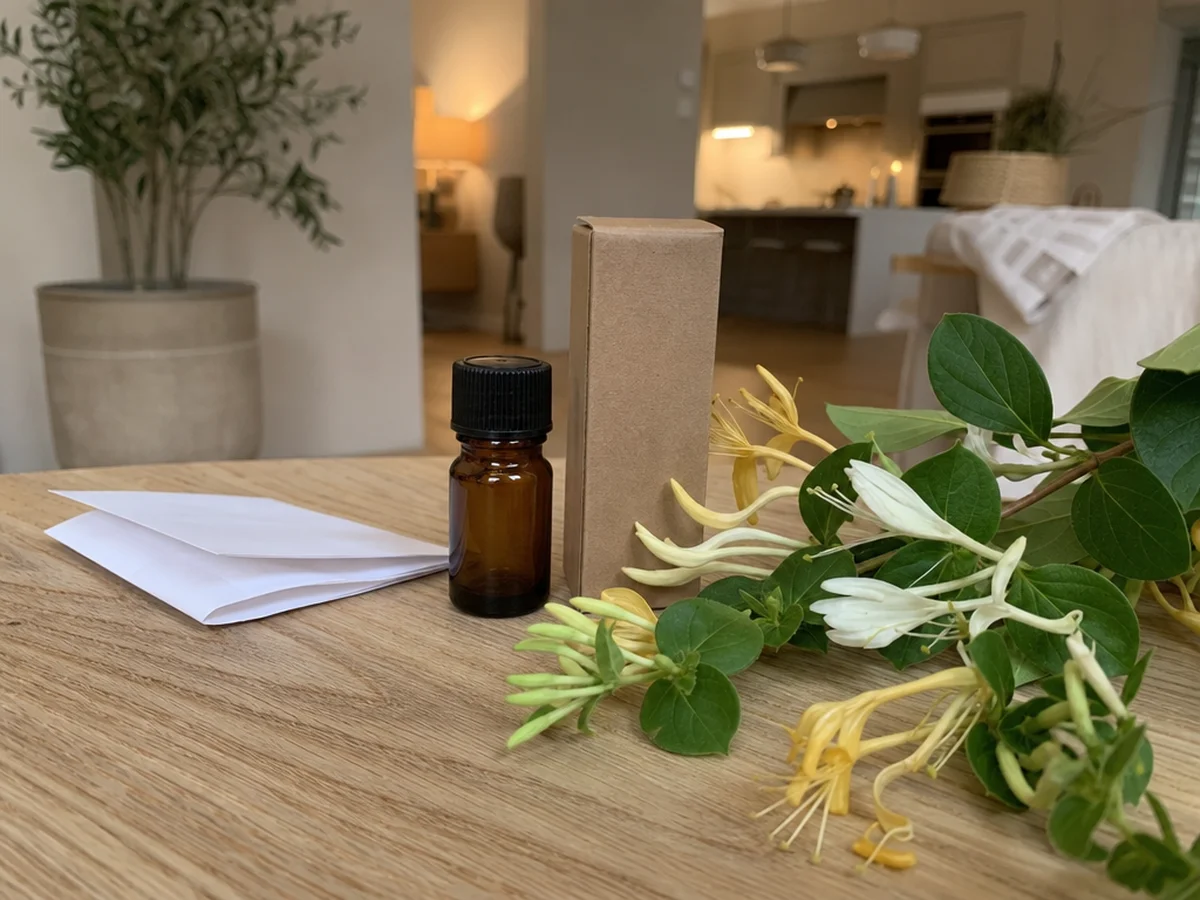
Our own listing against the same list
- Botanical name and part: Lonicera japonica, flowers.
- Process: a solvent-extracted absolute. Hexane is circulated through the blossom to leave a concrete, which is washed in high-proof ethanol, chilled and filtered.
- Neat: yes, nothing added.
- Lot and origin: the label carries the lot number and the Chinese origin.
- Paperwork: one published certificate for one batch, and a written request to us for anything more.
- Quantity: nine sizes from 0.5 oz to 400 lb, with current prices on the shop page.
The most useful test of any label is whether the seller will answer your next question in writing.
Honeysuckle Absolute
Honeysuckle Absolute from our own shop, in sizes from 0.5 oz to bulk.
From $13.99
Shop Now →Sources & Further Reading
- DermNet, 2020. Fragrance allergy. dermnetnz.org/topics/fragrance-allergy
- US FDA, 2022. Organic cosmetics. fda.gov/cosmetics/cosmetics-labeling-claims/organic-cosmetics
- US FDA, 2022. Fragrances in cosmetics. fda.gov/cosmetics/cosmetic-ingredients/fragrances-cosmetics
- IFRA, undated. Nomenclature for natural complex substances on the IFRA Transparency List (based on ISO 9235:2013). ifrafragrance.org