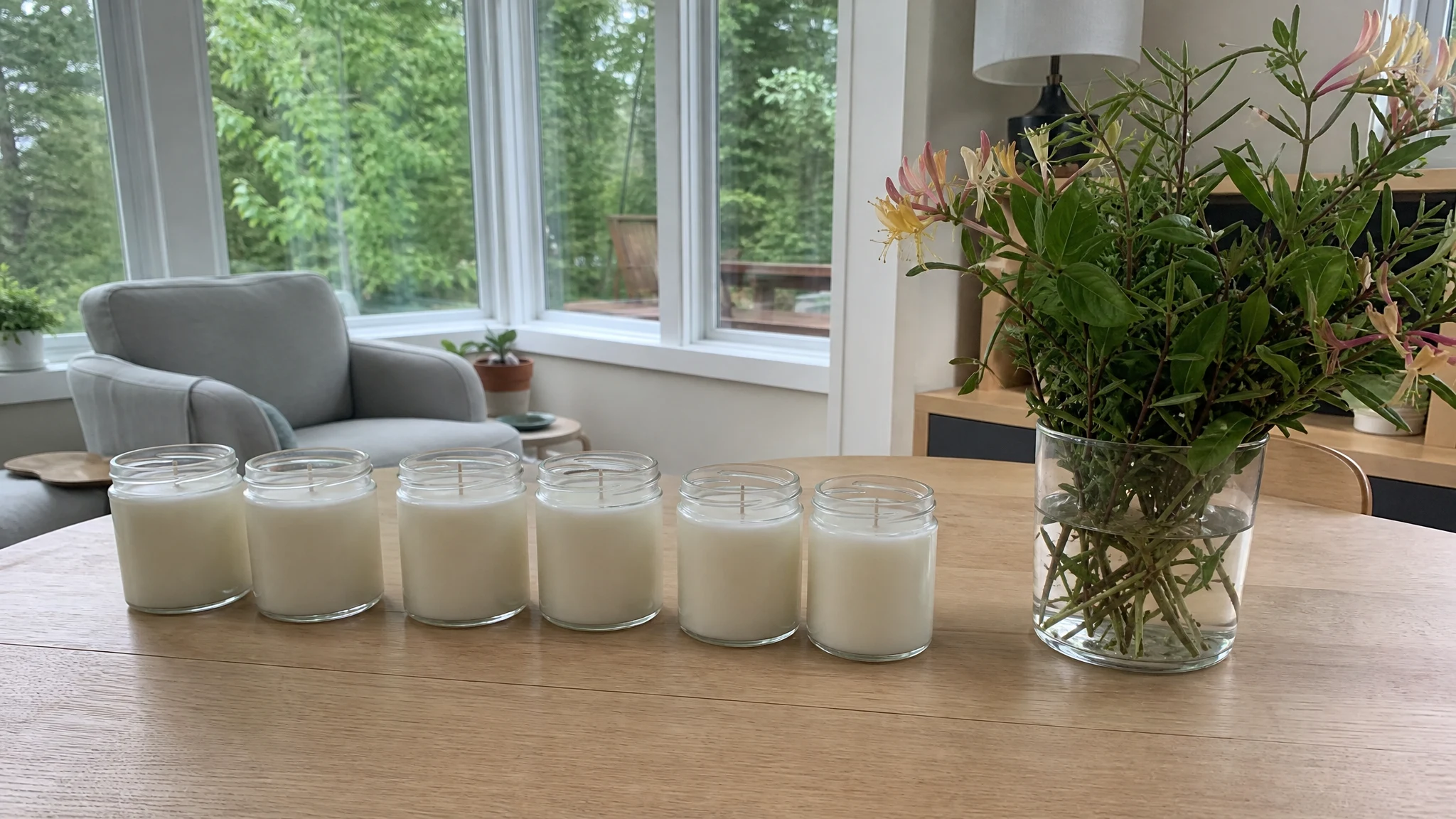
Honeysuckle Soy Candles: A Three-Jar Test Method
Your first honeysuckle candle should be three small candles. Wax data sheets talk about fragrance in general and never name an absolute, so the quickest way to learn what your wax, wick and jar do with it is to pour a short ladder of loads and compare. Here are the weights, the temperatures and the notes worth taking.
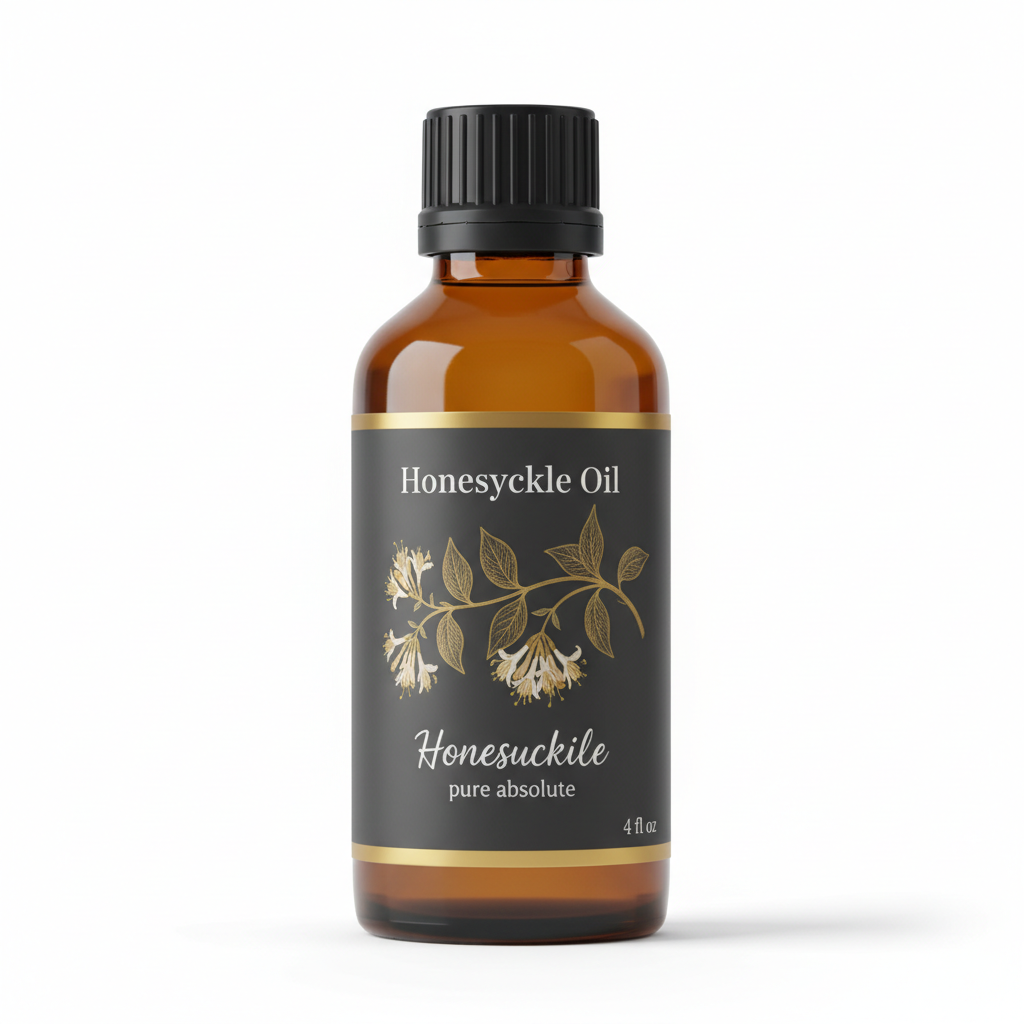
Honeysuckle Absolute
Our own Honeysuckle Absolute, in sizes from 0.5 oz to bulk.
From $13.99
Shop Now →What you will need
We sell the absolute and nothing else for this project, so gather the rest from a craft supplier: container soy wax, pre-tabbed wicks, three identical heat-safe jars, a scale that reads to 0.1 g, a probe thermometer, a pouring jug and a stirrer. The soy container data sheet we used prefers stainless steel for melting, calls a digital probe a safer choice than mercury, and cautions against containers with copper or zinc. Wicking decides the result more than anything, so buy the series your wax supplier suggests for your jar diameter, and two sizes if you can.
Why 4%, 6% and 8%
Candle loads are a share of wax weight. One craft supplier gives 6% to 10%, with 6% to 8% typical; the soy sheet allows up to 10-12%. A trace of honeysuckle absolute goes a long way, so we would bracket the typical range from just below it. Using the relative density of 0.989 from the Certificate of Analysis we publish for one batch, here is the arithmetic for 150 g of wax per jar.
| Jar | Load | Wax | Absolute |
|---|---|---|---|
| A | 4% | 150 g | 6 g |
| B | 6% | 150 g | 9 g |
| C | 8% | 150 g | 12 g |
The three jars use 27 g in total, just under a 1 oz bottle (about 29.2 g), which is why we suggest 1 oz for a first test. Weigh rather than count drops: a thick absolute makes drop size vary, and jar C would run to roughly 240 at the usual 20 drops per millilitre.
Set up your table before you start
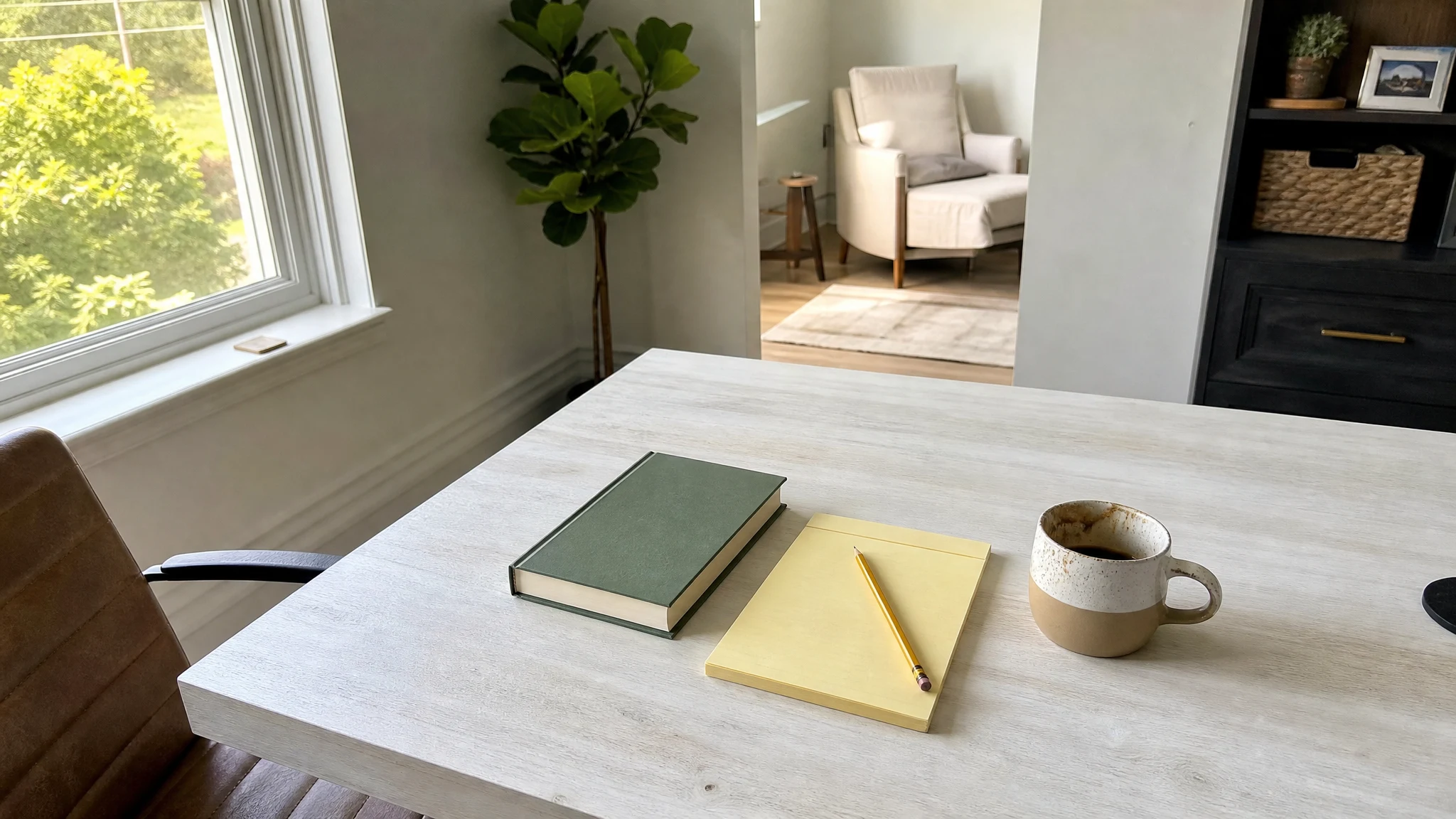
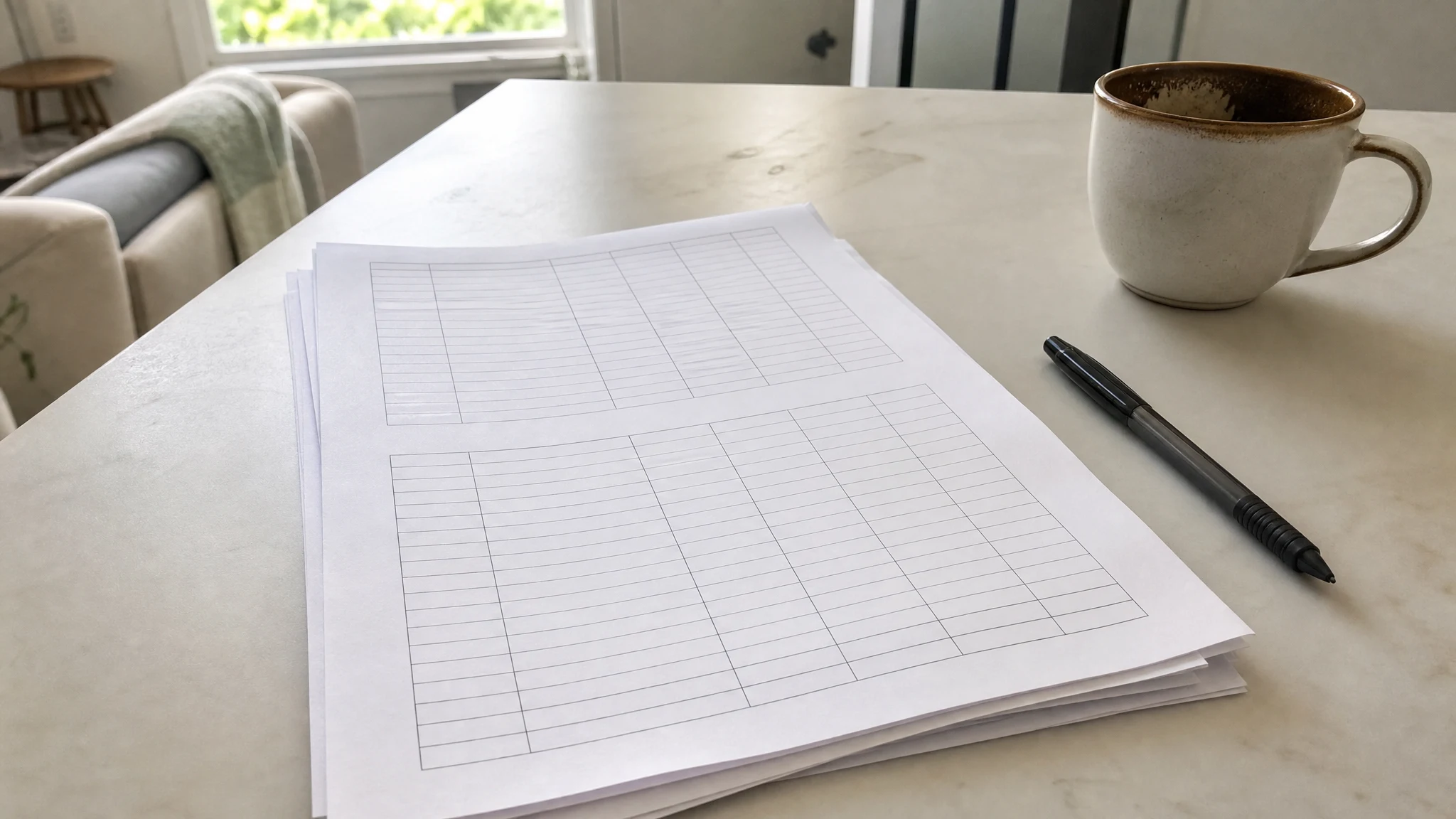
Clear a flat, level surface and lay down paper that you do not mind spoiling. Line up the jars in order and label them A, B and C with masking tape before any wax is hot. Have your notebook and a pencil within reach, since your hands will be busy. Candle making goes more smoothly when everything is ready beforehand, and it is far more enjoyable when you are not hunting for a stirrer with a jug of hot wax in your hand.
The pour
- Clean and dry the jars and centre each wick on its tab. The data sheet says warming jars to around 45 to 50 C can help.
- Melt 450 g of wax, stirring as it goes. The sheet advises keeping it under 85 C, with brief peaks to 90 C acceptable if it cools quickly.
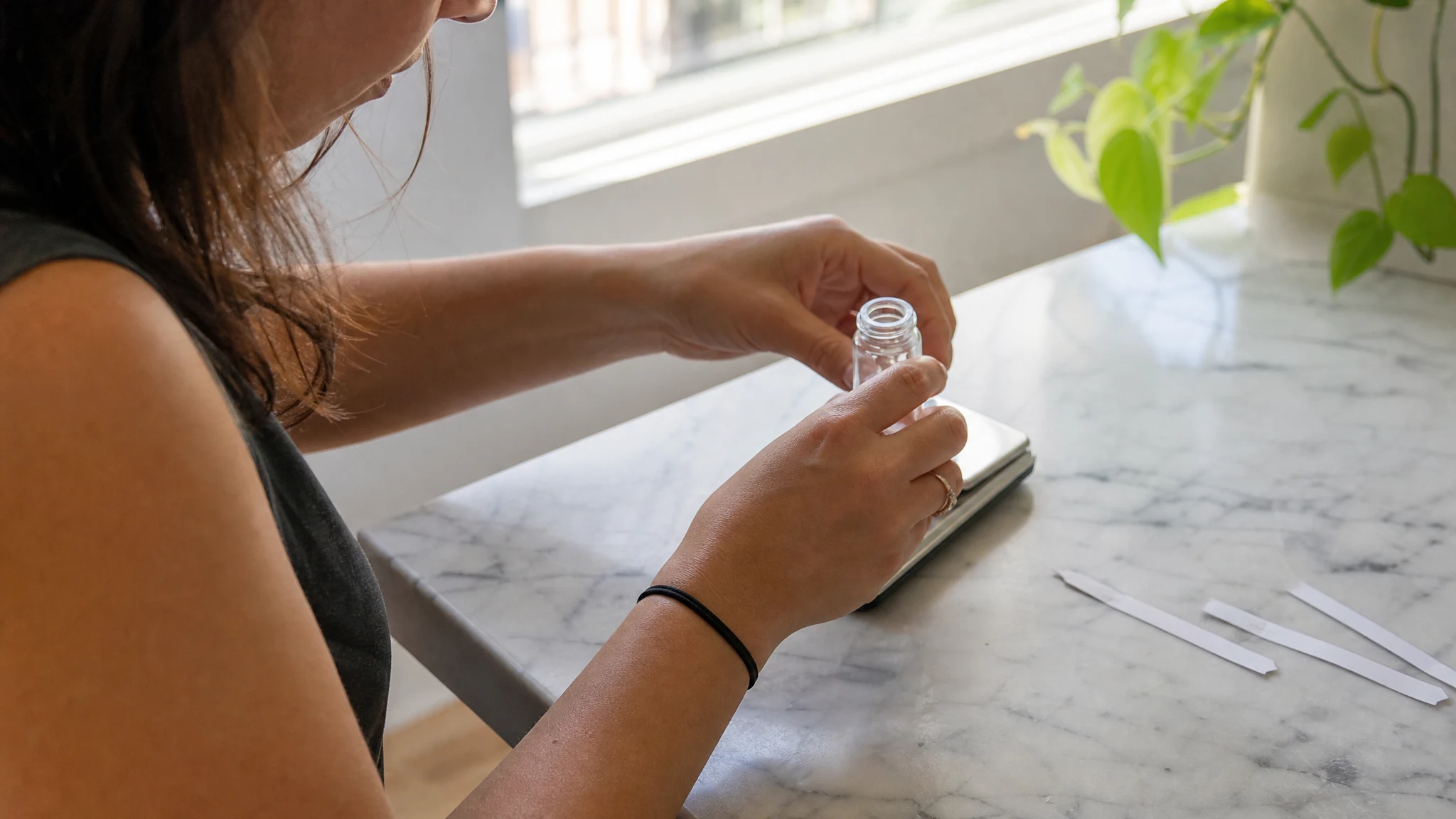
- Warm the closed bottle in your hand for a minute so it pours, then weigh 6 g, 9 g and 12 g into three small containers.
- Let the wax cool to your pour temperature. The sheet points to pouring near the congealing point, about 45 to 55 C, and adjusting in steps of 5 to 10 C if the surface is poor. Other waxes will differ, so use the numbers for yours.
- Divide the cooled wax among three jugs, stir in one portion each for a full minute and pour straight away.
- Leave the jars undisturbed at room temperature for 48 hours before burning.
What good notes look like
Your notes do not need to be fancy. A line for each jar with the load, the date poured, the cold smell, the smell while burning and a single sentence about whether you would give it as a gift is plenty. Include the little irritations too, such as a wick that drowns or a surface that looks bumpy. Those details are what turn a first test into a recipe you can repeat.
Judging the ladder
Keep one row of notes per jar. Smell each cold before lighting, at arm's length and close up. Then burn them one at a time in the same room with the same wick trim, noting the width of the melt pool after an hour and two, the flame height, any soot, and how the wax around the wick looks. The data sheet explains why: an oversized wick can soot and burn through quickly, an undersized one tunnels, and burn pool size and depth greatly affect fragrance throw. If the scent is faint but the pool is narrow, change the wick before you raise the load.
Then judge the scent from two places: beside the jar, and from the next room after an hour. Write down what you actually smell, in words. If honeysuckle disappears at 4% and 6% but appears at 8%, you have a number to scale. If 8% is no stronger than 6%, the supplier's point that more oil does not always mean stronger throw is probably at work. Honeysuckle is a soft middle note, so aim for a candle that is lovely nearby rather than one that fills the house.
If the absolute tints your wax, note that too; it can lightly colour pale products, which is good to know before a pastel batch. Our candle questions cover loads and temperatures in more detail, and the wax comparison helps if soy is not your wax. If a candle is not the right fit, the home fragrance guide compares other methods. Follow standard candle safety, such as the National Candle Association's trimmed wick, clear surroundings and attended flame.
Three jars, one evening, a few good notes: that is how a honeysuckle candle gets made properly.
Honeysuckle Absolute
Honeysuckle Absolute from our own shop, in sizes from 0.5 oz to bulk.
From $13.99
Shop Now →