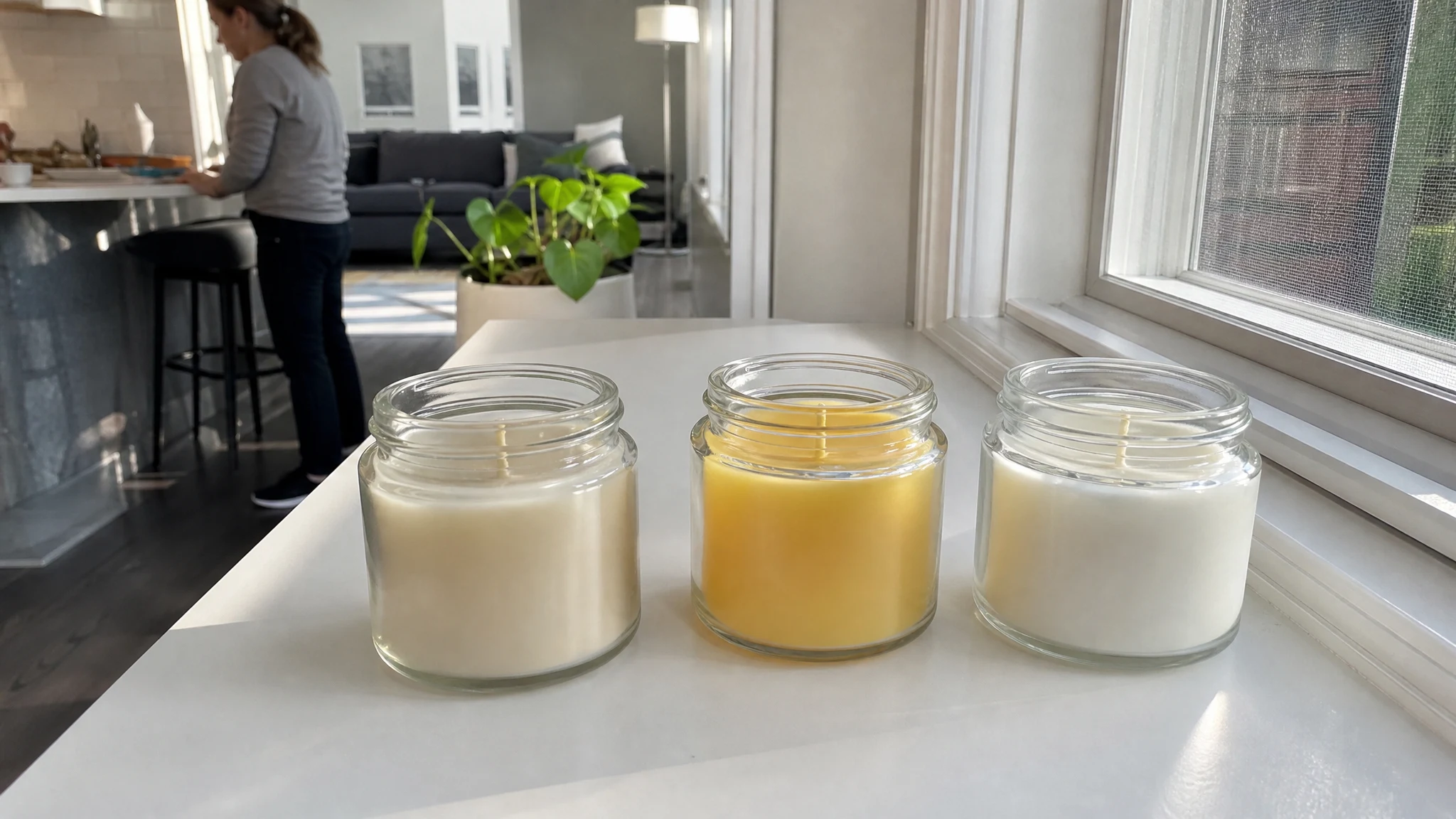
Which Wax Suits Honeysuckle Best? Soy, Coconut, Beeswax
Our short answer: start with soy. Honeysuckle is a delicate, nectar-like floral, and a wax with a low melting point lets you add it cool, which suits a scent that is easy to lose to heat. That is a judgment from the data sheets rather than a ranking handed down by a burn test, so here is how the three common choices compare and why we lean that way.
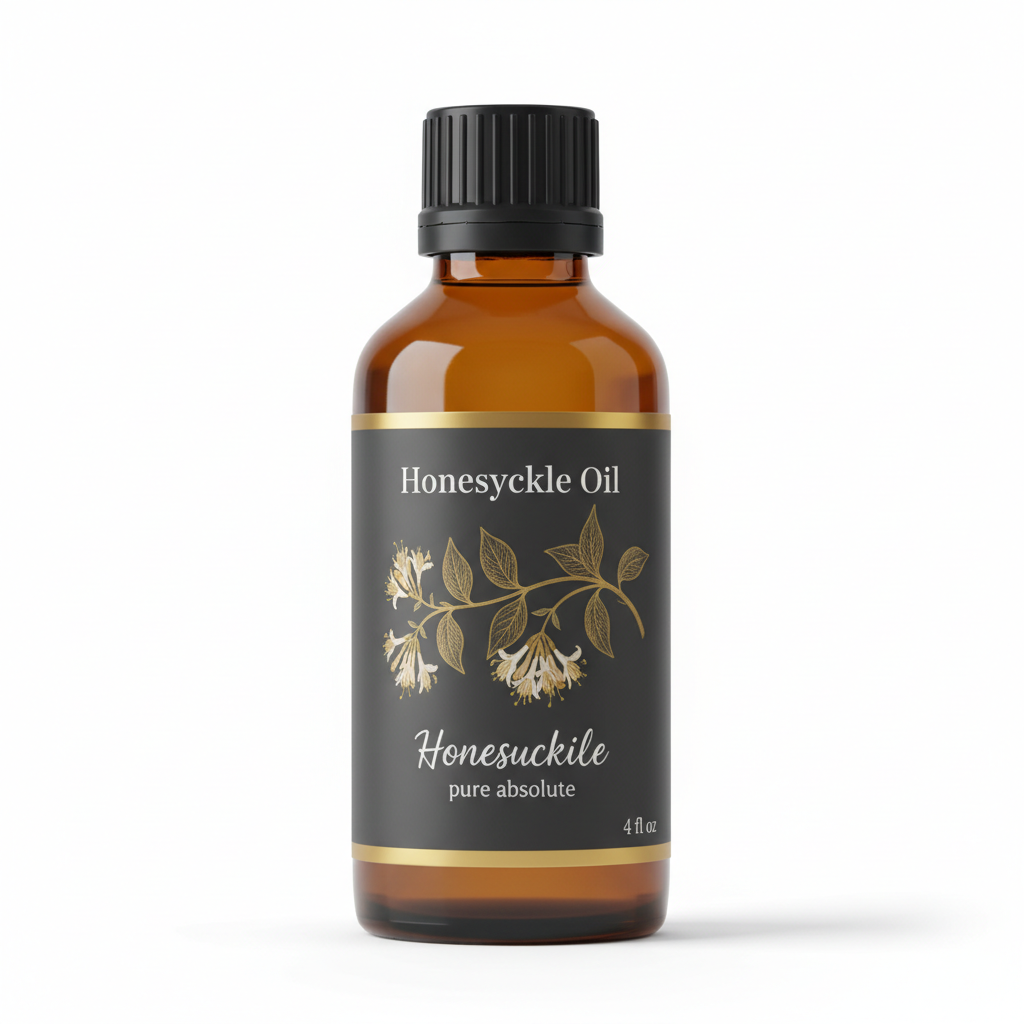
Honeysuckle Absolute
Our own Honeysuckle Absolute, in sizes from 0.5 oz to bulk.
From $13.99
Shop Now →What the data sheets say
Each figure below belongs to one named product, not to "soy" or "coconut" as a family, and every maker tells you to test your own combination.
| Wax | Melting point | Fragrance load stated | Pour guidance |
|---|---|---|---|
| Soy container wax (supplier data sheet) | 45.5 C typical, congealing 39 C | Up to 10 to 12% | Add fragrance at pour temperature, about 45 to 55 C |
| Coconut apricot blend (CandleScience) | 49.4 to 55.0 C | 10% | 170 F (about 77 C) |
| Beeswax | 62 to 65 C | No candle figure given | No candle figure given |
Two things stand out. The stated fragrance ceilings are about the same for the two container waxes, so you will not gain extra room for oil by switching. And the coconut apricot blend lists paraffin and soy among its ingredients, so "coconut" on a label is not a promise of an all-plant wax. If your candle makes a plant-only claim, read the ingredient list.
What about beeswax and honey?
People often assume beeswax smells of honey and will crowd a floral. The one study we looked at suggests something a little different. Researchers analysed one beeswax sample from a single apiary in Poland, using headspace GC-MS and a six-person sensory panel. Alkanes made up about 54% of the aroma profile and aldehydes about 37%, and the panel's strongest word for it was "waxy." That is one batch, so a different beeswax may smell different, and the authors point out their own limits.
Here is our reasoning, and it is reasoning rather than a measurement. A wax that melts at 62 to 65 C is usually poured hotter, which gives a floral's lighter notes more time to drift away before the candle is set. If you want honeysuckle with as little in its way as possible, the lower-melting waxes are the sensible start. If you love a honeyed background, beeswax may supply it on its own terms. Beeswax earns its place in a solid perfume balm, where it gives the texture.
Choosing by what you want
Before you compare numbers, think about the candle you actually want to light. Some people picture a soft, creamy jar on a bedside shelf, others a taper that smells faintly of a summer hedge. The wax you choose shapes the look and the feel of the candle as much as the scent, so a quick moment of picturing it saves a few wasted pours.
- A clean floral in a container: soy. The soy sheet says to add fragrance at your chosen pour temperature just before pouring and to keep the wax below 85 C, so the absolute goes in last and as cool as the wax allows. Our soy candle guide covers the pour.
- A smooth finish from a coconut blend: take the pour temperature from that blend's own sheet. The one we read pours at 170 F, far hotter than the soy sheet's advice.
- A beeswax candle: no sheet we read gives a fragrance load for it, so any figure would be a guess.
Whichever you pick, do one thing the sheets cannot do for you: smell the cold, set candle with your nose almost against the wax. A good floral candle should smell sweet and round up close, with nothing sharp or burnt underneath. If something smells off at that stage, it will not improve when you light it.
The arithmetic for a batch
Our absolute is sold neat. At 0.989 g per ml (the relative density on the Certificate of Analysis we publish for one batch), a gram is about a millilitre. A supplier guide puts candle fragrance at 6% to 10% of wax weight, with most between 6% and 8%. In 100 g of wax that is:
| Load | Absolute per 100 g wax | Candles of 100 g from a 1 oz bottle (about 29.2 g) |
|---|---|---|
| 6% | 6 g | about 4.9 |
| 8% | 8 g | about 3.6 |
| 10% | 10 g | about 2.9 |
So a bottle goes furthest at the low end, which is also where a concentrated floral tends to be easiest to balance. More oil does not always mean more scent throw, since wick, vessel and burn pool matter too, and the soy sheet advises letting a candle sit for 48 hours before a test burn and testing each wax, wick and container combination yourself. We sell the absolute only; wax, wicks and jars are at a craft supplier, which can also give you the current data sheet for your exact product. For a flameless version see our wax melt guide, and for common questions the candle FAQ.
The National Candle Association's basics apply to any of them: trim wicks to about a quarter inch, keep a lit candle at least 12 inches from anything flammable and stop burning when about half an inch of wax remains. A candle you sell has its own standards and labeling to meet, so check those with an insurer or attorney.
Pick the wax that matches the candle you imagine, pour it cool, and let the first test tell you the rest.
Honeysuckle Absolute
Honeysuckle Absolute from our own shop, in sizes from 0.5 oz to bulk.
From $13.99
Shop Now →Sources & Further Reading
- Soy Wax Container Technical Data Sheet, version 5.0 (revised 26 August 2020)
- CandleScience Coconut Apricot Candle Wax
- Natural Bulk Supplies, The Ultimate Guide to Cosmetic Waxes: Beeswax, Vegan Alternatives, and Specialty Waxes Explained
- Starowicz et al. 2021, Characterizing the Volatile and Sensory Profiles, and Sugar Content of Beeswax, Beebread, Bee Pollen, and Honey (Molecules 26(11):3410)
- Nature's Garden, How Much Fragrance Oil to Use (Load & Safety)
- National Candle Association, Candle Safety Tips