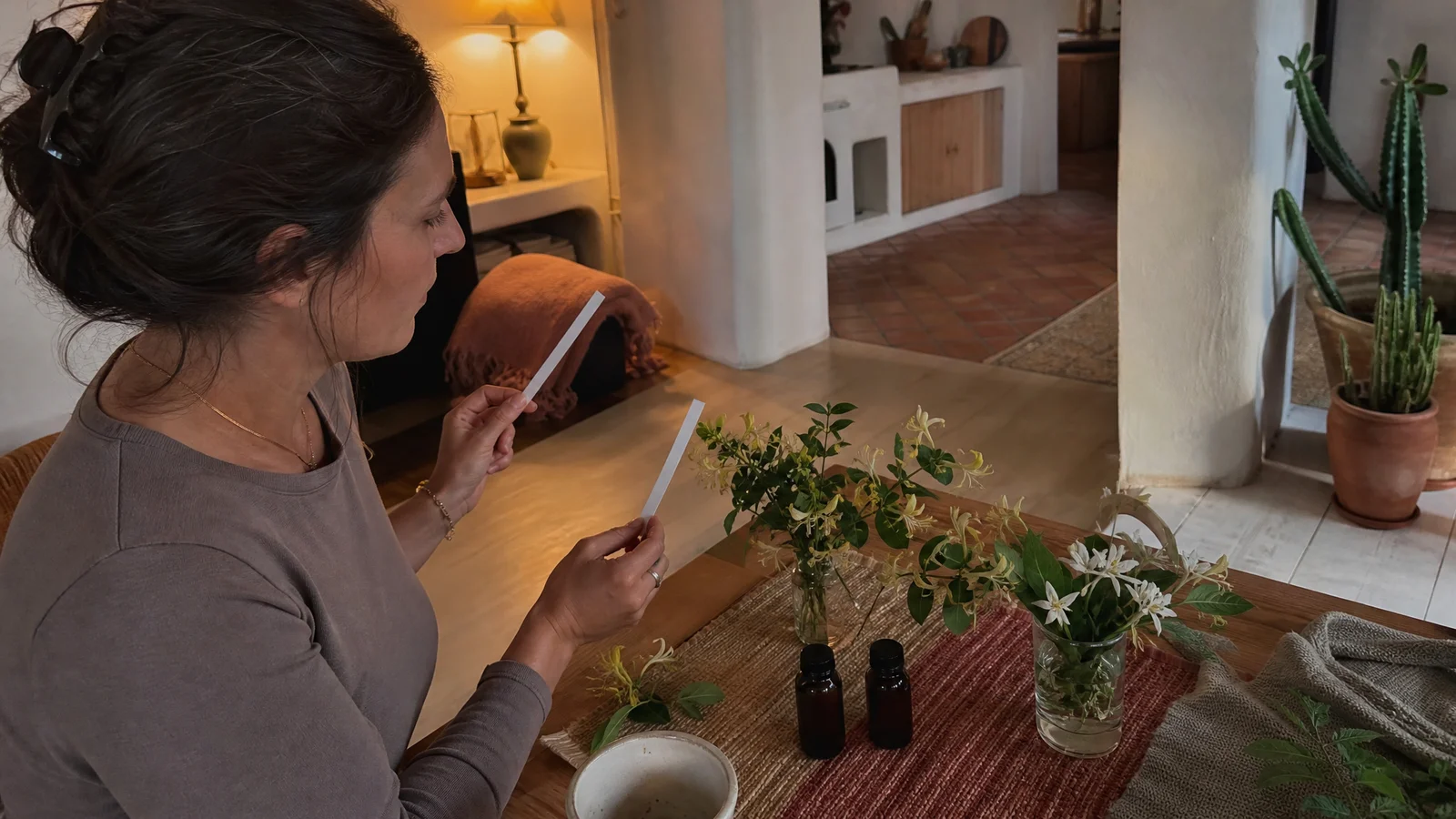
Honeysuckle vs Jasmine: How the Two Florals Differ
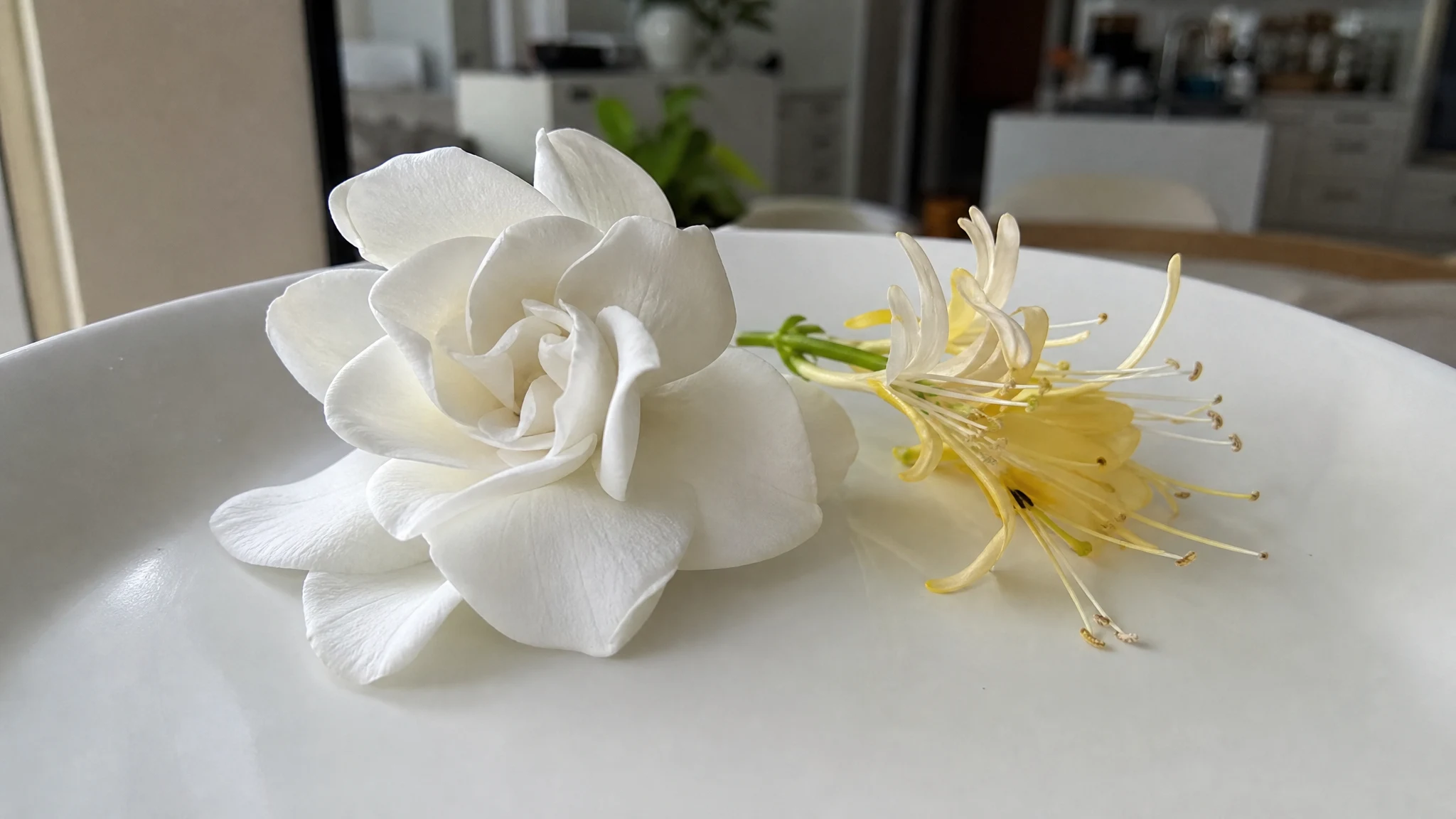
Ask someone to name a white floral and jasmine usually comes first. Honeysuckle stands next to it, a little greener, a little sweeter, and often described as jasmine's lighter cousin. Cousins are not twins, though, and the difference matters the moment you try to swap one for the other in a formula.
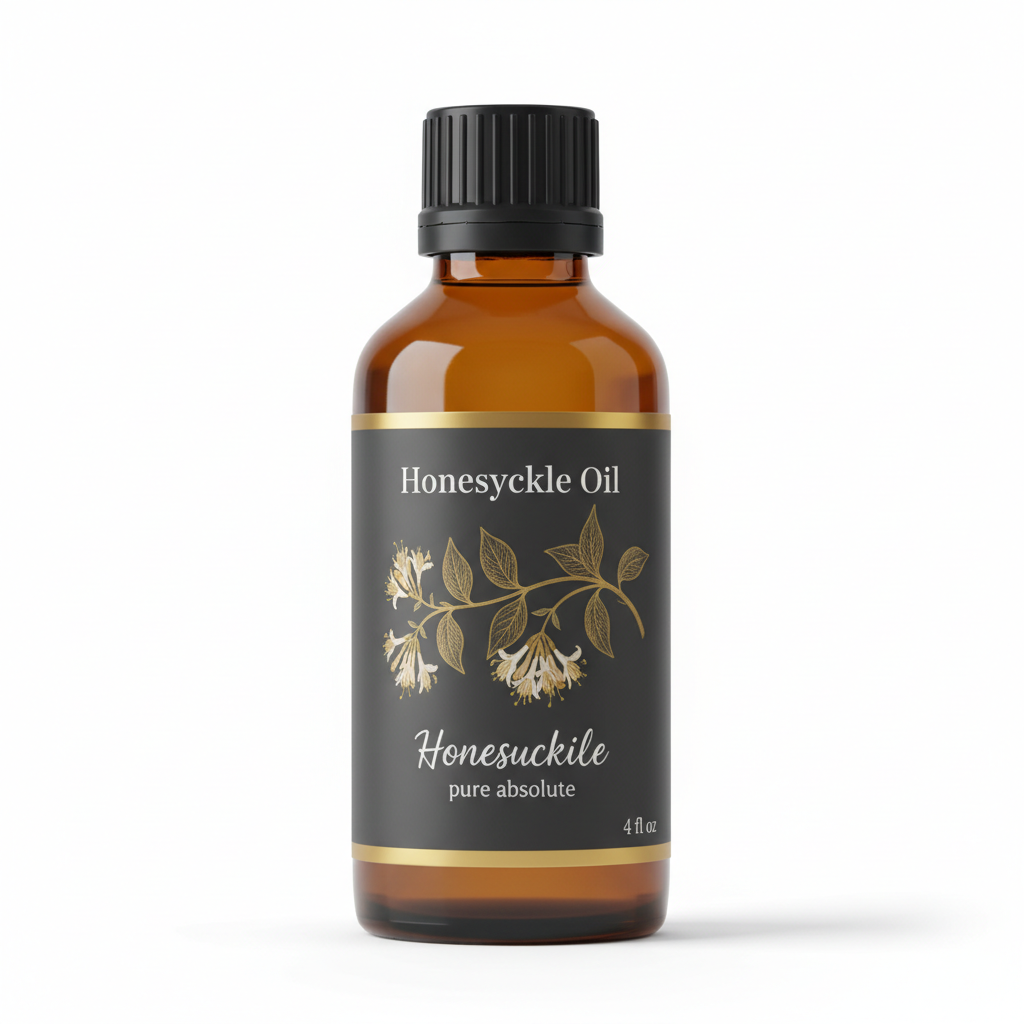
Honeysuckle Absolute
Our own Honeysuckle Absolute, in sizes from 0.5 oz to bulk.
From $13.99
Shop Now →If you have only ever met jasmine in a hand cream or a tea, honeysuckle may surprise you. It has the same family resemblance but it reads lighter on the nose, like a warm breeze through a hedge instead of a closed, perfumed room. Everything below is about helping you choose between them, or use them together.
Where they overlap
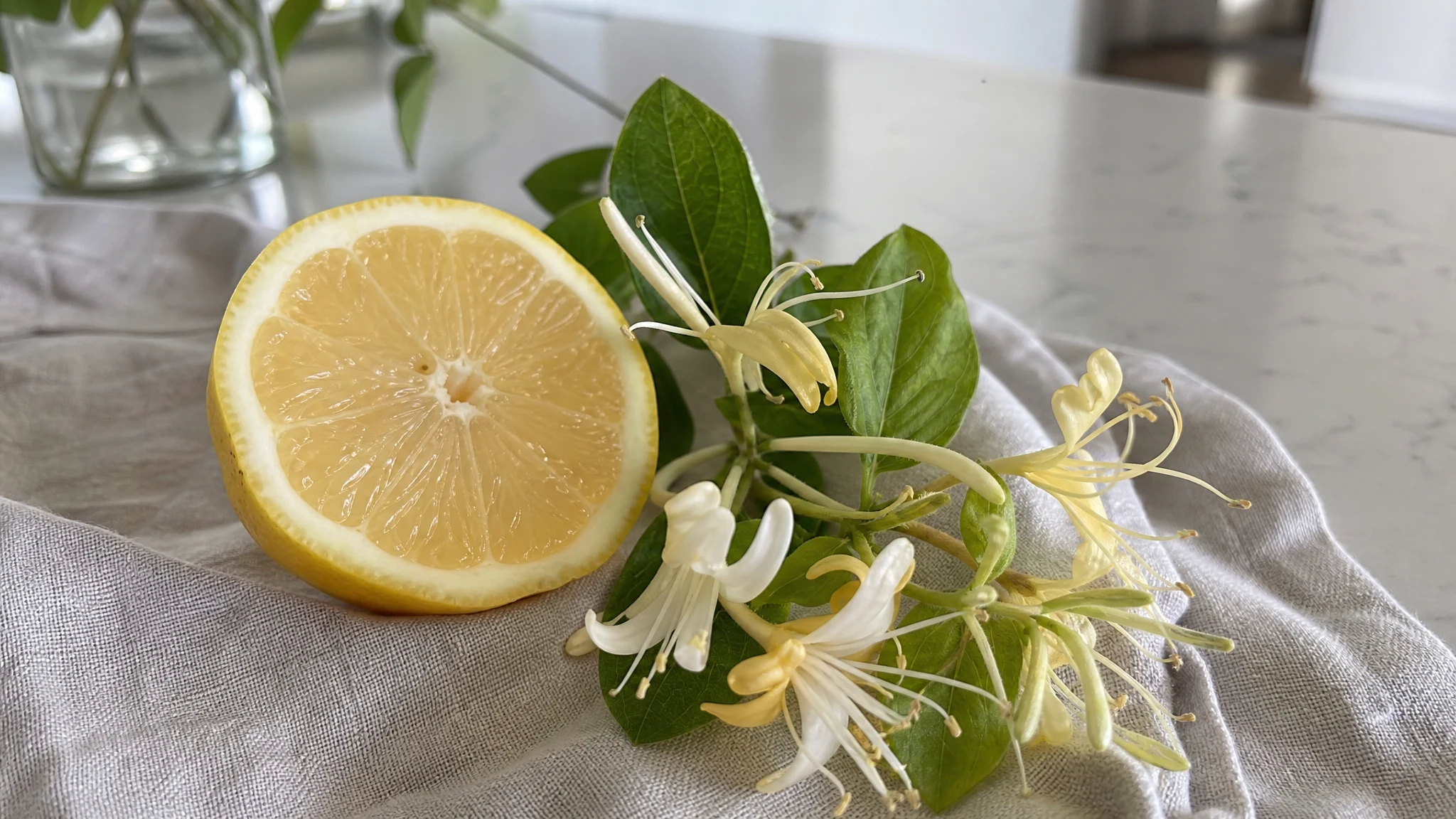
There is real shared ground. The chemistry of honeysuckle flower concrete has been reviewed in the literature, and the markers it highlights are linalool, (Z)-jasmone, (Z)-jasmin lactone and methyl jasmonate. Jasmine grandiflorum absolute, as the perfumery reference ScenTree lists it, also carries linalool and (Z)-jasmone. Shared molecules are a good reason the two sit comfortably together in a blend, and a fair reason honeysuckle gets called jasmine-adjacent. We describe our honeysuckle absolute as nectarous, lush and green-floral, like the living vine, with a soft jasmine-adjacent warmth, and as a middle, or heart, note.
Where they part ways
The biggest difference in the numbers is benzyl acetate, which ScenTree puts at roughly 40% to 65% of a jasmine grandiflorum absolute alongside indole, the component behind the richer, slightly animalic side of jasmine. Neither appears in the markers the honeysuckle review names. That is a modest but useful clue: jasmine tends toward dense and creamy, honeysuckle toward fresh and nectar-like.
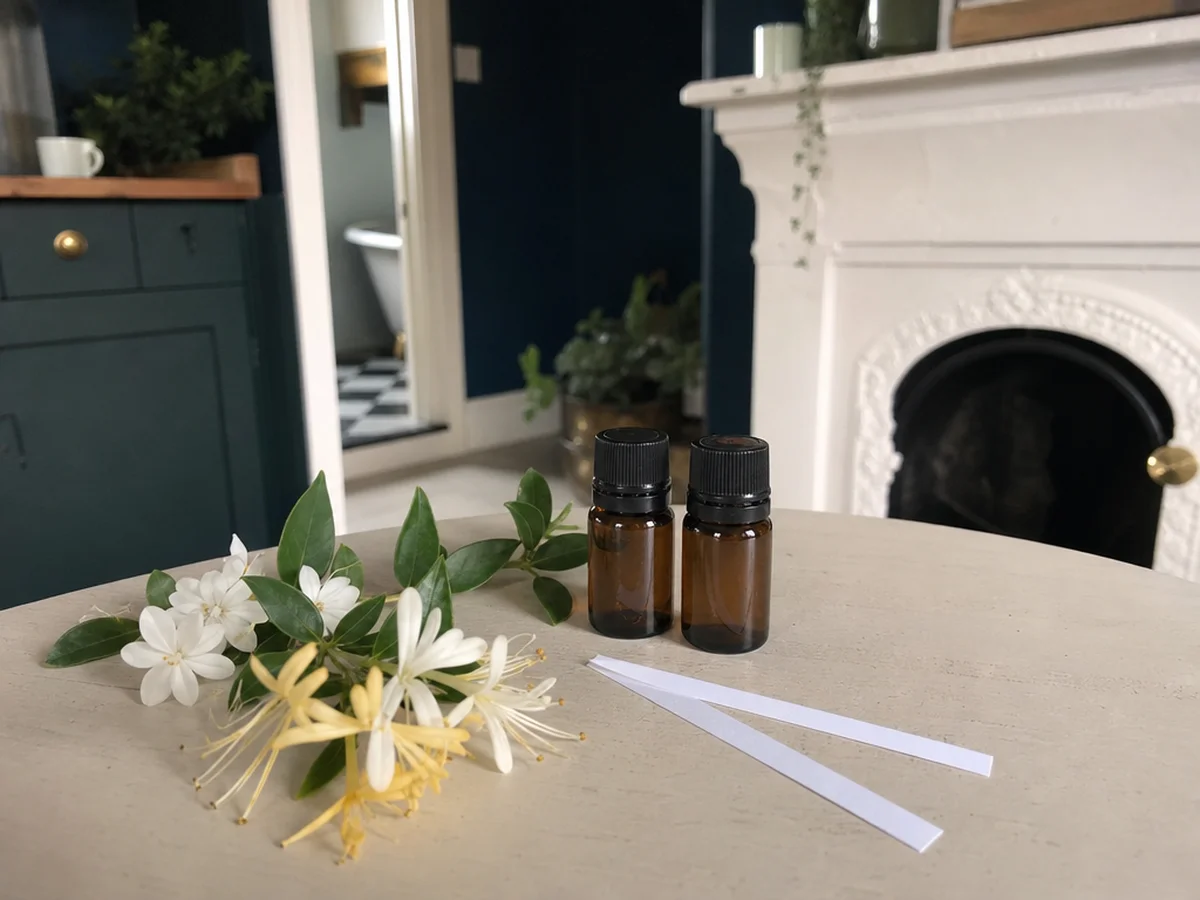
One caution for reading these figures. The honeysuckle data describe a flower concrete from a single older study, and the jasmine data are commercial reference ranges for finished absolute. They are not like for like, so treat them as a sketch of direction rather than a comparison table.
"Jasmine" is more than one material
ScenTree lists two separate commercial jasmines. Grandiflorum is the classic. Sambac is greener, with farnesene at about 20% to 25% and benzyl acetate at 15% to 20%, and ScenTree notes that autumn-harvested sambac flowers read as denser and more animalic because of their indole. So a brief that simply says "add jasmine" leaves a lot open. If you are blending, name the species and ask your supplier which one it is.
Honeysuckle, for our part, is a single-species material: every batch comes from Lonicera japonica alone. Flowers of the same species still vary by origin, as a study of dried buds from four regions of China showed, so keep notes on your lot.
A small fact about how much flower is in the bottle
An absolute is a tiny fraction of the plant. ScenTree gives jasmine grandiflorum concrete at about 0.5% of the fresh flower weight, with the absolute making up 50% to 70% of that concrete. The same kind of arithmetic is why a floral absolute is used a drop at a time, and why a trace of ours can perfume a whole blend.
How we would choose
- Choose honeysuckle when you want a green, nectar-like flower in front, at low levels.
- Choose jasmine when you want the denser, indole-rich white floral, and buy it from someone who documents which species it is.
- Use both when you want honeysuckle's freshness lifting a jasmine heart. No published conversion exists between the two, so work it out on paper strips.
For the strip test, make a stock of each at the same percentage by weight in the same carrier (our 10% dilution article shows the method). Smell each alone, then together at your planned ratio, at the start, after an hour and the next morning, and write down words like green, nectar, dense or animalic. If the honeysuckle strip loses its character next to jasmine, that is useful information about your formula. A supplier guide gives 10% to 15% as a typical total scent load for roll-on and solid perfume, so remember that each absolute shares that load, and honeysuckle's own ceiling is our 0.5% to 2% skin guidance in the finished product.
Thinking in terms of a finished product
It helps to picture what you are making. A body oil or a solid perfume will carry a floral differently than a candle, and a delicate material can vanish in a crowded blend. We would use honeysuckle where we want a fresh floral with room around it, such as a light body oil, a hair mist or a linen spray, and keep jasmine in mind for something richer and slower. That is a recommendation, not a rule, and your own strips will tell you more than we can.
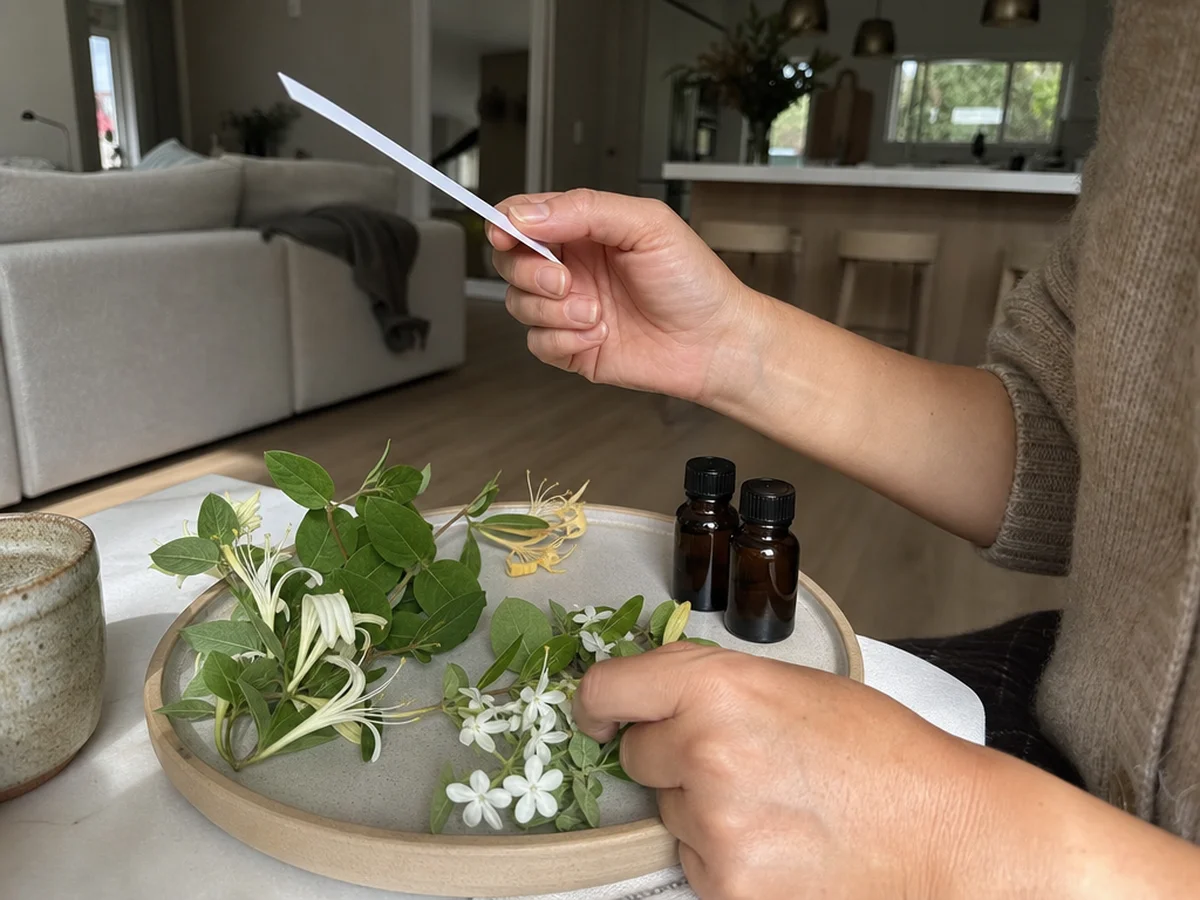
Whichever you pick, keep your notes short and dated. A line like "honeysuckle 1%, jasmine 0.5%, still green after an hour" will be worth far more next month than a memory of how it seemed.
Paperwork, either way
ScenTree notes that jasmine grandiflorum absolute is covered by an IFRA Standard for dermal sensitization, so ask your supplier for the current certificate. Natural does not mean unrestricted, and the same applies to honeysuckle: if you sell what you make, check the IFRA position for your product category. Our IFRA article shows what we could check, and the allergy article explains how sensitization works. Anyone with a known fragrance allergy should ask a dermatologist or allergist first.
If you do pair them, our blending article goes into ratios. Either way, let your nose decide, and keep a note of which lot was which.
Honeysuckle Absolute
Honeysuckle Absolute from our own shop, in sizes from 0.5 oz to bulk.
From $13.99
Shop Now →Sources & Further Reading
- ScenTree, Jasmine Grandiflorum absolute
- ScenTree, Jasmine Sambac absolute
- Shang et al. 2011, Lonicera japonica Thunb.: ethnopharmacology, phytochemistry and pharmacology (J Ethnopharmacol 138(1):1-21)
- Ning et al. 2025, Molecules 31(1):4, Lonicerae japonicae Flos across four origins
- Nature's Garden, How Much Fragrance Oil to Use (Load & Safety)