Honeysuckle Absolute vs Fragrance Oil: Which Suits You?
If you love the smell of honeysuckle, you can get there two ways: an absolute pulled from the flowers, or a fragrance oil composed to smell like them. They are different materials with different strengths, and the right one depends on what you are making and what paperwork you need. We sell only the absolute, so we are not neutral, but there are jobs where a fragrance oil is the better tool and we will say which.
Honeysuckle Absolute
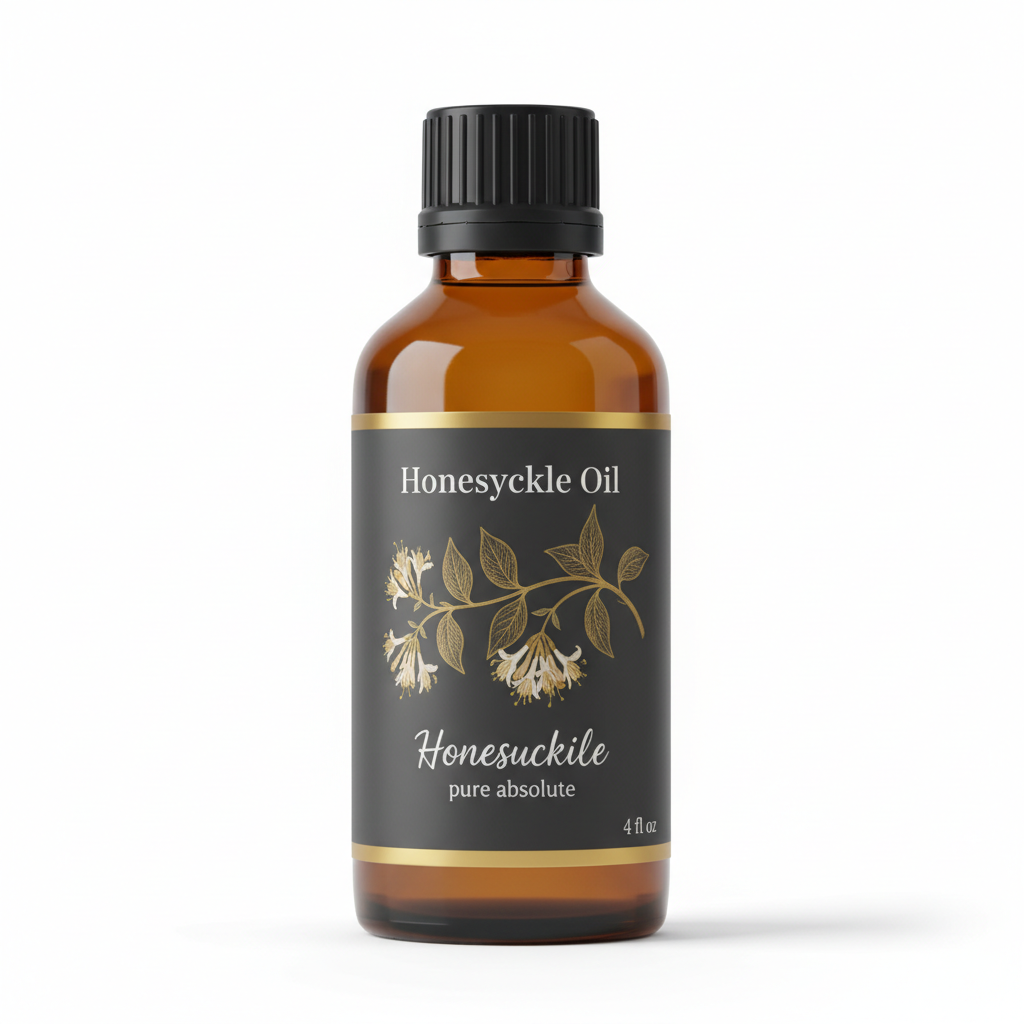
Our own Honeysuckle Absolute, in sizes from 0.5 oz to bulk.
From $13.99
Shop Now →What each one is
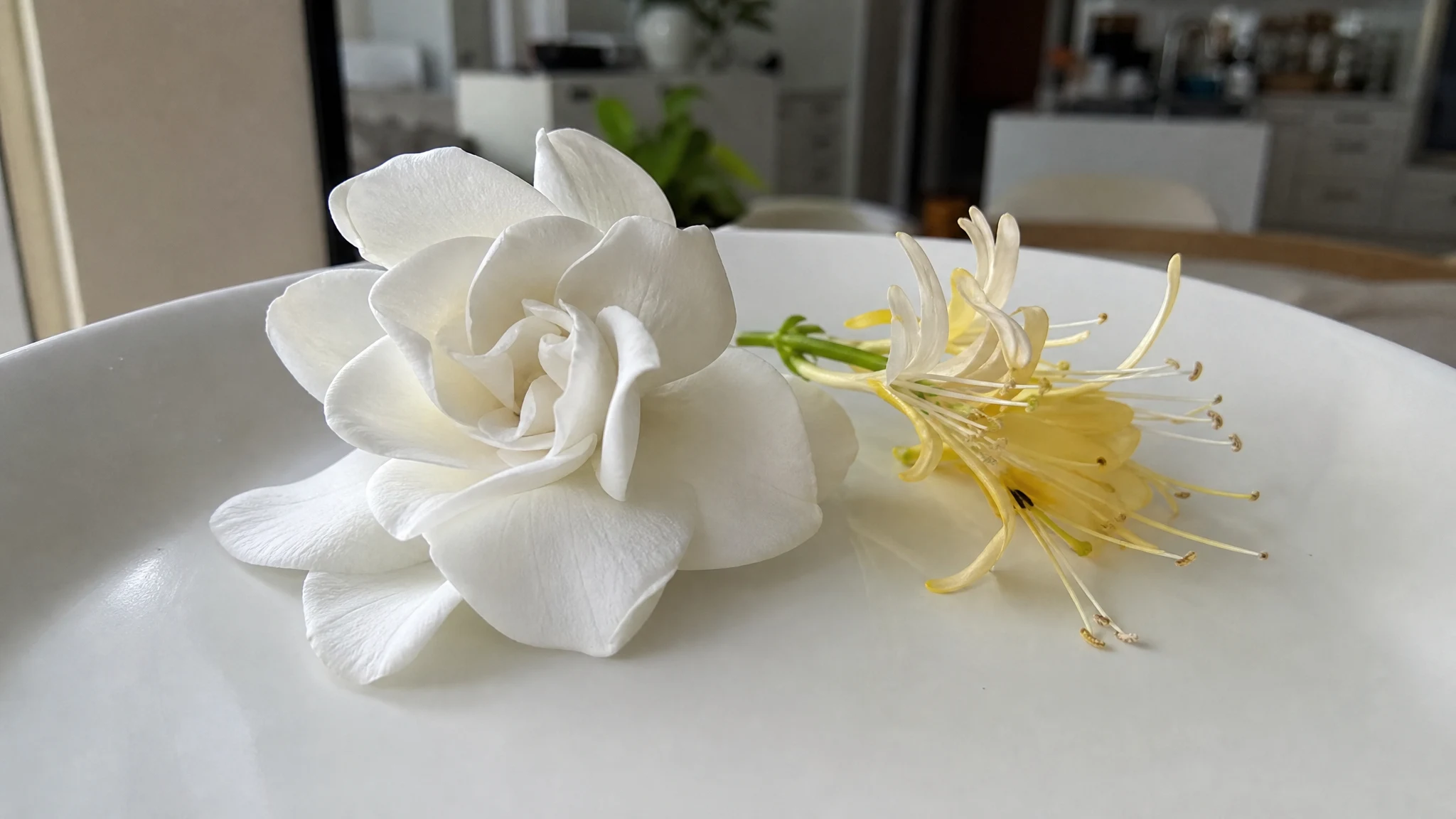
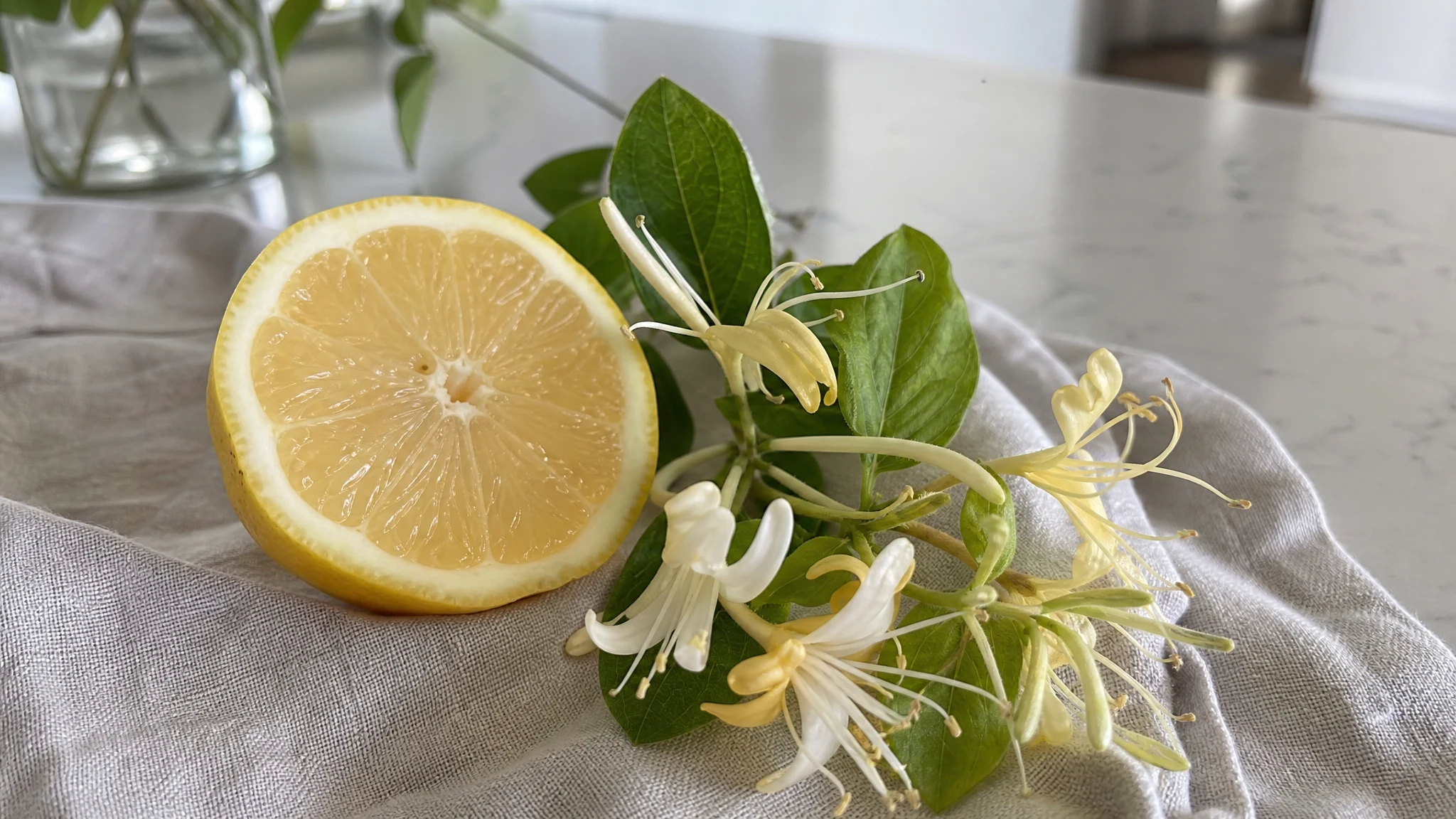
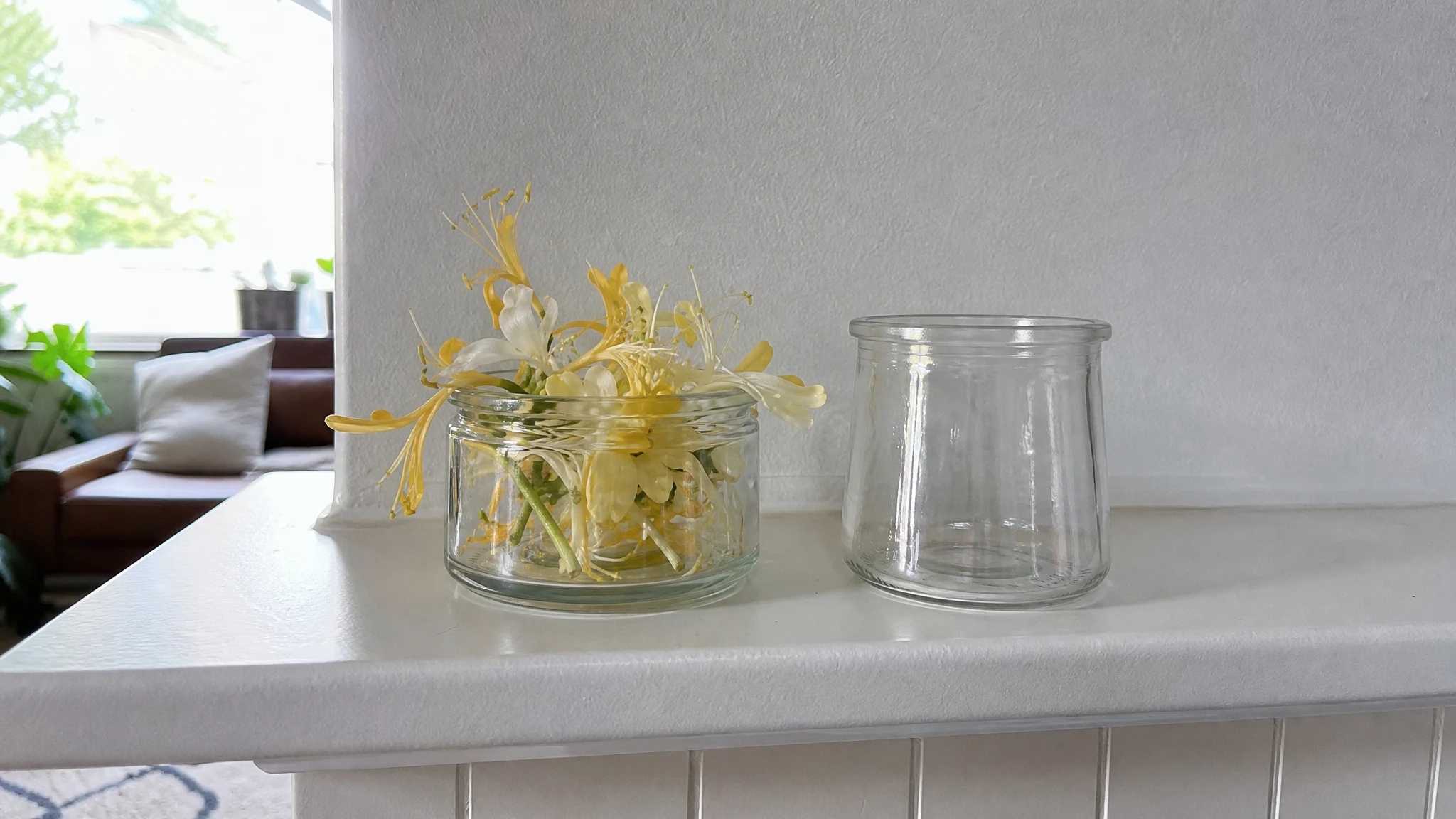
Our absolute comes from the flowers of one species, Lonicera japonica. A hydrocarbon solvent, in practice hexane, is run through the blossom and drawn off to leave a concrete, the concrete is washed in high-proof ethanol and chilled, and the filtered result is the absolute. It is sold neat, and we describe the scent as nectarous, lush and green-floral, like the living vine, with a soft jasmine-adjacent warmth.
A fragrance oil is a compounded scent. "Honeysuckle" tells you the smell it was built to have, not what it was built from. The FDA's page on fragrances in cosmetics notes that fragrance ingredients can be listed simply as "Fragrance", that the labeling law cannot force a company to disclose trade secrets, and that the agency lacks the same authority to require allergen labeling for cosmetics that it has for food. So a scented product label will often not say what the scent is made of. That does not make it a worse product, only a different one. Our guide to reading a honeysuckle oil label shows how to tell which you are looking at.
Where they differ
Repeatability is the first difference. An extract follows the plant. Two cultivars of Lonicera japonica studied in 2022 each gave 243 volatile compounds, yet 153 differed between them, and methyl anthranilate was about 154 times higher in the strongly scented one. A formula can be written down and rebuilt, so as a matter of reasoning, a fragrance oil supplier can aim for a very consistent scent from one bottle to the next.
Paperwork is the second. Craft suppliers commonly provide an IFRA certificate for each fragrance oil, which states maximum use levels by product type; one major supplier says every one of its oils comes with one. For our absolute, we publish a Certificate of Analysis for one batch, and it carries no IFRA statement.
Use rates are the third, and they cannot be swapped between materials. That supplier lists candles at 6% to 10% of wax weight, cold process soap at 3% to 6% of oils and butters, and lotion at 0.5% to 3% of the batch. Those describe fragrance oils. Our guidance for skin use of the absolute is 0.5% to 2% in a carrier, patch test first, which is our guidance for general skin use and not an IFRA limit. Our IFRA article explains what we could check.
Where a fragrance oil makes sense
If you are making candles or soap, particularly to sell, we would start with a fragrance oil that comes with a use-limit certificate for that product type. A 250 g candle at 6% needs 15 g of scent, about half of a 1 oz bottle of our absolute, so even test batches take real material. Our first-bottle article works through those grams. If you do want to try the absolute in wax or soap, our soap recipe and wax comparison set out the reasoning.
Where the absolute earns its place
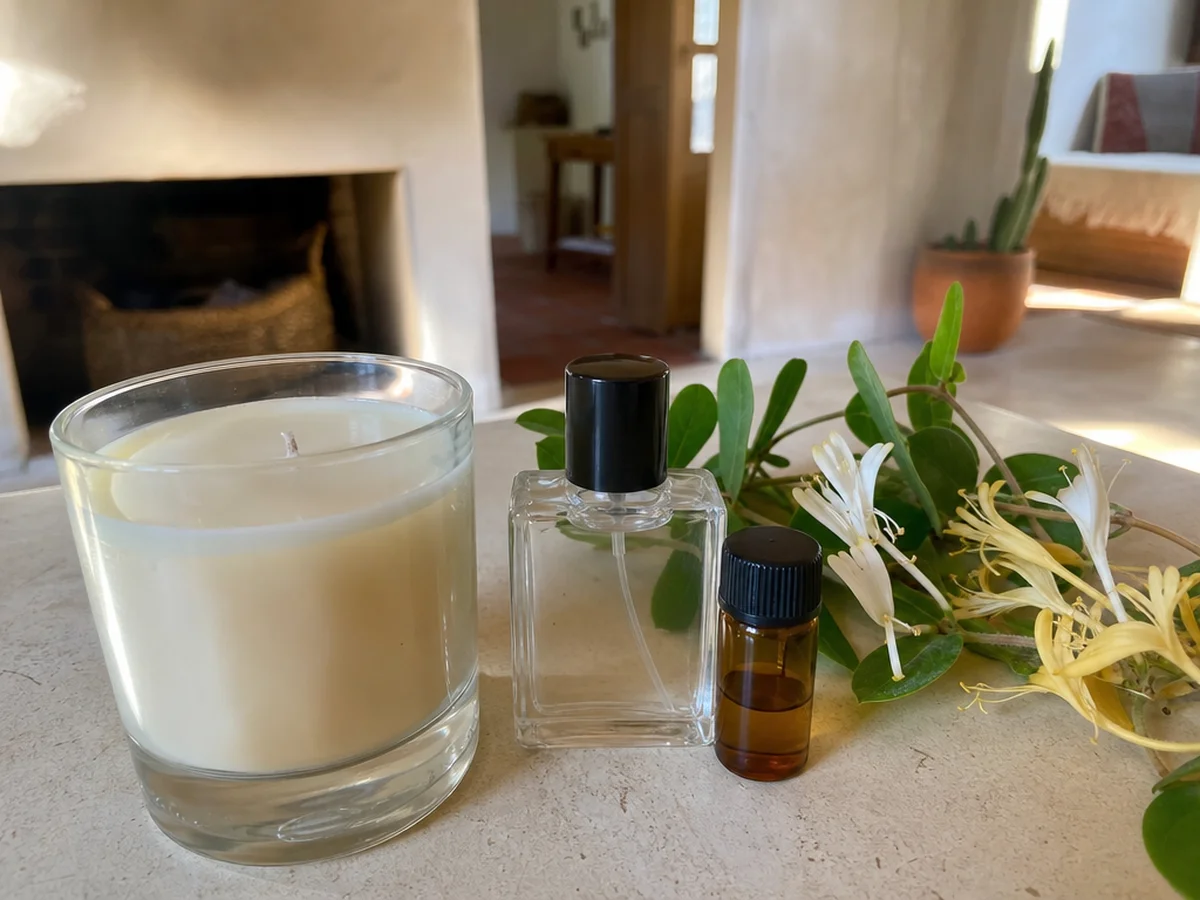
If your reason for wanting honeysuckle is that the scent comes from honeysuckle flowers, only an extract answers that, and the absolute is the one we sell. If you only care about the smell, either can do it, and the fairest test is to put both on paper strips at the same dilution and smell them a day apart. We found no published head-to-head comparison, so taste is the judge. For perfume oils, solid perfumes and body oils, the absolute is used at low levels in a carrier, so a small bottle goes a long way.
A side-by-side at the kitchen table
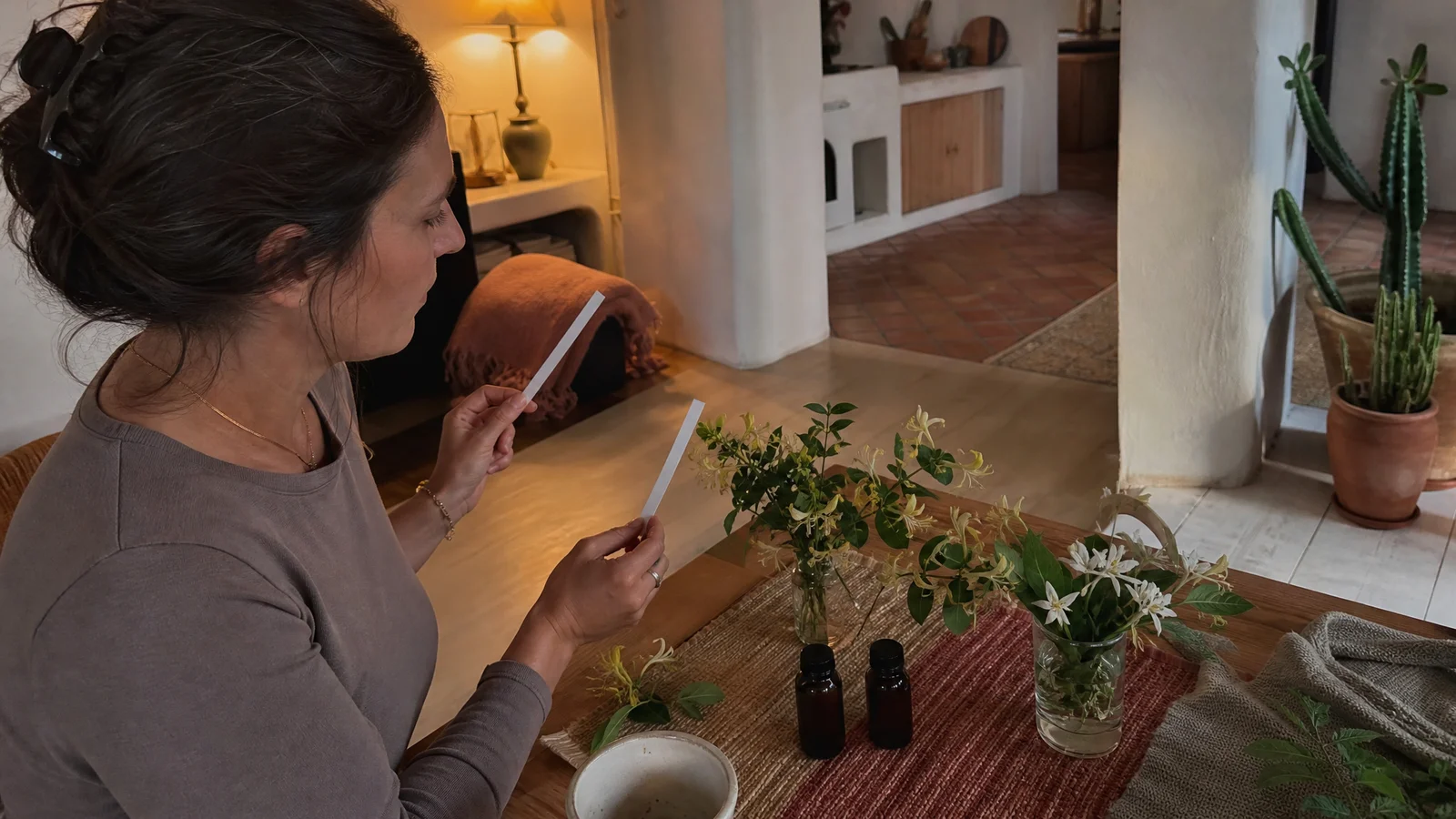
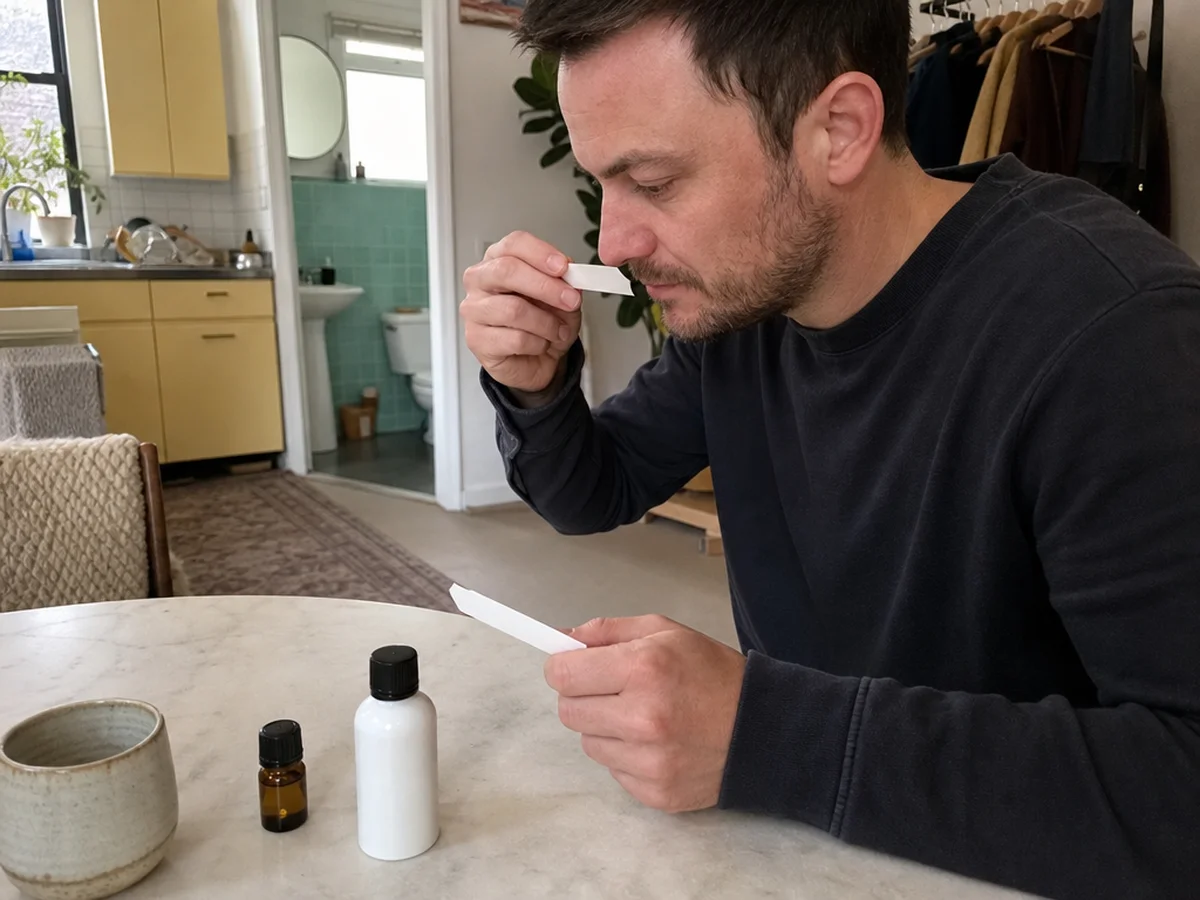
If you want to decide for yourself, set it up properly. Use two paper strips and label each with the material and the time. Dilute both to the same strength, dip them to the same depth, and smell at the start, after an hour and the next morning. Put them in the same light, away from food and cooking smells. Write down words, not scores. You may find you prefer one for the first minute and the other for the last hour.
Our honest advice
We run a one-product business, so we are glad to say when the other tool fits. If you want a ready-made scent with a use-limit certificate for a candle or a bar of soap, a fragrance oil is simple. If you want to explore the flower itself, a drop at a time, in a roll-on or a body oil, then the absolute is a lovely thing to own. Tell us which you are making and we are happy to point you to the right size or the right idea.
Natural does not mean no sensitivities
Safety does not track "natural" or "synthetic". A dermatology reference estimates that about 1% of adults have a fragrance allergy, and reactions can take hours or days to appear, so a patch test on a small area is sensible with either material. The FDA's page on aromatherapy likewise says a plant origin gives no exemption from safety requirements.
Choose by the job, and you will rarely go wrong with either.
Honeysuckle Absolute
Honeysuckle Absolute from our own shop, in sizes from 0.5 oz to bulk.
From $13.99
Shop Now →Sources & Further Reading
- US Food and Drug Administration, Fragrances in Cosmetics
- US Food and Drug Administration, Aromatherapy
- Li J et al., 2022. Integrated volatile metabolomic and transcriptomic analysis provides insights into the regulation of floral scents between two contrasting varieties of Lonicera japonica. Front Plant Sci 13
- Nature's Garden, How much fragrance oil to use: load and safety (4 September 2026)
- DermNet, Fragrance allergy