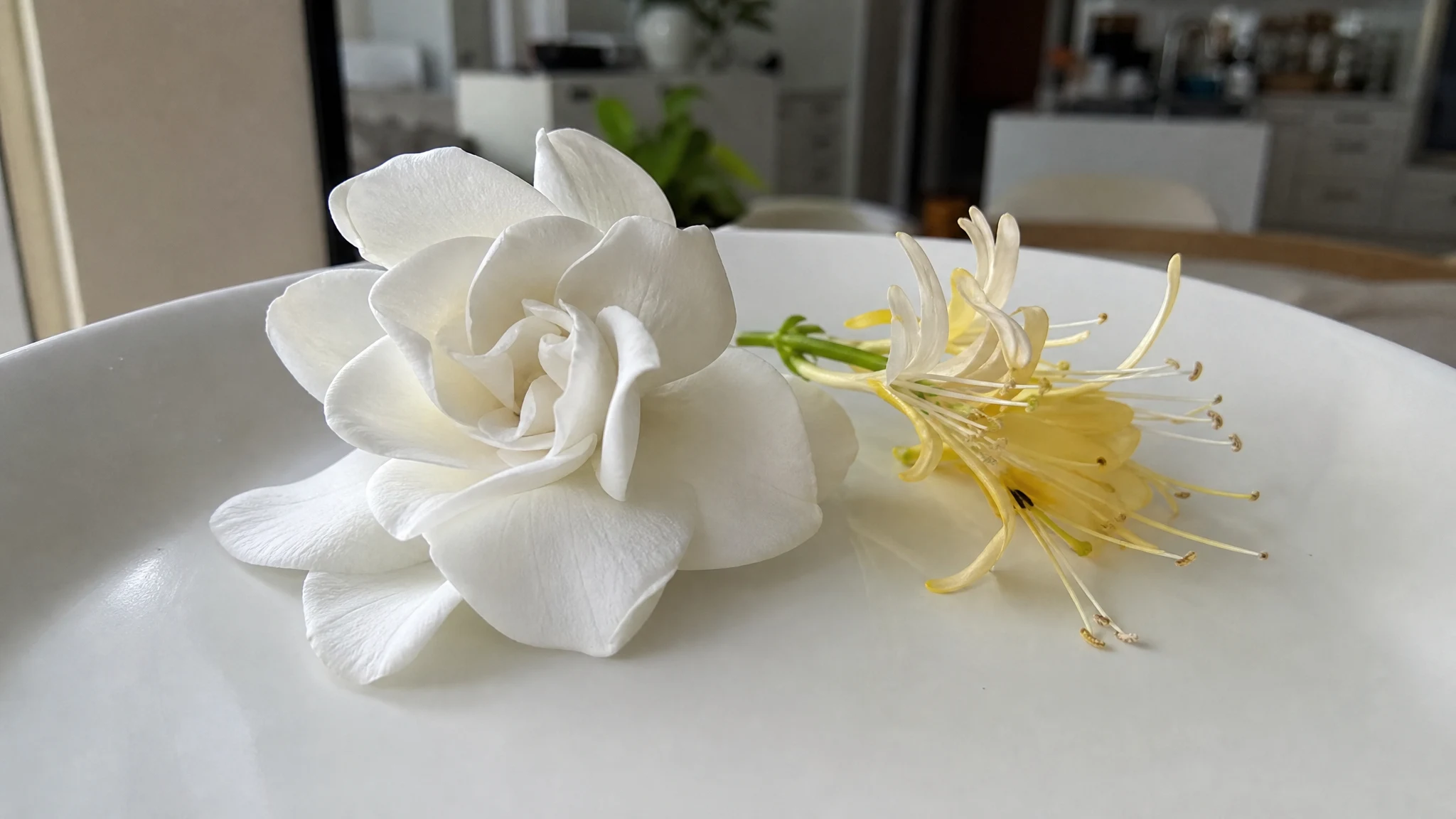
Honeysuckle vs Gardenia Absolute: Which White Floral?
Ask a perfumer to name the great white florals and honeysuckle and gardenia will both come up, usually in the same breath as jasmine and tuberose. They share a creamy, sweet, slightly green character, and it is tempting to treat them as substitutes. The chemistry papers say the picture is a little more interesting than that.
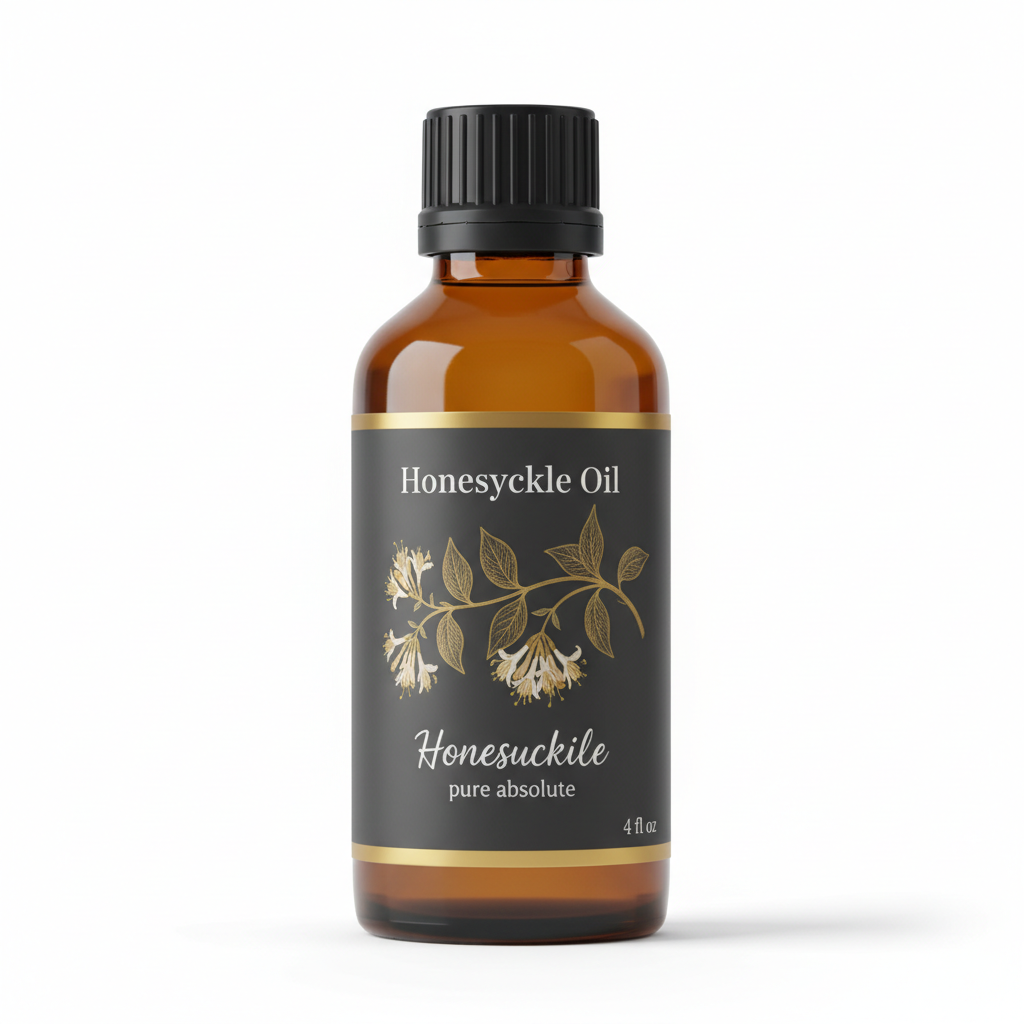
Honeysuckle Absolute
Our own Honeysuckle Absolute, in sizes from 0.5 oz to bulk.
From $13.99
Shop Now →What the studies measured
For honeysuckle, the main review of Lonicera japonica reports about 150 compounds in a flower concrete, with linalool, (Z)-jasmone, (Z)-jasmin lactone and methyl jasmonate as markers, and finds that the living flowers smell strongest in the middle of the night. For gardenia, a 2025 study sampled the air around one cut, blooming flower and reported 40 volatiles, led by beta-ocimene and linalool, with alpha-farnesene next.
These are very different kinds of measurement: one is an extract and the other is the air around a single flower, in different units, so you cannot read across and say that one is richer or sweeter. What you can say is that linalool appears in both, a floral, slightly fresh note that PubChem describes as reminiscent of bergamot and lavender, which explains the family resemblance. Honeysuckle also carries jasmone, which PubChem describes as jasmine-like. Even within the species, scent varies: two honeysuckle cultivars grown in one nursery each yielded 243 volatiles, yet 153 of them differed in amount.
Two different moods
If you smell a lot of florals you start to sort them by mood. Gardenia tends to feel round, creamy and a bit heavy, the sort of flower you imagine in a warm, closed room. Honeysuckle feels more open and outdoorsy, with a nectar sweetness and a green edge that suits the idea of a vine over a garden wall. Those are impressions, not measurements, and your nose may sort them differently, which is the whole reason to try them side by side.
How we describe ours
Our honeysuckle absolute is made from Lonicera japonica flowers alone. A hydrocarbon solvent, in practice hexane, is circulated through the blossom to leave a concrete, the concrete is washed in high-proof ethanol and chilled, and the filtered result is the absolute. We describe the scent as nectarous, lush and green-floral, like the living vine, with a soft jasmine-adjacent warmth, and it sits in the heart of a blend. The Certificate of Analysis we publish for one batch lists a relative density of 0.989, a refractive index of 1.509 and an optical rotation of +1.88 degrees, each inside a wide standard window; if you need GC-MS data, ask us in writing before you order.
We sell honeysuckle only, so for gardenia you would go to a perfumery-supplies seller. Our advice there is the advice we would want for any floral: smell it before committing to a large size.
Choosing for a project
Here is how we would decide.
- If the project is about honeysuckle, use honeysuckle. Nothing in the chemistry lets gardenia stand in for it, and our scent profile describes what to expect.
- If you want a richer, heavier white floral, put a sample of gardenia beside our 0.5 oz or 1 oz size on a blotter and let your nose choose. Our jasmine comparison covers the other near neighbour.
- If you are building an accord, remember that honeysuckle blends well with bergamot, sweet orange, neroli, ylang ylang, cedarwood and sandalwood.
A simple blotter test
If you can get a sample of both, set up a quiet comparison. Use plain paper strips, label each with a pencil, and keep them in separate spots so the scents do not mix. Smell one, then the other, then take a break and smell some coffee beans or just the crook of your own elbow to reset. Come back after ten minutes, after an hour, and the next morning, and write down a word or two each time, such as creamy, green, sweet, heavy, light.
Pay attention to which strip you reach for again without thinking. That is usually the one that suits what you are making. If both seem right, try them together at different ratios on separate strips, with the more delicate one in the larger share, and see whether the combination keeps the best of each or turns muddy.
Matching the flower to the product
A scent behaves differently in a candle, a body oil and a room spray. Heat can flatten some florals, a carrier oil can soften them, and a wax can hold them close. For that reason we would settle the choice with the product in mind. Try the flower in the form you plan to make, in the tiniest batch you can manage, before committing to the bigger jar.
Reading a listing for either flower
The word "gardenia" or "honeysuckle" on a bottle can refer to a plant, a scent type or a fragrance oil, so the botanical name matters. The fragrance industry's naming scheme for natural materials marks plant part and process using ISO 9235 terms: F for flower, and absolute and steam-distilled oil have separate codes. A listing that names neither plant nor process is worth a question. For honeysuckle our steam distillation article explains why "essential oil" on a label deserves one. FDA also notes that fragrance ingredients can be listed simply as "Fragrance" on a finished product, so a cosmetic label rarely tells you which flower is inside.
Both flowers earn their place on a perfumer's shelf, and the better choice is the one whose scent you have smelled on a blotter.
Honeysuckle Absolute
Honeysuckle Absolute from our own shop, in sizes from 0.5 oz to bulk.
From $13.99
Shop Now →