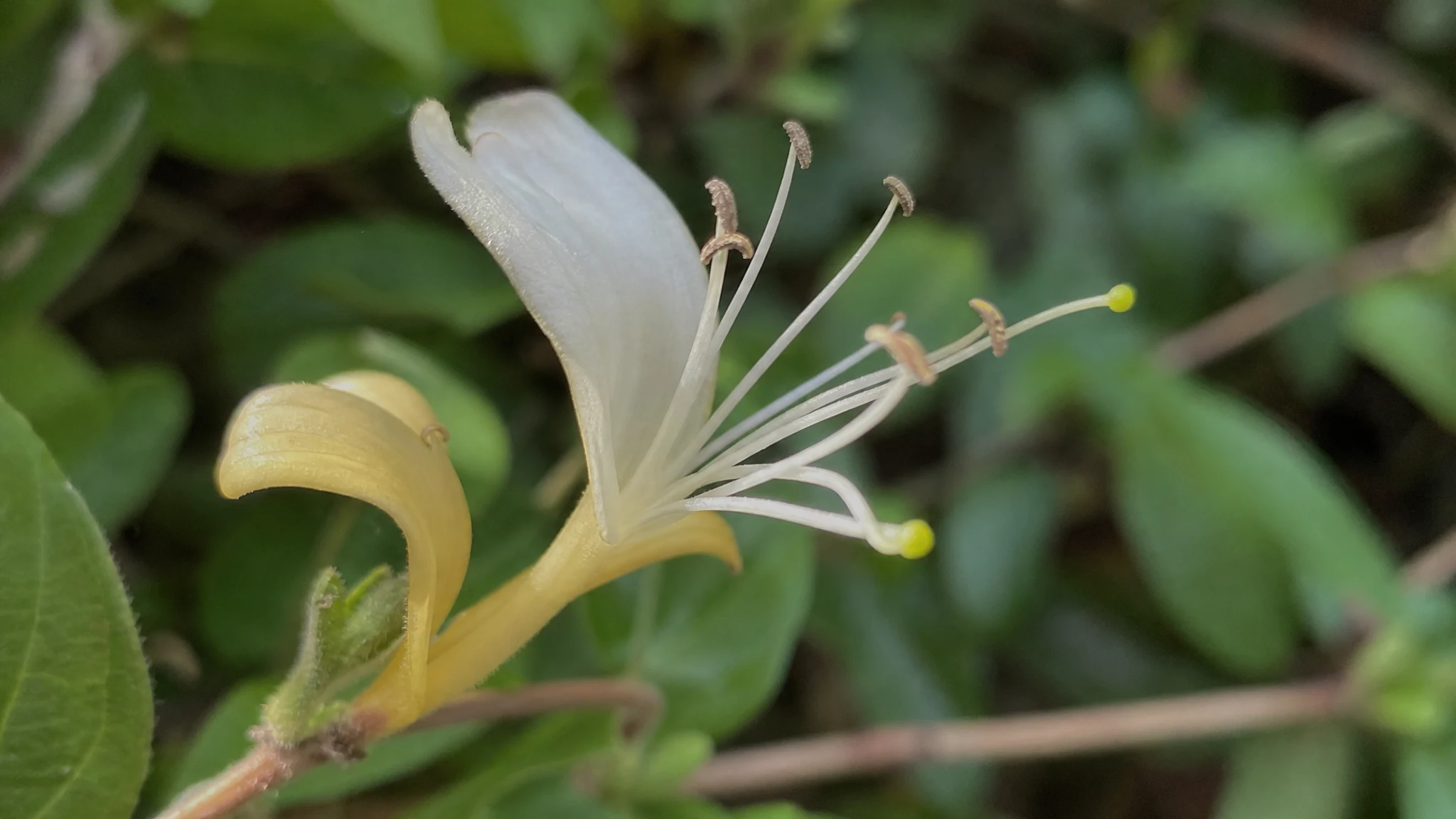
What Does Honeysuckle Smell Like? A Scent Profile
Ask ten people what honeysuckle smells like and you will get ten answers, and most of them will be about a childhood fence. That is part of the charm. It is also why the question needs a little untangling, because the word covers a living flower, an absolute in a bottle, and the sweet floral note in countless candles and body sprays.
Honeysuckle Absolute
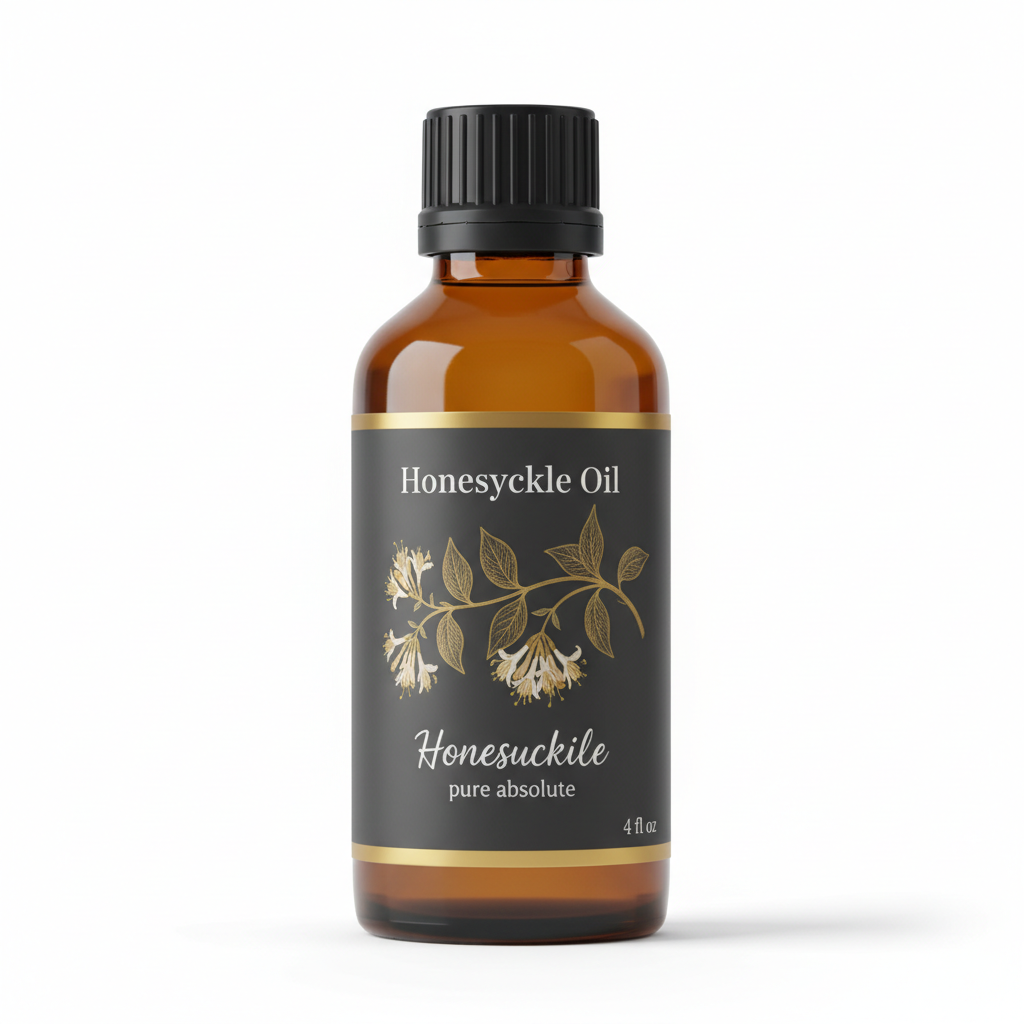
Our own Honeysuckle Absolute, in sizes from 0.5 oz to bulk.
From $13.99
Shop Now →How we describe our absolute
Ours is nectarous, lush and green-floral, like the living vine, with a soft jasmine-adjacent warmth. In perfumery terms we place it as a middle, or heart, note, which means it shows up after the first bright impression fades and carries the centre of a blend. A trace is enough to perfume a whole blend, so a small bottle goes a long way.
The green edge is what keeps it from being merely sweet. Think of walking past the vine on a warm evening rather than a sugary candle. We cover the difference in our piece on absolute versus fragrance oil.
The flower is a moving target
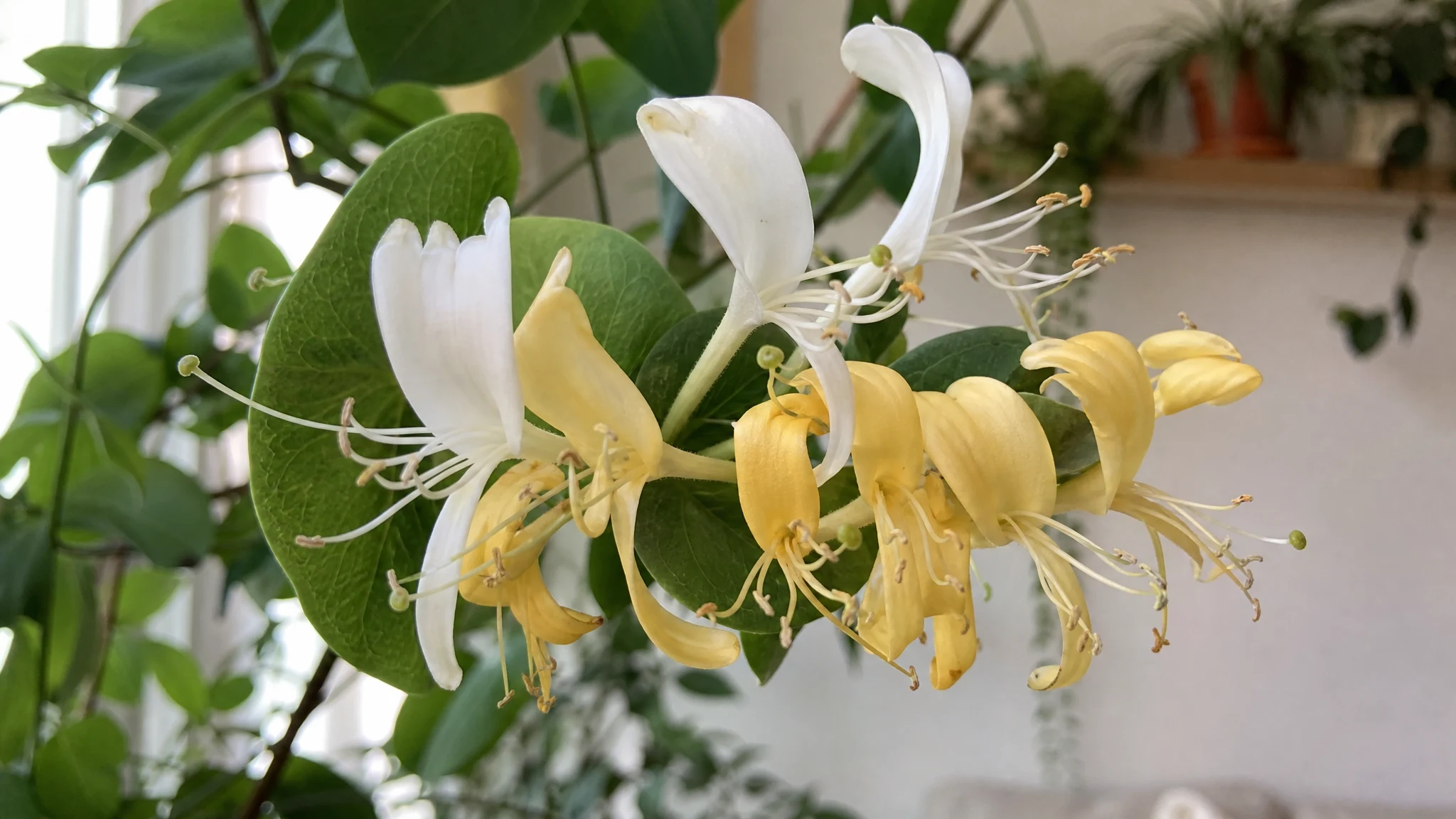
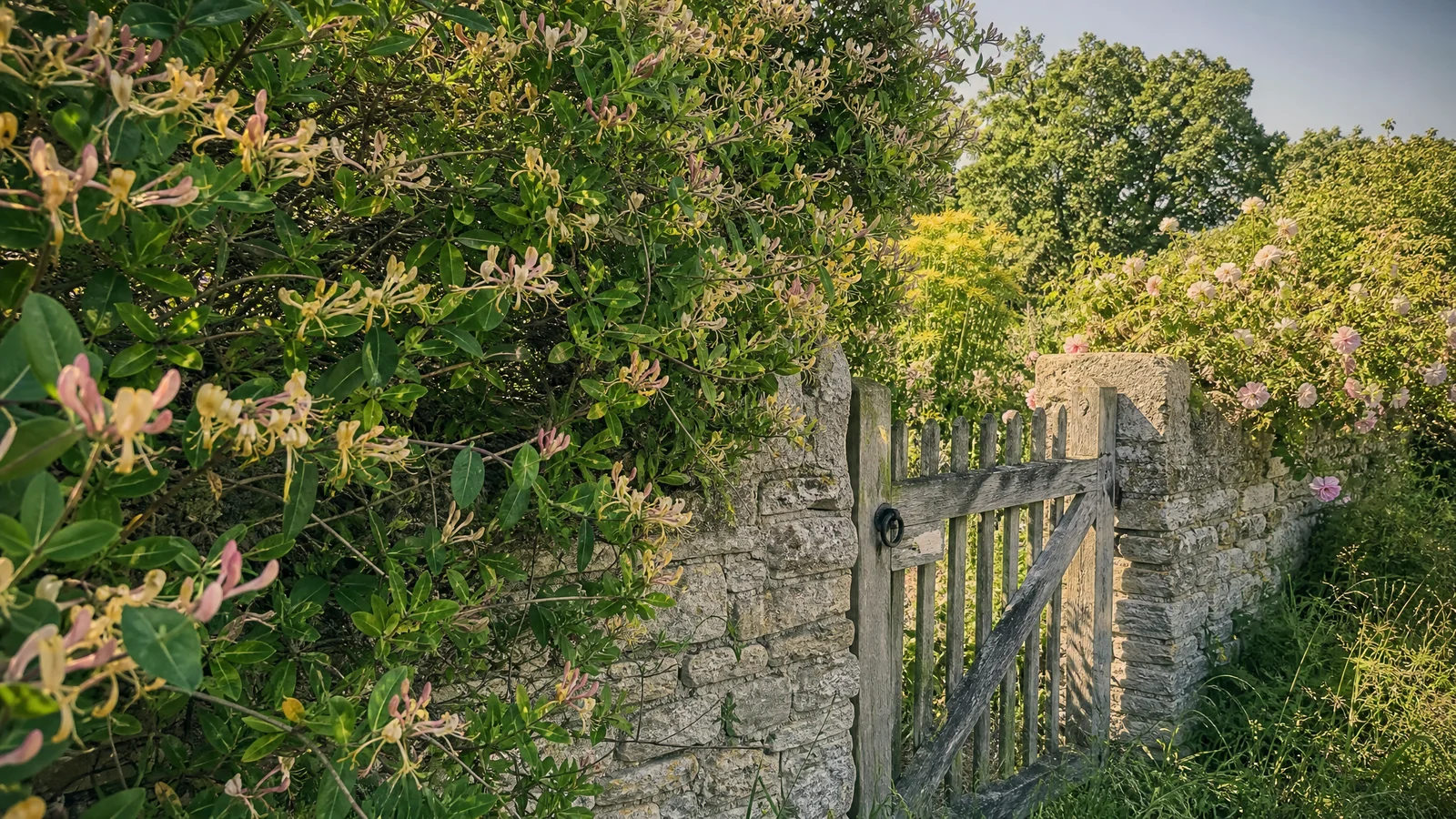
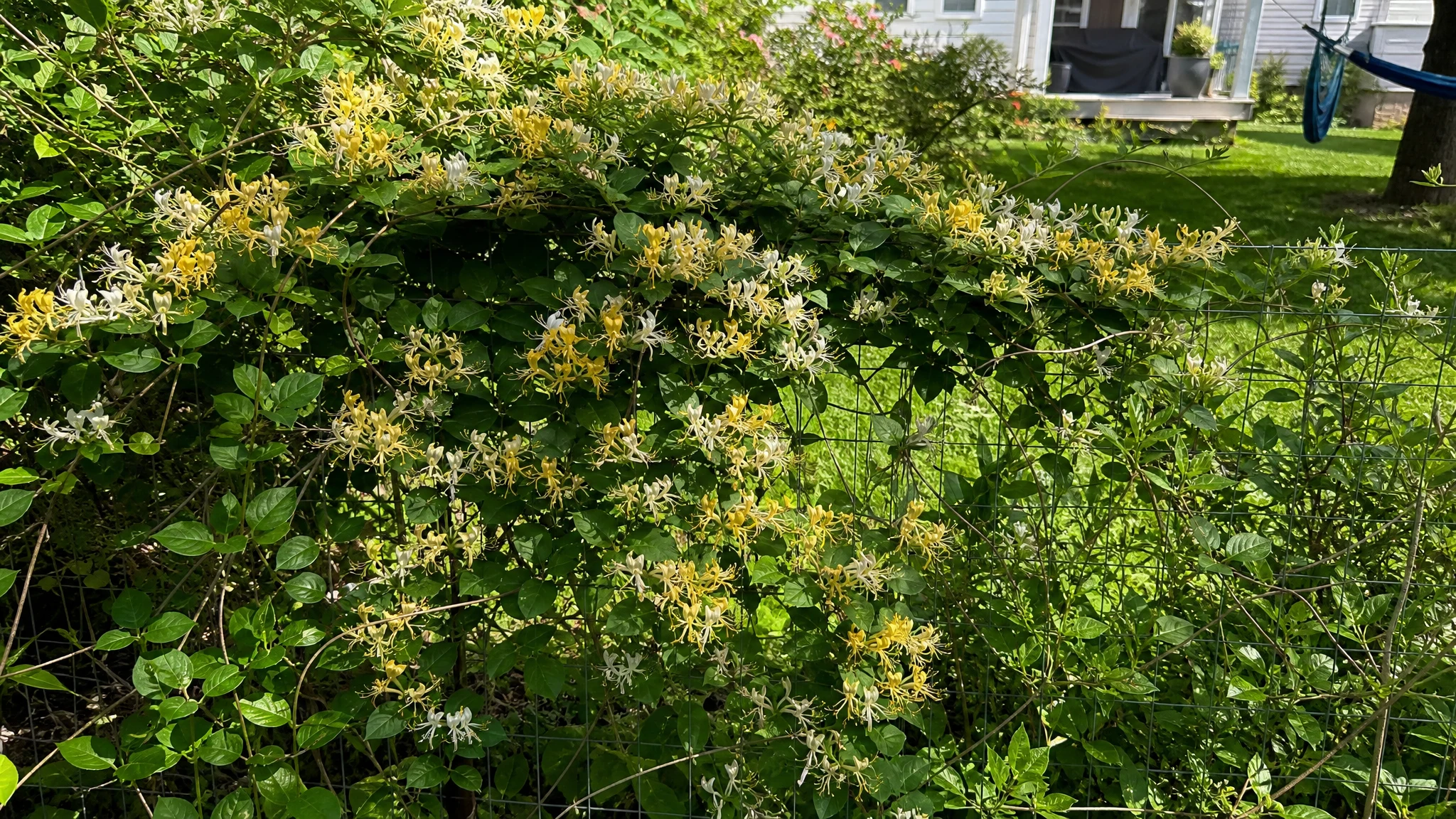
The living plant never smells the same twice. Researchers who followed Lonicera japonica flowers through their two or three days of life found that scent output peaked on the second night, which is one reason the garden version seems to grow more intense as the evening goes on. We dig into that in why honeysuckle smells stronger after dark.
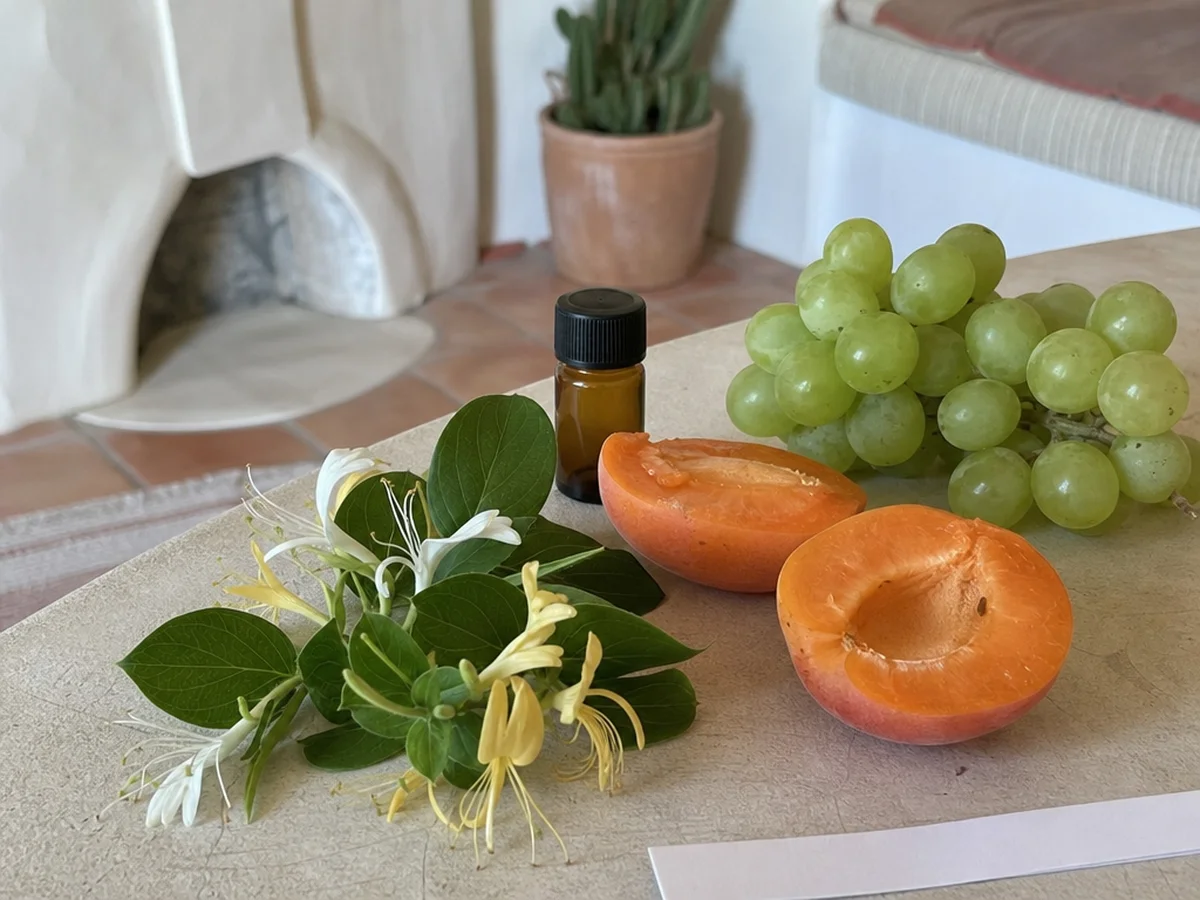
Variety matters too. A comparison of two cultivars of the same species found more than a hundred scent compounds differing between a strongly fragrant plant and a bland one, with methyl anthranilate over 150 times higher in the fragrant one. That compound is described in chemical references as grape-like and reminiscent of orange blossom, which gives a hint of where some of the sweetness comes from. So when someone says "honeysuckle smells like grape candy" and someone else says "like jasmine", both can be right about the plants they have smelled.
Where the familiar words come from
Chemistry references describe several compounds reported in honeysuckle in everyday terms: linalool as floral, a little like bergamot or lavender; jasmone as jasmine-like with a woody, citrusy edge; methyl jasmonate as sharp and long-lasting. We would not claim that a list of ingredients adds up to a smell, because a mixture of a hundred and fifty or so compounds behaves like a chord rather than a list of notes. Still, it is easy to see why honeysuckle sits so comfortably between jasmine and a green citrus-flower, and why we pair it in articles with jasmine and gardenia.
Honeysuckle in good company
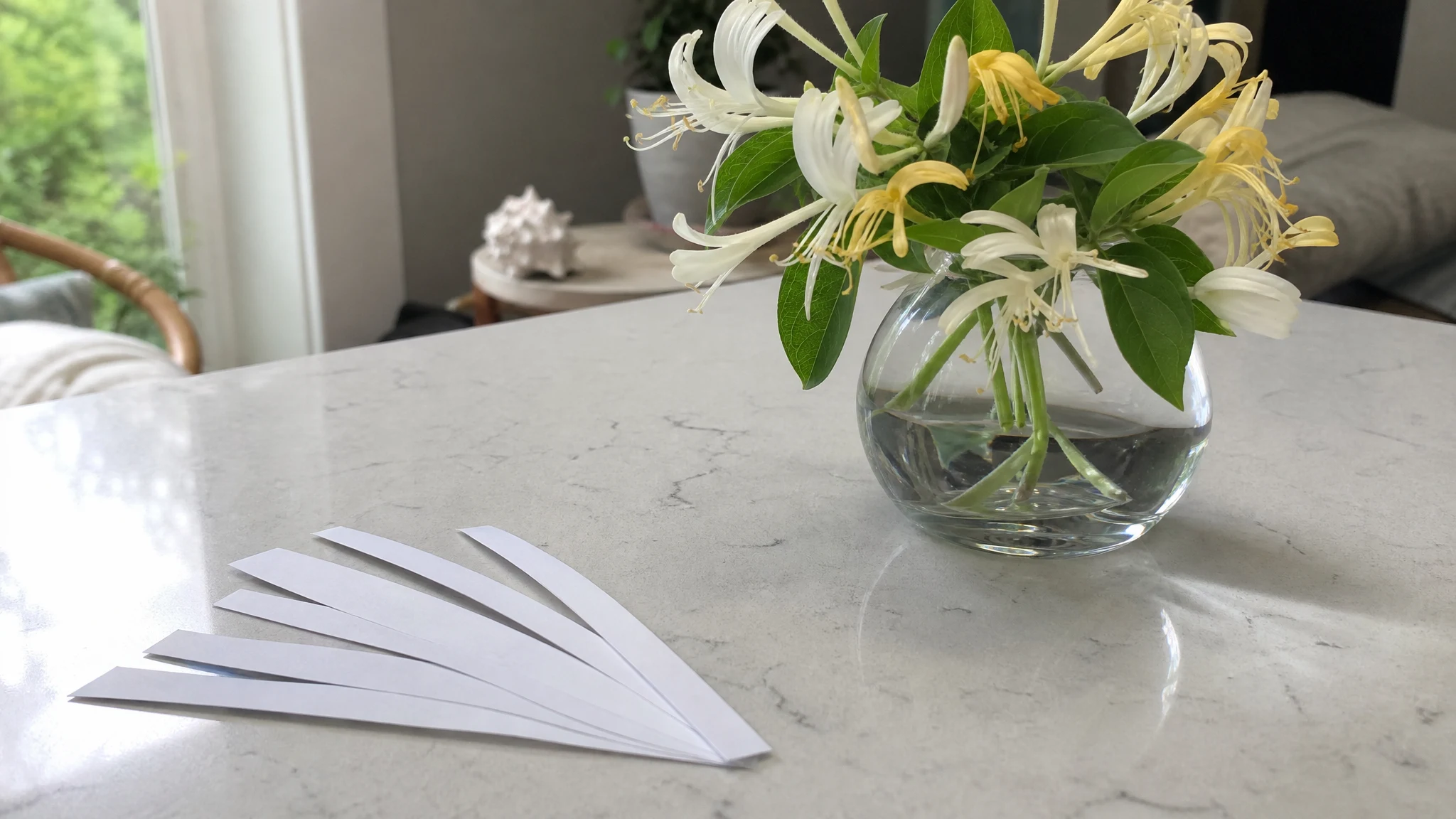
Our list of partners that blend well with it includes bergamot, sweet orange, neroli, ylang ylang, cedarwood and sandalwood, and it is easy to picture why. Citrus lifts the top of the blend and makes the sweetness feel brighter. Neroli adds a clean white-flower sparkle. Ylang ylang leans into the lush, creamy side. The woods give the whole thing something to stand on, so the floral does not float away. We do not sell any of those, but you will find them at a perfumery-supply shop, and a small dab of each on separate strips is a pleasant afternoon.
Words that help
If you struggle to describe a floral, borrow the words people use for food and weather. Is it honeyed or watery? Sticky or airy? Warm or cool? Does it smell like a closed room or an open window? Pick three words and write them next to the date. You will be surprised how useful that note is when you come back to the same strip a month later.
An evening ritual
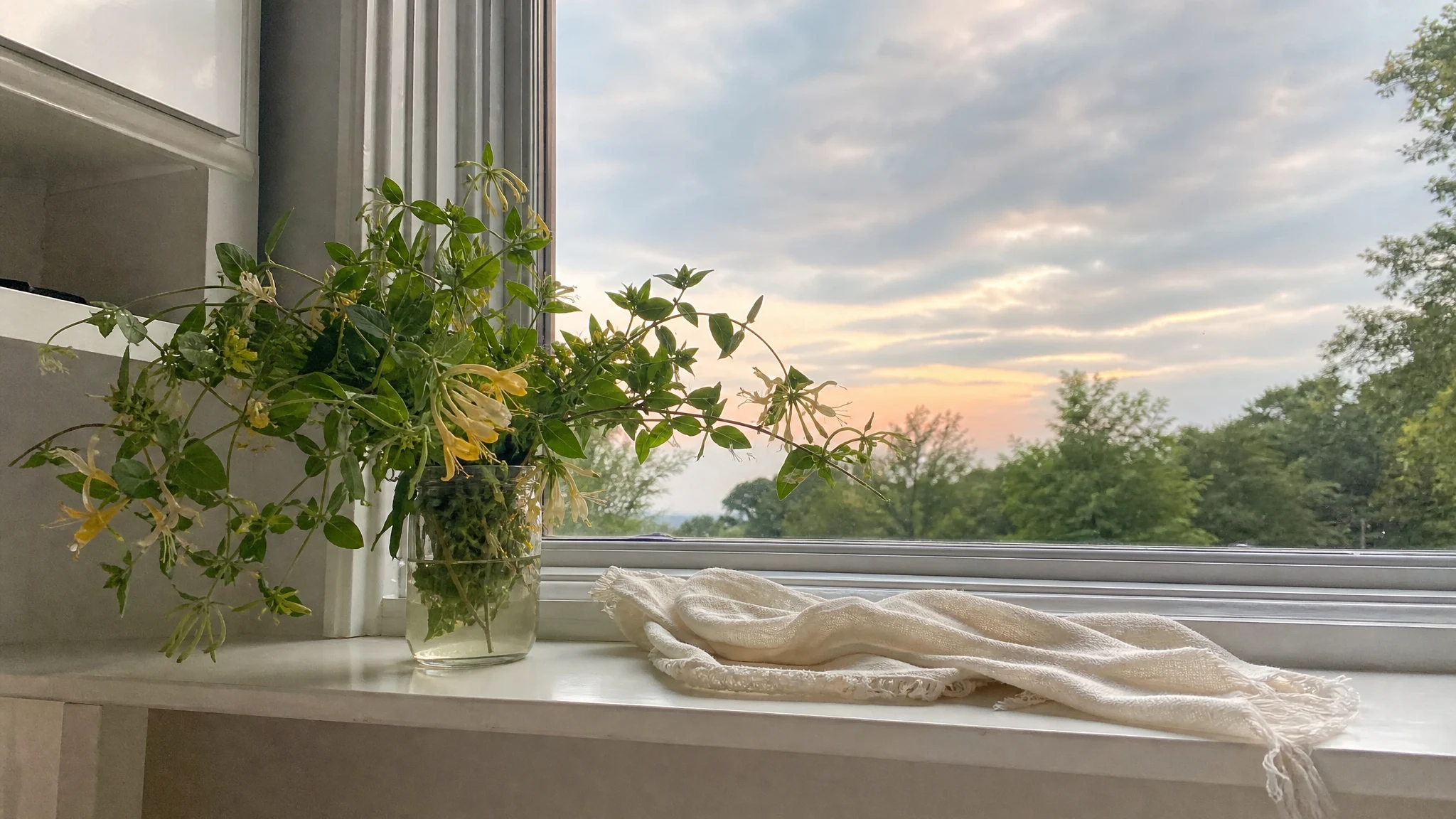
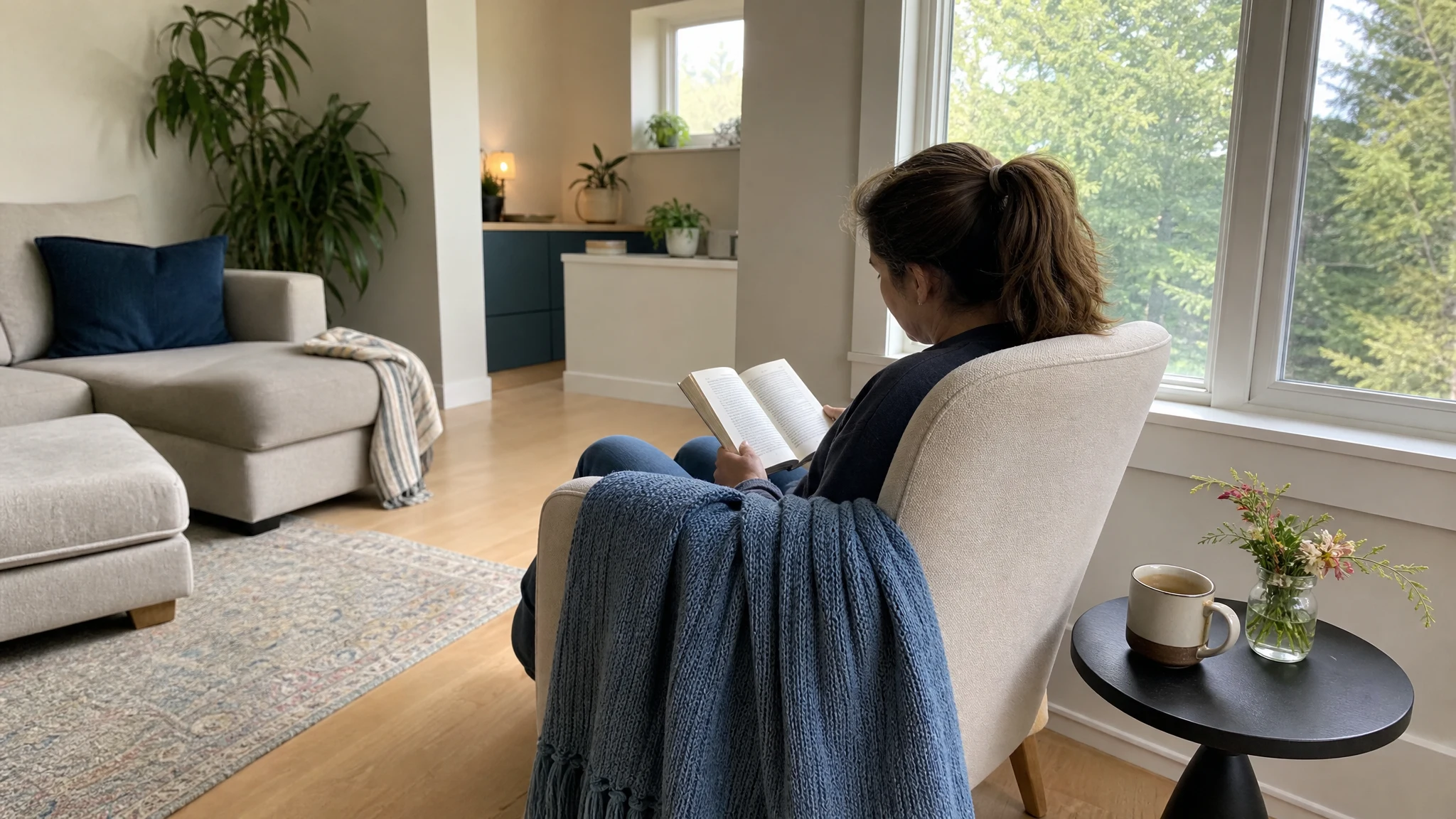
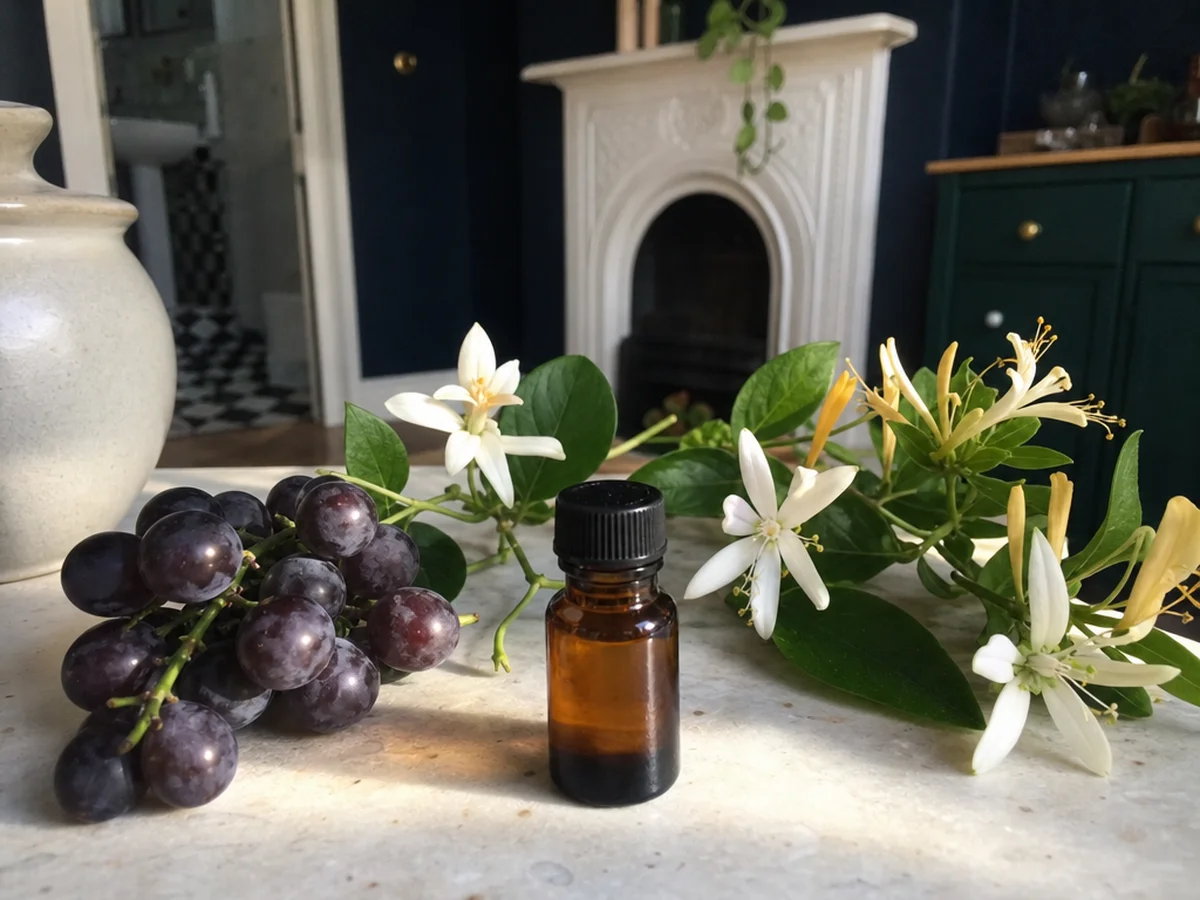
Honeysuckle is a flower of dusk, so try giving it that setting: dim light, quiet room, a strip you made an hour earlier. Notice whether the green or the sweet arrives first. There is no right answer, and that is the pleasure of it.
Why it is easy to love
Some florals are loud and others are shy. Honeysuckle manages to be sweet without being heavy, and green without being sharp, which is why people tend to remember it so clearly. It often takes them back to a particular fence or a porch, and that kind of memory is worth listening to when you decide how to use it.
Getting to know it properly
The best way to learn a floral is slowly, and a few habits help.
- Dilute before you sniff. Neat absolute is intense and thick, which flattens the nuances. Our 10% dilution guide shows how to make a working stock by weight.
- Use a paper strip and write the time on it. Come back after ten minutes, then an hour. The heart of a floral often arrives later than you expect.
- Keep a second strip nearby, perhaps a jasmine or a favourite honeysuckle scent, to give your nose a comparison.
- Jot down your own words before you read anyone else's, including ours.
- Take breaks. Your nose tires after a handful of strips.
That is also why we suggest starting with a 0.5 or 1 oz bottle: it is plenty to learn how the scent behaves in a blend before you decide how much you really need.
If the flower is new to you, try this. Smell it on a strip in the evening, in a quiet room, and see whether the green or the sweet comes first for you.
Honeysuckle Absolute
Honeysuckle Absolute from our own shop, in sizes from 0.5 oz to bulk.
From $13.99
Shop Now →Sources & Further Reading
- Feng, Wang, Luo and Huang (2023), Floral scent emission is the highest at the second night of anthesis in Lonicera japonica (Caprifoliaceae), Journal of Systematics and Evolution 61(3):530-537
- Li et al. (2022), Frontiers in Plant Science 13, cultivar volatile comparison in Lonicera japonica
- PubChem, methyl anthranilate (odor descriptions)
- PubChem, linalool (odor descriptions)
- Shang et al. (2011), J Ethnopharmacol 138(1):1-21