What Does Honeysuckle Symbolize? Devotion Explained
Ask what honeysuckle means and the answer comes quickly: devotion, lasting love, two lives twined together. It is a lovely idea, and when you trace it back it turns out to have a lovely and very specific source, which is simply how the vine grows.
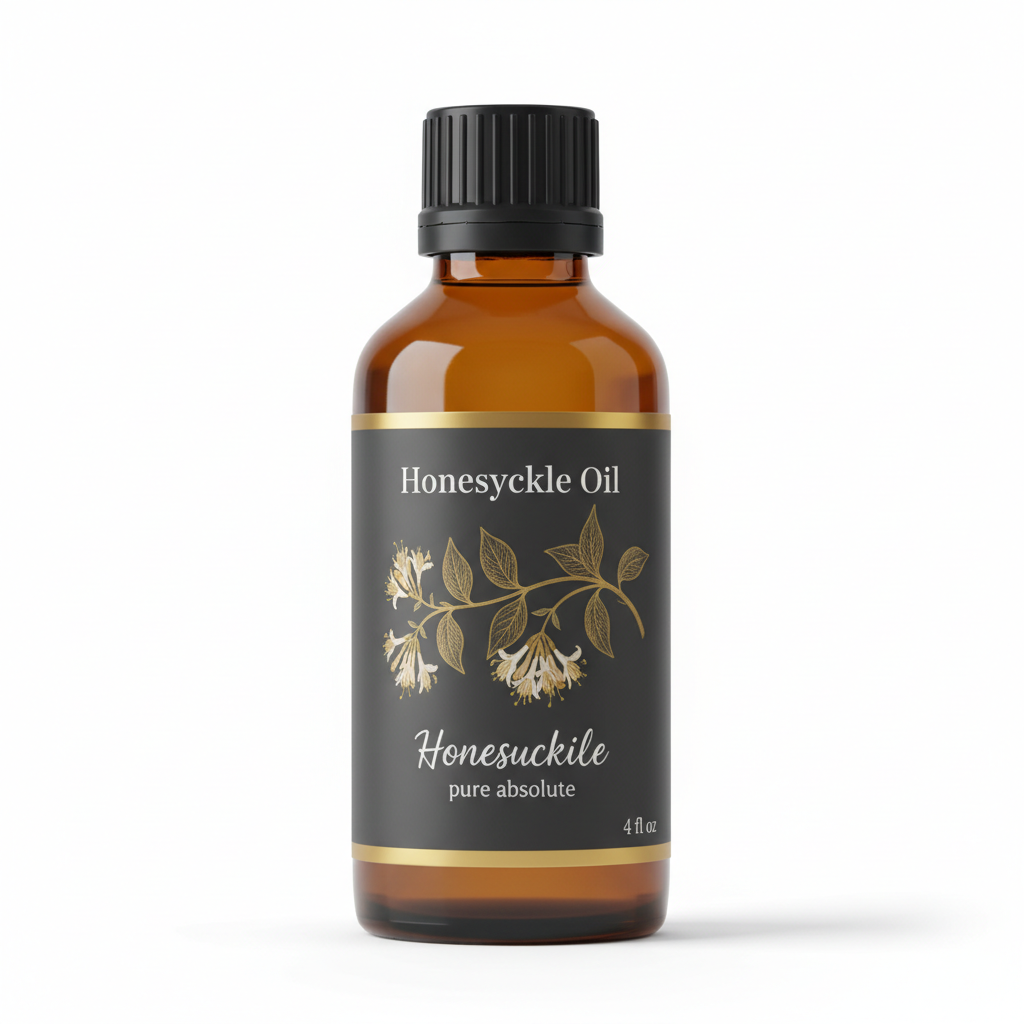
Honeysuckle Absolute
Our own Honeysuckle Absolute, in sizes from 0.5 oz to bulk.
From $13.99
Shop Now →A poem about two plants that cannot be parted
The oldest anchor we could check is Chevrefoil, a twelfth-century lai by Marie de France whose title means "honeysuckle." A summary of the poem describes how it compares Tristan and Iseult to honeysuckle and hazel grown so tightly together that separating them would kill both (Wikipedia, Chevrefoil). The picture is physical: a vine climbing and clasping.
Shakespeare uses it too. In Titania's speech in Act 4 of A Midsummer Night's Dream, the woodbine "the sweet honeysuckle / Gently entwist[s]," and ivy "enrings the barky fingers of the elm" (Project Gutenberg, A Midsummer Night's Dream). Embrace and dependence, again. Neither writer is talking about fragrance. The symbol was stuck to the vine's shape long before anyone bottled its scent. Which vine they had in mind is a story of its own, told in our short history of honeysuckle.
Why a vine makes such a good love story
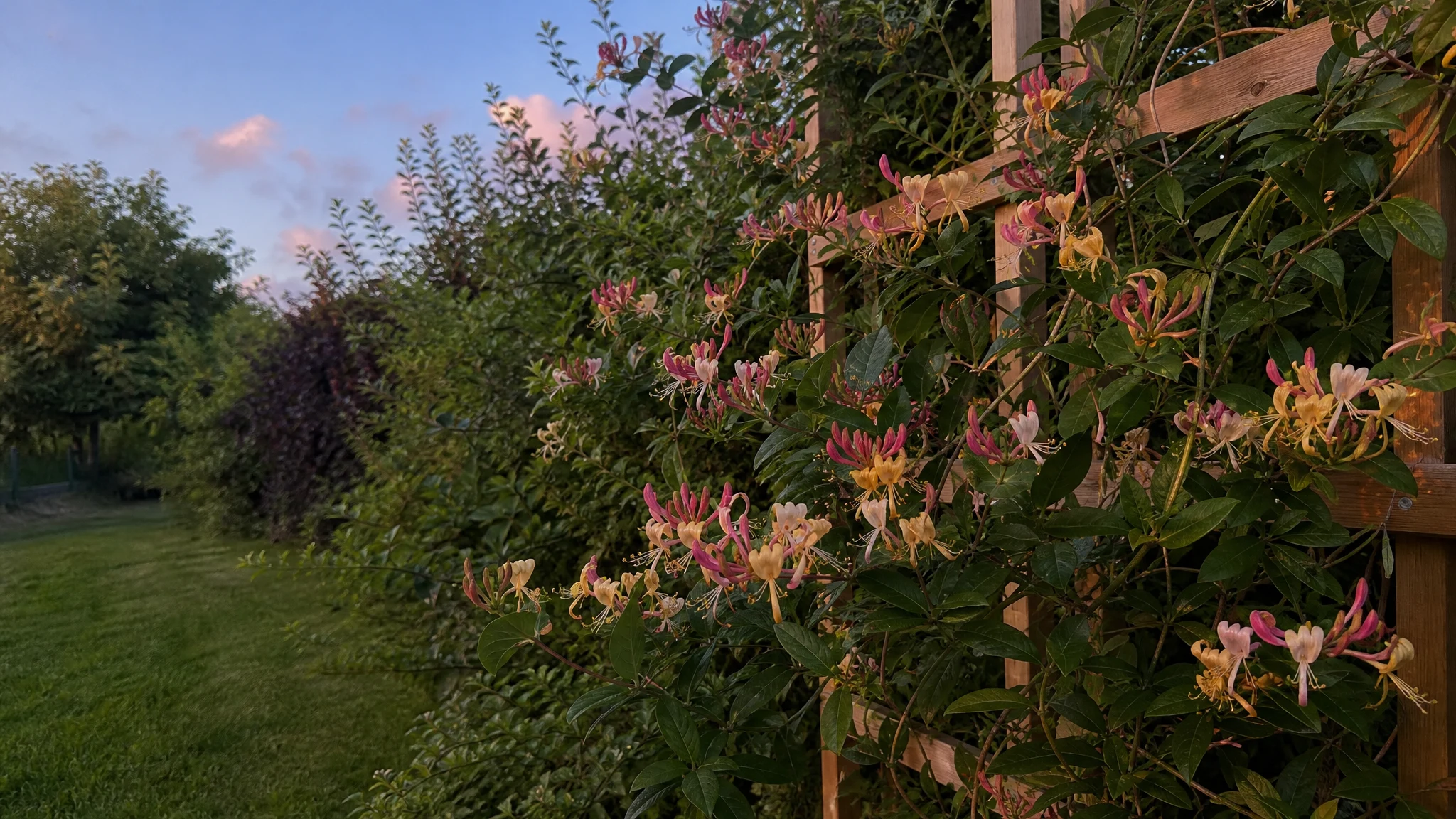
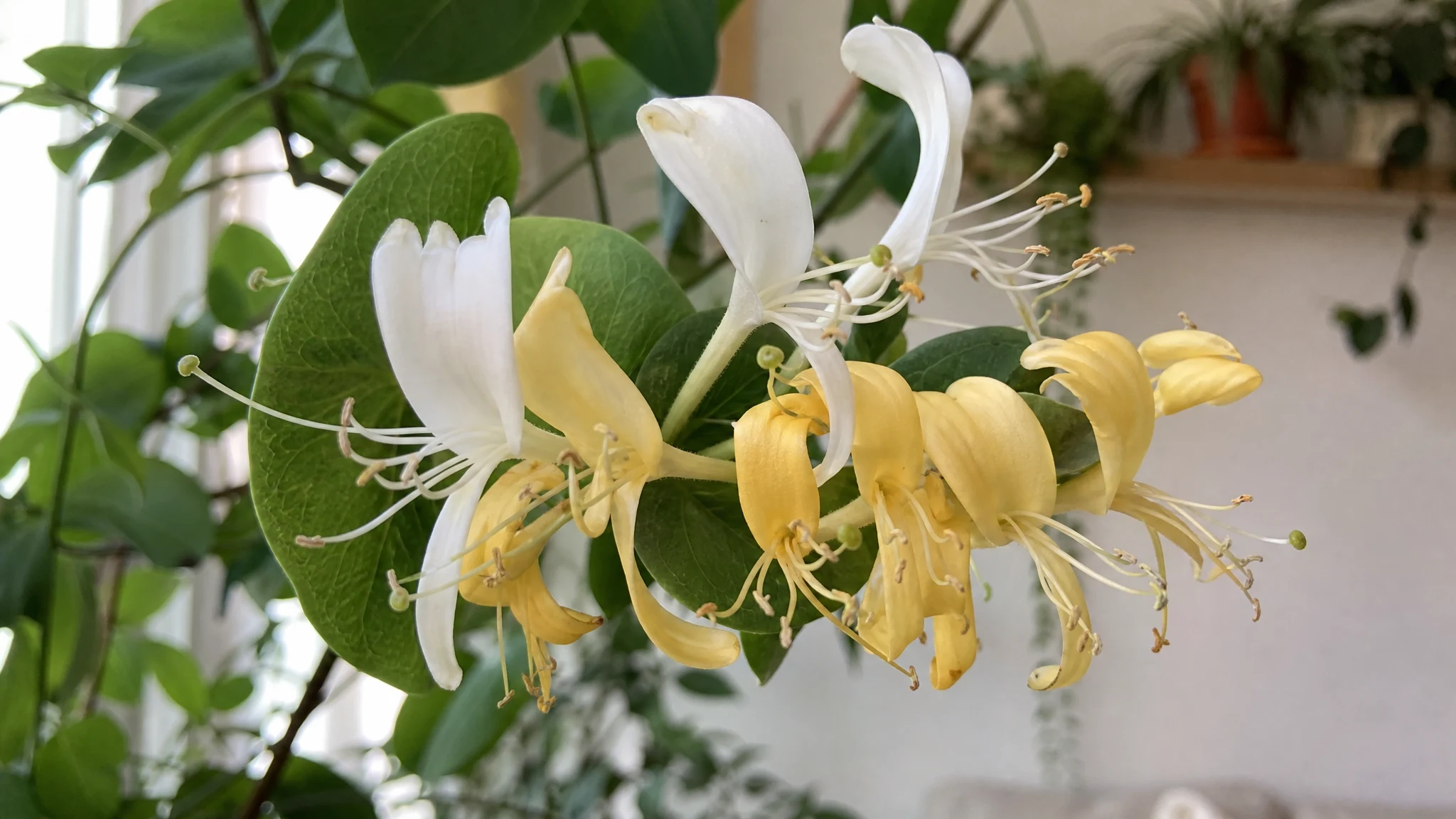
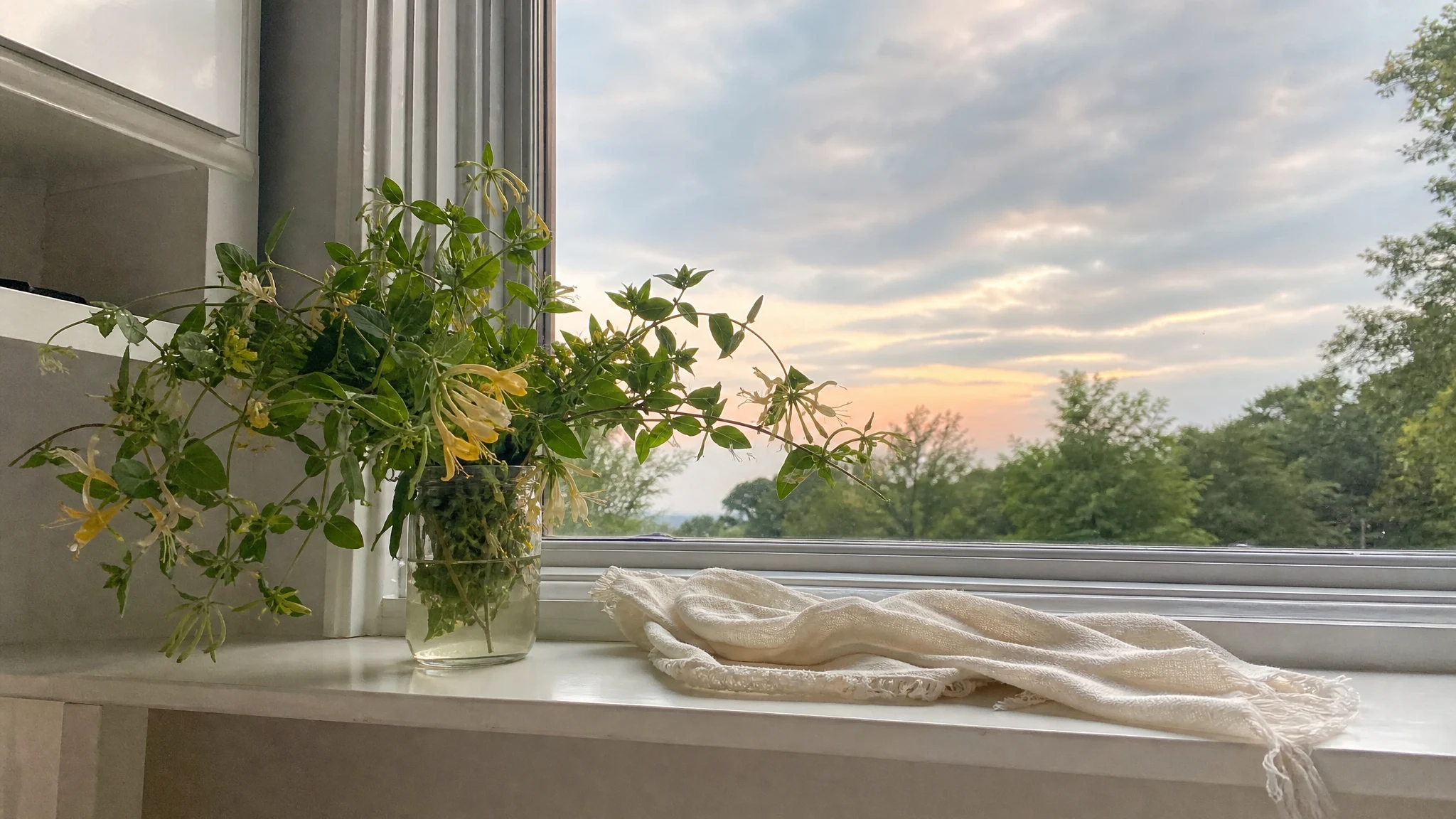
Stand in front of a honeysuckle that has been left alone for a season and you will see the whole idea at once. The stems wind themselves around whatever they find, a fence post, a trellis, a neighbouring shrub, and the flowers hang in pairs. It is easy to see how storytellers looked at that tangle and thought of two people who cannot be separated. The meaning came from looking at the plant long before anyone thought about a bottle.
It also explains why the symbol has lasted. A meaning that you can check with your own eyes in the garden is a sturdy one, and it needs no dictionary to hold it up.
A name that carries its own picture
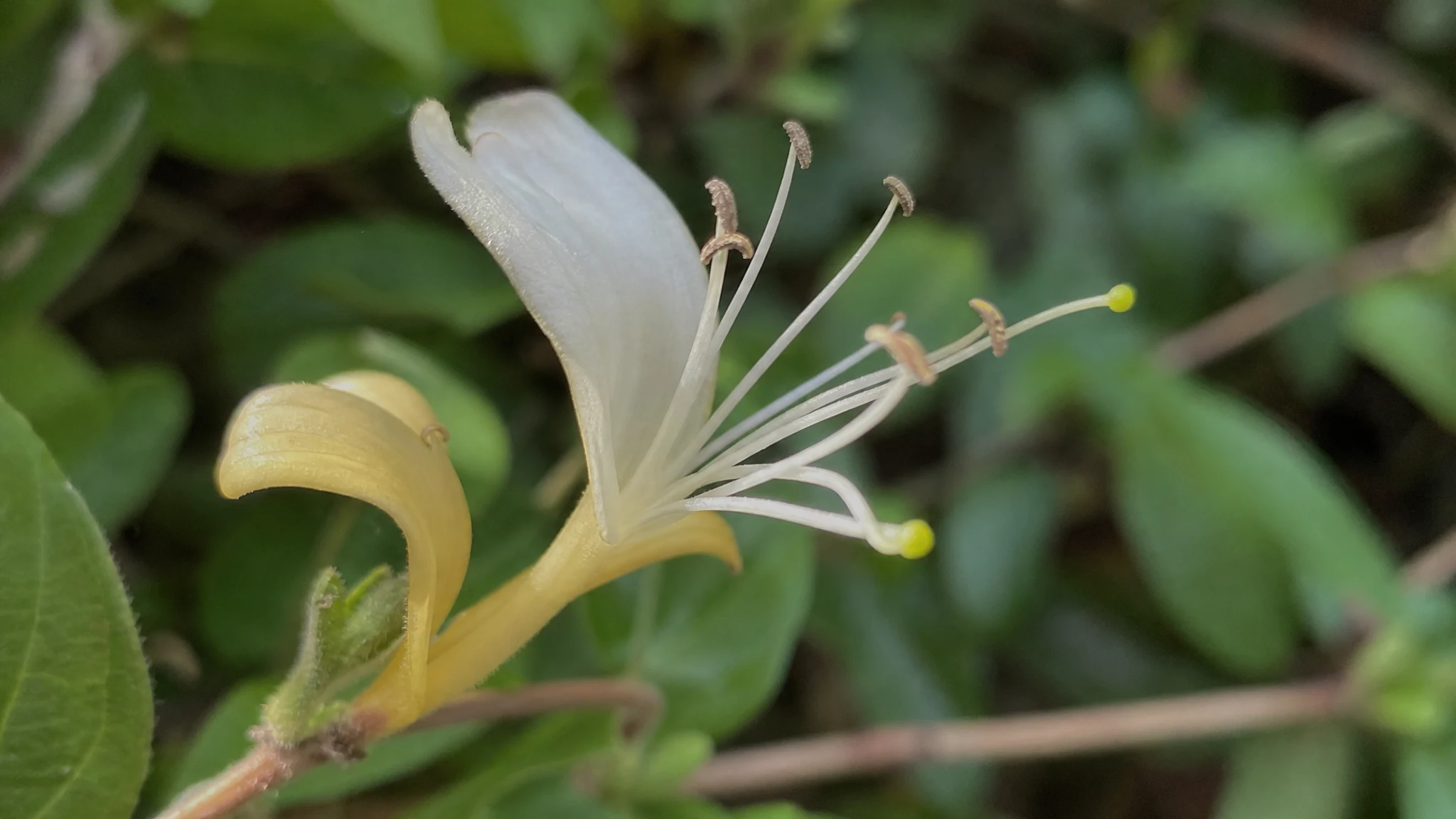
The plant behind our absolute has descriptive names too. Jin yin hua means gold-silver flower, for blossoms that open white and age to yellow on the same vine, and ren dong teng is usually translated winter enduring vine (Wikipedia, Lonicera japonica). Both record something you can see on the plant. We like a meaning you can check against the real thing. Meet the vine properly in Lonicera japonica, the vine behind our absolute.

The Victorian dictionary problem
Many pages give honeysuckle a single Victorian meaning. The flower dictionaries were real, and the first, by Charlotte de la Tour, appeared in 1819, but accounts of the language of flowers note that no universally accepted set of meanings exists and that books disagree (Wikipedia, Language of flowers). So if a meaning matters to you for a card or a ceremony, pick the book you like and cite it, or simply say it is yours. That honesty is more charming than a borrowed certainty anyway.
Why a smell can carry a story
There is real reason a scent attaches to meaning so easily. A review of the research reported preliminary evidence that odors can cue autobiographical memories more effectively than cues from other senses, with the most useful work coming from naturally formed memories, not laboratory pairings (Chu and Downes, 2000). We would call that a reasonable working idea and not a rule. In practice it means the most meaningful honeysuckle is the one tied to your own memory: a porch, a fence, a June evening.
Putting the meaning to work
If you want to use the symbol in something handmade, keep it simple and keep it true. A few ideas we like:
- A card with the Shakespeare line, giving the act and scene, so anyone can look it up.
- A wedding or anniversary favour with a label that tells the vine story in two sentences, and nothing grander than that.
- A gift tag that names the plant, Lonicera japonica, and says plainly that the scent is warm, green and floral.
- A pressed flower or a small cutting from a friend's garden, if the species is one you can grow responsibly where you live. Our note on Japanese honeysuckle explains why that needs a little care.
A scent is a scent
We would not promise that a fragrance will make anyone feel devoted, calm or anything else. A fragrance can be lovely and it can remind someone of a place, and that is plenty. What we can honestly offer is the story of where the symbol came from, and the pleasure of a scent that goes with it. The rest is the person who opens the gift, and the memory they bring to it.
If you write about honeysuckle for a card, a label or a shop page, a short rule helps: say where the idea came from, name the source, and leave out anything you cannot point to. A line like "the vine has stood for devotion in poems for centuries" is honest and warm, and it needs no further decoration.
Making your own meaning
That suggests a nice approach for gifts and handmade products. Say why you chose it. "The vine on my grandmother's fence bloomed in June" is a better label than any borrowed legend. Quoting Titania with the act and scene is a lovely card, and it is accurate. And a scent can simply be described as a scent: warm, green and floral. Our guide to gifting honeysuckle absolute has practical ideas for putting that into a gift.
A vine that holds fast to whatever it grows beside has been telling the same story in poems and gardens for centuries, and it still tells it every June evening.
Honeysuckle Absolute
Honeysuckle Absolute from our own shop, in sizes from 0.5 oz to bulk.
From $13.99
Shop Now →