Making Honeysuckle Oil at Home: What Works, What Does Not
Honeysuckle on a fence smells so good that nearly everyone has wondered about bottling it. The honest answer comes in two parts. A true absolute is an industrial product that does not belong in a kitchen, and there is one home method that is genuinely worth trying if what you want is a gently scented project.

Honeysuckle Absolute
Our own Honeysuckle Absolute, in sizes from 0.5 oz to bulk.
From $13.99
Shop Now →Why an absolute is not a kitchen project
An absolute starts with a hydrocarbon solvent, hexane in practice, circulated through fresh blossom to leave a waxy concrete. The concrete is then washed in high-proof ethanol, chilled and filtered. That is how ours is made, and the story of the first stage is in from concrete to absolute. The sticking point at home is the solvent and the evaporation that follows, since both are flammable and neither belongs near a stove.
Even the ethanol stage deserves respect. The NIOSH Pocket Guide gives ethanol a flash point of 55 F (about 13 C) and explosive limits of 3.3% to 19% in air, and classes it as a Class IB flammable liquid, so warm ethanol in a kitchen is a flammable vapour. How much solvent remains in a finished extract is a question for any supplier, which is why solvent residue in absolutes is worth reading. For a hazard assessment of a particular setup, a chemist or industrial hygienist is the right person to ask.
What home methods actually give you
| Method | What you get | Worth knowing |
|---|---|---|
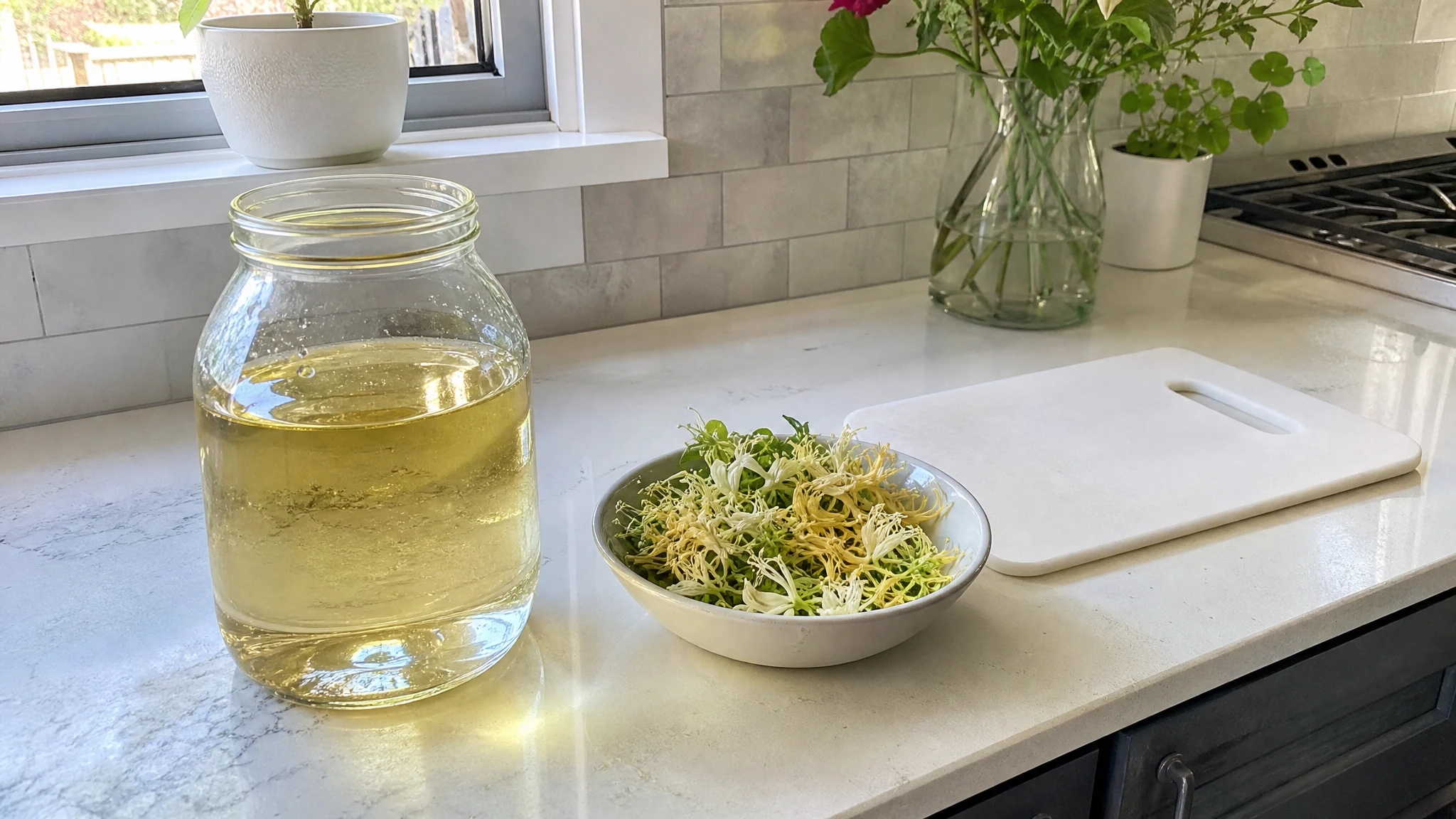
| Fresh flowers steeped in oil | A lightly scented oil | Fresh plant material in oil is a food-safety concern |
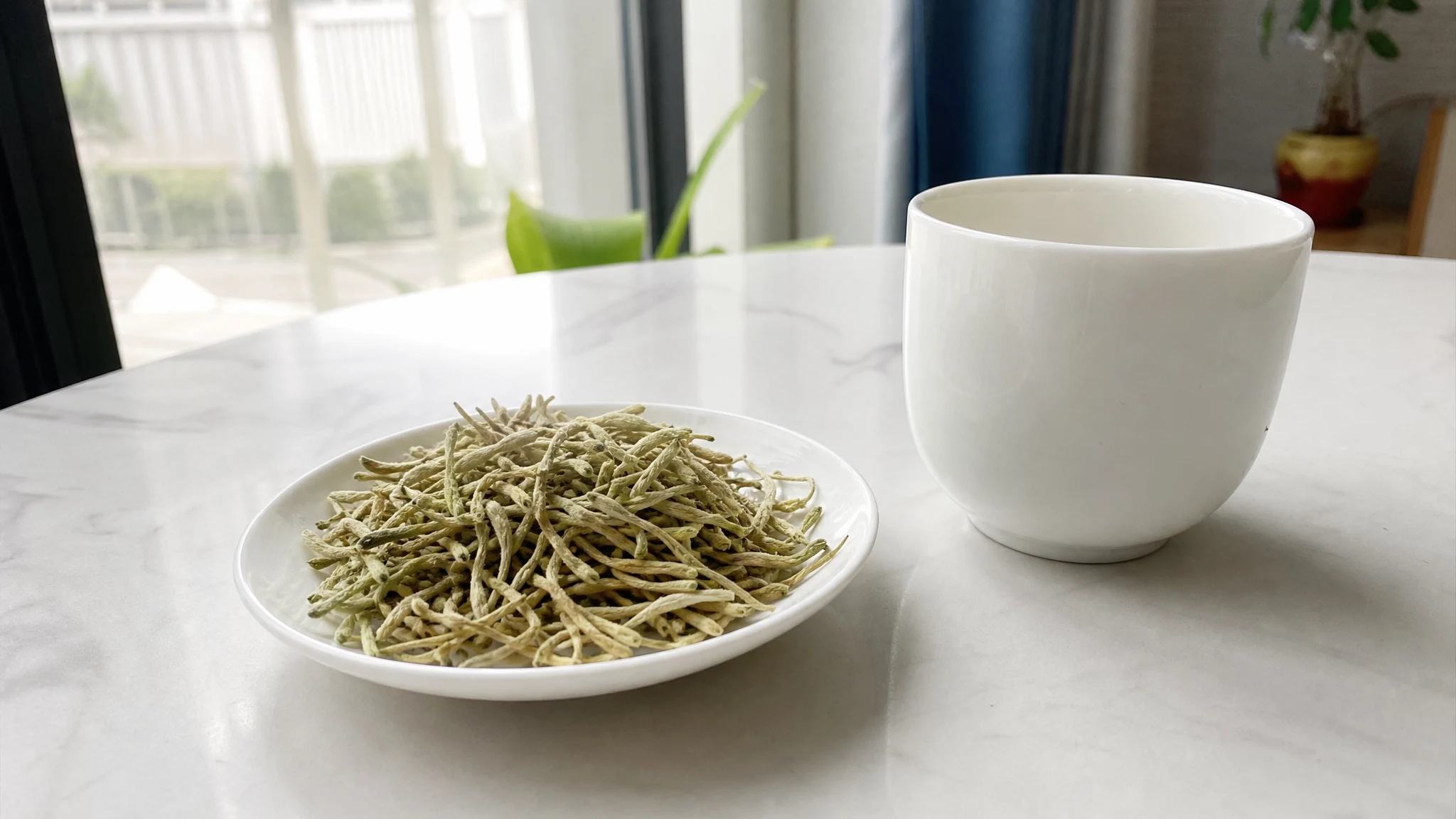
| Dried flowers steeped in oil, refrigerated | A softly scented body oil | Short life, scent strength varies |
| Flowers steeped in alcohol | A scented tincture, not an absolute | Ethanol is flammable |
| Steam distillation | Almost nothing | Honeysuckle does not yield an essential oil this way, see the steam distillation explainer |
The oil route, and why dried flowers win
Penn State Extension (updated April 2024) notes that oils flavoured with fresh herbs or garlic can be a source of botulism. Its safe approaches are 2 to 4 days of refrigeration for fresh-herb infusions, or up to three months refrigerated for oils made with dried herbs, and its only room-temperature method is a 24-hour citric acid soak of basil, oregano or rosemary (Penn State Extension). The tested method behind that, by Abo and colleagues, covered garlic and those three herbs (Food Protection Trends, 2014).
That guidance is written for culinary oils and honeysuckle blossoms were not in the work, so applying it to a body oil is our own reasoning. It points one way, though: keep fresh flowers out of any oil you plan to store, and use dried ones.
A dried-flower outline
- Dry the blossoms completely. Wilted is not dry.
- Cover them with a carrier oil from a craft or grocery supplier and keep the jar in the refrigerator.
- Strain, label with the date, and use within three months, sooner if it smells off or turns cloudy.
- Use it as a lightly scented body oil. Patch test first, and keep it to the skin.
Expect something soft and gentle, a different thing from the concentrated floral in an absolute. We compare the two in infused oil versus absolute.
The tincture route
Steeping flowers in ethanol gives a scented alcohol. It is not an absolute, because it skips both the concrete and the chilling that define one, and the strength is anyone's guess. If you try it, treat the flash point seriously: keep it away from stoves, candles and any flame, work in small amounts with good ventilation, and never warm it to speed things along.
Choose your flowers and parts with care
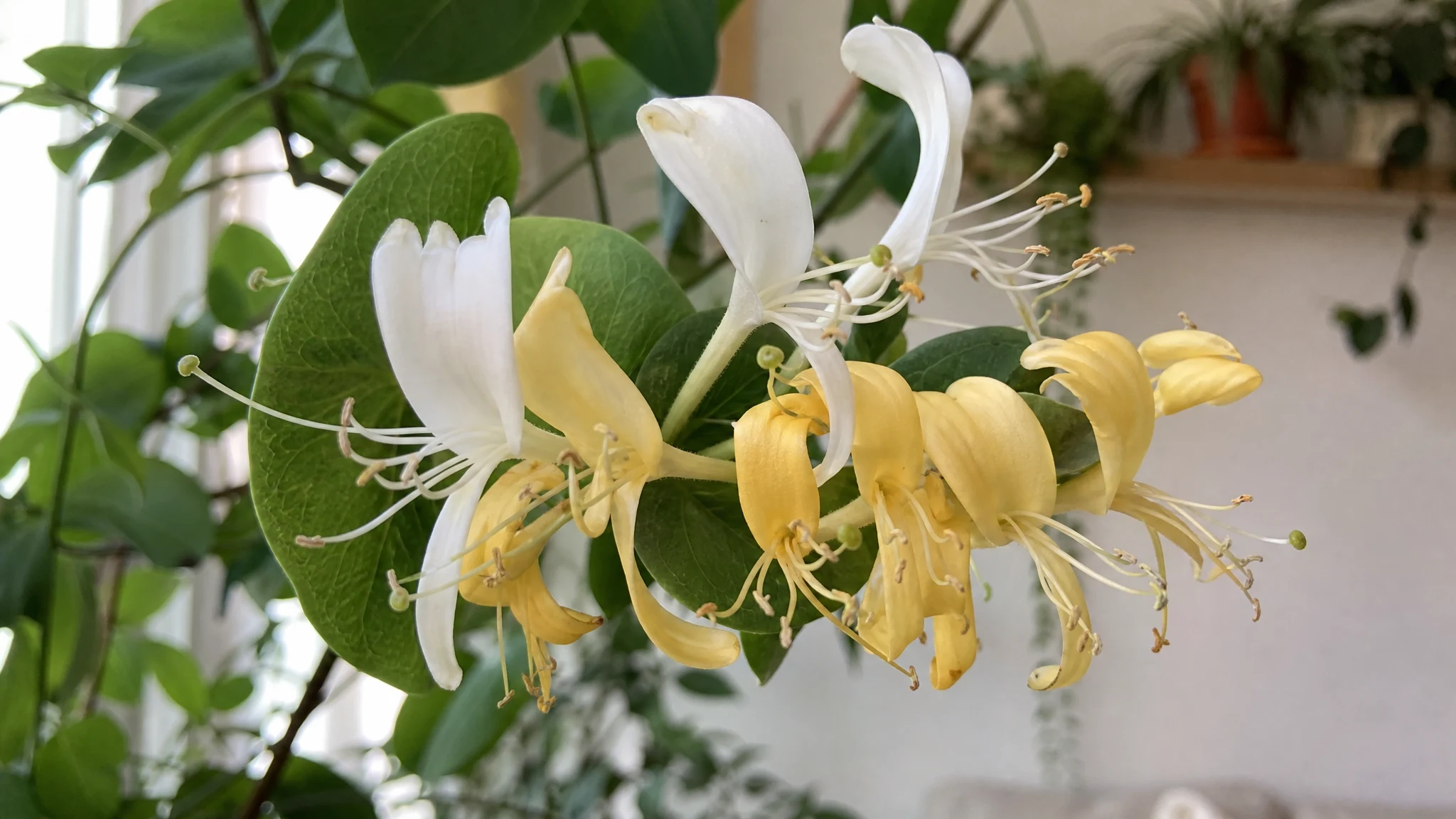
NC State Extension's poisonous plants database lists the berries of Lonicera japonica as the toxic part, with saponins as the toxic principle, and rates it "toxic only if large quantities eaten". It records symptoms including vomiting, diarrhoea and rapid heartbeat, and it also records that the plant does not cause contact dermatitis (NC State Extension). So pick flowers only, keep berries out of anything you make, and keep all of it away from children and pets. If a child or pet has eaten berries, call poison control or a veterinarian.
Confirm the species before you pick, since honeysuckles differ and the notes above apply only to Lonicera japonica. A local extension office can help. This species is also regarded as a weed in some regions, and our invasive species note explains where.
Setting expectations for a home jar
It helps to be realistic. A jar of dried honeysuckle in carrier oil is a quiet project, and the scent you get will be soft, faint and different each time you make it. Treat the first jar as a trial. Write the date on the label, record how many blossoms went in, and smell it after a week and again after a month. That way the second jar is better than the first, and you learn what you like without wasting anything.
When buying makes more sense
If you want an exact dose, the absolute is the practical route. A 1% blend in 100 g of carrier uses 1 g of absolute, and a 0.5 oz bottle holds about 14.6 g at the density on our published certificate, so one bottle covers a good many blends of that size. Our dilution guidance for skin is 0.5% to 2% in a carrier with a patch test first. Carrier oils, dried flowers and bottles come from a craft or grocery supplier, since we sell the absolute only, and it is for external use, never for internal use.
Either way, a jar of dried honeysuckle in oil is a nice way to spend an afternoon, and it makes you appreciate the real thing even more.
Honeysuckle Absolute
Honeysuckle Absolute from our own shop, in sizes from 0.5 oz to bulk.
From $13.99
Shop Now →Sources & Further Reading
- CDC NIOSH. NIOSH Pocket Guide to Chemical Hazards: Ethyl alcohol. cdc.gov/niosh/npg/npgd0262
- Penn State Extension, updated 2024. How to safely make infused oils. extension.psu.edu/how-to-safely-make-infused-oils
- Abo B et al., 2014. Acidification of garlic and herbs for consumer preparation of infused oils. Food Protection Trends. foodprotection.org/2014-07acidification
- NC State Extension. Lonicera japonica, poisonous plants database. plants.ces.ncsu.edu/poisonous-plants/lonicera-japonica