Honeysuckle Oil Benefits? What the Research Really Covers
Type "honeysuckle oil benefits" into a search box and you will find confident lists. Open the studies behind them and a pattern appears: most are about a dried herb used in Chinese medicine, not about a scented absolute. That gap is the most useful thing to understand, and it is easy to see once you know where to look.

Honeysuckle Absolute
Our own Honeysuckle Absolute, in sizes from 0.5 oz to bulk.
From $13.99
Shop Now →One word, three materials
In a research paper "honeysuckle" might mean a water decoction of dried flower buds, a volatile oil taken from dried flowers by steam or supercritical carbon dioxide, or, in perfumery, an absolute from flowers made with a solvent and then ethanol. They are different materials made from different plant states by different processes. A review of the literature points out that composition shifts with habitat, harvest time, plant part, extraction method and drying, and cites a study with more than 14% linalool in fresh flowers against under 0.4% in dried ones (Shang et al., 2011). When drying alone moves one major aroma compound by that much, a result from the dried material cannot be carried across to an extract of fresh flowers.
What the research tends to look like
The same review reports one volatile oil yield: 1.08% from dried flower by supercritical CO2, which tells you how little oil is in the plant at all. A more recent review of the dried herb, Lonicerae Japonicae Flos, is candid about its own limits. The authors note that most of the antibacterial studies did not include a comparison group, that some of the research is not in depth, and that a unified quality standard for the herb is still an open question (Zheng et al., 2022).
That is typical of an interesting but young field. It is a lot of lab work on extracts, with much less in the way of controlled studies in people, and almost none of it on a fragrance absolute. We have not found a study of a solvent-extracted honeysuckle absolute on skin or inhaled, and we would not want to guess what one would show.
Why we describe it by scent
We sell our honeysuckle absolute as a scented material for perfume, soap, candles and body care, and we make no medical claims for it. That is also how US regulators see it. FDA states that intended use decides whether a product is a cosmetic or a drug, and that a plant origin does not exempt a product from safety requirements (FDA, Aromatherapy). If your question is about a health condition, a physician, or a licensed practitioner of traditional Chinese medicine for herbal questions, is the right person to ask.
Why we say it so plainly
It would be easy to put a list of impressive-sounding studies on a product page and let readers draw their own conclusions. We would rather not. The honeysuckle we sell is a perfumer's material, and the honest way to describe it is by its scent, its handling and its sizes. If that sounds modest, it is meant to be. The plant has a long history in other settings, and those settings deserve their own careful treatment by people qualified to give it.
Where the confusion starts
Much of the muddle comes from the word itself. Honeysuckle is a garden plant, a herb, a perfume note and a flavour in a candle, all at once. A single search result can slide between these without telling you. So when you read something that sounds exciting, it is worth stopping at the first sentence and asking what, exactly, is being discussed.
How to read the next honeysuckle headline
A few quick questions will serve you with any plant claim. What material was it: dried bud, distilled oil, extract, or absolute? What was the model: cells in a dish, animals, or people, and how many? What dose was used, in what vehicle? And what did the authors say about their own limits? Nine times out of ten, the answers show you a study about something other than the bottle in your hand.
What a honeysuckle absolute does offer is its aroma: nectarous, green-floral and warm. If you want to know more about that, what honeysuckle smells like is a good place to start, and honeysuckle oil myths and facts goes through the common claims one by one. For the herb itself, see how Jin Yin Hua differs from the absolute, and for safe handling, is honeysuckle oil safe.
What to do with your curiosity instead
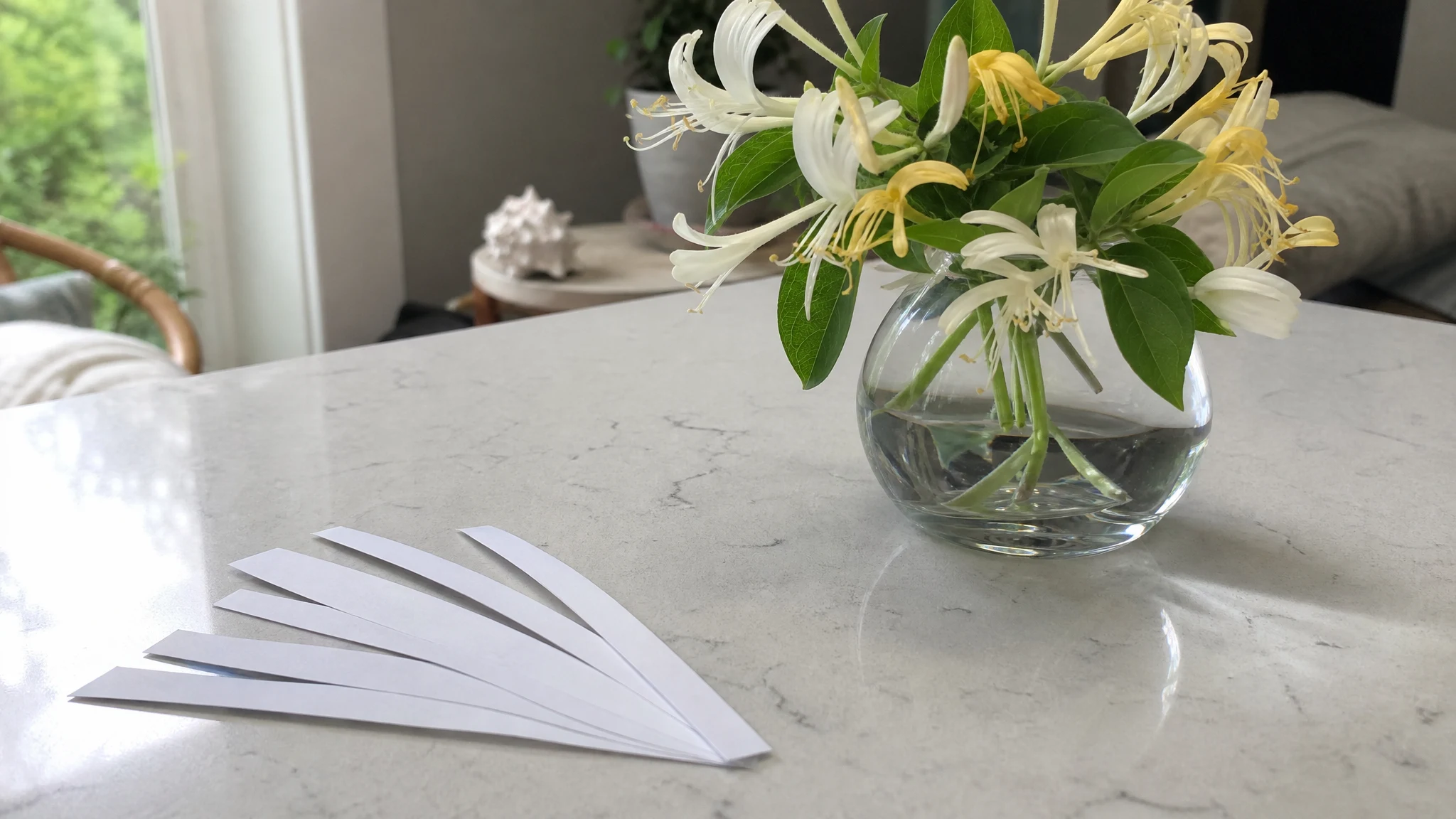
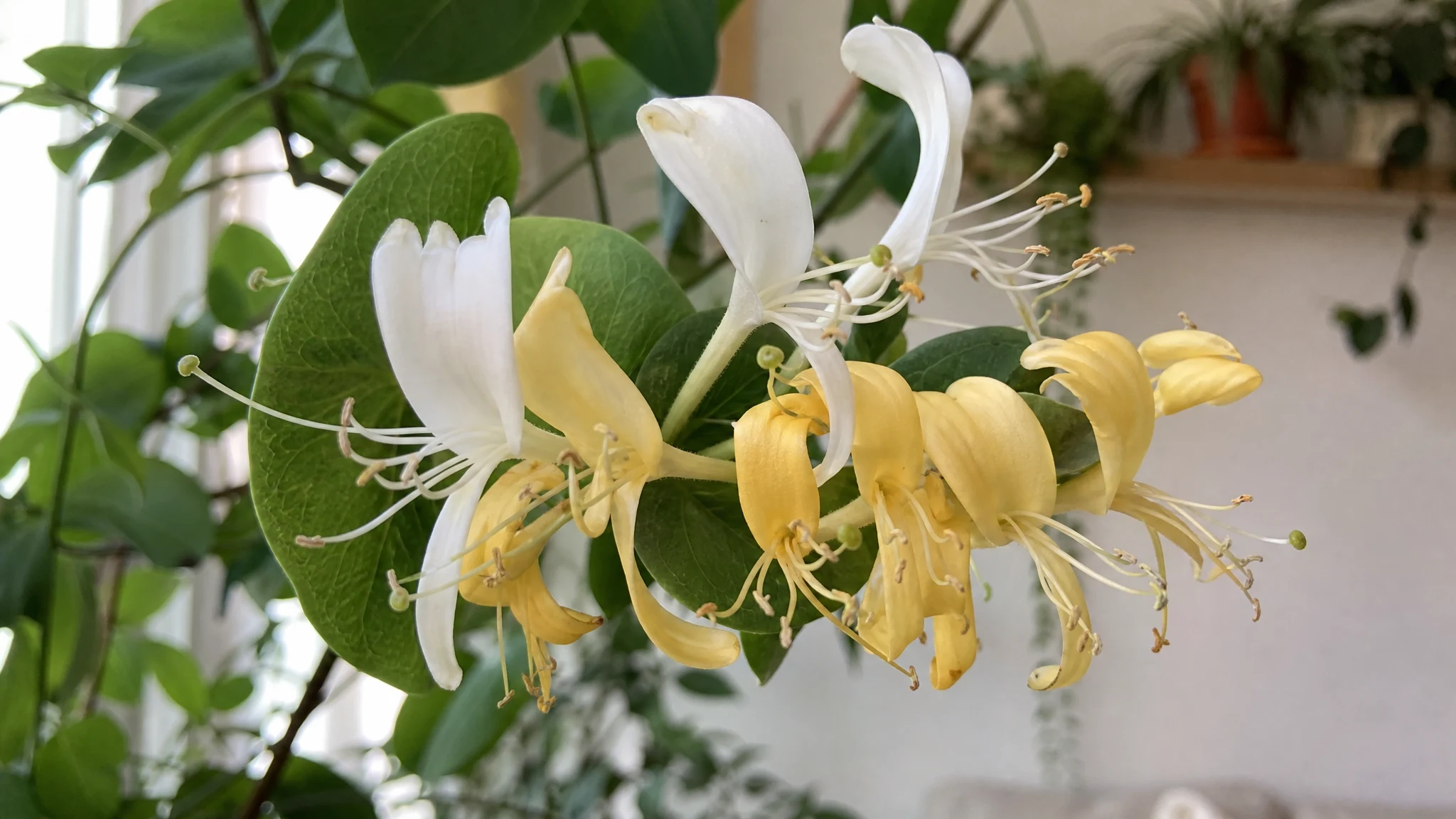
If the plant has caught your interest, there are good ways to follow it that do not involve a benefit list. Walk past a vine in flower and notice when the scent is strongest in the day. Then put a diluted blend of the absolute on a paper strip and compare the two. Write down the words you reach for. Honeysuckle is one of those flowers that is easy to love for its smell alone, and that is the reason we sell it.
And when a friend sends you an article about a miracle flower, there is no need to argue. Just ask which material the study used, and see where the conversation goes.
The plant is genuinely interesting, and it deserves to be described for what it is.
Honeysuckle Absolute
Honeysuckle Absolute from our own shop, in sizes from 0.5 oz to bulk.
From $13.99
Shop Now →