Honeysuckle Absolute Glossary: Terms Makers Should Know
Buy a honeysuckle absolute for the first time and the vocabulary arrives all at once: concrete, accord, relative density, residual solvent. None of it is hard, and knowing it makes you a much better buyer and maker. Here are the terms in the order you tend to run into them.
Honeysuckle Absolute
Our own Honeysuckle Absolute, in sizes from 0.5 oz to bulk.
From $13.99
Shop Now →What the material is
Absolute. The liquid left when a concrete is washed in ethanol, chilled and filtered. That is how ours is made, with a hydrocarbon solvent (hexane in practice) used first to pull the aroma from the blossom. An absolute is not distilled, and it is not an essential oil. Our piece on how an absolute is made walks through it.
Concrete. The waxy first extract, made with a solvent, from which an absolute is later made. A jasmine reference puts it at roughly 0.5% of the weight of fresh flowers (ScenTree, jasmine absolute); honeysuckle yields will differ.
Essential oil. A volatile oil taken from a plant by steam distillation or pressing. Honeysuckle does not give a meaningful one under steam, so "honeysuckle oil" on a label usually means an absolute, a fragrance oil, or something else. We explain the difference in absolute versus fragrance oil.
Fragrance oil. A composed scent built from aroma chemicals, natural materials or both. It comes with its own usage limits from its maker. We sell one honeysuckle absolute and no fragrance oils.
Neat. Undiluted. Ours is sold neat, with nothing added, so the dilution arithmetic is yours to do.
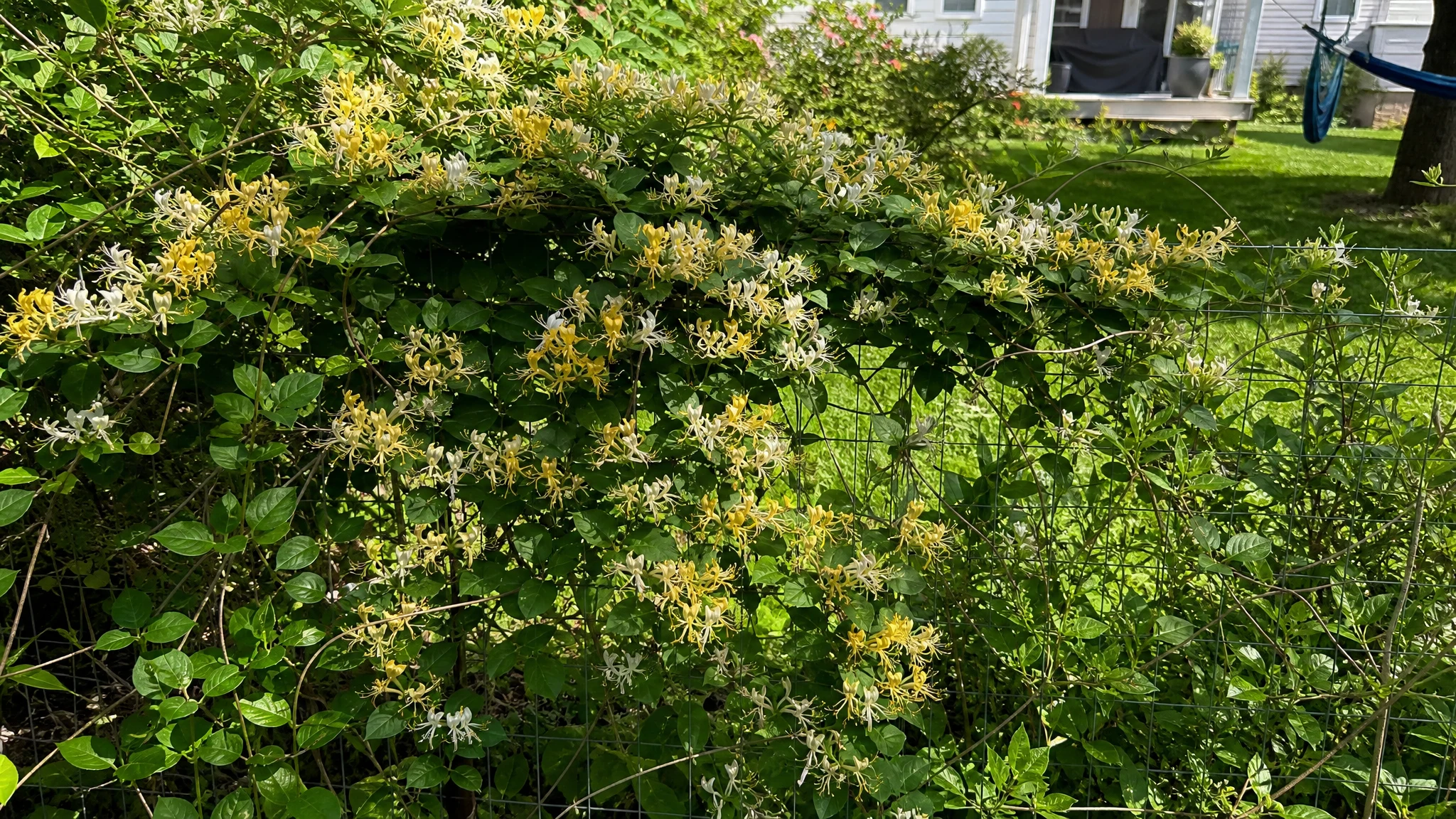
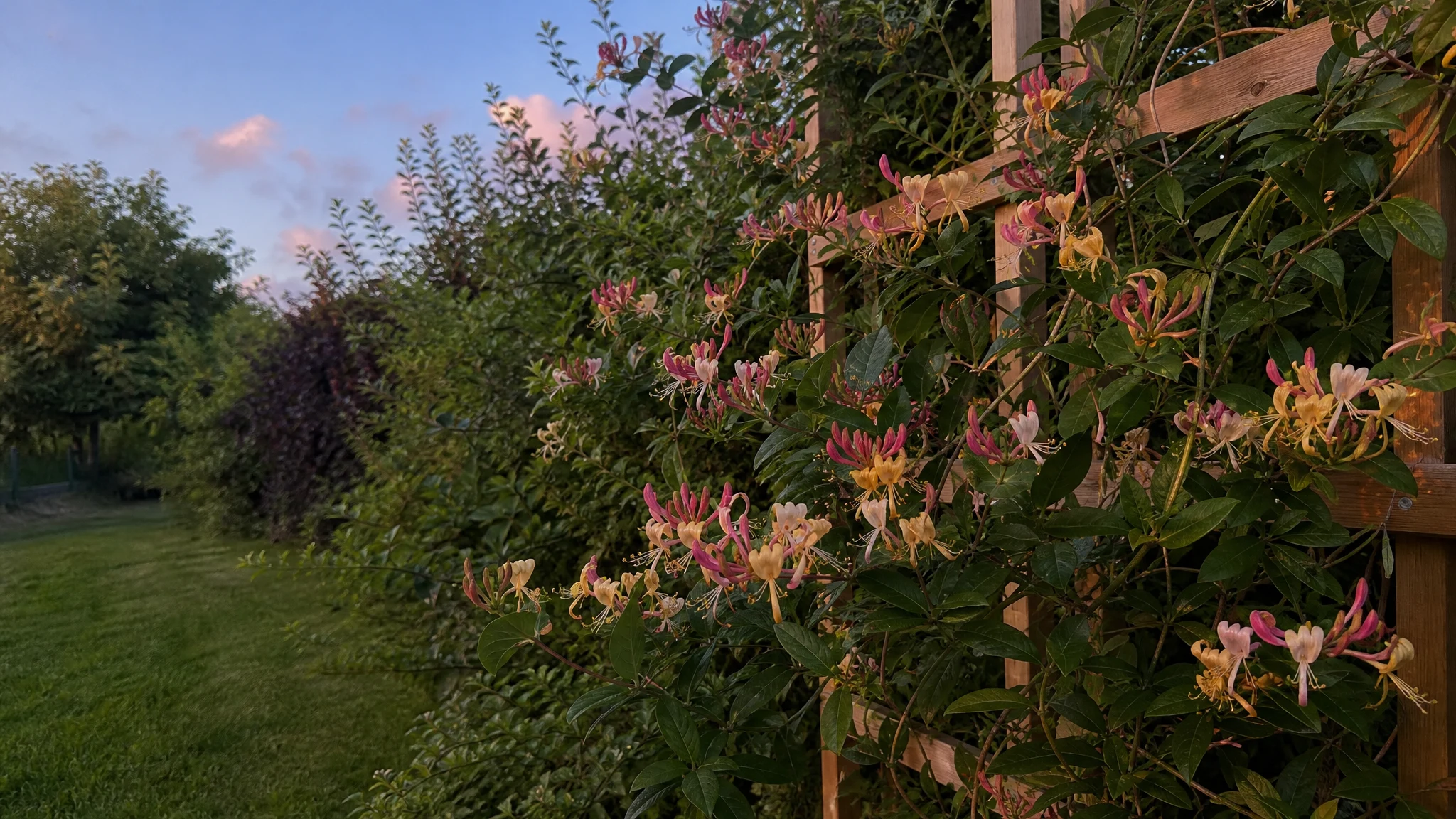
Botanical name. The Latin name that says which plant. Ours is Lonicera japonica. Industry listings use a standard nomenclature in which the plant part is coded (F for flower) and an absolute has its own category (IFRA nomenclature for natural complex substances).
How it smells and where it sits
Heart note. A material that sits in the middle of a perfume, after the bright opening and before the base. We place honeysuckle absolute there. Note positions are trade convention, not measurements.
Accord. Several materials blended so they read as one new impression, such as a lush white floral. Soliflore: a perfume built around one flower. The rollerball recipe is a simple way to try one.
Drydown and sillage. Drydown is how a scent smells after the first minutes on skin or paper. Sillage is how far it carries around the wearer. Both are trade words and both are a matter of nose.
Green-floral. How we describe our absolute: nectarous, lush and green, with a soft jasmine-like warmth.
What the paperwork says
COA (certificate of analysis). A laboratory report on one batch. The one we publish covers appearance, smell, relative density, refractive index and optical rotation. For a line-by-line tour, see how to read a COA.
Relative density, refractive index, optical rotation. Three physical constants: how heavy the liquid is compared with water, how much it bends light, and how much it turns polarized light. Our published batch reads 0.989, 1.509 and +1.88 degrees. Handy for makers: 0.989 means a milliliter weighs about 0.989 g.
GC-MS. Gas chromatography with mass spectrometry, the instrument that separates a sample and names its compounds. It gives a composition table. The certificate we publish has no GC-MS table, so if you need one for a lot, ask us in writing before ordering.
Residual solvent. Trace solvent left in a finished extract. Ask for the figure for your lot in writing if it matters to your product. More in solvent residue in absolutes.
Lot (batch) number. The code that ties a bottle to its paperwork. It is the first thing to quote when you ask a supplier for a document.
Allergens and "fragrance." In the US, FDA says fragrance ingredients in a cosmetic can be listed simply as "fragrance" (FDA, Fragrances in Cosmetics).
Words you will hear at the bench
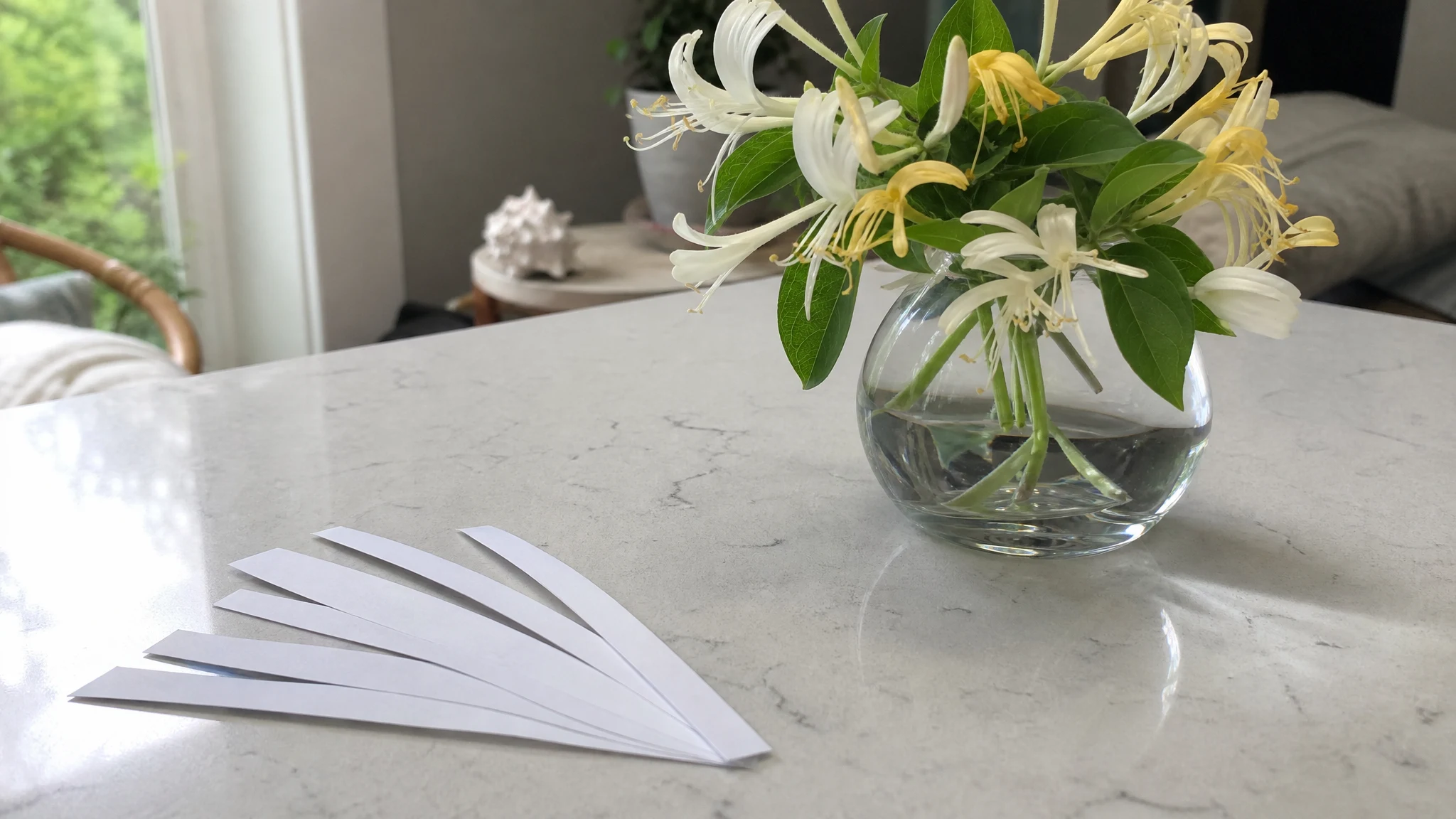
Blotter. A strip of absorbent paper for smelling. Dip, label and sniff, instead of smelling from the bottle.
Stock. A stronger dilution you keep on hand, such as a 10% solution, so tiny amounts are easier to measure. Our 10% dilution guide shows how.
Tare. Pressing the button on a scale so it reads zero with your empty vial on it. Do it before every ingredient.
Carrier. The oil you dilute the absolute into for skin use, such as jojoba or fractionated coconut. We sell the absolute only, so carriers come from a craft or cosmetic-supply shop.
Decant. Pouring a working amount into a smaller bottle so the main one stays closed.
Using it well
Dilution. The share of absolute in the whole. Our guidance for skin is 0.5% to 2% in a carrier, so 1% is 1 g of absolute in 99 g of carrier. Keep a scale handy: drops vary with the dropper and the absolute is viscous.
Patch test. Putting a small diluted amount on a small patch of skin before wider use, as we recommend. See making a 10% dilution for an easy way to measure small amounts.
Sensitization. When skin learns to react to a substance so that later exposures cause reactions. One study found that linalool exposed to air for ten weeks sensitized guinea pigs, while fresh linalool did not (Sköld et al., 2002).
Oxidation. Slow reaction with oxygen, the reason to keep the cap tight and decant working amounts into smaller airtight bottles.
Once these terms feel familiar, the rest of honeysuckle is mostly a matter of smelling, measuring and enjoying it.
Honeysuckle Absolute
Honeysuckle Absolute from our own shop, in sizes from 0.5 oz to bulk.
From $13.99
Shop Now →