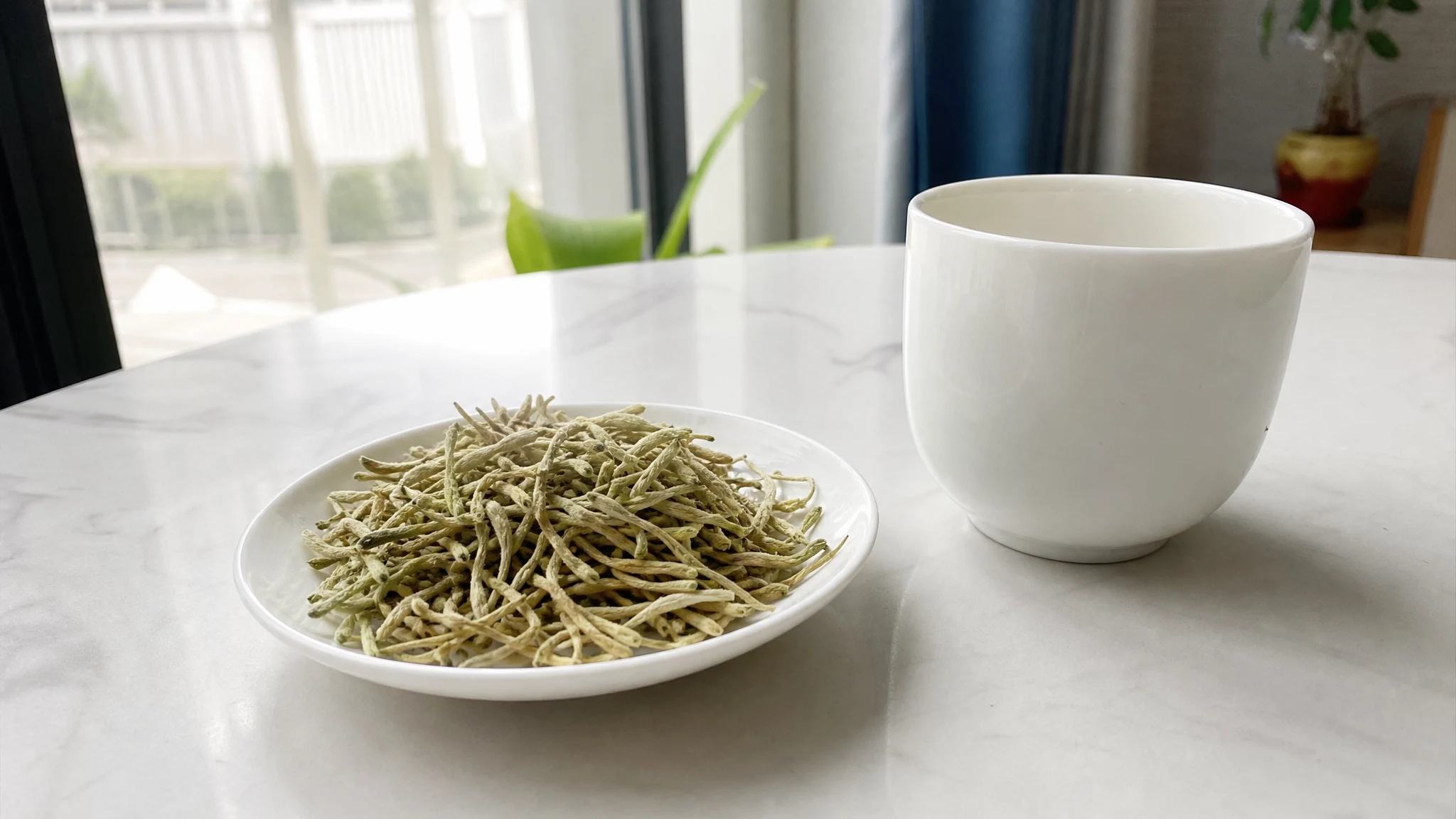
Jin Yin Hua vs Honeysuckle Absolute: Herb or Scent?
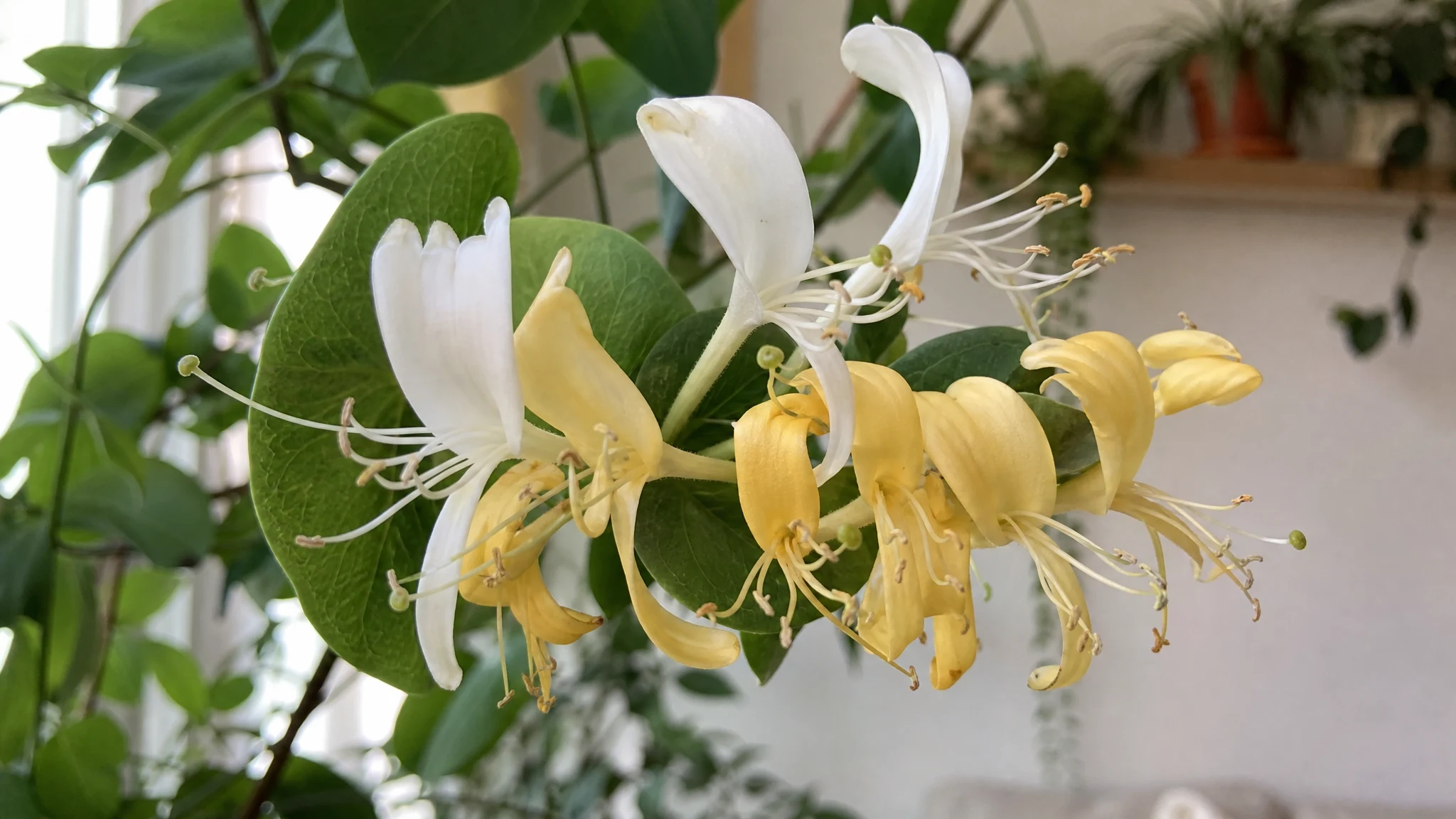
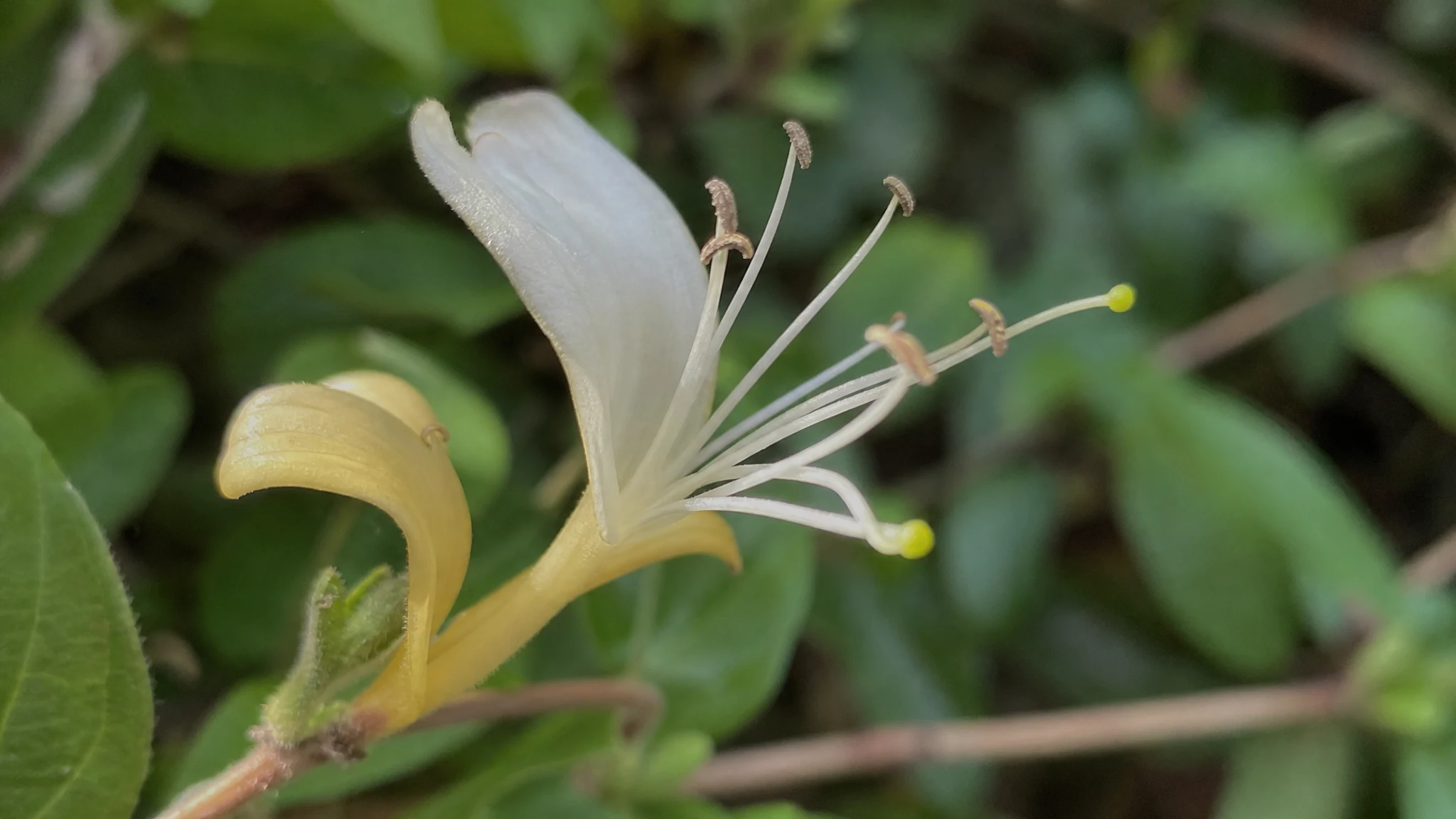
Jin Yin Hua means "gold-silver flower," and it names two things at once: the fading white-to-yellow blossoms of the vine, and the dried flower that Chinese herbal practice uses. Our honeysuckle absolute comes from the same species, but the two products are as different as a pot of tea and a bottle of perfume.
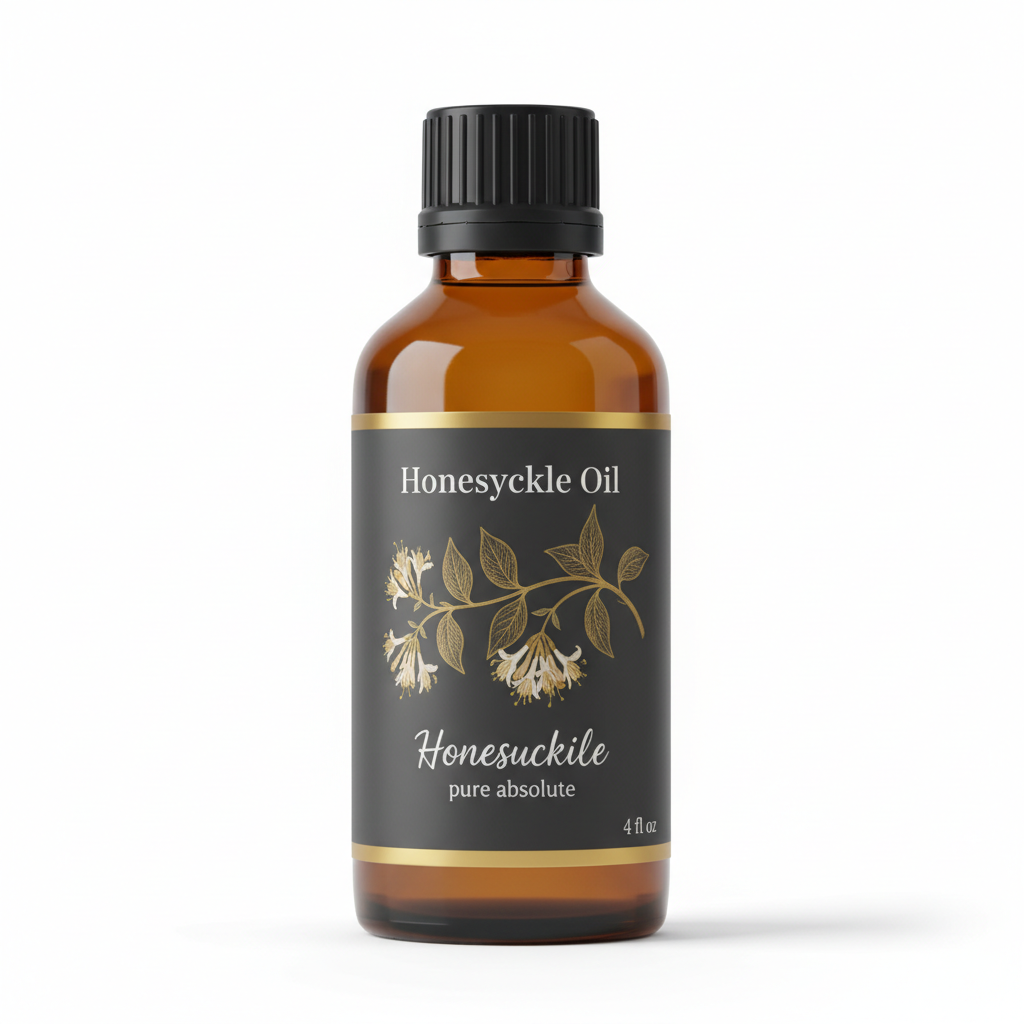
Honeysuckle Absolute
Our own Honeysuckle Absolute, in sizes from 0.5 oz to bulk.
From $13.99
Shop Now →It can be confusing to meet the same plant under two names. A shopper who searches for honeysuckle may find a bag of dried flowers in one tab and a small amber bottle in another, and both say Lonicera on the label. The easiest way to keep them straight is to ask what each one is for.
What the herb is
The pharmacopoeia definition of the herb, Lonicerae Japonicae Flos, is "the dried bud or flower with initial blooming of Lonicera japonica Thunb." Its quality test is an assay of chlorogenic acid, which should be at least 1.5% in the 2020 edition. Buds are picked in May and June on a sunny morning once the dew is dry, then dried away from hot sun and turned so they do not blacken (Zheng et al., 2022).
It is worth a pause on that marker. Chlorogenic acid is a plant phenolic, chosen because it can be measured reliably in the dried herb. It is not what you smell. A pharmacist's quality marker and a perfumer's aroma profile are two different questions asked of the same flower.
What the absolute is
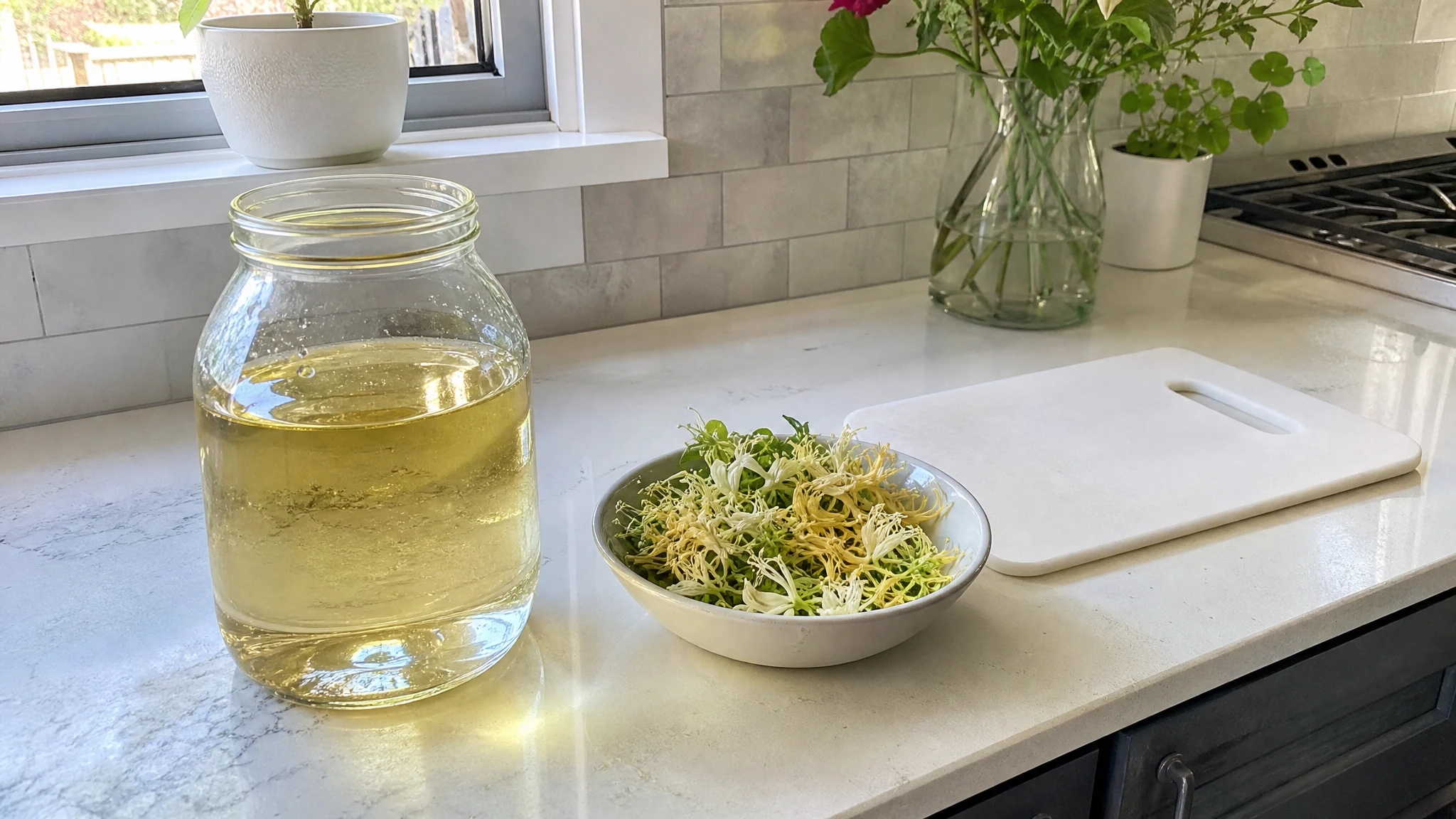
Our absolute is made from honeysuckle blossoms with a solvent (hexane in practice), a concrete is produced, and an ethanol wash and chill turn that concrete into the absolute. It is sold neat, for scent, in perfume, soap, candles and body care. Nobody takes it by mouth, and our guidance is not to. The explainer on how an absolute is made goes through the process.
| Question | Jin Yin Hua | Honeysuckle absolute |
|---|---|---|
| Plant state | Dried bud or just-opened flower | Flowers, extracted with solvent |
| Preparation | Drying, then decoction or other herbal preparation | Solvent extraction, ethanol wash, chill, filter |
| How quality is judged | Chlorogenic acid assay | Smell, appearance and physical constants on a COA |
| Purpose | Herbal practice, under a practitioner | Fragrance and craft |
Why drying changes the story
One study cited in a review of the plant found linalool above 14% in fresh flowers and under 0.4% in dried ones (Shang et al., 2011). Linalool is a main player in many floral scents, so the drying step matters for the aroma as well as the chemistry. A finding about dried herb, in either direction, does not automatically describe a fresh-flower extract.
A kitchen shelf versus a perfumer's shelf
Imagine two shelves. On one sits a paper bag of dried blossoms, light and brittle. On the other sits a small bottle of a thick, concentrated liquid that you handle by the drop. They come from the same plant, but they are handled differently, stored differently and judged differently. The dried flower is something you would measure by the spoonful under the care of a practitioner. The absolute is something you would measure on a scale in grams, for scent.
That is why we would not swap one for the other, in either direction. Using our absolute as if it were the herb would be a mistake, and so would expecting a bag of dried buds to give you the scent of the vine in a candle or a body oil. Each does its own job well.
The certificate's word "pharmacopoeia"
The certificate of analysis we publish for one batch gives its criterion as "Pharmacopoeia" and records appearance, smell, relative density 0.989, refractive index 1.509 and optical rotation +1.88 degrees, each inside a wide window. That is a different exercise from the herb's chlorogenic acid assay, and it is the right one for a scent material: it shows that the liquid is plausible, not that it shares anything with the herb. If you need GC-MS or residual solvent data for a lot, ask us in writing through the contact page before you order.
Reading product names with care
Names do a lot of work online. "Honeysuckle extract", "honeysuckle oil" and "Jin Yin Hua" can all point to different things, and the shortest listings leave the most to guess. Look for the process, the plant part and what the product is for. If a listing does not say, ask the seller before you order, and keep the answer in writing.
If you are ever unsure which one a recipe or a shop means, look at what you are meant to do with it. A recipe that has you steeping, simmering or swallowing is talking about the herb. A recipe that has you weighing drops into a candle, a perfume or a carrier is talking about a fragrance material. We sell the second kind only.
Who to ask about health questions
We make no medical claims about our absolute. If you are interested in honeysuckle as a herb, a physician or a licensed traditional Chinese medicine practitioner who knows your history and medications is the person to ask. FDA draws the same line from the other side: a product's intended use decides whether it is a cosmetic or a drug (FDA, Aromatherapy).
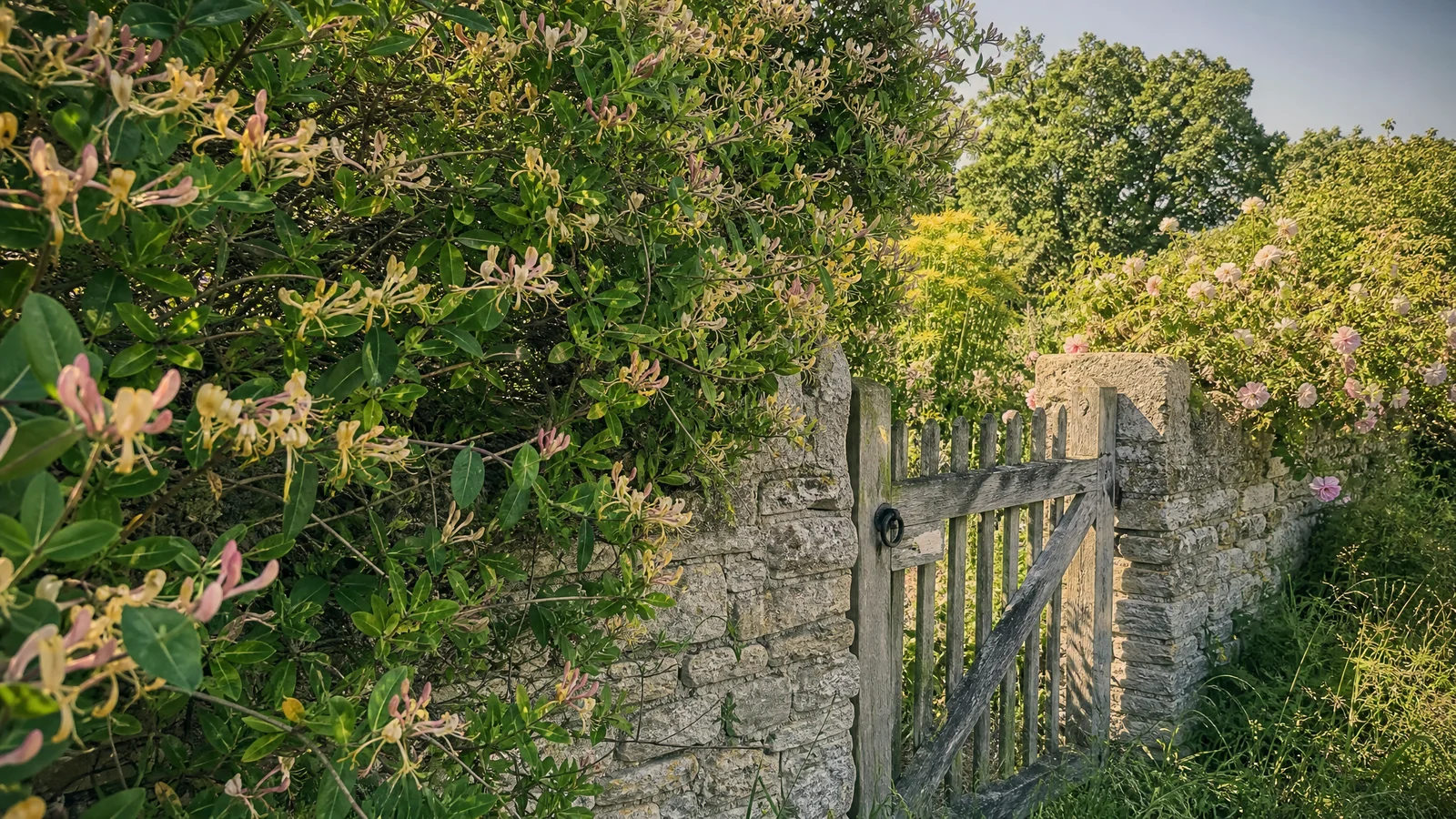
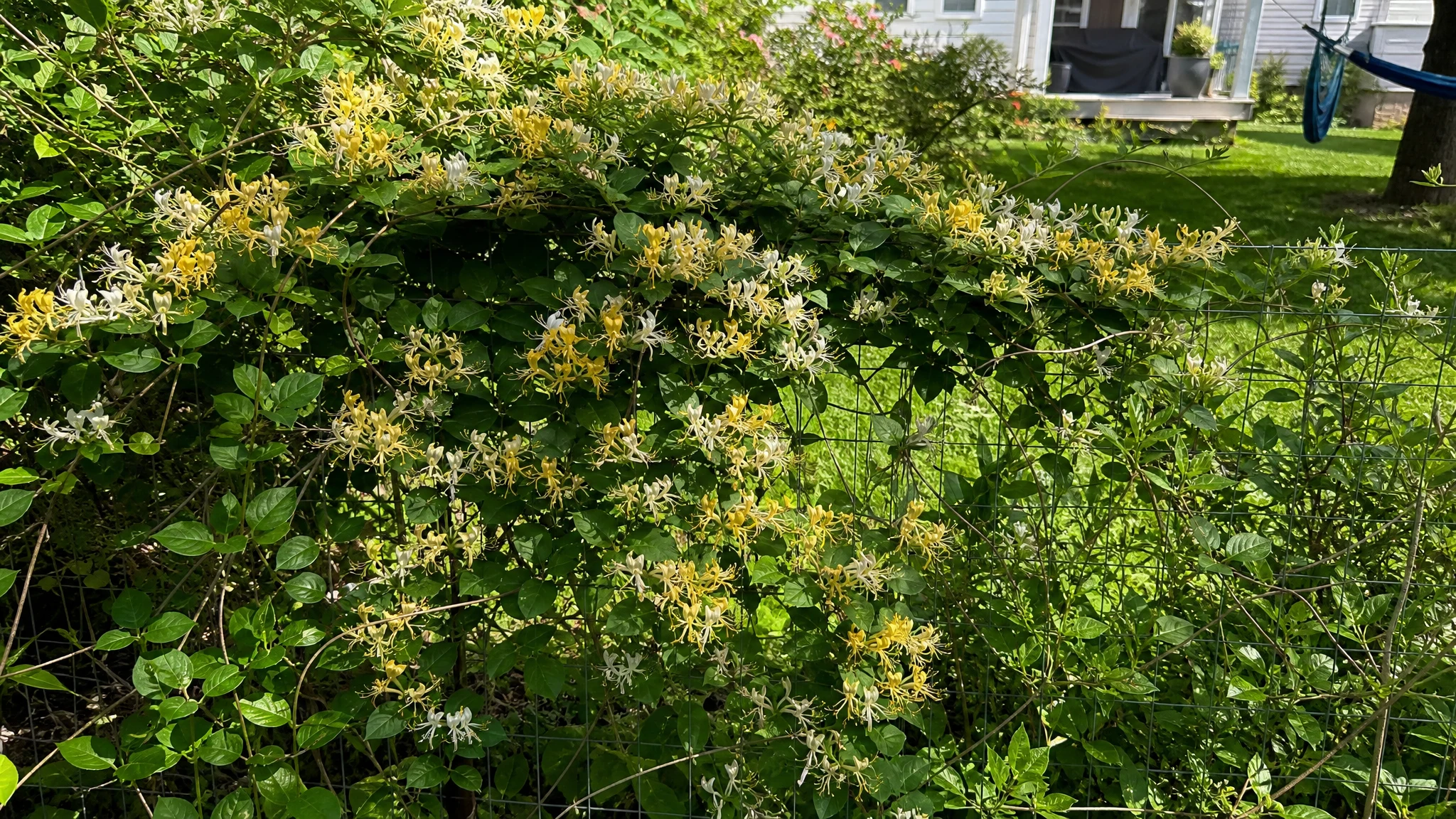
For what the research literature does and does not cover, our article on what honeysuckle research studies goes into more depth, and the vine itself is a good place to meet the plant.
Same flower, different jobs. Keeping them apart is how you get the most out of each.
Honeysuckle Absolute
Honeysuckle Absolute from our own shop, in sizes from 0.5 oz to bulk.
From $13.99
Shop Now →