Honeysuckle History: Poems, Hedgerows, Two Vines
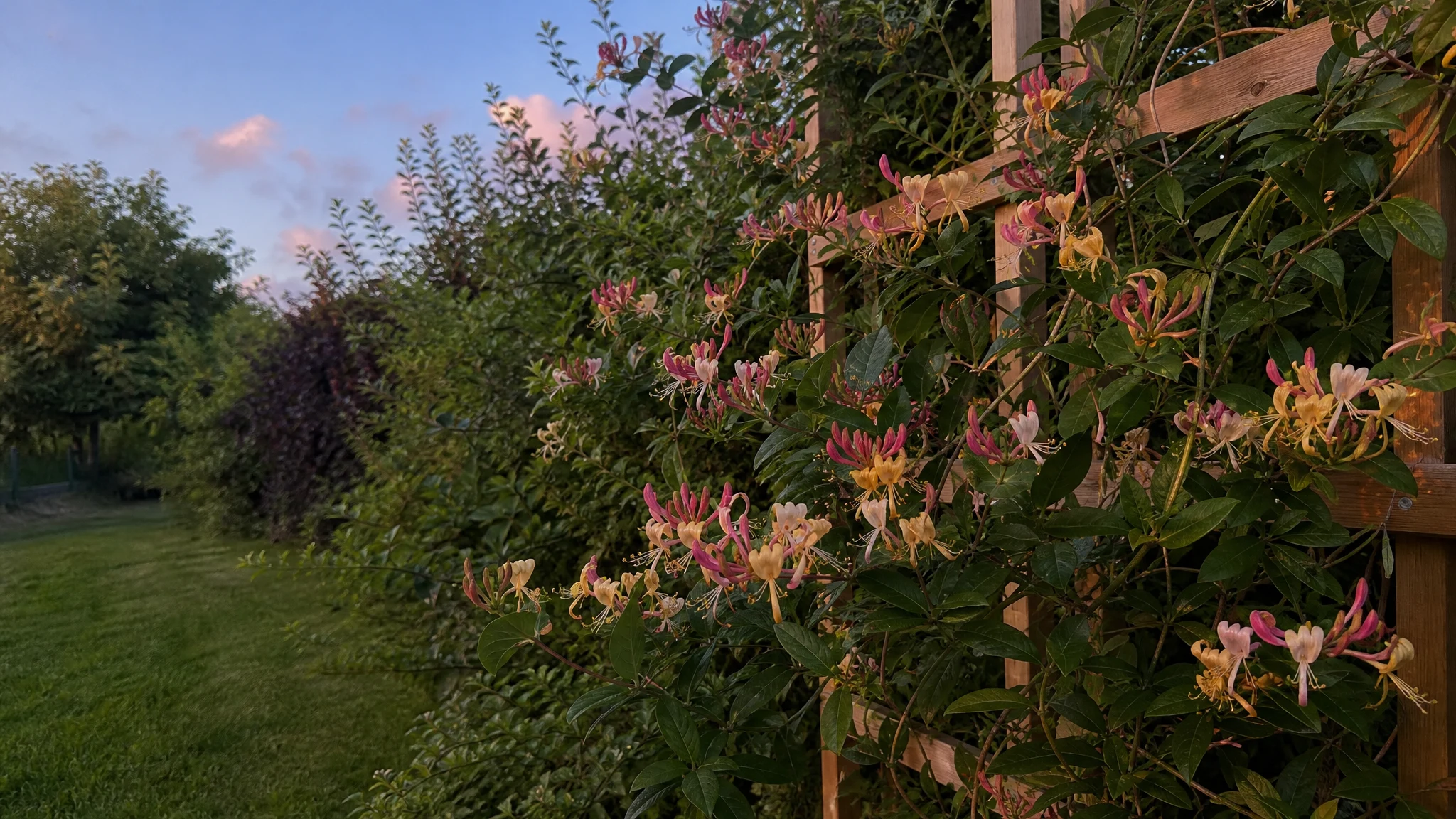
In Act 4 of A Midsummer Night's Dream, Titania tells Bottom that "the woodbine the sweet honeysuckle / Gently entwist[s]," just as ivy rings the elm. It is one of the best-known honeysuckle lines in English, and it comes from a vine that is not the one behind our absolute.
Honeysuckle Absolute
Our own Honeysuckle Absolute, in sizes from 0.5 oz to bulk.
From $13.99
Shop Now →Two vines under one name
It is easy to treat a plant name as one thing, but honeysuckle is a good lesson in why it is not. Ask a gardener in England and a gardener in Virginia what they mean by the word and you may get two different plants. The story of our flower begins by sorting that out, and the rest of it falls into place once you do.
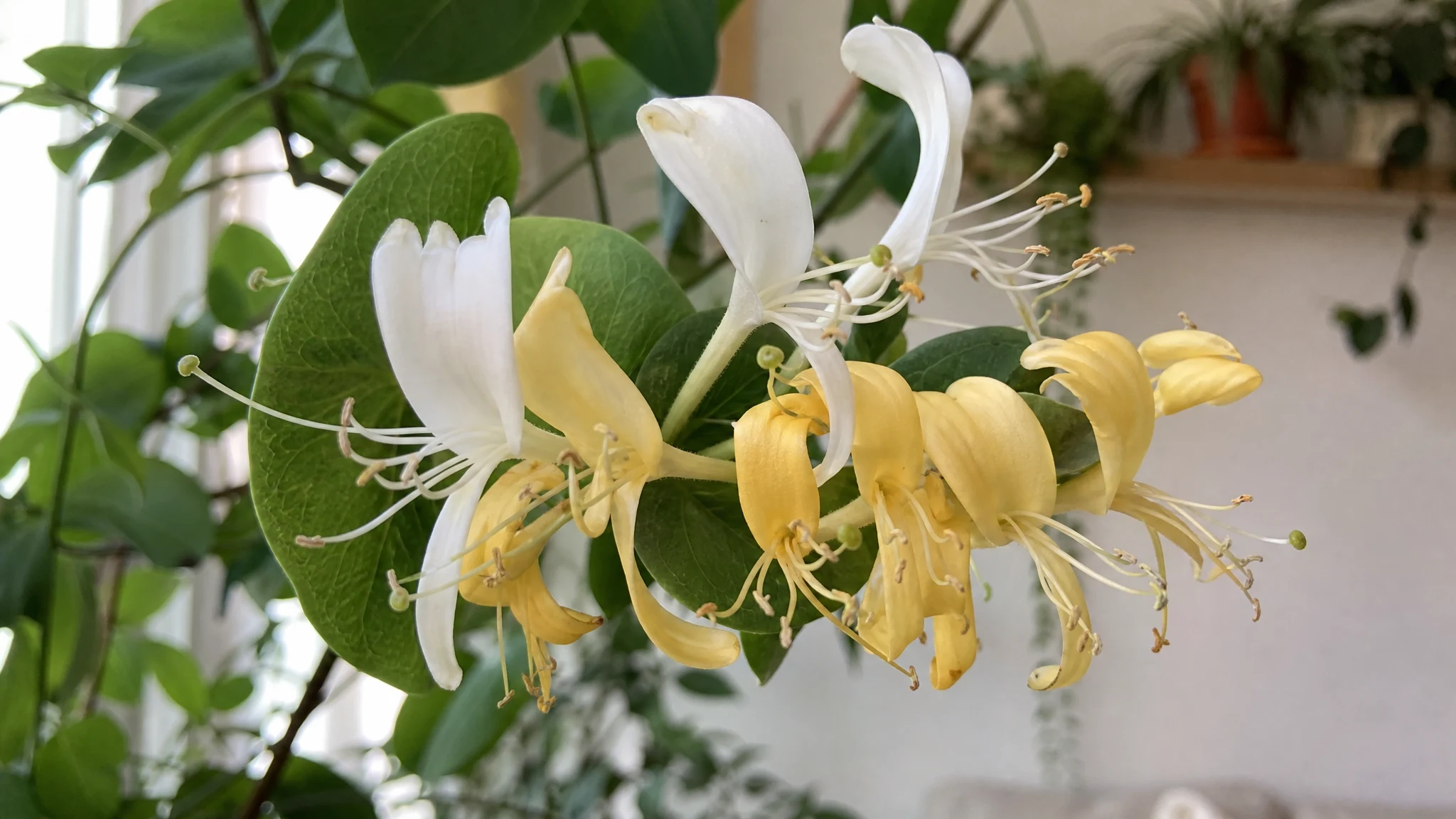
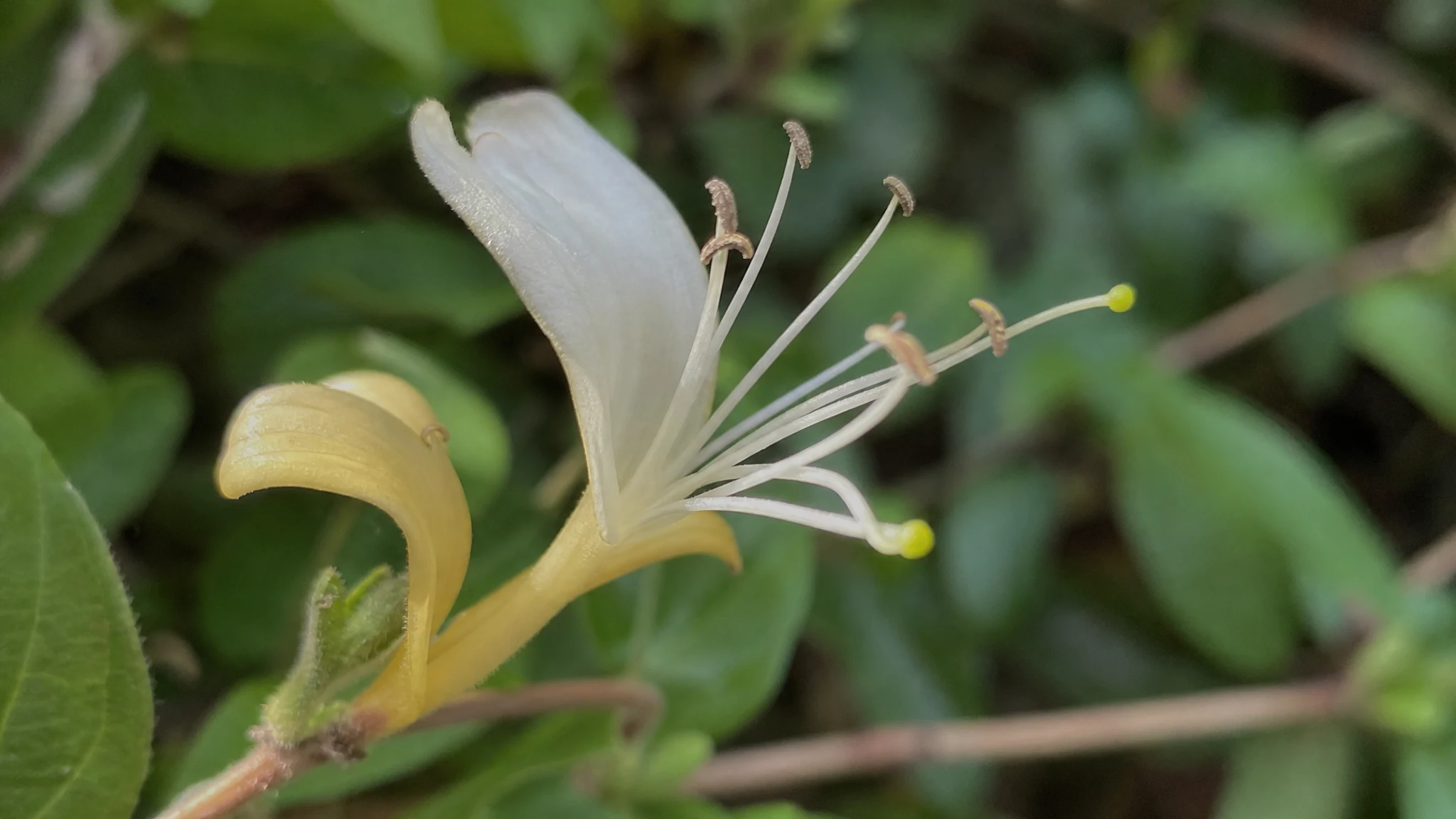
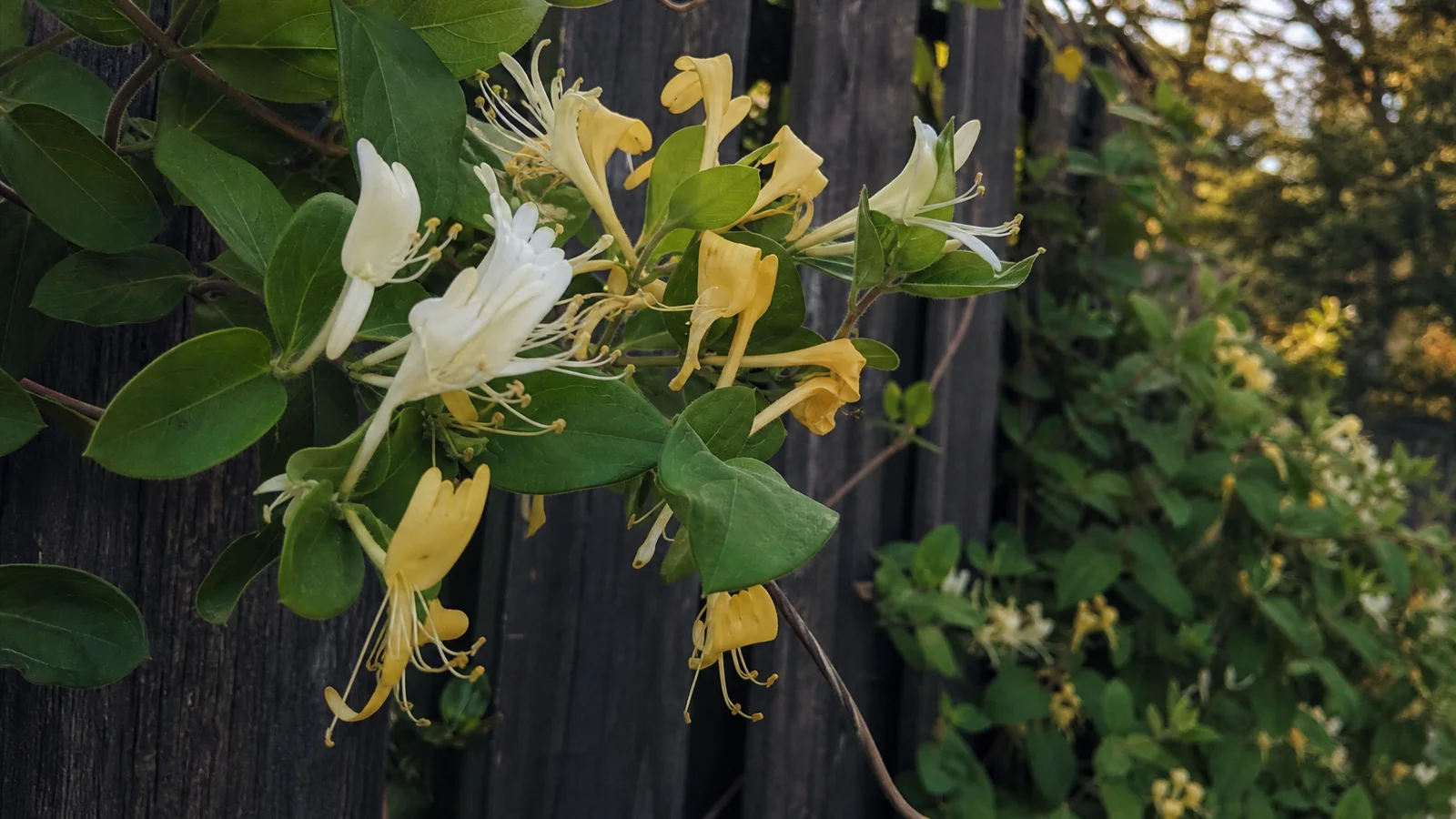
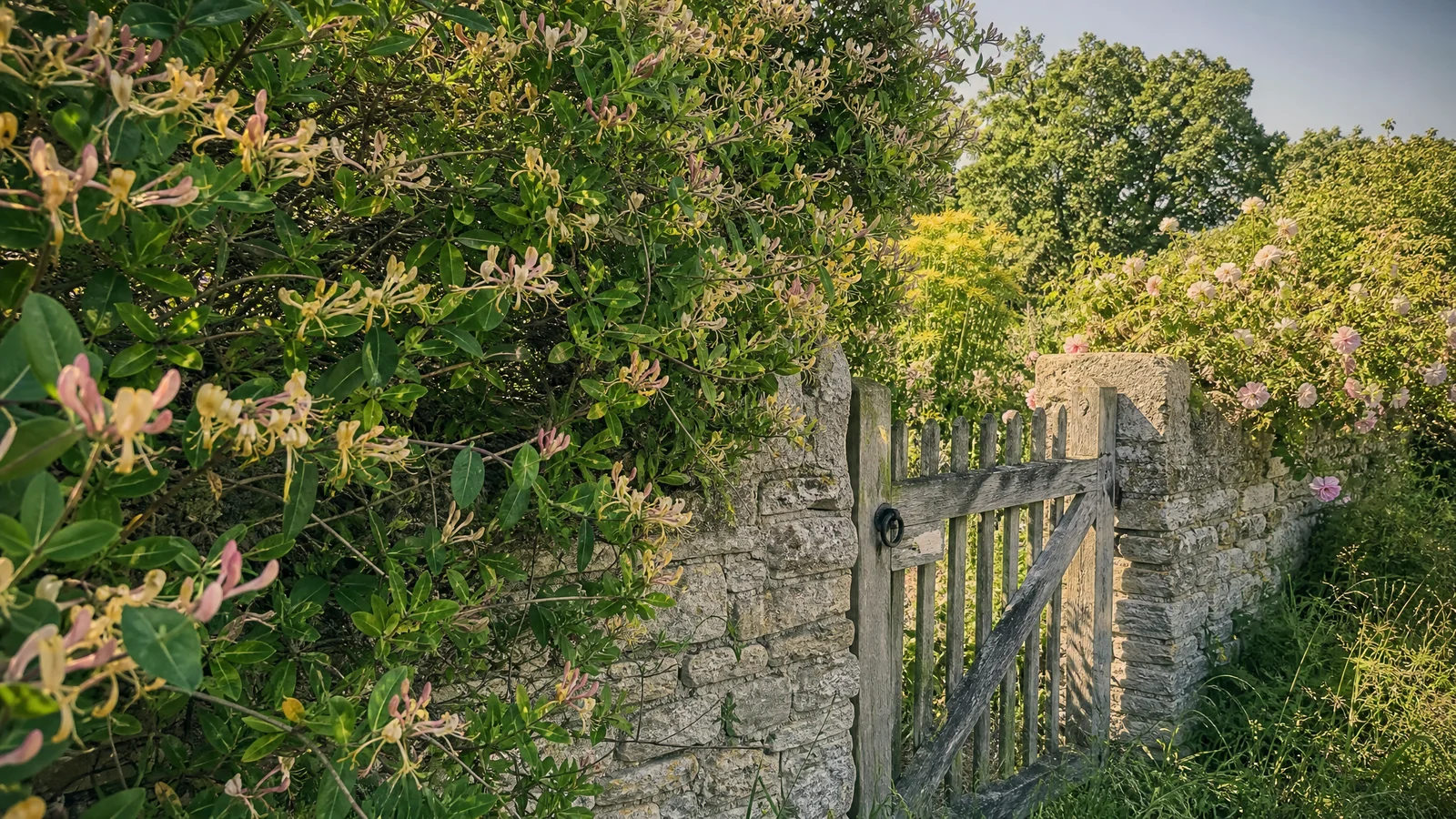
"Honeysuckle" covers a whole genus, Lonicera, with 158 accepted species. The name for the genus honors the Renaissance botanist Adam Lonicer, and Linnaeus applied it in 1753 (Wikipedia, Honeysuckle). The vine of English hedgerows is Lonicera periclymenum, native across Europe and North Africa, and famous for scent that comes out strongly at night (Wikipedia, Lonicera periclymenum). Ours is Lonicera japonica, an East Asian twiner whose white flowers fade to yellow. Different plants, similar habits, and a shared love of dusk.
One easy way to keep them apart is to remember where each one belongs. The hedgerow vine is a creature of cool, damp countryside, while ours is an East Asian climber that has been taken up by farmers, gardeners and perfumers in several parts of the world. Put the two side by side in flower, and you would see cousins rather than twins.
A symbol of clinging, and a literary one
Shakespeare was borrowing an older picture. The twelfth-century lai Chevrefoil, by Marie de France, uses honeysuckle and hazel growing so tightly together that parting them would kill both, as an image of two lovers (Wikipedia, Chevrefoil). Both poets care about how the vine behaves, climbing and clasping. Neither is describing its fragrance, which is worth knowing the next time someone says the plant "means" devotion. We take that idea further in the symbolism of honeysuckle.
If you want to read the lines for yourself, both are short. Try the Shakespeare passage aloud, slowly, and notice how the verb does the work: it is the twining you hear more than the flower. Poems about honeysuckle keep returning to the same image of holding on, which may be why the plant feels so familiar even to people who have never stood beside one.
One small footnote for Shakespeare readers: "woodbine" was a flexible word, and the second use of it in the play may refer to bindweed instead of honeysuckle. Even in the most famous line, the plant is a little slippery.
The Asian vine crosses the Pacific
Japanese honeysuckle has had a very different career in America. UConn Extension dates its arrival to Long Island, New York, in 1806, where it was valued as an ornamental and for erosion control (UConn Extension). The USDA Forest Service adds that it was promoted for many years, planted to cover disturbed ground, and used for wildlife in the mid-1900s (USDA Forest Service FEIS). A plant that people planted on purpose became a plant that land managers now work to remove. Is Japanese honeysuckle invasive? has the details.
In China, a cultivated crop
At home in China the story is agricultural. A review of the plant's literature describes it as widespread along the Yellow and Yangtze river basins and largely cultivated in counties in Hunan, Henan and Shandong, and reports that the flower was grown in Fengqiu County in Henan 1,500 years ago. The plant flowers from May to September, and each blossom lasts only a handful of days (Shang et al., 2011). Our own vine is grown in China, where Lonicera japonica is a major medicinal crop. For how the flower in that medicine relates to our absolute, see Jin Yin Hua and honeysuckle absolute.
Why this matters when you open the bottle
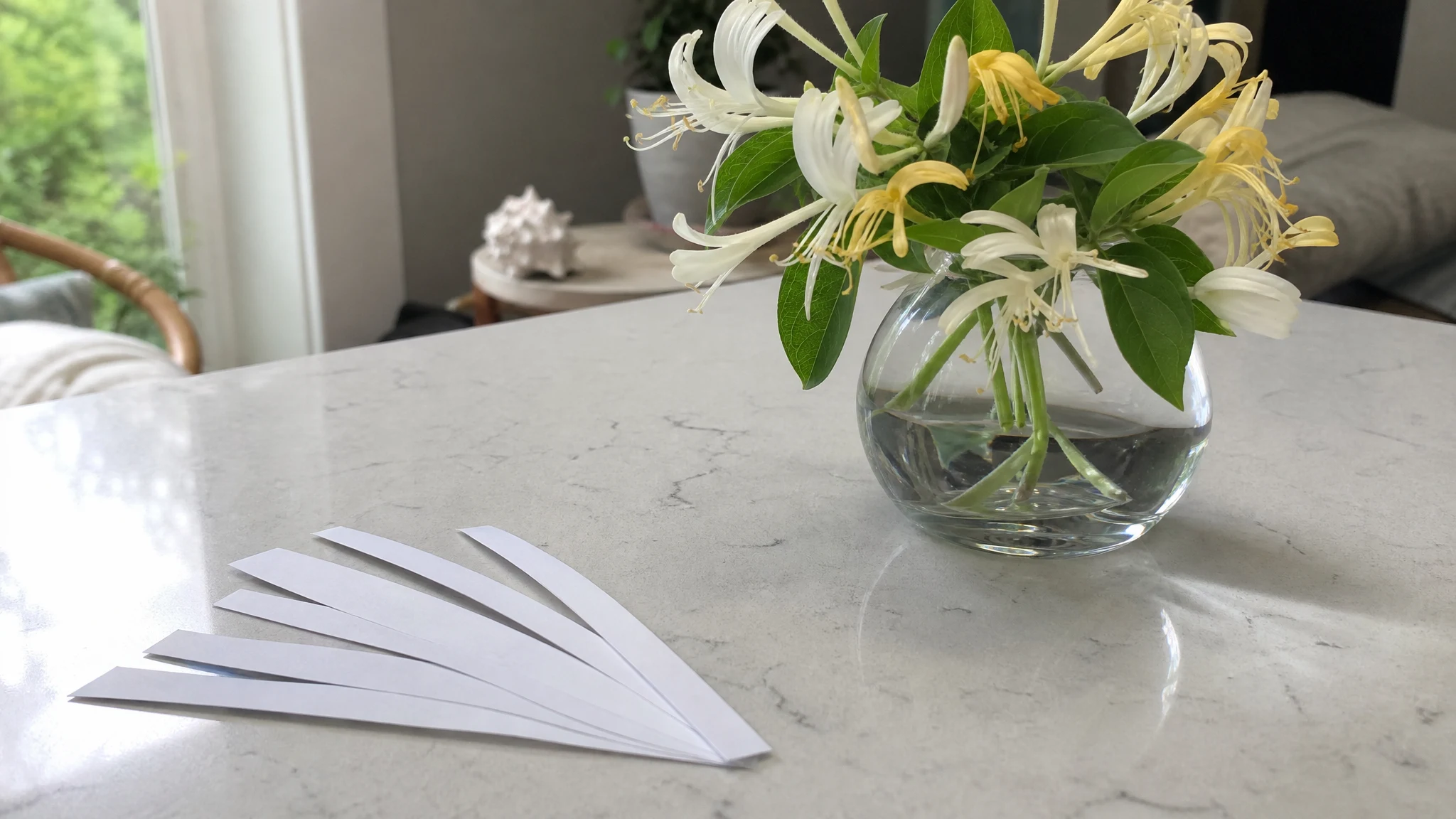
All this history is a good reason to slow down when you open a bottle of our absolute. You are not smelling the English hedgerow of the poems. It is a different vine, taken through a very different process from a walk at dusk. But the sweetness has the same family resemblance, and if you know the garden scent you may recognise something in it. Smell it first on a blotter, away from other scents, and let your memory of a particular fence or porch fill in the rest.
If you are curious, make a small project of it. Find out which honeysuckle grows near you, ask your local extension office whether it is native or an escapee, and compare the flowers in your own hand. It is a gentle way to learn what is growing around you, and it makes the stories above feel a lot less distant.
Where the stories meet
Put the threads together and you get a lovely irony. The honeysuckle of English poetry is a woodland climber that perfumes the night, the one in your garden center might be an escapee, and the flower behind a bottle of absolute comes from a cultivated crop in East Asia. What connects all of them is that tubular, sweet-smelling bloom, and the habit of climbing toward whatever is nearby.
So when you open a bottle of the absolute, you are smelling a very old story with a very long reach.
Honeysuckle Absolute
Honeysuckle Absolute from our own shop, in sizes from 0.5 oz to bulk.
From $13.99
Shop Now →