Honeysuckle and Jasmine: A Roll-On Pairing Guide
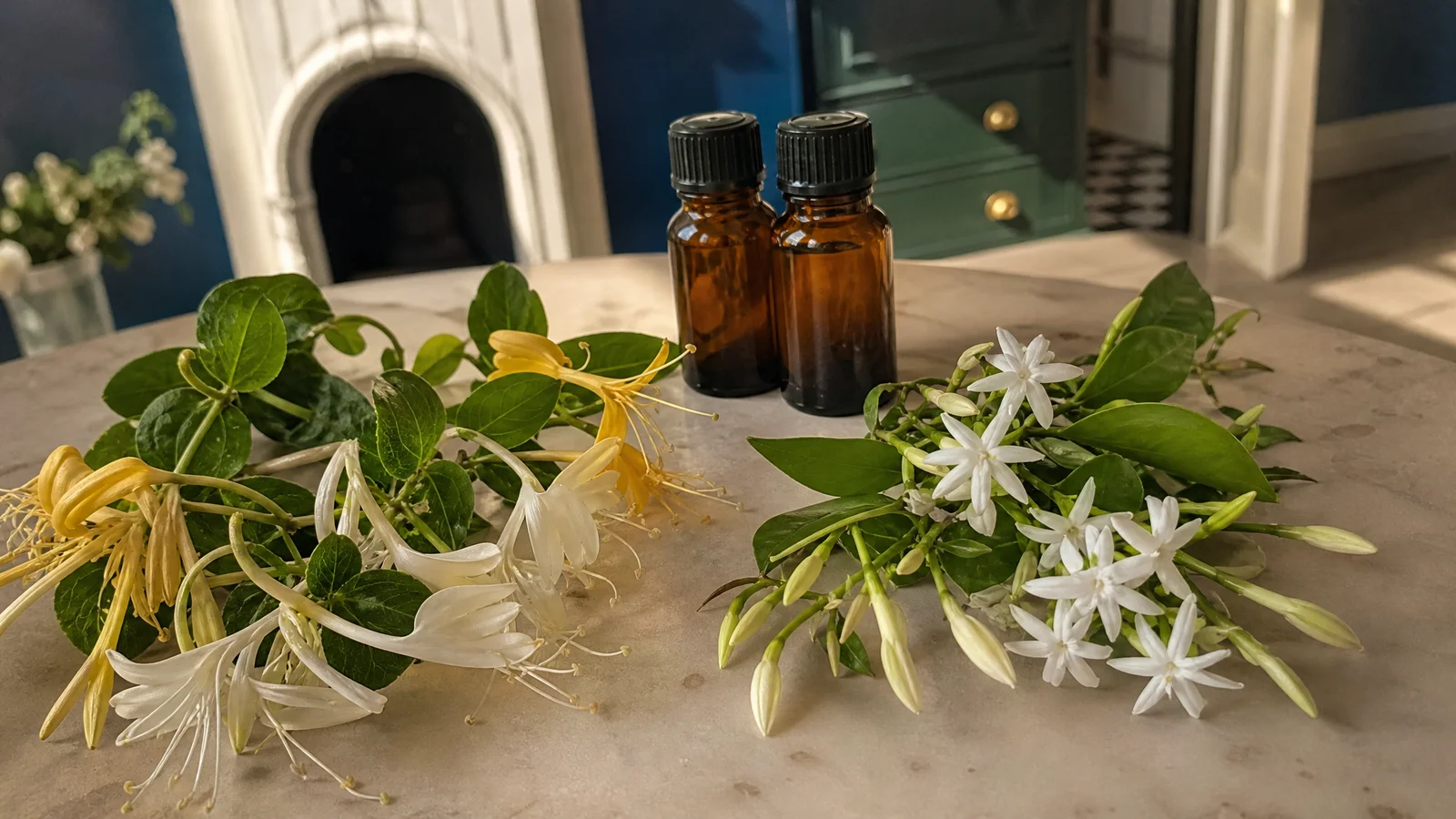
Honeysuckle and jasmine look like natural partners: both white flowers, both heart notes, both at home in an evening perfume. The pairing is worth exploring, and the best way in is a small roll-on with the honeysuckle held steady and the jasmine varied around it.
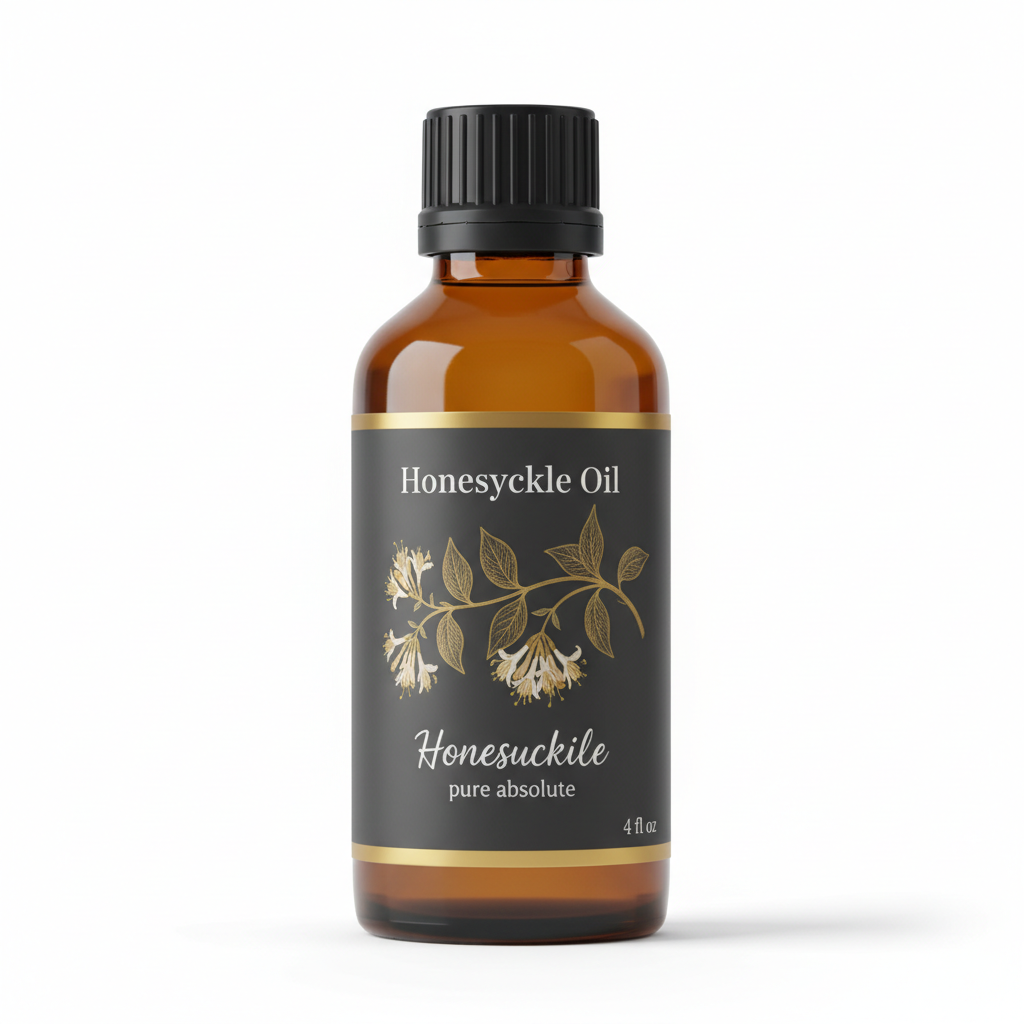
Honeysuckle Absolute
Our own Honeysuckle Absolute, in sizes from 0.5 oz to bulk.
From $13.99
Shop Now →Two white florals, two moods
Our honeysuckle is nectarous and green-floral, with a soft jasmine-adjacent warmth. Jasmine grandiflorum absolute is described by the reference database ScenTree as an orange liquid and a heart note with white-floral, sunny and animalic facets. Its listed composition is led by benzyl acetate (40 to 65%), with linalool, farnesene, eugenol, jasmone, indole and benzyl benzoate behind it. The honeysuckle literature points to linalool, jasmone and methyl jasmonate among the markers of the flower concrete, so the families overlap, even though the figures cannot be compared directly.
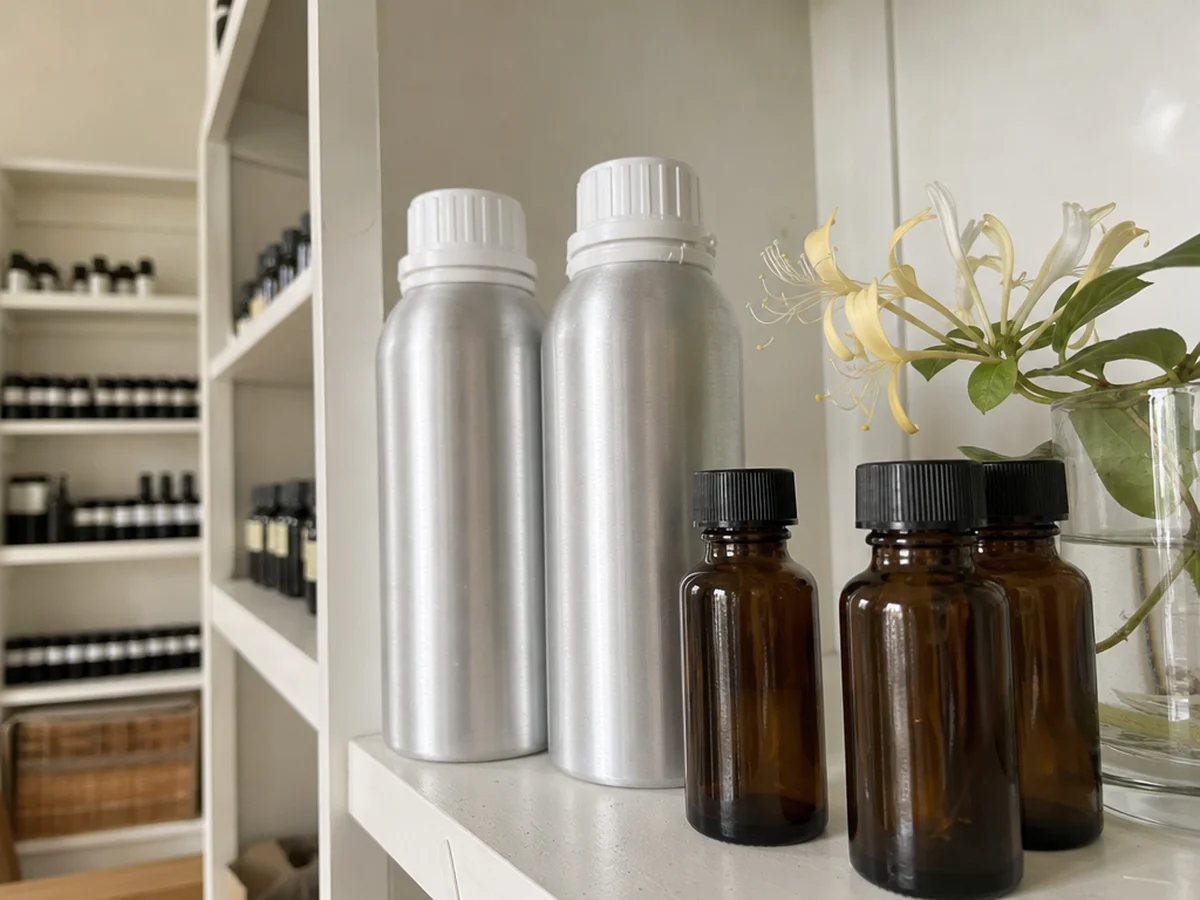
Our reading, from the two lists, is that honeysuckle brings the green, nectar side to a pair, and jasmine brings depth and warmth. Your nose is the only judge, so try them on strips before you commit. Our comparison of honeysuckle and jasmine goes through the differences.
The simplest way to learn the pair is a side-by-side blotter test. Dip one strip in each, label them in pencil, and smell them separately. Then hold the two strips together near your nose and slowly move them closer and farther away. Pay attention to what changes: you may find the jasmine takes over quickly, or that honeysuckle holds its place. Come back to the strips after ten minutes and again after an hour, because the scent you notice at the start is rarely the one that stays.
Start with jasmine's own paperwork
Our guidance for the honeysuckle is 0.5% to 2% in a carrier, patch tested first. Jasmine is the one that sets the ceiling. ScenTree notes an IFRA restriction on jasmine grandiflorum absolute for dermal sensitization, and IFRA describes its Standards as prohibitions, restrictions and specifications that are compulsory for members and leave final responsibility for safe products with the company making them. We could not read the limit table clearly, so we do not quote a number. Ask your jasmine supplier for the certificate for your product category, and let the lower of the two ceilings win. Our IFRA article explains what we could check.
It also pays to be specific about which jasmine you are buying. Grandiflorum and sambac are different plants with different profiles, and the label should name the species, the extraction method and the batch.
Three ratios in a 10 g roll-on
It is worth saying that nothing about this pairing has to be complicated. Many of the best perfumes are only a few materials, and a simple two-flower roll-on is a satisfying way to learn how scents behave together. Keep the first one small and plain, and leave other partners out until you know this pair well.
Hold the honeysuckle at 1%, which is 0.10 g of absolute or 1.0 g of a 10% stock, and vary the jasmine by weight of absolute.
| Honeysuckle : jasmine | Jasmine in 10 g | Jasmine in finished oil |
|---|---|---|
| 3 : 1, honeysuckle lead | 0.033 g | 0.33% |
| 1 : 1, even | 0.10 g | 1% |
| 1 : 3, jasmine lead | 0.30 g | 3% |
The last row is only for a jasmine certificate that allows it, and the first is the gentlest place to begin. Weighing 0.033 g is not realistic, so make a 10% stock of each absolute, which turns it into 0.33 g of stock. The dilution guide shows how, and a gram scale reading to 0.01 g is the sensible tool. Warm the honeysuckle bottle in your hand first. Our How It's Made page says it thickens in the cold.
When you do start to blend, keep things plain and tidy. Work on a clean surface, wash and dry your hands first, and keep a small spoon or stirrer for each material. Jasmine absolutes are often thick, much like ours, so a minute in warm hands before weighing makes them easier to handle. Write down each addition as you go. A recipe written afterwards from memory is rarely the recipe you actually made.
Letting the blend rest
Once the roll-on is mixed, give it a day or two with the cap on before you judge it. A new blend can smell a little scattered at first, as though each ingredient is speaking separately, and it may come together after resting. Keep it somewhere cool and dark, and try it on your inner wrist rather than a blotter, since how a scent behaves on skin is the real test. If it needs a tweak, change only one thing, and by a small amount.
A word on labels, if you sell it
If the roll-on is going to a customer, ingredient labelling comes along with it. The European Commission explains that Regulation (EU) 2023/1545 added 56 fragrance allergens, which must be listed above 0.001% in leave-on and 0.01% in rinse-off products. ScenTree names benzyl benzoate, eugenol and linalool among the allergenic components of jasmine absolute. As arithmetic, 1% jasmine at about 8% linalool contributes around 0.08% linalool to the finished oil, far above the labelling threshold. For US sales, our labeling article is a starting point, and a regulatory professional is the right check for a real product.
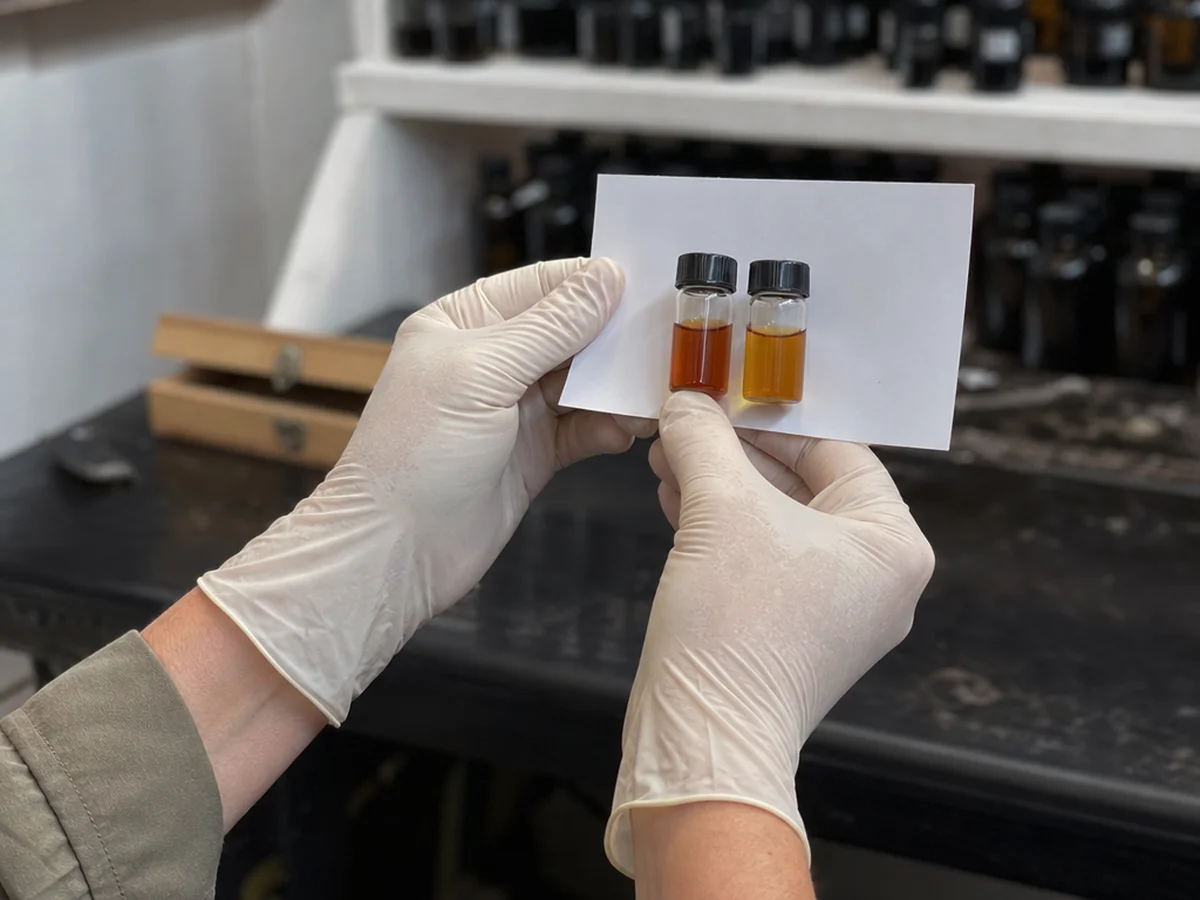
Once you have found a ratio you like, write it down by weight and the lot numbers of both absolutes, and the pair will be easy to repeat.
Honeysuckle Absolute
Honeysuckle Absolute from our own shop, in sizes from 0.5 oz to bulk.
From $13.99
Shop Now →