Honeysuckle Cuticle Oil in Jojoba: A Small Batch
Hands do everything: they type, wash, cook and wave. A cuticle oil is a tiny, quiet bit of care for them, and with honeysuckle absolute it can smell like a garden gate in summer. The trick is how little you use, so this recipe is built on a weighed 10% stock and a small bottle.
Honeysuckle Absolute
Our own Honeysuckle Absolute, in sizes from 0.5 oz to bulk.
From $13.99
Shop Now →Why jojoba, and why a stock
We like jojoba as the carrier here because it holds up well. In a Japanese study, jojoba oil, olive oil and squalene were heated at 60 C for 60 days, and jojoba came through with an unchanged acid value and the lowest peroxide and carbonyl readings of the three (Tsuchimoto, Sakai and Fukui, 2022). The same paper found that crude jojoba oils varied from one maker, country and year to the next, so buy a fresh bottle with a date on it and smell it before you use it. You will find jojoba at a craft shop, pharmacy or grocery; we sell only the absolute.
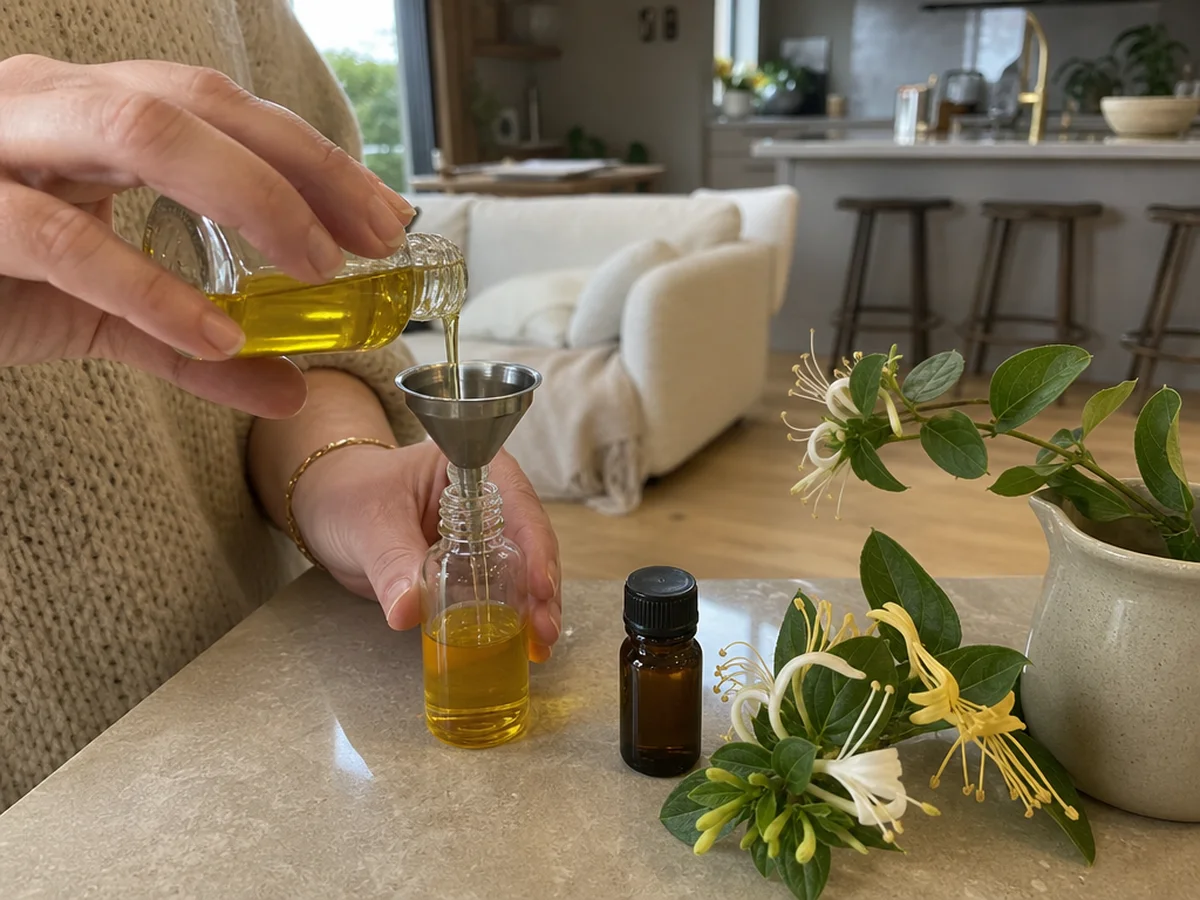
The absolute is thick and strong, and a dose this small is one drop or less, which no one can place reliably. So make a 10% stock first: weigh 1 g of absolute into 9 g of jojoba and stir until no streaks remain. If the bottle is cold, warm it in your hand for a minute so it pours. Then fill a 10 ml bottle by weight.
| Strength | Absolute in the 10 g fill | 10% stock | Plain jojoba |
|---|---|---|---|
| 0.5% | 0.05 g | 0.5 g | 9.5 g |
| 1% | 0.10 g | 1.0 g | 9.0 g |
| 2% | 0.20 g | 2.0 g | 8.0 g |
One batch of stock fills twenty bottles at 0.5%, ten at 1%, or five at 2%, and a 0.5 oz bottle of absolute holds enough for a great many batches of stock. We recommend starting at 0.5%: our dilution guidance is 0.5% to 2% in a carrier with a patch test first, and hands are a good place to stay at the low end, as the next section explains. Label the stock and the bottle with the strength, the date and the lot number from the absolute.
Why hands change the dose
There is something quietly pleasing about a recipe this small. You need a scale, a tiny glass beaker or jar, a stirring stick and a clean bottle with a dropper, and the whole job takes about ten minutes. Set everything out on a clean towel before you begin, wash and dry your hands, and have a pen ready for the label. Working in good light helps, since you will want to see that the stock looks even, with no streaks left.
Fragrance allergy behaves differently on hands. DermNet notes that fragrance allergy is thought to affect around 1% of adults, that hands are among the most commonly affected areas, and that fragrance can travel from hands to the face. Reactions are delayed too, showing up hours to days later (DermNet, Fragrance allergy). It follows that the number of applications, not the size of each, is what grows on hands.
So patch test properly: a small line of the finished oil on the inner forearm, left for a day or two before you use it on your hands. Keep it away from eyes, children and pets. If you have reacted to scented products before, ask a dermatologist or allergist first. Our post on how sensitization works goes into the reasons.
Using it, and keeping it simple
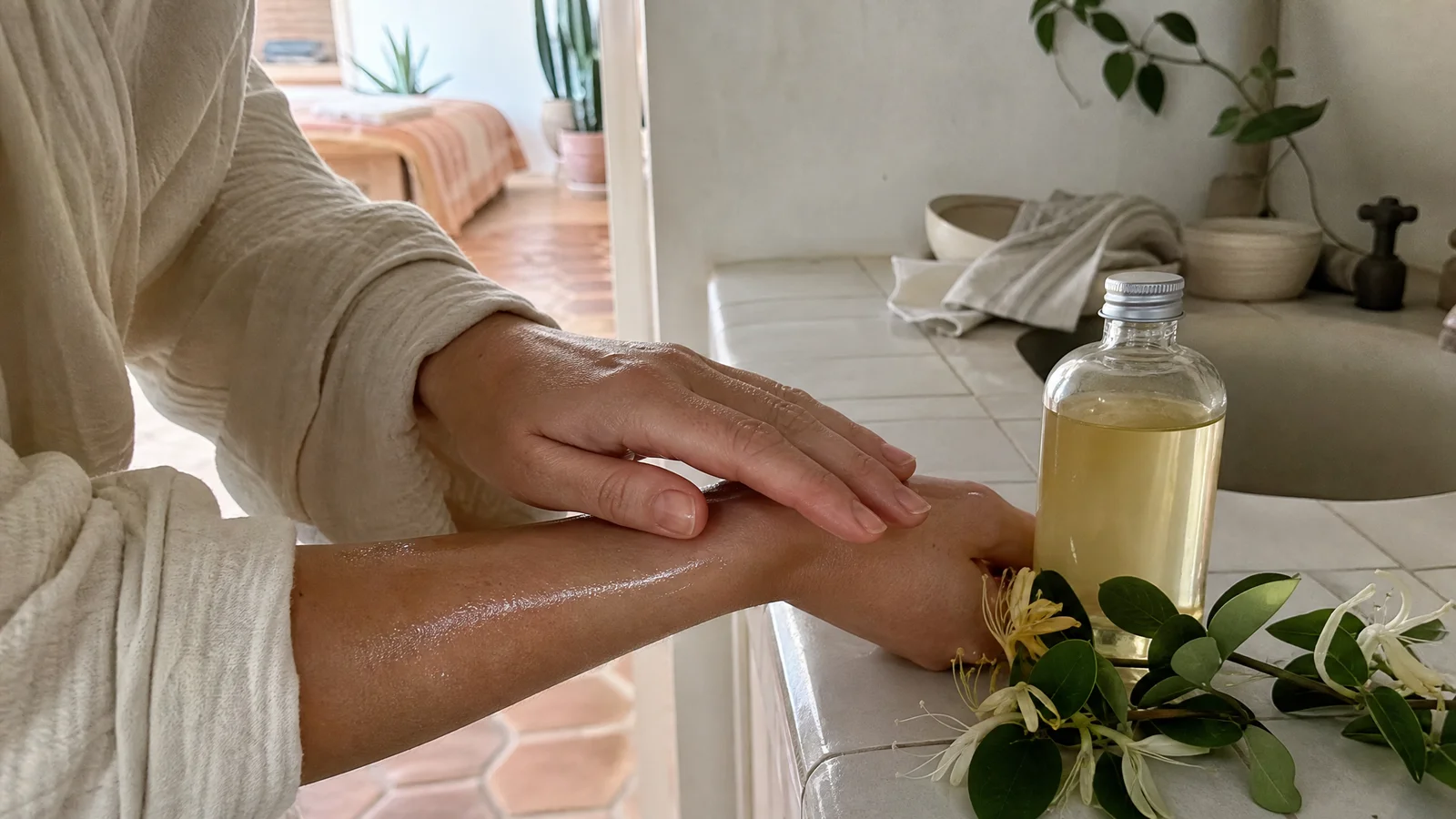
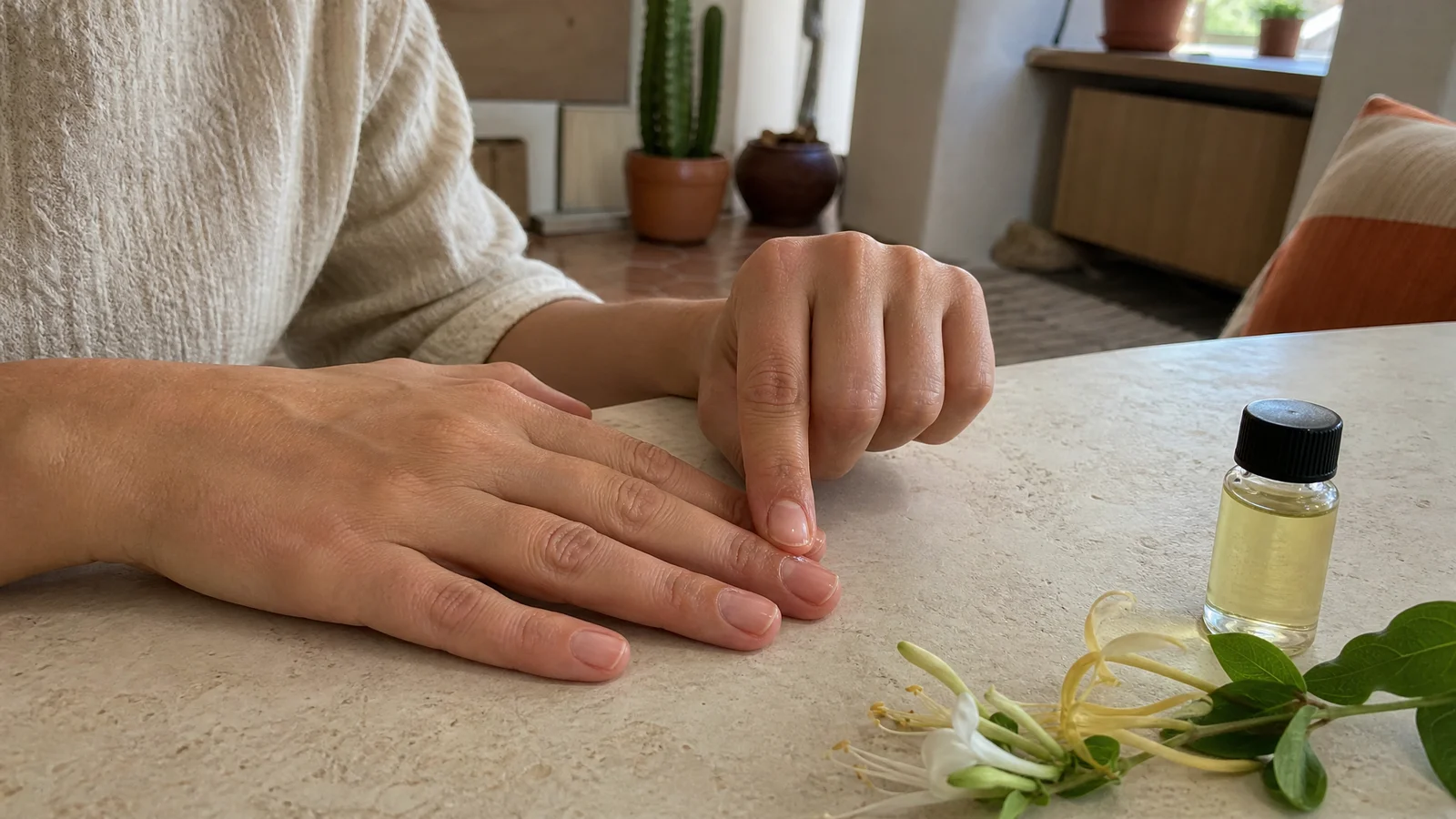
Put a drop on each nail, press it into the skin around the nail, and massage it in. It is a scented conditioning oil, and that is all we would call it: it leaves cuticles feeling soft and smooth. Keep to those words on a label, too. The FDA says a product's status depends on its intended use, and plant origin makes no difference (FDA, Aromatherapy). A claim about nail conditions is a question for a dermatologist.
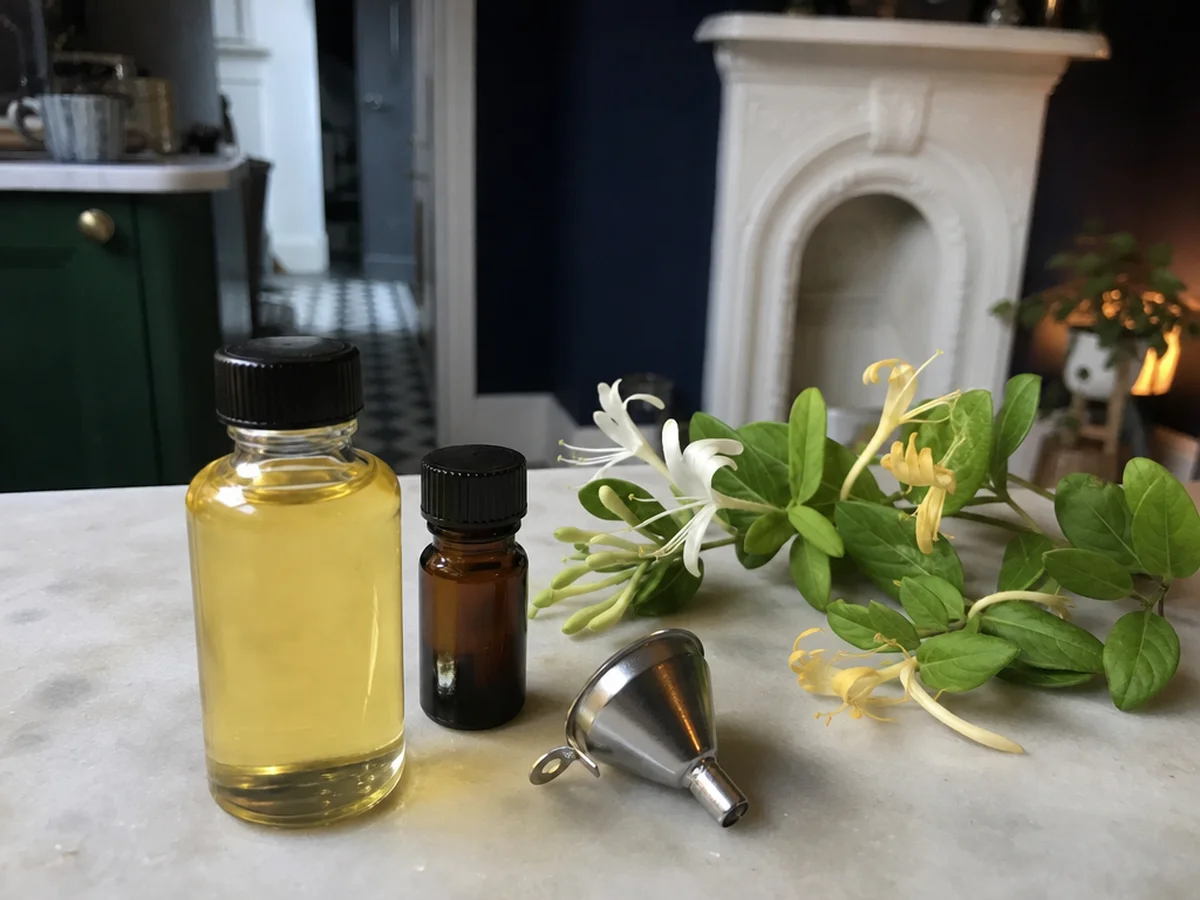
When you first try it, smell the bottle before you put it on. At 0.5% the scent is faint, a whisper of sweet flower that you mostly notice when your hands come close to your face. That is the right level for something you will use many times a day. If it seems too quiet, resist adding more at once, and give it a few days. Your nose gets used to a scent quickly, and a bottle that seems shy on day one may seem just right by the end of the week.
An oil is also not an invitation to cut. A dermatologist quoted in an American Academy of Dermatology release describes the cuticle as a nail's protection against organisms and advises people not to let a technician cut it (AAD release via Newswise, 4 August 2000). It is an older source, but a sensible one. Let the oil soften and scent, and leave the cuticle in place.
One easy habit is to keep a bottle where you already pause for a moment, such as beside the sink at home, on a desk or in a bag. Using it at the same time each day, say after washing up in the evening, makes it a small ritual rather than another chore. Oil on fingertips will mark paper and phone screens, so rub in well and wipe your fingers on a clean cloth before touching anything you care about.
Two housekeeping notes. The absolute can tint pale products, so look at your fingertips in daylight after the first use. And make small batches: 10 ml at a time, dated, and retire any oil that starts smelling different. For the weighing method in more depth, see our 10% dilution walkthrough (use oil, not the ethanol it describes, here) and the carrier comparison.
A bottle by the sink, a drop at a time, and your hands smell faintly of a vine in bloom.
Honeysuckle Absolute
Honeysuckle Absolute from our own shop, in sizes from 0.5 oz to bulk.
From $13.99
Shop Now →Sources & Further Reading
- Tsuchimoto S, Sakai H, Fukui K, 2022. BPB Reports 5(6):121-124. jstage.jst.go.jp/article/bpbreports/5/6/5_121
- DermNet. Fragrance allergy (July 2020). dermnetnz.org/topics/fragrance-allergy
- FDA. Aromatherapy (content current as of 09/08/2023). fda.gov/cosmetics/cosmetic-products/aromatherapy
- American Academy of Dermatology release via Newswise, 4 August 2000. newswise.com/articles/tips-for-using-nail-cosmetics