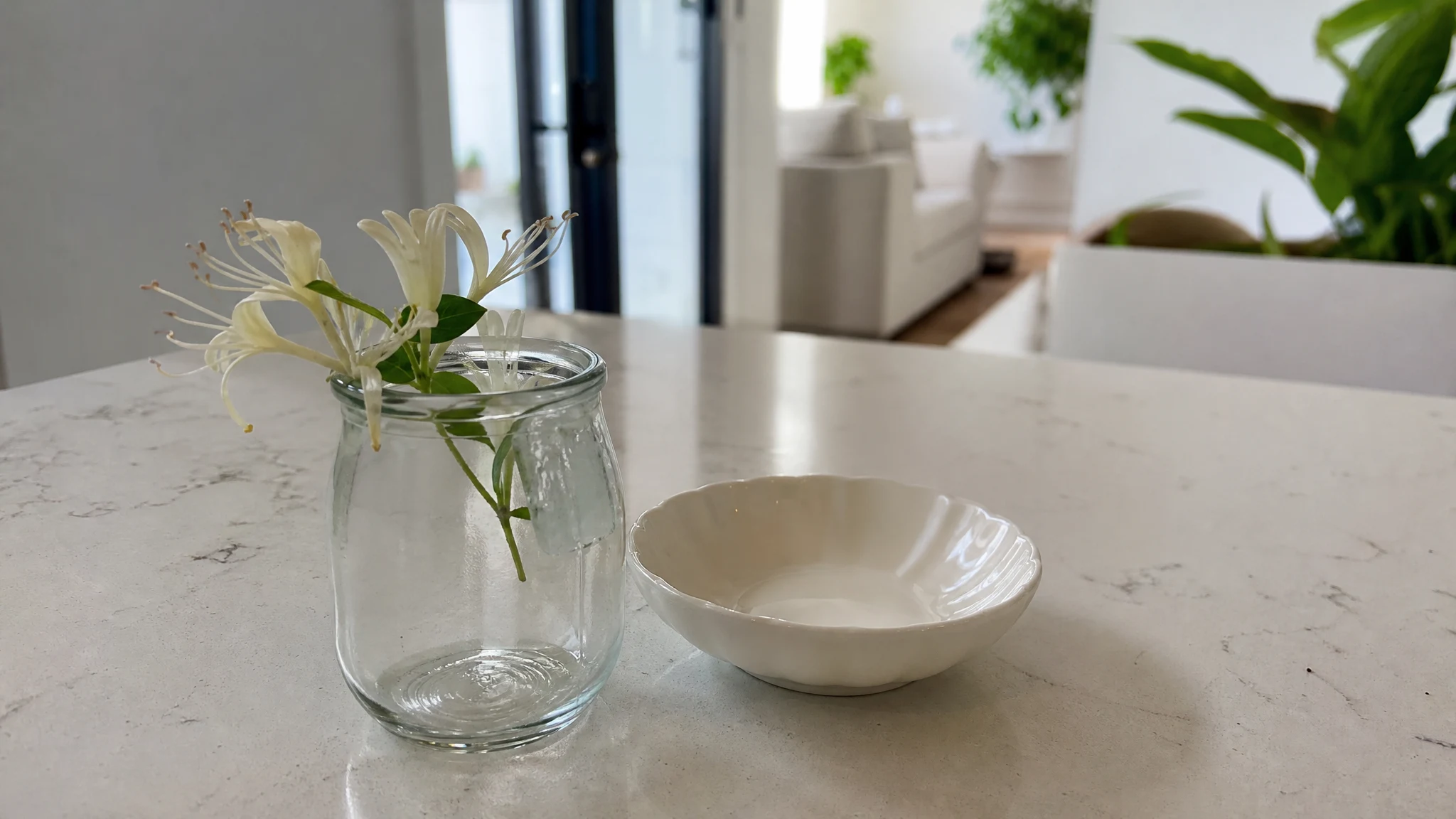
Last Drops of Honeysuckle Absolute: 8 Ways to Use Them
Honeysuckle absolute is thick enough that a bottle which looks finished can still hold a gram or more, and that gram is a lot of perfume. Before you rinse it down the sink or leave it to dry out in a cupboard, here are eight ways to put the last of it to work.
Honeysuckle Absolute
Our own Honeysuckle Absolute, in sizes from 0.5 oz to bulk.
From $13.99
Shop Now →Weigh before you decide
Everything below depends on how much you actually have, so a small scale that reads to 0.01 g is the most useful tool in this article. A rough guide: about 1 g covers 100 g of a finished body product at 1%, and about 0.3 g covers 30 g at 1%. Drops are only a convention for something this viscous (roughly 20 to the millilitre, and the Certificate of Analysis we publish for one batch gives a relative density of 0.989, so a drop is about 0.05 g), and a cold, thick absolute pours bigger drops than a warm one.
For anything that touches skin we recommend 0.5% to 2% in a carrier oil, with a patch test first. Our article on IFRA limits and honeysuckle absolute goes into what that range does and does not tell you.
There is something satisfying about finishing a bottle properly. We would rather see a gram of absolute turned into one lovely small thing than left to dry in a cupboard, and the ideas below all start from that attitude.
1. Warm it and let it drain
Absolutes thicken with age and in the cold, and that is normal. Warm the bottle in your hand for a minute and it pours again; Robert Tisserand makes the same point about chilled oils generally. Then stand the bottle neck-down on a clean dish for a few minutes and weigh what drains. A hand is warm enough. There is no need for hot water.
Before you start any of these, set out a clean saucer and a few labelled containers so each idea has a place to go. It is much easier to finish a bottle when nothing has to be hunted for halfway through.
2. Turn it into a smelling stock
If you have at least half a gram, a 10% stock in ethanol is the standard perfumer's way to keep a precious material ready for blotter work. We walk through the method in making a 10% dilution by weight. It is for smelling and sketching blends, not for skin, and ethanol is flammable, so work away from flames.
3. Rinse the bottle with a little jojoba
Add a small, weighed amount of jojoba from a craft or supply shop, cap, warm and swirl. You will not know the strength, because you do not know what was left, so treat it as a scent concentrate for a cotton pad in a drawer or a fabric sachet rather than something for skin.
4. Scent a sachet or a drawer liner
A trace of absolute on cotton or unglazed ceramic scents a surprising amount of space, with no carrier and no water. It is also the easiest first project, which is why our linen spray and sachets article begins there. Keep sachets where children and pets cannot get to them.
5. Try a pairing before you buy another size
A gram of leftover absolute is plenty for blotter experiments. Bergamot, sweet orange, neroli, ylang ylang, cedarwood and sandalwood are the partners we suggest, and you will find them at a perfumery-supplies seller. The neroli accord has ratios worked out by weight. Label every blotter and smell at set intervals.
6. Put it into one small batch
A tidy way to finish a bottle is a single small batch with a written method, such as the scent-only hair oil. Rinse the last of the absolute into your carrier oil first, rather than tipping a sticky bottle straight into a water-based mixture, and work out the percentage from the weight you recovered. If you label what you make, keep the wording to scent. FDA draws the line between a cosmetic and a drug by intended use, and plant origin does not change that.
One practical tip before the last two ideas: work on a clean tray or saucer, with a paper towel under everything. A sticky, thick absolute has a way of finding its way onto fingers, caps and the edge of the bench, and a quick wipe with a paper towel as you go saves a lot of fuss later.
7. Keep a reference vial
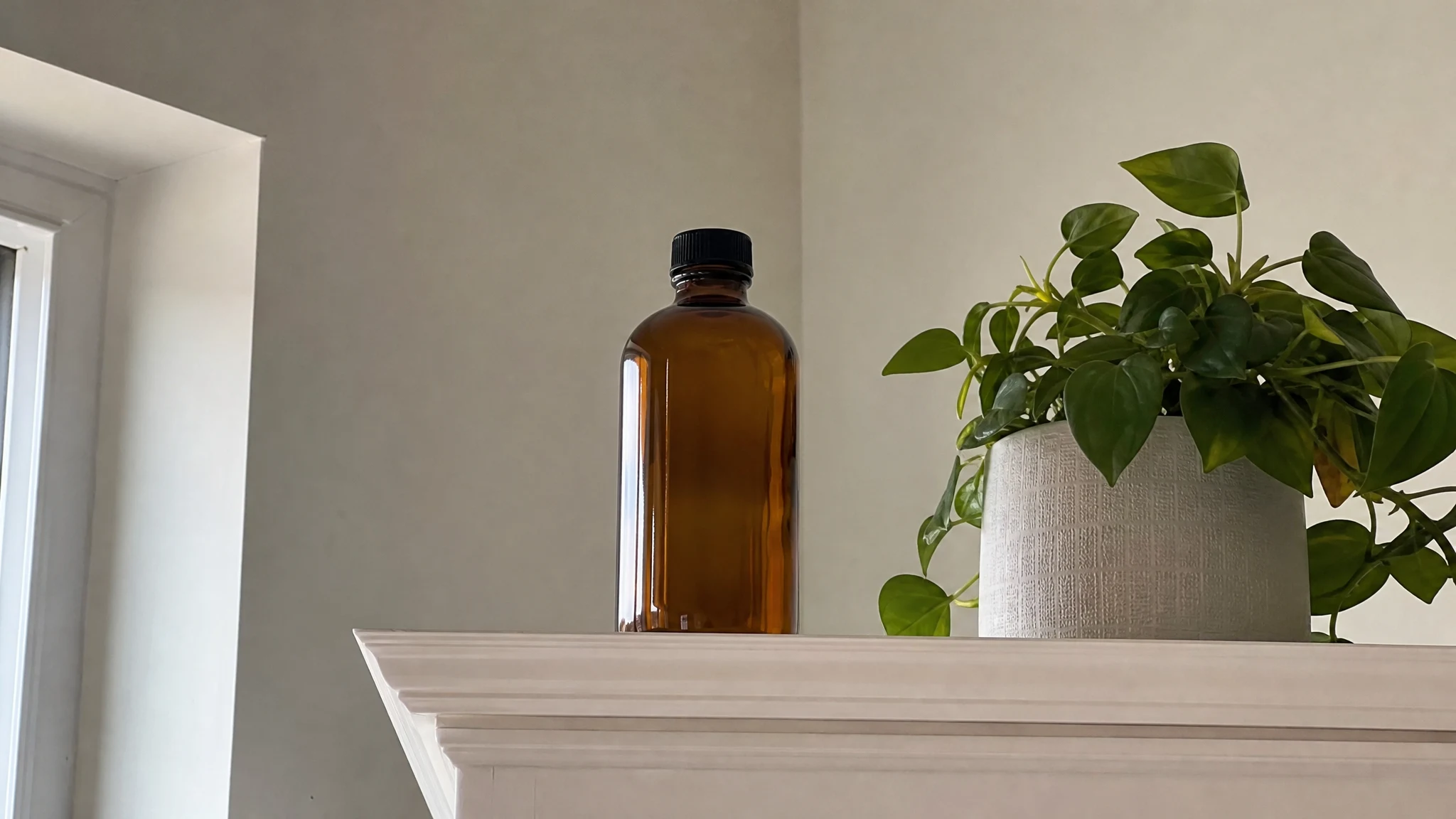
If you reorder, set aside half a gram of the old lot in a small amber vial marked with the lot number and date. Smelling it beside the new bottle is the quickest way to see whether two lots seem alike, and our appearance article covers what to compare.
8. Retire it if it has clearly changed
Oxidation is the one reason to let a bottle go. The Tisserand Institute notes that oxidised oils carry peroxides that raise the chance of skin reactions, and a bottle that has been opened many times and reduced to a film has had the most air. If the residue smells sharp, sour or flat next to a fresh sample, keep it off skin and ask your local waste authority how to dispose of small amounts of fragrance material. Our storage guide shows how to avoid getting there.
The simplest rule for the last drops is to weigh them, smell them against something fresh, and give them a job that fits the amount.
Honeysuckle Absolute
Honeysuckle Absolute from our own shop, in sizes from 0.5 oz to bulk.
From $13.99
Shop Now →