Does Honeysuckle Absolute Go Bad? How to Tell
Every maker has that bottle: bought for a project, used twice, then pushed to the back of a drawer. When you finally find it, the obvious question is whether it still counts as honeysuckle absolute or has turned into something you should not put on your skin. The honest answer is that it changes slowly, the changes are easy to notice if you know what to look for, and your nose is the best instrument you own.
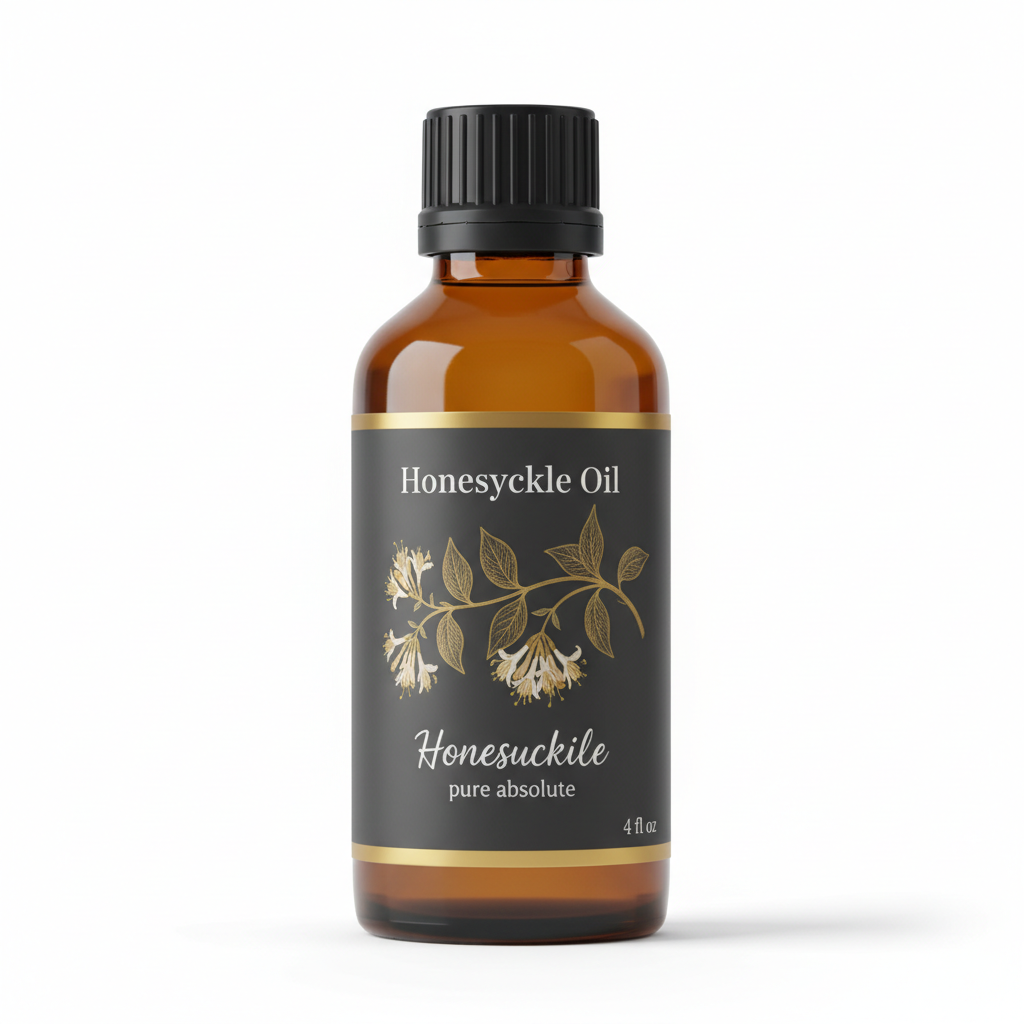
Honeysuckle Absolute
Our own Honeysuckle Absolute, in sizes from 0.5 oz to bulk.
From $13.99
Shop Now →What is actually happening in the bottle
An absolute is a concentrated mix of aroma molecules, and many of those molecules react with oxygen over time. The Tisserand Institute names three things that encourage this in aromatic oils: heat, light and moisture. It adds that the more air there is in the bottle, the faster the oil will oxidize, and that as it happens the smell changes a little and some freshness is lost. That page is written about essential oils, not absolutes, so we use it as a sensible guide rather than a rule for ours. The chemistry of a floral extract is similar enough that the same habits make sense.
One of the molecules involved is worth knowing about. Linalool is among the compounds reported from Lonicera japonica flower concrete, which is the waxy first stage that an absolute is made from. In a laboratory study, linalool left in air for ten weeks dropped to about 80% of its starting content and formed a hydroperoxide. In guinea pigs, the aged linalool sensitised the animals while high-purity fresh linalool gave no reactions. That is a single lab study on one molecule, not a test of any absolute, but it explains why we would rather you treat a doubtful bottle with caution than hope for the best.
Three checks, in this order
1. Smell it, then smell it again later
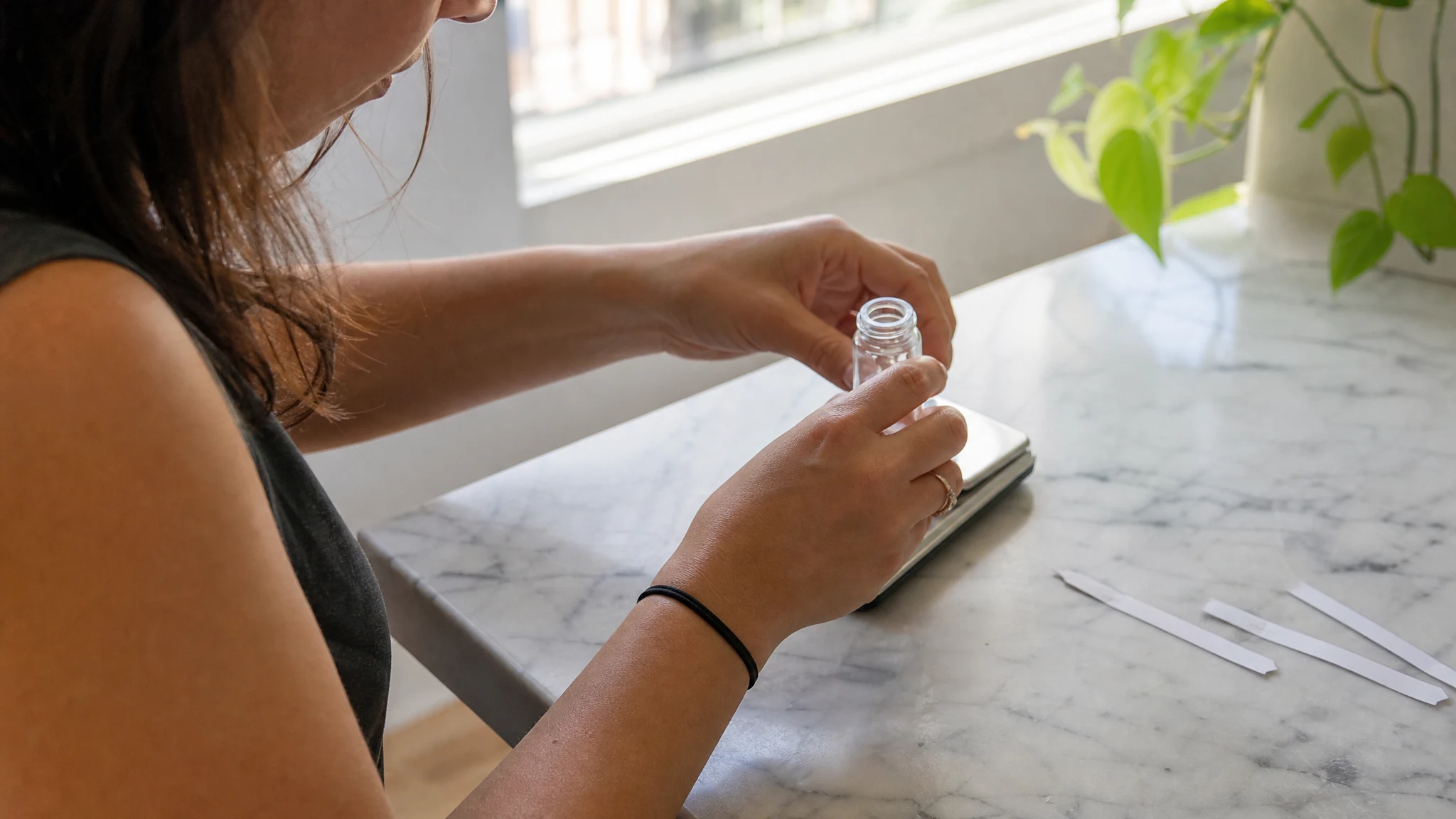
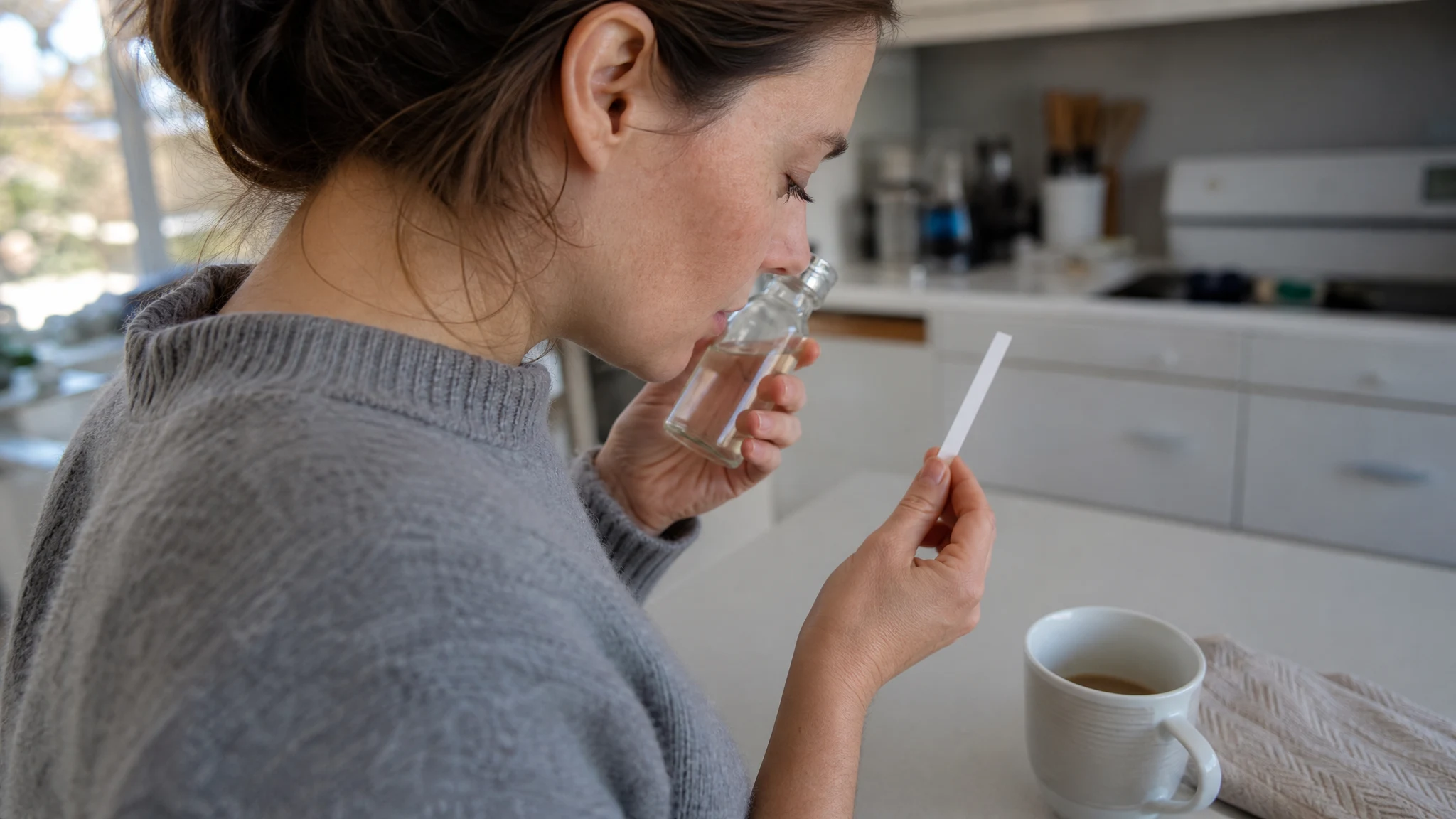
Honeysuckle absolute reads as lush and green-floral with a soft jasmine-like warmth. A bottle that has drifted tends to lose that green lift and turn flatter, sharper or faintly sour. Do not judge on the first sniff straight from the neck of the bottle, where you only meet the top notes. Put a drop on a blank paper strip, wave it for a few seconds, and come back to it after ten minutes. If the heart of the scent is still sweet and floral, the bottle is probably fine. If it has gone harsh, solvent-like or oddly stale, that is your signal.
A tip we would give anyone who buys a new bottle: write the date you first opened it on the bottle itself. A smell memory fades, a date does not.
2. Look at the pour, but do not over-read it
Thickness is the check people get wrong most often. The absolute thickens with age and thickens further in the cold, and that this is normal and not a fault. Warm the bottle in your hand for a minute and it pours again. So a stiff bottle on a cold morning tells you almost nothing. Our guide to why honeysuckle absolute is thick walks through it.
What does deserve attention is a change that does not reverse with warmth: cloudiness that stays, a sticky film around the cap threads, or a layer that will not loosen at room temperature. Treat those as a second reason to be careful, particularly when they arrive together with a changed smell.
3. Check the paperwork against the bottle
If you bought from us, the lot number is on the label, and the batch on the Certificate of Analysis we publish shows a best-by date of 02/05/2027. A date on a certificate is a useful reference, but it describes one batch and does not stand in for your nose. Our guide to reading a floral absolute COA explains what each line does and does not tell you. If something about your bottle puzzles you, send us the lot number through the contact page so we can help work out what you are seeing.
What we would do with a bottle that has turned
Our recommendation is simple. If the smell has clearly changed, retire that bottle from anything that touches skin: body oil, lotion, balm, soap, hair products. The Tisserand Institute says oxidation products tend to be slightly toxic and increase the risk of adverse skin reactions, and the linalool study points the same way. A candle or a room spray that never lands on skin is a more forgiving place for a borderline bottle, though if it smells off to you it will smell off in the finished product too.
Whatever you decide, a patch test remains worthwhile on any new blend. Our fragrance allergy and patch test guide covers how to do one properly, and we recommend diluting to 0.5% to 2% in a carrier oil and patch testing first.
Slowing it down next time
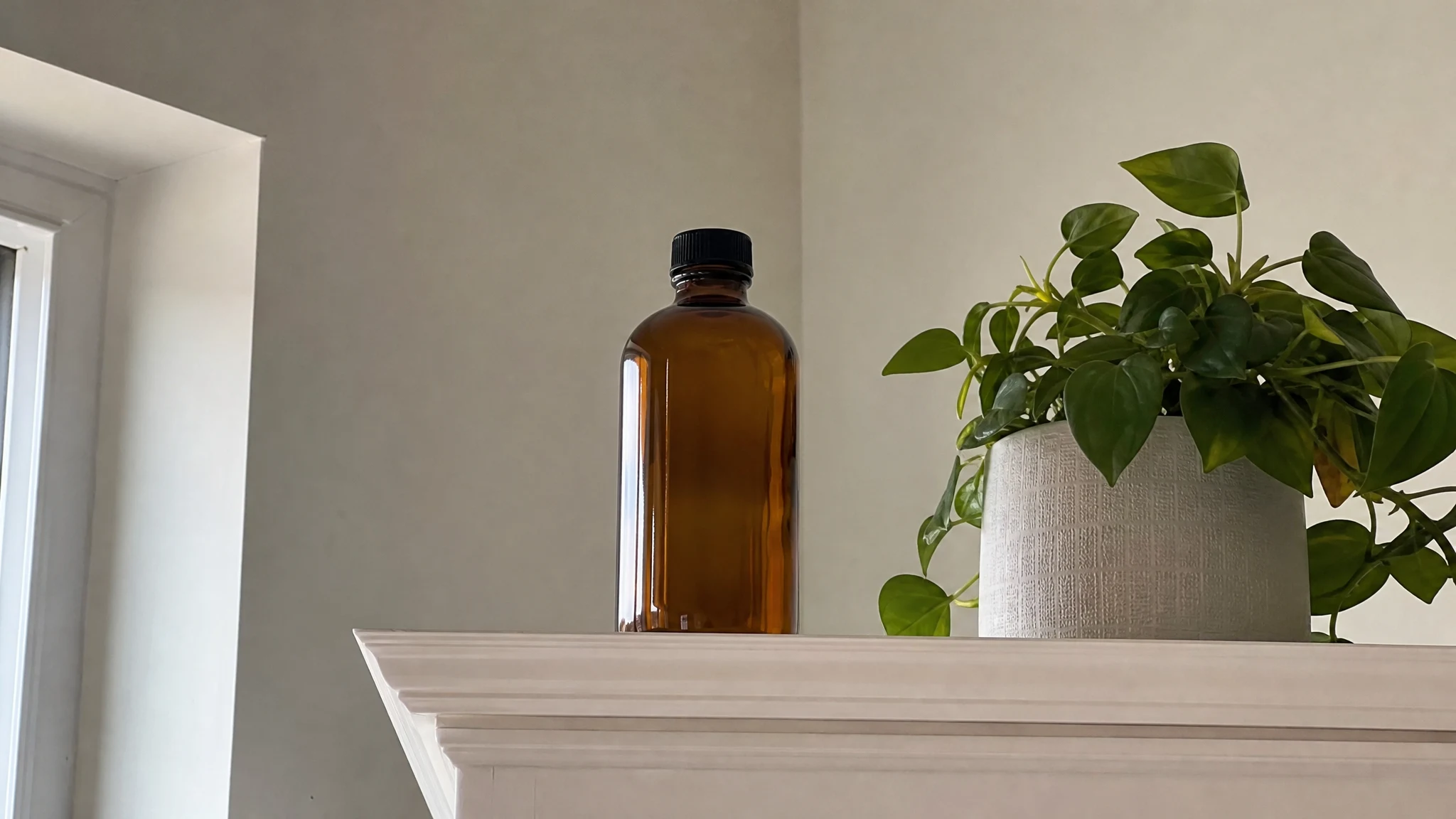
Most of the work comes from keeping air out. Keep the cap tight, keep the bottle cool and out of direct light, and move working amounts into smaller airtight bottles instead of leaving a large one open, which is the approach in our storage guide. If you are left with a few stubborn drops, our last-drops post has ideas that do not involve skin.
An absolute is a living, slightly temperamental thing, and a bottle that smells beautiful in the first year deserves a little attention in the second. A date on the label, a tight cap and a quick sniff are all it takes to know where you stand.
Honeysuckle Absolute
Honeysuckle Absolute from our own shop, in sizes from 0.5 oz to bulk.
From $13.99
Shop Now →Sources & Further Reading
- Tisserand Institute, "Is my bottle of essential oil oxidized or no longer good to use?"
- Sköld M, Börje A, Matura M, Karlberg AT, "Studies on the autoxidation and sensitizing capacity of the fragrance chemical linalool, identifying a linalool hydroperoxide." Contact Dermatitis, 2002
- Shang X et al., "Lonicera japonica Thunb.: ethnopharmacology, phytochemistry and pharmacology of an important traditional Chinese medicine." Journal of Ethnopharmacology, 2011